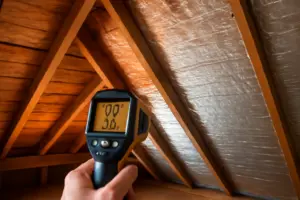
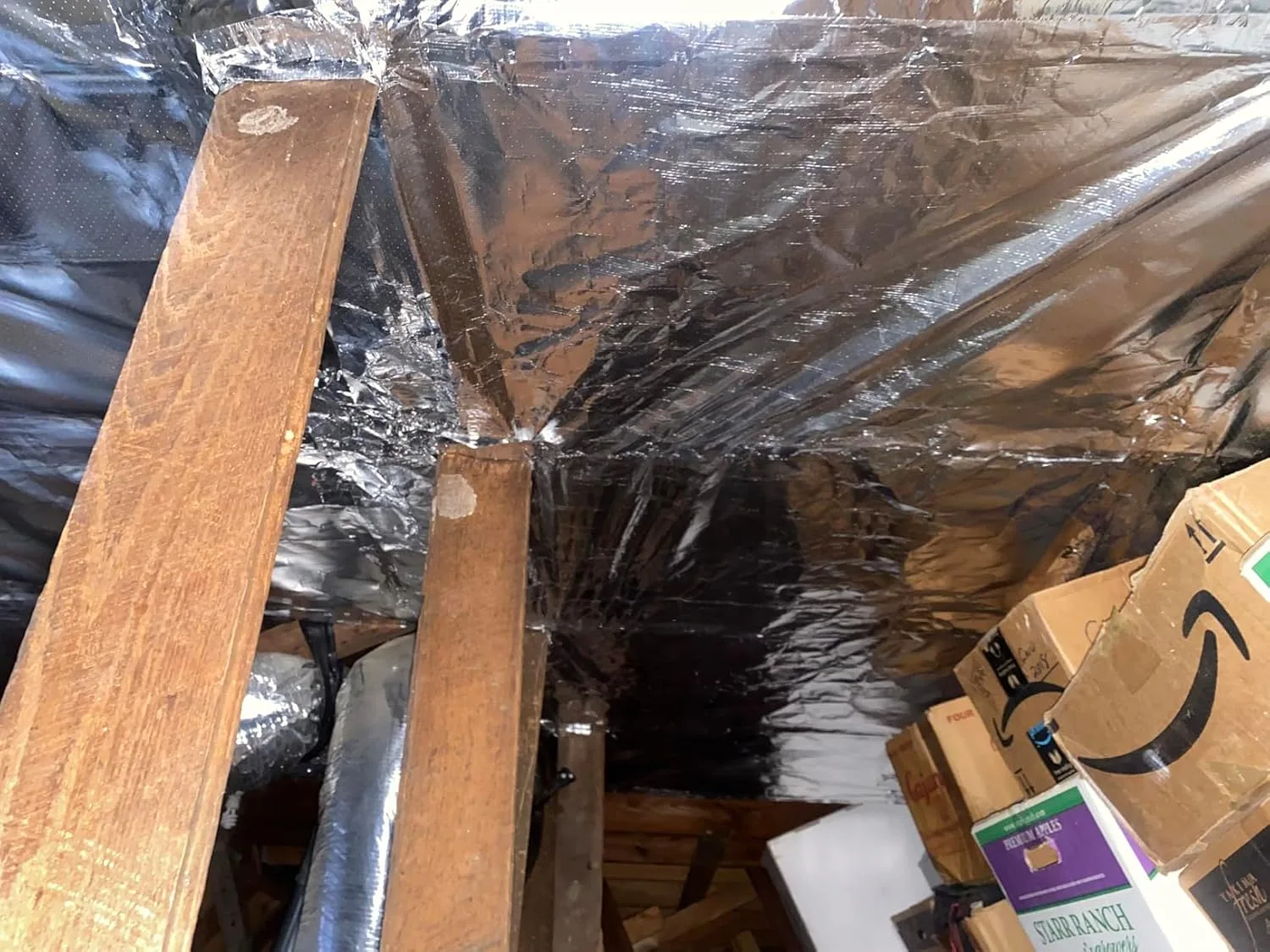
Pull up a photo I still have saved from a job in Gilbert, Arizona, and you’ll see exactly why this topic makes me want to grab homeowners by the shoulders before they sign a contract. The picture shows a sheet of radiant barrier foil lying flat across an attic floor, shiny side facing up, with a visible layer of dust already dulling its surface after a single Arizona summer. The homeowner — I’ll call him Ray — had handed a contractor $1,200 for that install, and his July electric bill barely moved compared to the year prior. “The guy told me I’d cut my cooling costs in half,” Ray told me, clearly steaming. “I feel like I got robbed.” I climbed up with my thermal camera and spent close to an hour crawling around his attic, and what I found explained everything: the foil had been draped straight over his existing R-19 insulation instead of mounted with airspace beneath it. Once dust coated that reflective surface, it stopped reflecting anything — it had become, essentially, an expensive tarp. Ray hadn’t been cheated by the product itself. He’d been cheated by sloppy information and an even sloppier install. That job is the whole reason I’m sitting down to write this. Whether radiant barrier attic does it work isn’t a question with a clean yes or no — the honest answer is “it depends, and here’s the part the sales pitch conveniently skips.” If you’re trying to see past the marketing hype and figure out whether foil belongs in your attic, you’ve landed in the right spot. I’ve installed, tested, and diagnosed radiant barriers across hundreds of Southwest attics, and what follows is the unvarnished version.
The Real Mechanics of How Heat Invades Your House
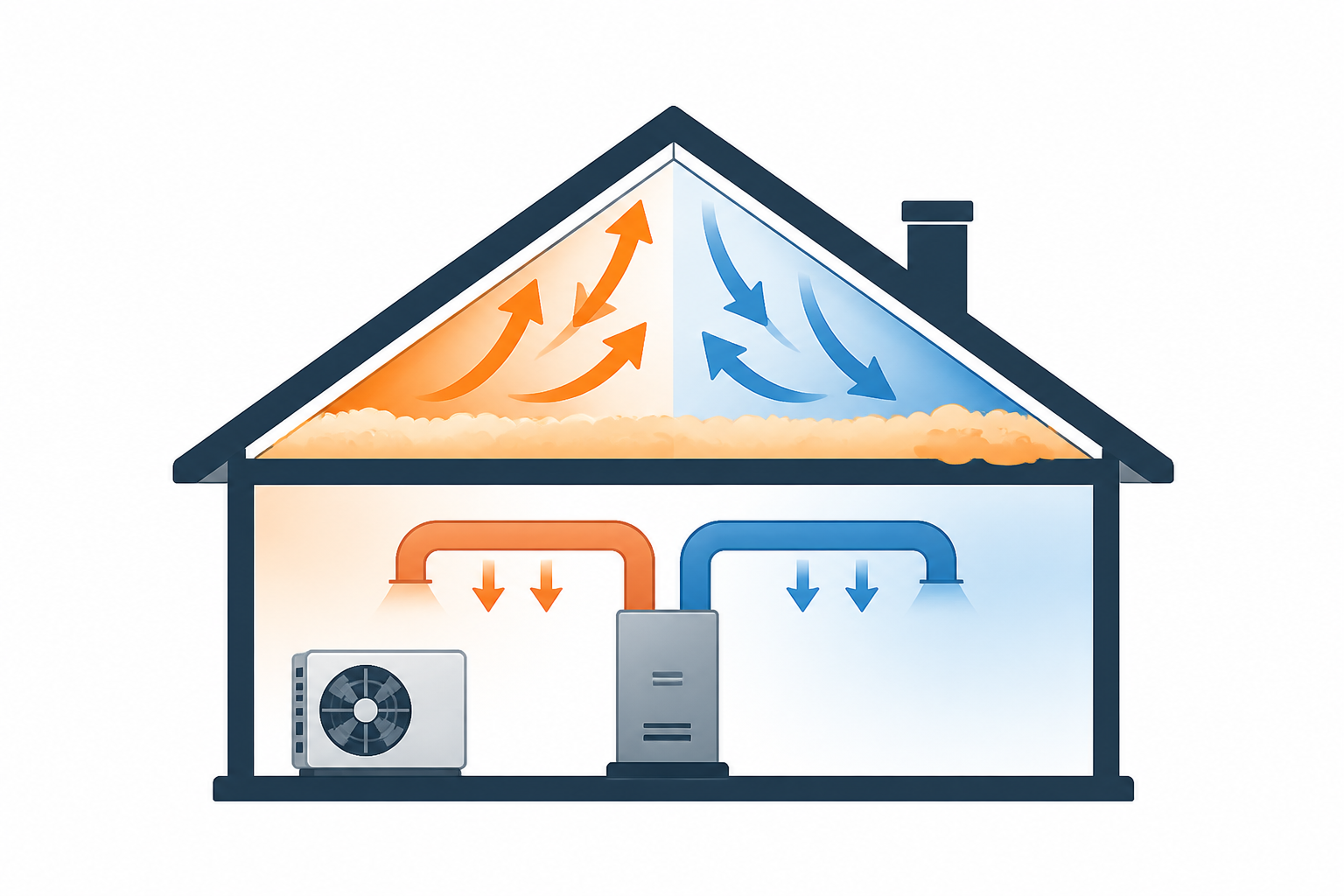
Before deciding whether a radiant barrier earns its keep, you need a clear picture of what it’s actually built to do — and just as important, what falls outside its job description. Heat has three ways of moving: conduction (contact), convection (airflow), and radiation (infrared energy traveling in waves). The insulation sitting in your attic, whatever form it takes — blown fiberglass, cellulose, batts — is built to fight conduction and convection. It slows the heat trying to push through your ceiling assembly. What it barely touches is the radiant energy pouring down from above it.
Picture what’s unfolding overhead during a scorching July afternoon. That roof deck — the OSB or plywood beneath your shingles — can climb to 150°F, even 170°F, under direct sun. All that stored heat radiates downward as infrared energy, functioning like an oversized heat lamp aimed straight at your attic floor. Your R-19 or R-30 batts down there are still slowing conduction as designed, but only after soaking up that radiant hit first — which drives their own temperature up, which in turn speeds up how fast heat conducts into your living space below. Your AC unit ends up working overtime. And any ductwork routed through that attic space? It’s baking in air that can hit 140°F, bleeding conditioned air out before it ever makes it to a supply vent.
A radiant barrier tackles the problem from a completely different angle than insulation does. It’s a reflective aluminum sheet — usually rated 95 to 97 percent reflectivity — engineered to bounce infrared radiation back up toward the roof deck instead of soaking it in. It contributes zero R-value, none whatsoever. Its actual job is to shrink the radiant load reaching your insulation before it ever gets absorbed. Field studies and DOE research consistently back this up: in hot, sun-heavy regions — IECC climate zones 1 through 3, meaning Florida, Texas, Arizona, New Mexico, and the Gulf Coast — a correctly installed barrier can knock attic temps down 20°F to 30°F and trim cooling bills somewhere around 5 to 10 percent. In practical terms, that translates to roughly $50 to $150 saved per year, depending on square footage, local utility rates, and how much ductwork sits exposed in that attic.
This is exactly where sales pitches start to unravel. Plenty of contractors and product reps will throw out a 40% savings figure like it’s gospel. I’ve never seen that number backed by any credible, peer-reviewed building science research. Maybe it holds up in some extreme scenario — a badly under-insulated house, single-pane skylights, ductwork slapped directly under the roof deck, all baking in most cities heat — but for a typical home, it’s fantasy. The realistic figure stays in that 5-10% cooling reduction range for hot climates. That’s genuine savings and still worth weighing — but only if you walk in with accurate expectations. And if you live somewhere like Minnesota or Michigan, where heating eats up most of your annual energy budget? A radiant barrier will barely register. Winter heat loss comes from conduction and air leaks, not radiant transfer through your roof.
Where Radiant Barriers Genuinely Deliver — When the Install Is Done Correctly
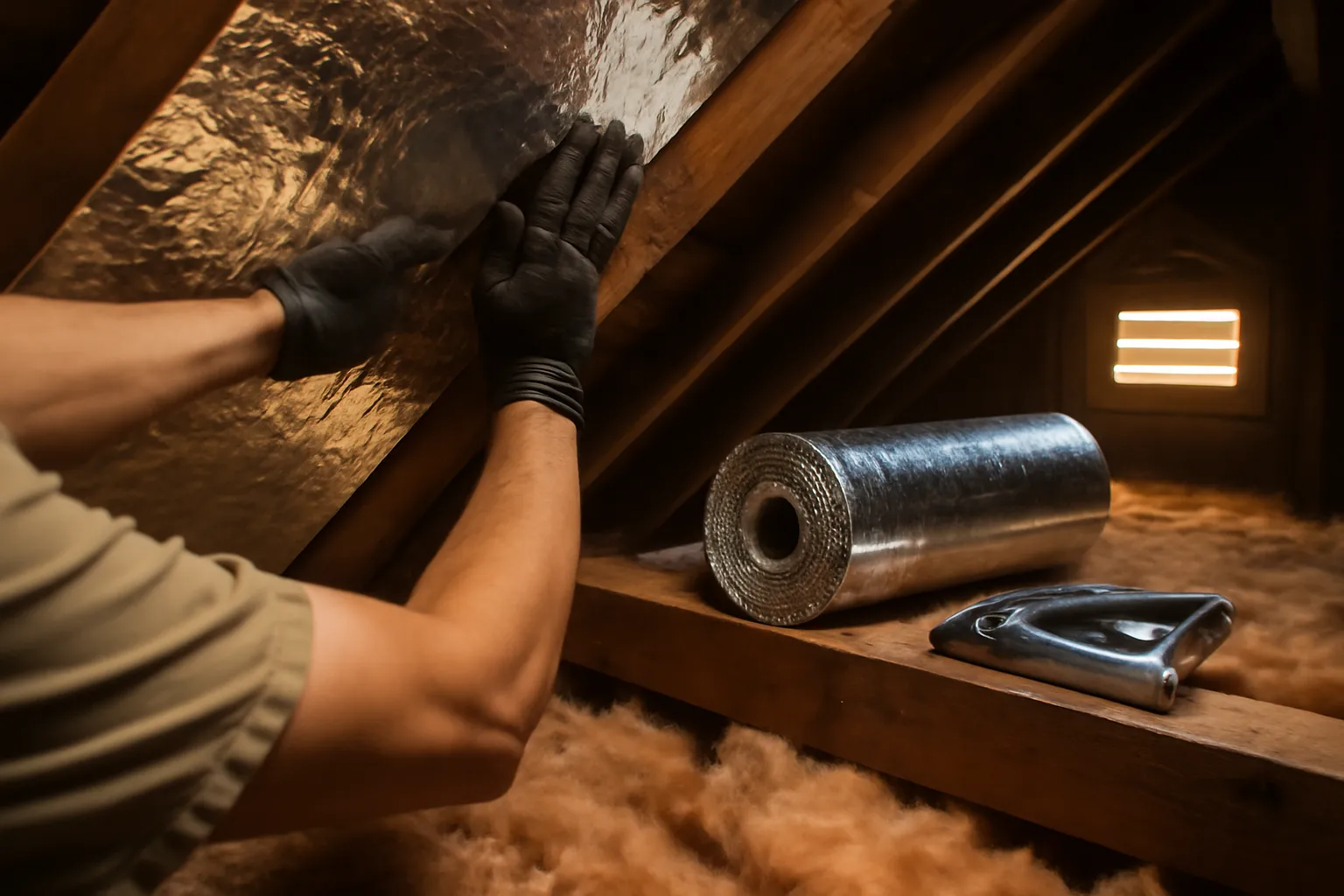
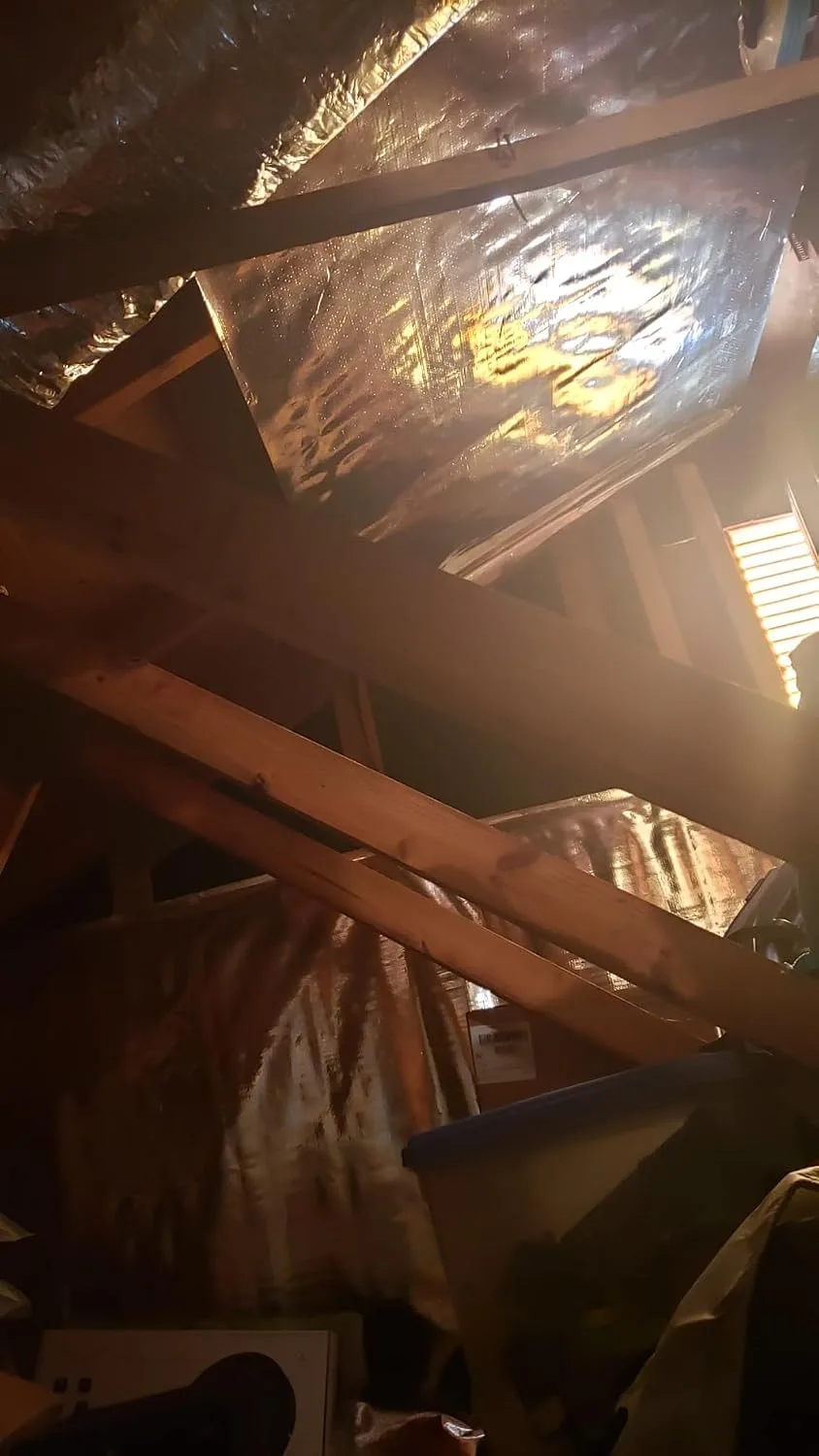
Nearly every radiant barrier failure I’ve troubleshot traces back to one culprit: an installation method that kills the material’s reflective edge before it ever gets a chance to work. If you’re spending money on this stuff, it has to hang with open airspace underneath it, using a product designed to stay flat and manageable even in a cramped, tight attic.
Where it earns its keep
- Heavy-duty perforated sheeting holds up against sagging and tearing mid-install — essential when you’re wedged between joists on a 130°F afternoon
- A 1000 sq ft roll cuts down on seams and gaps, leaving fewer weak points where radiant heat can slip through
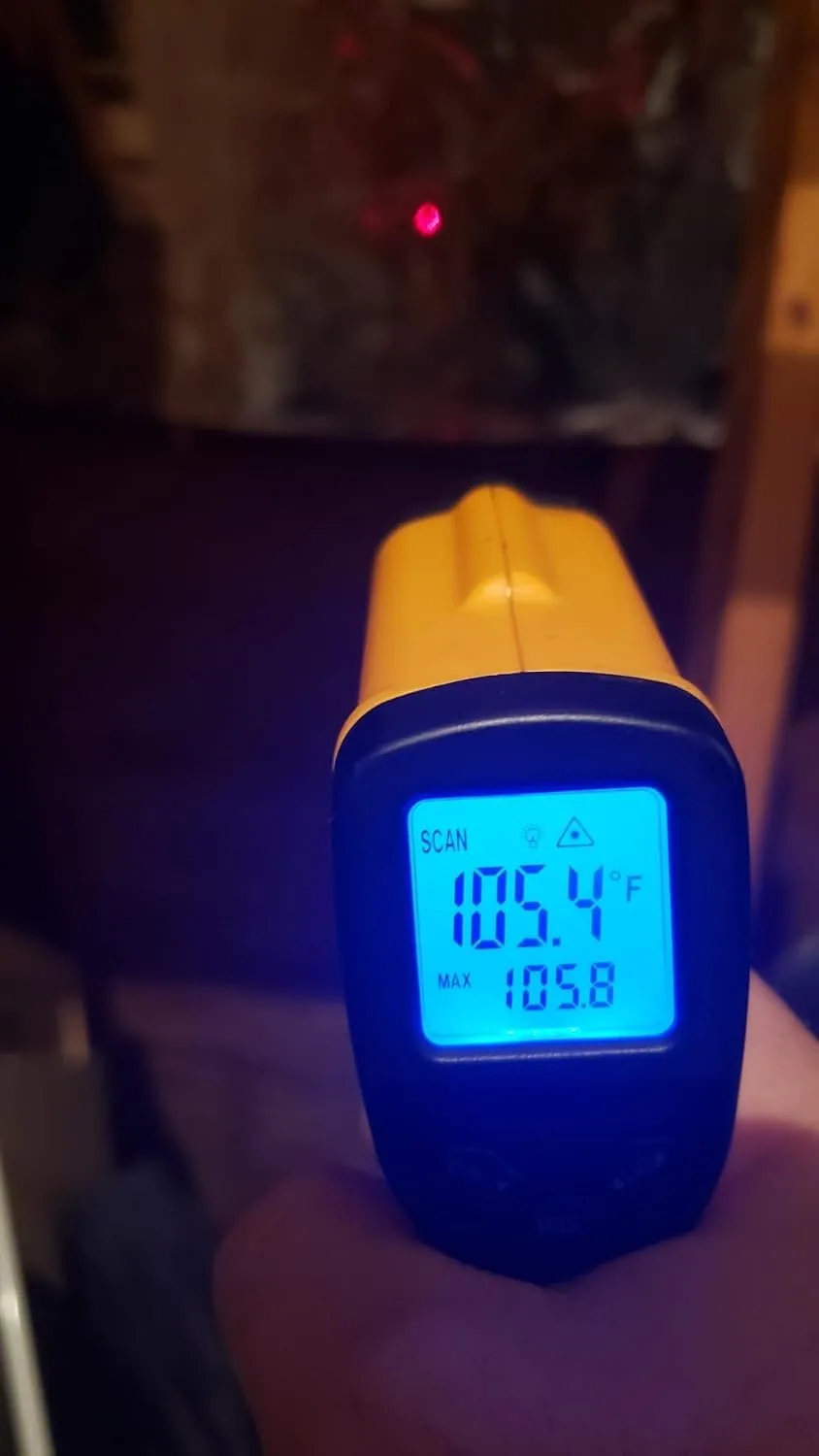
- Stapled to the rafter undersides with genuine airspace beneath it, it produces real, measurable results — attic temperature drops of 5–10°F under direct sun
Where it falls short
- It’s a supporting player, not a stand-in for bulk insulation — expect modest savings on your utility bill, nowhere near the 50% figure Ray was promised
- How it’s installed matters more than the material itself; lay it flat for $1,200 like Ray’s contractor did, and it’ll let you down every time
I almost skipped radiant barrier on my own 2008 remodel in Tempe until I realized the attic deck was already pulling 165°F midday—that’s when I understood the physics actually worked. That’s when I reached for the RadiantGUARD® Radiant Barrier Xtreme Attic Insulation 1000 sq ft, 4 x 250ft.
About This Article

Written by Dana Sorensen. Homeowner turned building-science obsessive. I help other homeowners understand attic insulation, ventilation, and air quality so they can stay comfortable year-round without overspending on energy bills. More about this site.
Scope and limits. Dana is a homeowner who studies building science, not an HVAC contractor or licensed tradesperson. Anything involving combustion appliances, gas lines, or electrical work belongs with a licensed contractor.
Verify this against a primary source
Specifics change, and your situation may differ from the one described here. These are the authorities worth checking directly:
- ENERGY STAR — recommended insulation R-values by climate zone
- U.S. Department of Energy — air sealing and insulation guidance
- EPA Indoor Air Quality — ventilation and indoor air quality standards