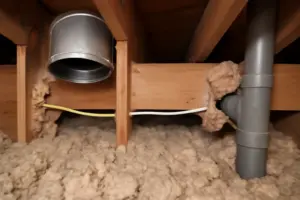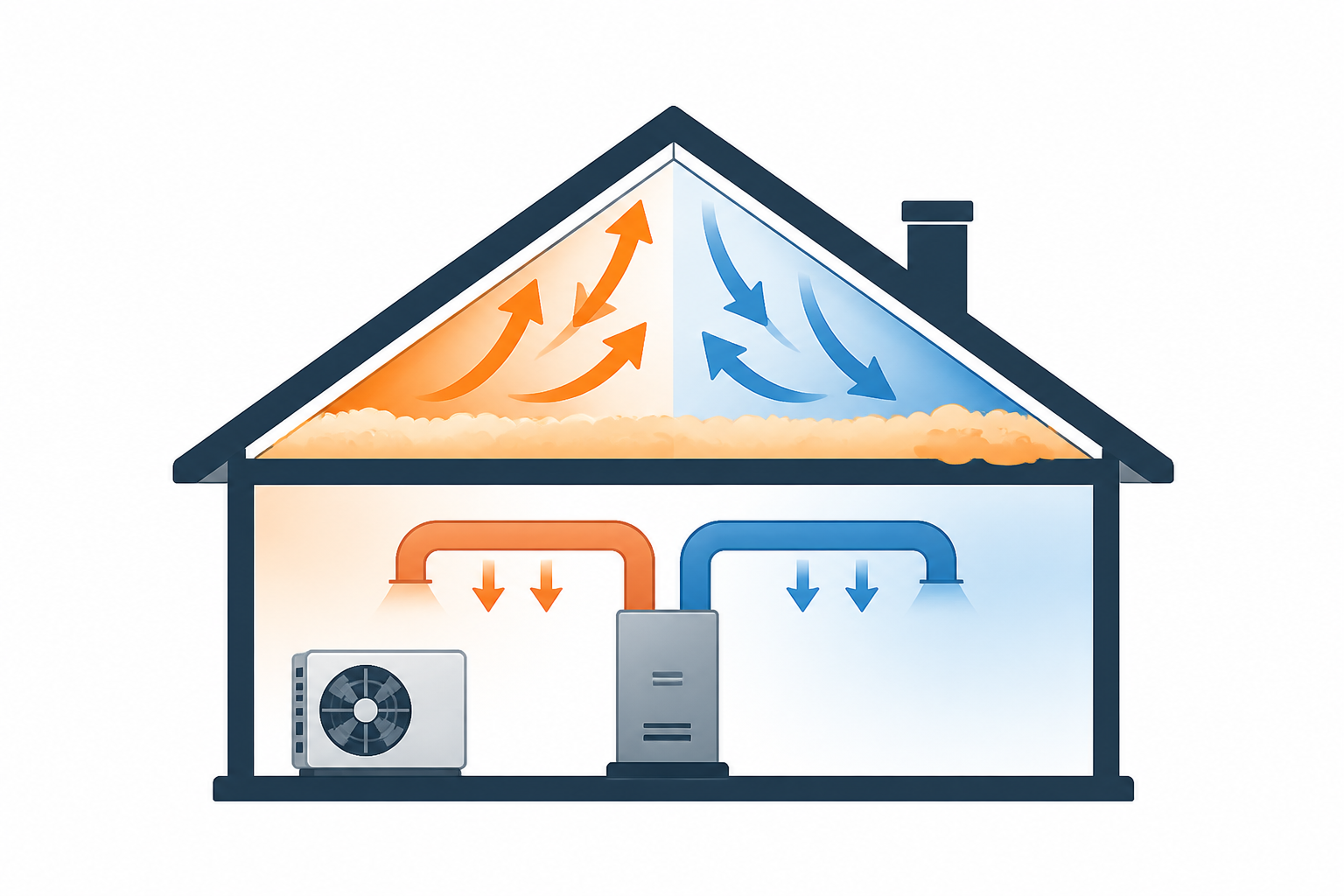
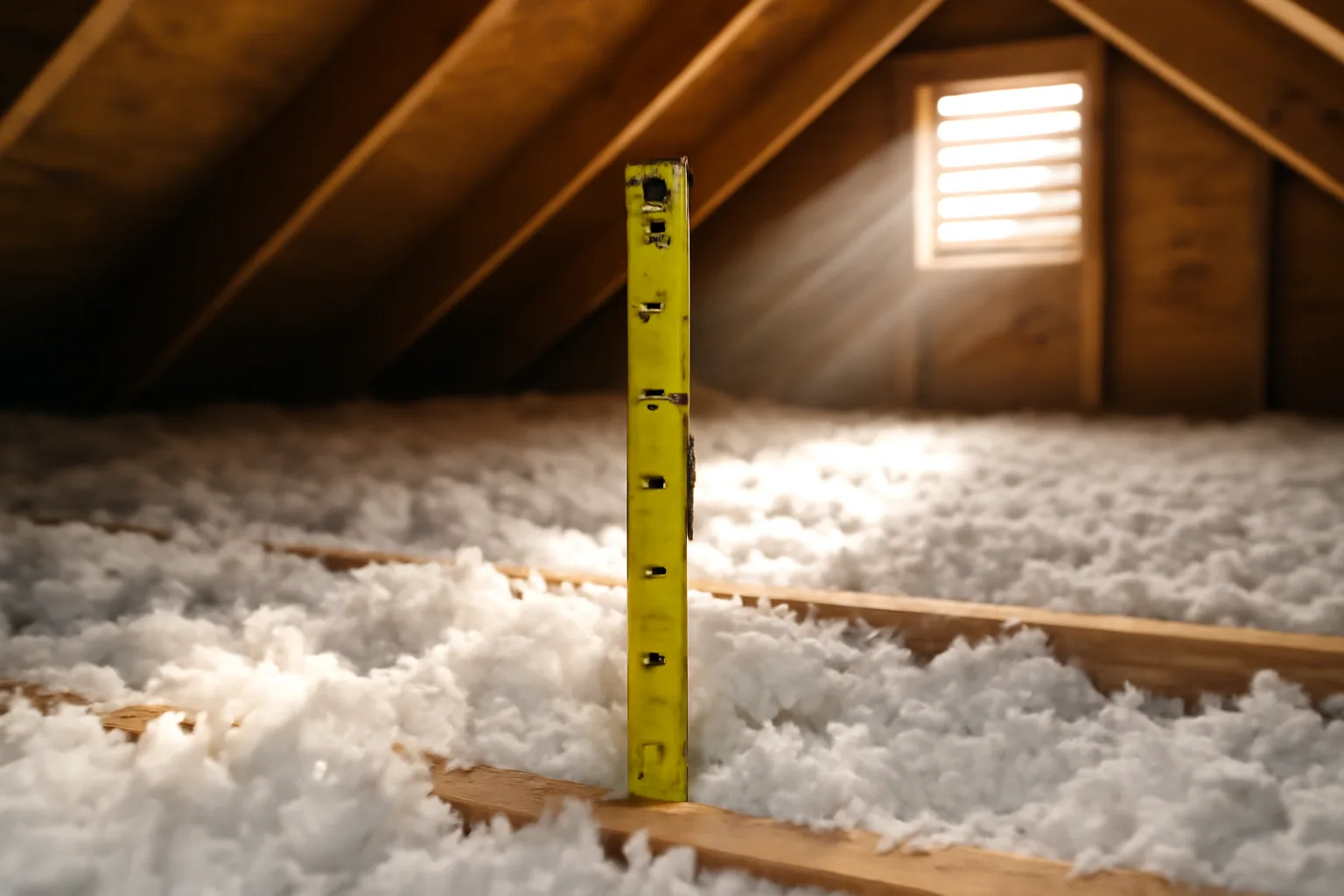
What a manufacturer spec sheet or code minimum never spells out is the real dollar cost of falling short. Last winter, in a home outside northern Utah, I found that out firsthand while working with a homeowner paying $380 a month just to heat his house. His attic clearly had insulation in it — visible, obvious. But when I pushed a tape measure down into it, I only found R-19 worth of material. Zone 6, where this house sits, calls for R-49 to R-60 according to Department of Energy guidance. He’d been bleeding money through his ceiling every single day without realizing it. Knowing your climate zone’s true R-value target isn’t some minor technical footnote — it’s the line between a home that’s affordable to run and one that quietly drains your bank account all year long.
For more than a decade now — twelve years and counting — I’ve made my living inspecting attics and troubleshooting HVAC systems, and I’ve crawled through hundreds of attic spaces spread across four separate climate zones. If there’s one mistake that shows up more than any other, it isn’t the wrong insulation product. It’s simply not having enough of it installed. Builders frequently stop at whatever the code minimum happens to be. Codes themselves often lag behind what current energy science actually recommends. And most homeowners have no real idea what’s sitting above their ceiling until something forces them to find out.
That’s exactly what this article is here to fix. I’m going to break down precisely how much attic insulation your specific climate zone calls for, explain why R-value carries more weight than raw thickness ever could, and show you how to check what’s actually installed above your own ceiling right now. By the time you finish reading, you’ll know for certain whether your attic is helping your energy bills or quietly working against them.
What R-Value Really Measures (and Why Depth Alone Can Fool You)
R-value is simply a measurement of thermal resistance — how effectively a material blocks heat from moving through it. The higher that number climbs, the better the insulation performs. Most homeowners understand that much just fine. Where confusion creeps in is assuming two inches of one material behaves the same as two inches of another. It absolutely does not.
Take this comparison: two inches of open-cell spray foam gets you roughly R-7. Two inches of fiberglass batting lands closer to R-6. Two inches of closed-cell spray foam, on the other hand, jumps to R-12 or higher. Identical thickness, wildly different outcomes. That’s precisely why measuring depth alone — without first identifying what material you’re looking at — only tells you half the story.
Here’s a rundown of typical R-value-per-inch figures for the insulation materials most often found in attics:
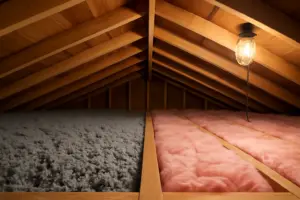
- Blown-in fiberglass: R-2.2 to R-2.7 per inch
- Loose-fill cellulose: R-3.2 to R-3.8 per inch
- Fiberglass batt insulation: R-2.9 to R-3.8 per inch
- Mineral wool batts: R-3.0 to R-3.3 per inch
- Open-cell spray foam: R-3.5 to R-3.7 per inch
- Closed-cell spray foam: R-6.0 to R-6.5 per inch
Whenever I’m evaluating an attic, identifying the material comes first, every single time. Measuring depth comes second. Only after covering both steps can I actually calculate the true in-place R-value. Skip that first step and you’ll end up like plenty of homeowners before you — convinced you’re sitting at R-38 when the real number is closer to R-22.
Attic Insulation R-Value by Climate Zone: The Full Breakdown
The Department of Energy splits the entire country into eight distinct climate zones, numbered 1 through 8. Zone 1 covers the humid deep south — think Miami, think Puerto Rico. Zone 8 sits at the opposite extreme, covering subarctic Alaska. Wherever your home falls on that scale determines how hard your HVAC system has to work, and that in turn determines how much insulation your attic actually needs.
These DOE figures, which align with the 2021 IECC energy code, should serve as your baseline. A good number of states have already adopted these standards or something close to them. That said, plenty of jurisdictions are still operating under older code cycles. Check your local requirements, certainly — but treat the DOE numbers as the actual performance level you’re aiming for.
Zones 1 and 2 — Hot and Humid Climates
Florida, coastal Texas, Louisiana, and Hawaii all fall under this category. Cooling load is the primary concern here, not heating. Recommended attic R-value: R-30 to R-49. Most existing homes in these zones only carry R-19 to R-25 — a real shortfall. From what I’ve seen firsthand, pushing a zone 2 home up to R-38 can shave 15 to 20 percent off cooling costs in a previously under-insulated house.
Zone 3 — Mixed-Humid and Hot-Dry Climates
Zone 3 stretches across most of the Southeast, inland portions of Texas, Arizona, and pieces of California. Both heating and cooling loads carry real weight here. Recommended attic R-value: R-38 to R-49. I’ve walked through dozens of zone 3 attics stuck at R-19 — builder-grade minimums left over from the 1990s. Those homeowners were spending 25 to 30 percent more on energy every single year than they needed to.
Zones 4 and 5 — Mixed-Humid and Cool Climates
This range covers the Mid-Atlantic states, the Midwest, the Pacific Northwest, and sections of the Mountain West. Winter heating demand dominates in these areas. Recommended attic R-value: R-49 to R-60. This is where the bulk of my work happens. Zone 5 homes still carrying their original 1980s-era insulation typically test out at R-11 to R-19. Bringing those attics up to R-49 usually pays for itself within four to seven years through energy savings.
Zones 6, 7, and 8 — Cold and Very Cold Climates
Zone 6 takes in northern Minnesota, Montana, and the upper reaches of New England. Zones 7 and 8 stretch across Alaska and the far northern latitudes. Recommended attic R-value: R-49 to R-60, with R-60 preferred in zones 7 and 8. Remember that Utah homeowner from the start of this article? He’s in zone 6. Bringing his attic up to R-49 dropped his heating bill from $380 down to under $210 a month the following winter.
How to Measure What You Already Have
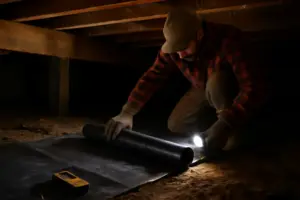
You can’t decide what to add until you know your starting point, and this is exactly where most DIY homeowners stumble first. They eyeball the insulation instead of actually measuring it. Don’t make that mistake. Insulation compresses and settles as years go by, particularly blown fiberglass and cellulose. What looks like a full 12 inches might have compacted down to only 8 inches of effective coverage.
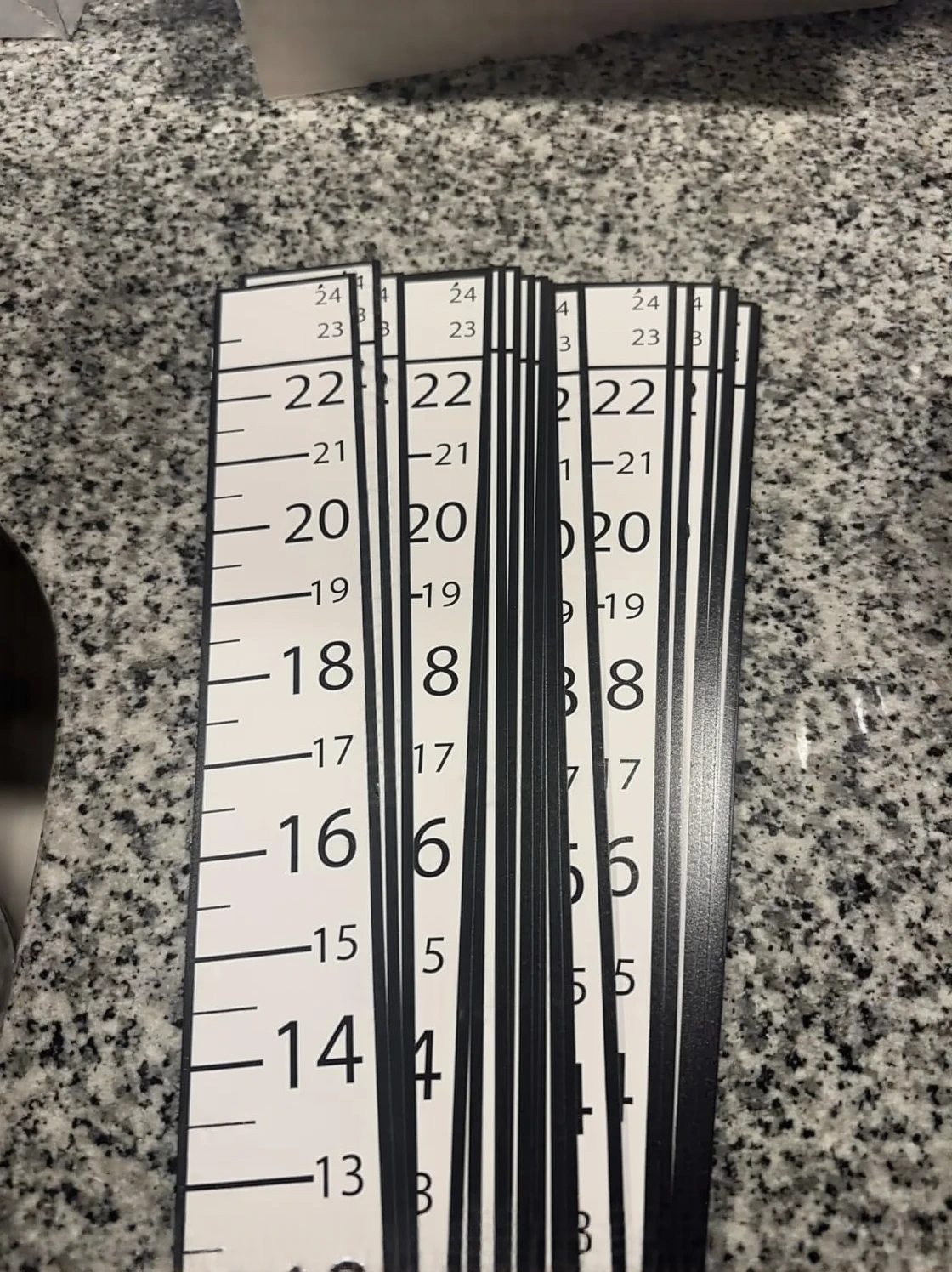
The better method involves depth markers — physical rulers pushed down into the insulation at multiple points across the attic floor. I’ve walked attics where the depth swung by a full 6 inches between the center of the floor and the eaves. A single measurement tells you nothing useful. Plan on taking eight to ten readings spread across the entire floor to land on a genuinely accurate average.
I found this out the hard way earlier on. I’d priced a job off three quick measurements taken right by the attic hatch — naturally the deepest, easiest-to-reach spot in the whole space. Turns out the material near the eaves was a full 40 percent shallower. I ended up scrambling to order extra material at the last minute, absorbing the cost overrun myself. These days, I take a full grid of readings before a single quote ever goes out the door.
The Ruler That Proved My Suspicions — And Stopped Me from Guessing
You can’t correct a problem you haven’t actually measured. Standing in an attic trying to determine whether a homeowner is meeting their climate zone’s R-value requirement, a plain old ruler doesn’t cut it — I need the exact insulation depth converted into R-value right there on the spot.
What works
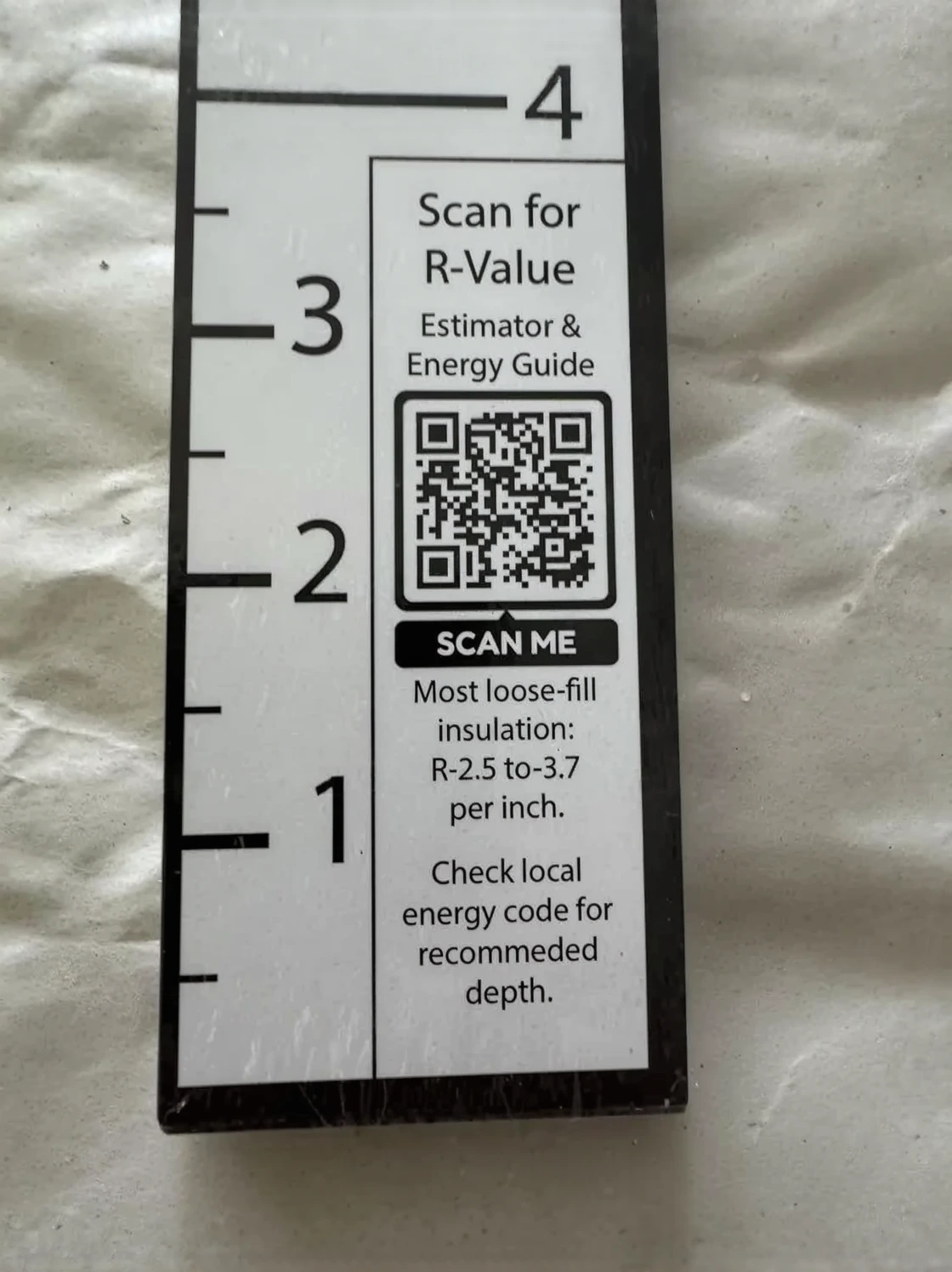
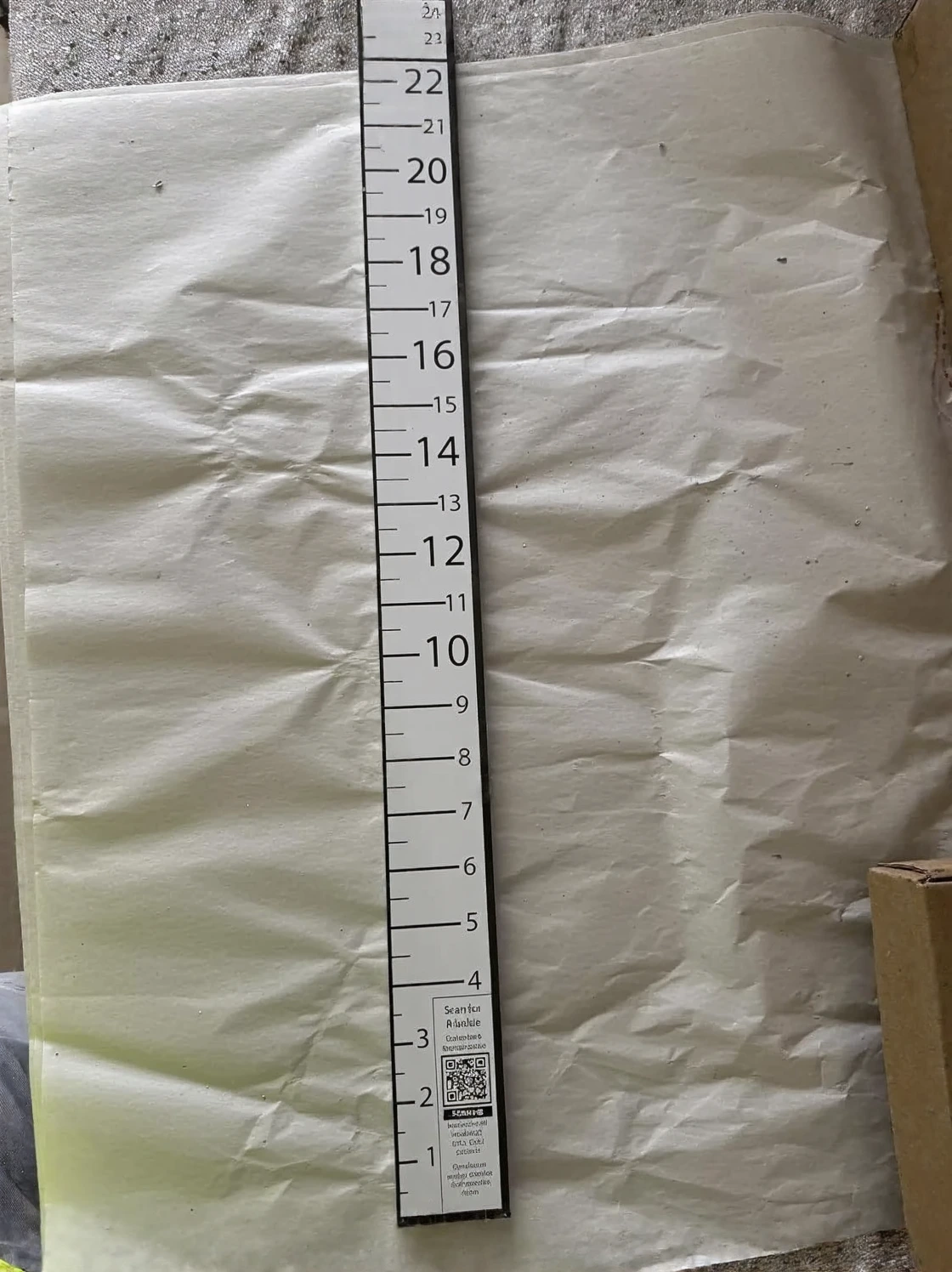
- Color-coded depth markers handle the conversion for you — read the R-value equivalent straight off the marker instead of doing inch-to-R-value math in your head or on a calculator
- Tough enough to survive repeated trips through attic insulation, batts, and uneven surfaces that would snap or bend a standard ruler
- Markings stay legible even under dim attic lighting and through dust buildup, so you’re not straining to make out tiny numbers
What doesn’t
- Doesn’t automatically adjust for insulation that’s already settled or compressed — though it does make plain that R-value drops over time, which is useful information on its own
- Only genuinely useful once you already know your climate zone’s recommended range — otherwise you’re just gathering depth numbers with nothing to measure them against
The first time I used a standard ruler in that Utah attic, I second-guessed my measurement because the numbers didn’t line up with what the homeowner expected — but when I switched to a depth-marked ruler, the reality was undeniable. Grab Aimee’s Workshop Attic Anchor Insulation Ruler Depth Markers so you can walk into any attic with confidence.
Attic Insulation R-Value by Climate Zone: Quick Reference
If you just need your number, here it is. The table below lists DOE-recommended attic R-values by climate zone, both for an uninsulated attic and for topping off an attic that already has 3-4 inches (roughly R-9 to R-11) in place. These are DOE and ENERGY STAR guidance figures, not code minimums — plenty of states and municipalities amend their energy codes to require more or less, so treat this as your starting benchmark and verify against local code if you’re pulling a permit.
| Zone | Representative States/Regions | Uninsulated Attic (DOE Recommended R-Value) | Adding to Existing 3-4″ (DOE Recommended R-Value) |
|---|---|---|---|
| 1 | South Florida, Hawaii, Southern coastal Texas | R-30 to R-49 | R-25 to R-30 |
| 2 | North/Central Florida, South Texas, Southern Louisiana, Southern Arizona | R-30 to R-49 | R-25 to R-30 |
| 3 | Southern California, Georgia, North Texas, coastal Carolinas, Tennessee | R-38 to R-49 | R-25 to R-38 |
| 4 | Mid-Atlantic, Ohio Valley, Kentucky, Pacific Northwest coast, most of Virginia | R-49 to R-60 | R-38 to R-49 |
| 5 | Northern Illinois, Pennsylvania, Iowa, most of New York, Colorado’s lower elevations | R-49 to R-60 | R-38 to R-49 |
| 6 | Northern New England, upstate New York, Michigan’s Upper Peninsula, Minnesota, Wisconsin, Montana, mountain West at elevation | R-49 to R-60 | R-49 to R-60 |
| 7 | Northern Minnesota, North Dakota, interior Alaska | R-49 to R-60 | R-49 to R-60 |
| 8 | Far northern Alaska | R-49 to R-60 (R-60 preferred) | R-49 to R-60 |
Zone 6 specifically
If you’re in zone 6 — northern New England, upstate New York, Michigan’s Upper Peninsula, Minnesota, Wisconsin, Montana, or the mountain West at elevation — target R-49 as your floor and R-60 if you’re insulating from scratch or gutting the attic anyway. The cost difference between R-49 and R-60 is mostly a few more inches of blown-in material, and at zone 6 heating loads it pays for itself.
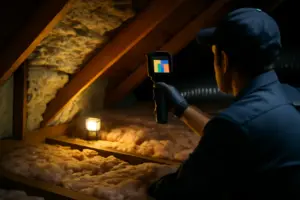
But here’s what I tell every zone 6 homeowner I work with: R-value alone won’t stop ice damming, and ice damming is the failure mode that actually costs people money up here. Ice dams form when heat escapes from the living space into the attic, warms the roof deck, melts snow, and that meltwater refreezes at the colder eaves. That’s an air sealing and ventilation problem as much as an insulation problem. I’ve been in zone 6 attics with R-60 sitting on top of unsealed can lights, open chases, and leaky attic hatches — and they still ice dam every winter, because warm air is bypassing the insulation entirely rather than conducting through it. Before you add another inch of fiberglass or cellulose, get the air sealing done first (top plates, penetrations, the attic hatch) and confirm your soffit-to-ridge ventilation path is actually open. In zone 6 and colder, that sequence matters more than the R-number on the bag.
Not sure which zone you’re actually in? DOE and the Building America program publish a climate zone map broken down by county — a quick search for “DOE climate zone map by county” will get you there, and your zone is usually one county-level lookup away. For the full reasoning behind these ranges, including how insulation type and attic construction change the math, keep reading below.
About This Article

Written by Dana Sorensen. Homeowner turned building-science obsessive. I help other homeowners understand attic insulation, ventilation, and air quality so they can stay comfortable year-round without overspending on energy bills. More about this site.
Scope and limits. Dana is a homeowner who studies building science, not an HVAC contractor or licensed tradesperson. Anything involving combustion appliances, gas lines, or electrical work belongs with a licensed contractor.
Verify this against a primary source
Specifics change, and your situation may differ from the one described here. These are the authorities worth checking directly:
- ENERGY STAR — recommended insulation R-values by climate zone
- U.S. Department of Energy — air sealing and insulation guidance
- EPA Indoor Air Quality — ventilation and indoor air quality standards