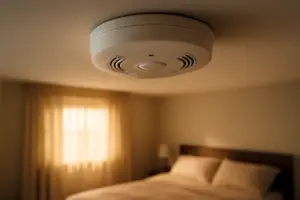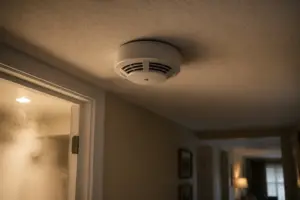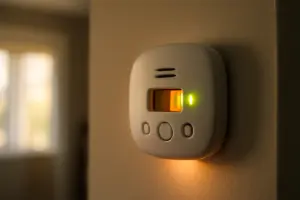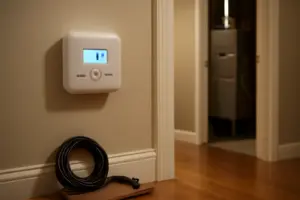
How many smoke detectors does your house actually need to be safe? If your honest answer is “however many came with the place when I bought it,” you’re not alone — and that’s exactly the assumption that nearly cost a family outside Salt Lake City everything. Nice family, two kids, three-bedroom ranch with a finished basement. A small kitchen fire broke out last spring. They caught it in time, nobody was hurt. But here’s the detail that stuck with me: not a single detector in that house made a sound. Not one. When I walked the place afterward, I counted four smoke detectors total. One had a dead battery sitting inside it. Two had manufacture dates from 2008 — sixteen years old, which means they were offering zero real protection no matter how cheerfully they chirped during a test. The fourth was an ionization-only model mounted roughly eight feet from the stove, about the worst spot you could pick for that sensor type. In their minds, they were covered — detectors on the ceiling, occasionally tested. But their whole house smoke CO detector plan, if you want to call it that, had more gaps than an old screen door. That family isn’t the exception; they’re the rule. Most of the homeowners I meet have never sat down and actually worked out how many smoke detectors they actually need, let alone whether the units they have talk to each other as one connected system. Let’s fix that right now.
The Real Reason Your Existing Detectors May Already Be Useless
Here’s a piece of safety science that catches most homeowners off guard — and honestly, plenty of contractors miss it too. Smoke detectors have a shelf life, and it isn’t indefinite. Ten years from the manufacture date stamped on the back label, they’re done. Past that window, the internal sensing chamber breaks down, the radioactive source inside ionization units decays past useful levels, and photoelectric sensors build up enough internal grime that their responsiveness tanks. Pressing the test button won’t tell you any of this — that button only checks whether the horn works, not whether the sensor can actually detect smoke. A unit can pass that beep test and still be completely blind to a real fire. Few misunderstandings in home safety are more dangerous than trusting that button.
Then there’s a second layer to this: not all smoke sensors work the same way. Two core technologies exist. Ionization sensors rely on a tiny quantity of Americium-241 to ionize the air inside a chamber, and they’re fast to react to flaming fires that throw off small combustion particles — a grease flare-up or burning paper, for instance. Photoelectric sensors work differently, using a light beam aimed at a receiver; smoke particles scatter that light onto the receiver and trigger the alarm. Photoelectric units are far better suited to catching slow, smoldering fires — the type that fill a room with heavy smoke long before any visible flame appears. Statistically, these smoldering fires are the deadlier ones, since they tend to strike overnight while everyone’s asleep. NFPA 72, the governing national fire alarm code, calls for homes to have both sensor technologies present, ideally combined into single units.
Carbon monoxide is its own separate danger entirely. It’s colorless, odorless, and generated anytime combustion is incomplete — gas furnaces, water heaters, fireplaces, a car left running in an attached garage, generators. Sustained exposure at 70 PPM is enough to cause symptoms in a perfectly healthy adult. Push that to 150–200 PPM and you’re looking at headaches and dizziness inside two to three hours. Under the UL 2034 standard, CO alarms are required to trigger within set time windows: 60 to 240 minutes at 70 PPM, 10 to 50 minutes at 150 PPM, and just 4 to 15 minutes at 400 PPM. None of that overlaps with smoke detection — a smoke alarm has no idea CO exists, and a CO detector can’t sense smoke at all. I regularly walk into homes loaded with smoke detectors and carrying exactly zero CO protection, despite having gas furnaces, gas water heaters, and attached garages. That’s a gap that shouldn’t exist.
Last on the list is the interconnection issue. Under building code — IRC Section R314, plus most local amendments — new construction requires every smoke detector in the home to be wired or networked together, so that one alarm triggering sets off all of them. Older homes get grandfathered out of this requirement, but think through the actual scenario: a fire ignites in your basement at 2 AM while you’re asleep two floors up. A lone, non-connected detector down there might never reach you in time. Interconnecting your detectors isn’t a nice-to-have upgrade — it’s a core life-safety function.
How a Connected System Catches What Four Standalone Units Missed
The kitchen fire at that Salt Lake City home exposed something uncomfortable: a handful of aging, disconnected detectors will always leave blind spots. The fix isn’t simply adding more units to the walls — it’s making sure every detector you own is networked so one alert reaches the entire house at once.
Where this setup earns its keep
- Because the units are interconnected, a smoke or CO event detected by any single unit sets off every unit in the house — meaning a basement alarm still reaches you upstairs behind a closed bedroom door
- Sealed 10-year batteries take the “oops, dead battery” scenario off the table completely — no quarterly checks, no forgotten swaps, and they’re built to meet UL 217 and UL 2034 standards for smoke and CO detection alike
- A six-unit pack is generally enough to properly outfit a multi-story home — hallways, bedrooms, basement, kitchen area — for less than what buying each detector separately would run you
Where it gets complicated
- Getting units interconnected means either hardwiring or setting up a wireless hub — you can’t just drop these into your old battery-only mounting brackets without some electrical work or upfront planning
- A sealed 10-year battery sounds great until it dies — at that point you’re replacing the entire detector, not just swapping a battery, so plan your budget around that decade-mark replacement
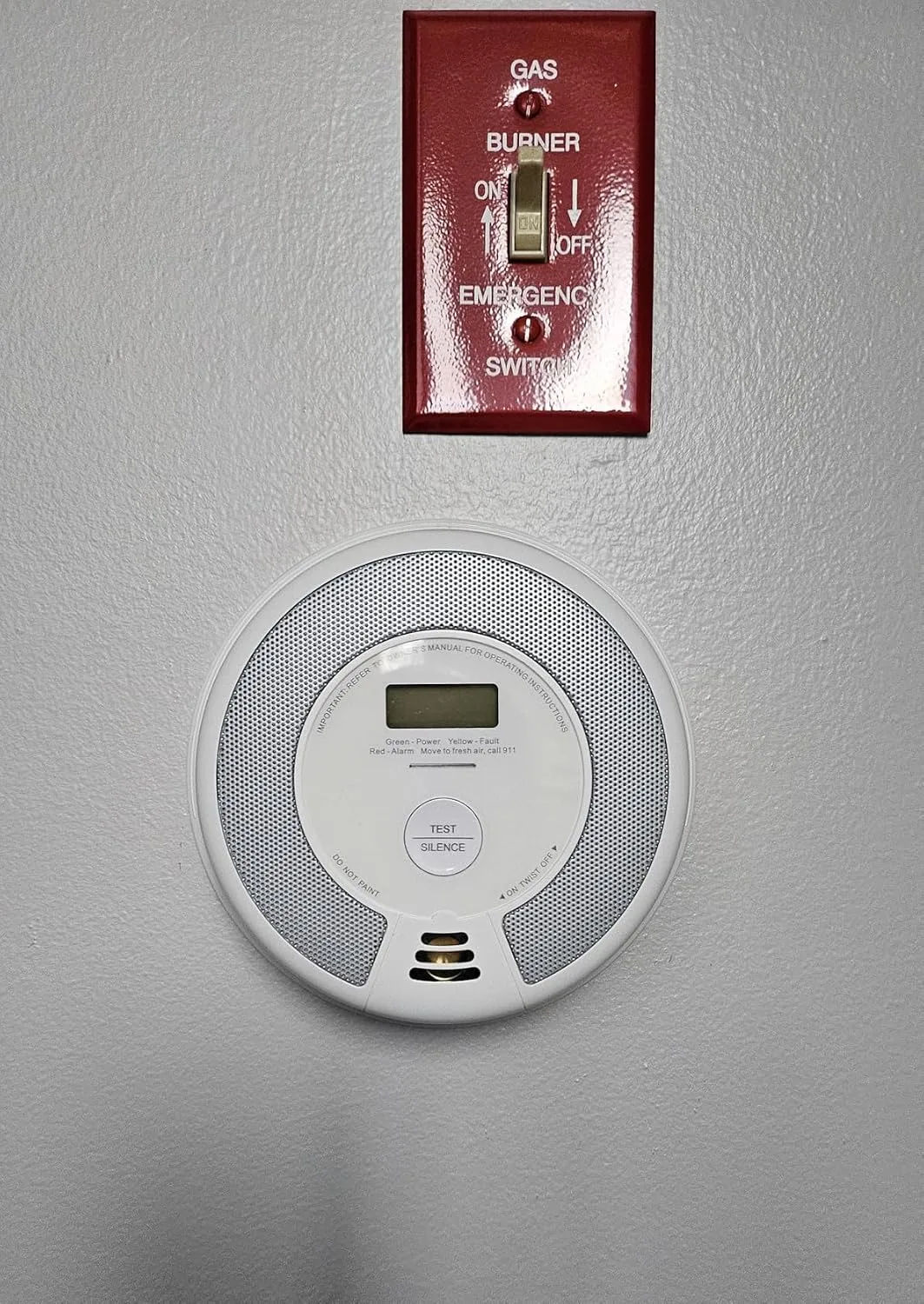
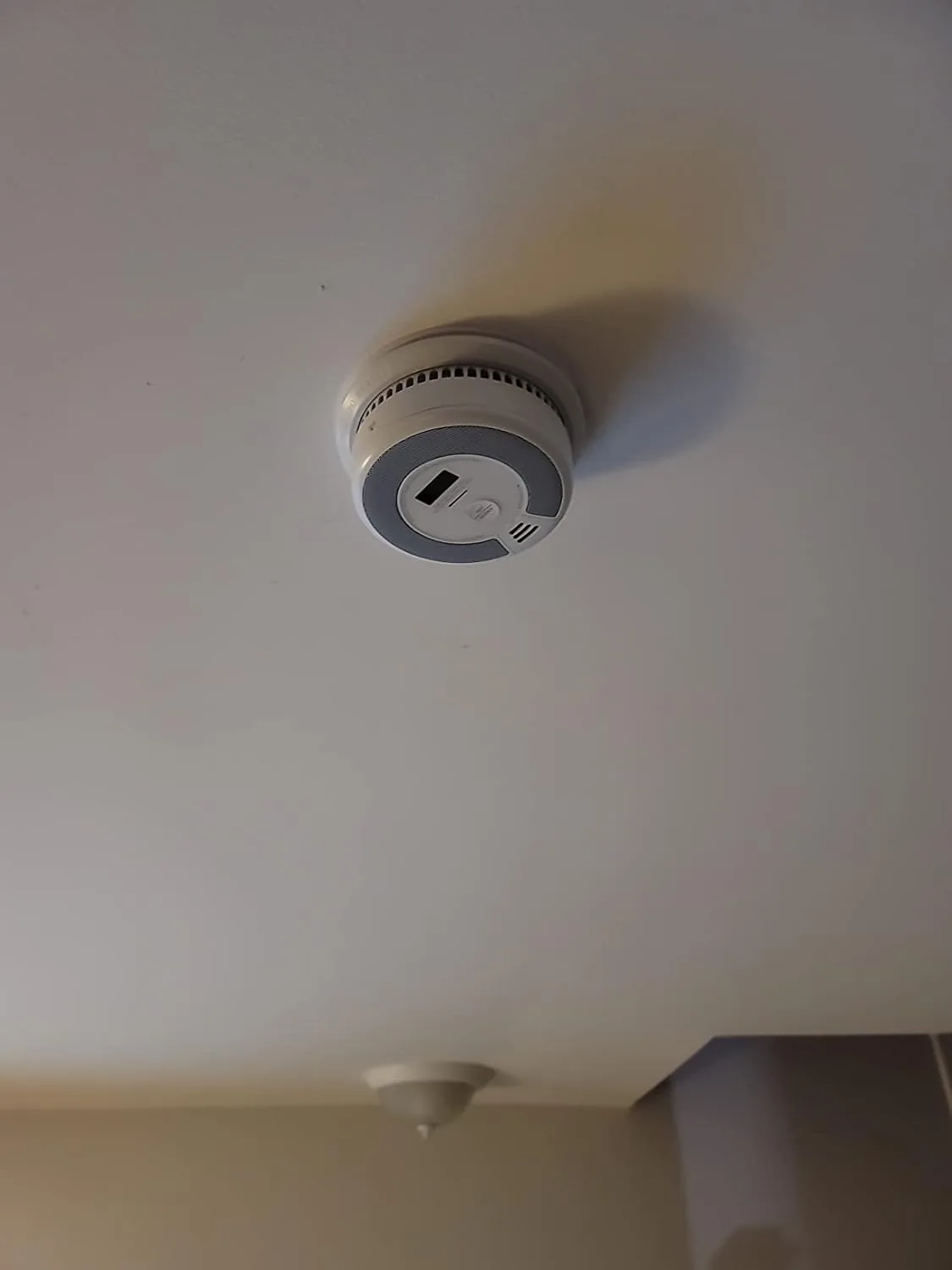
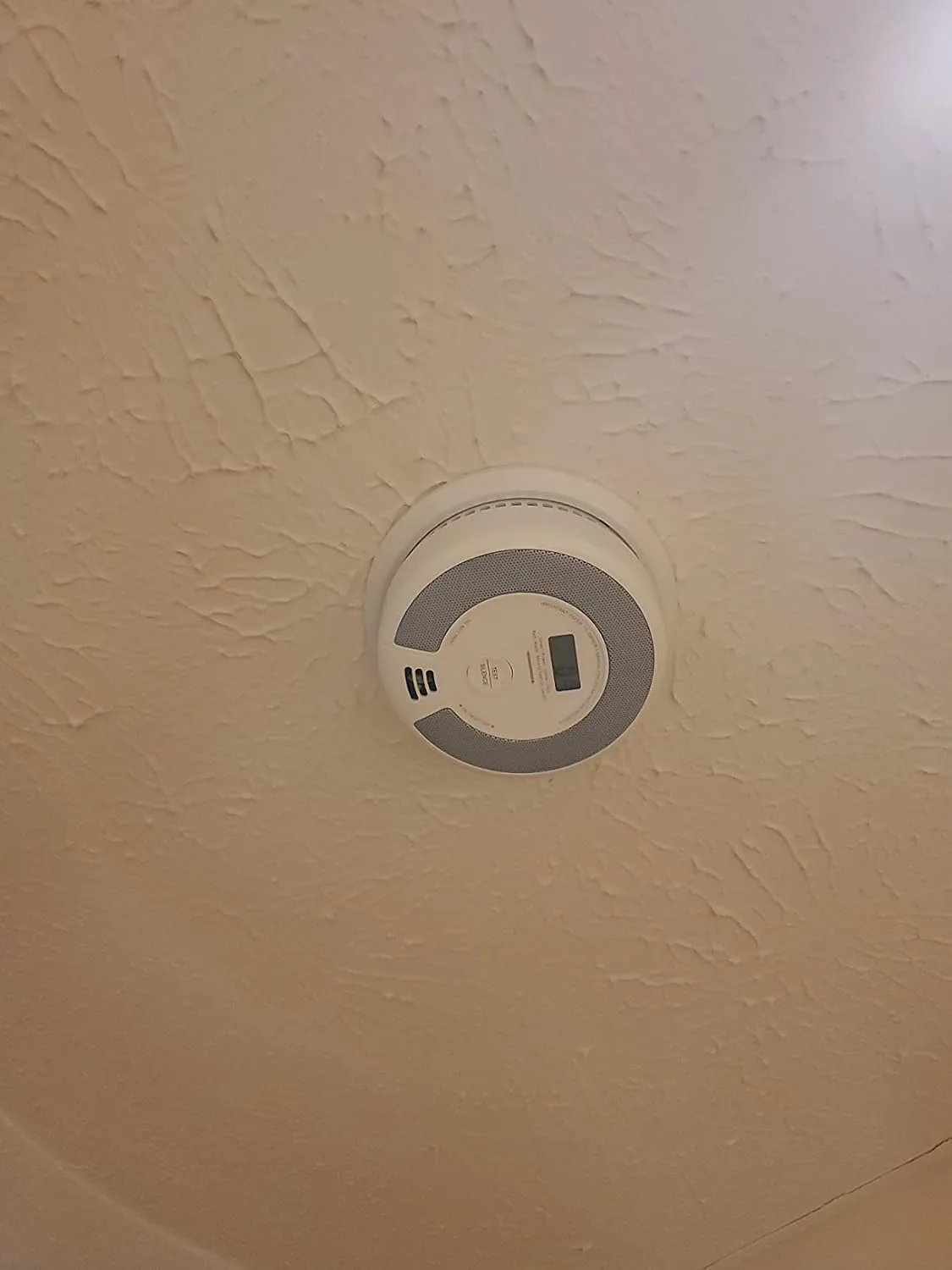
I’ll admit, I hesitated on recommending hardwired systems to DIY homeowners at first — I worried about the installation friction. But seeing that Salt Lake City kitchen fire and knowing those four detectors never communicated changed my mind. X-Sense Interconnected Smoke and CO Detector Combo is the closest thing to foolproof coverage I’ve found for homes that need real protection.
About This Article

Written by Dana Sorensen. Homeowner turned building-science obsessive. I help other homeowners understand attic insulation, ventilation, and air quality so they can stay comfortable year-round without overspending on energy bills. More about this site.
Scope and limits. Dana is a homeowner who studies building science, not an HVAC contractor or licensed tradesperson. Anything involving combustion appliances, gas lines, or electrical work belongs with a licensed contractor.
Verify this against a primary source
Specifics change, and your situation may differ from the one described here. These are the authorities worth checking directly:
- ENERGY STAR — recommended insulation R-values by climate zone
- U.S. Department of Energy — air sealing and insulation guidance
- EPA Indoor Air Quality — ventilation and indoor air quality standards