
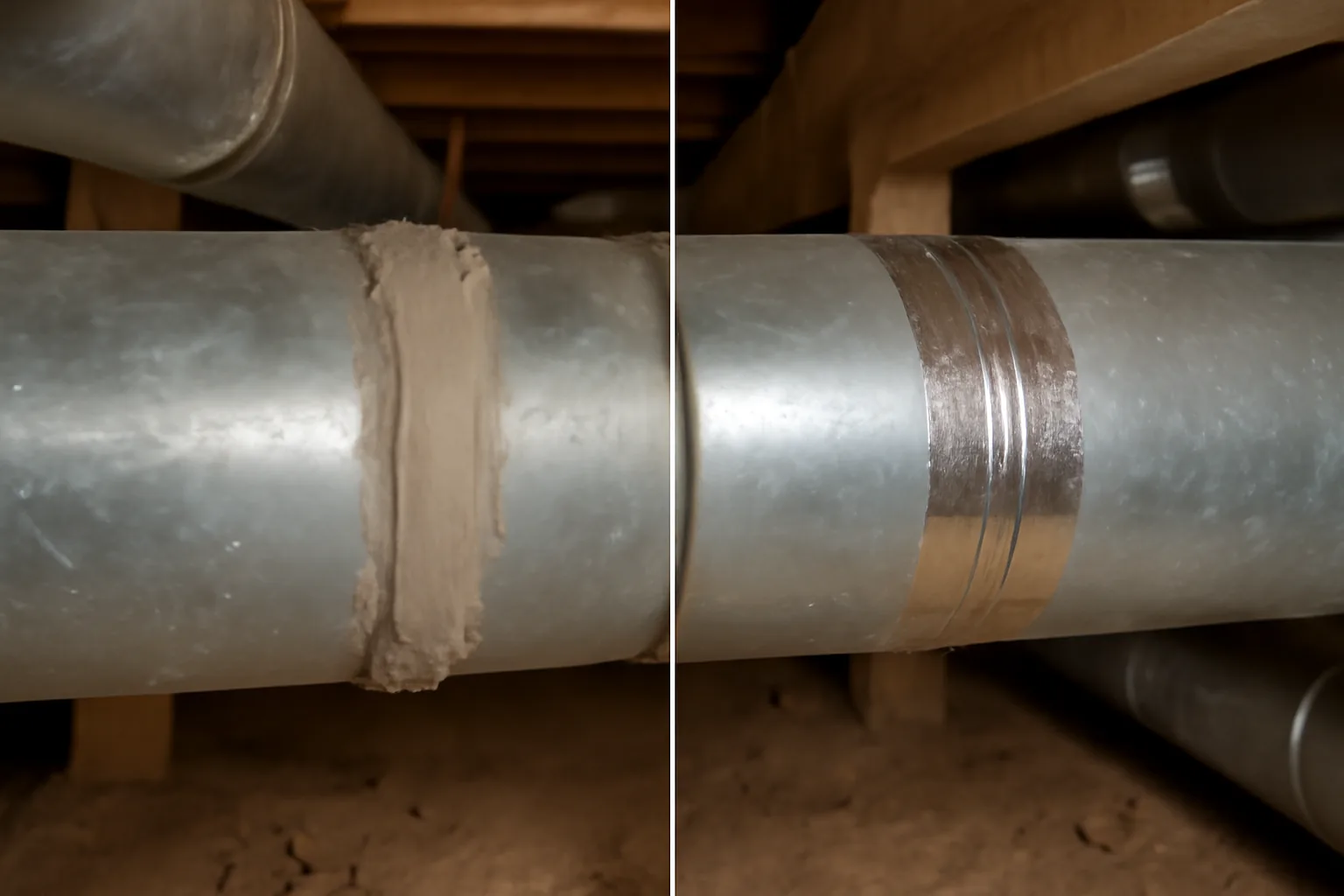
Early on, I made the call myself: tape over mastic, because it went up fast and left a tidy-looking seam. Three years later, back in that same attic, I watched that same foil tape curl away from the collars in long strips — and that one mistake still shapes how I answer the question I hear from homeowners at least once a week: duct mastic vs tape — which one actually holds up? Twelve years and hundreds of sealed systems later, I still watch people default to tape because it’s quick and looks clean going on. I get the appeal. But that shortcut quietly drains real dollars out of your energy bills year after year, and I’ve seen the failure up close — not just on other people’s jobs, but on my own early work too.
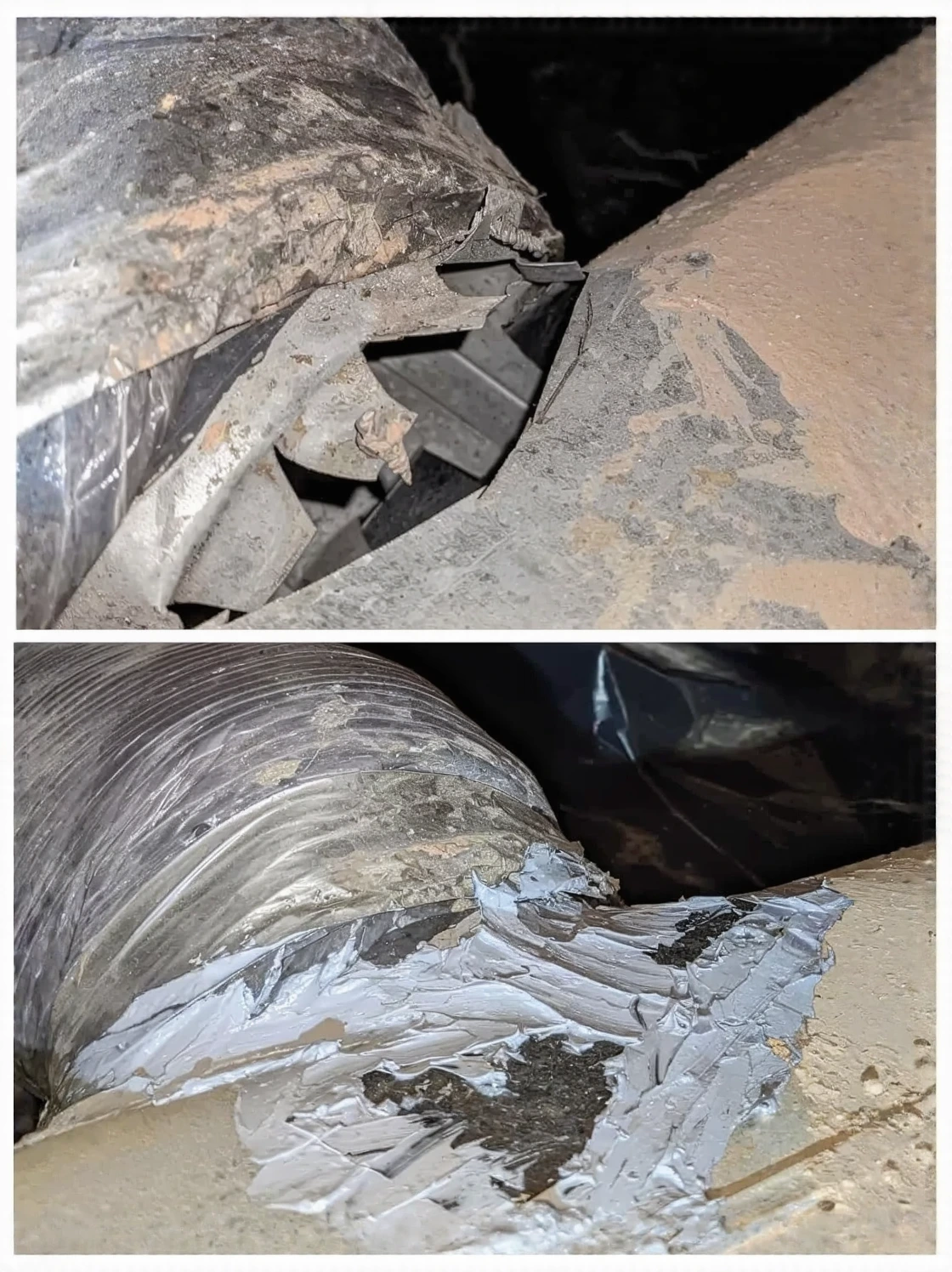
Take a 1,980-square-foot ranch I worked on in most cities last spring. The owner had watched her power bill creep up $80 to $100 a month over four years with no obvious cause. A duct blaster test told the story: nearly 28% of the conditioned air was escaping before it ever reached a vent. The reason came down to tape that had shriveled, hardened, and torn loose at the flex duct collars. That single visit is what turned this into a topic I refuse to stay quiet about.
So let me walk you through the actual test I ran, what I saw over time, and the sealant I now reach for on every job — my own house included.
Mastic and Tape — What Each One Really Is
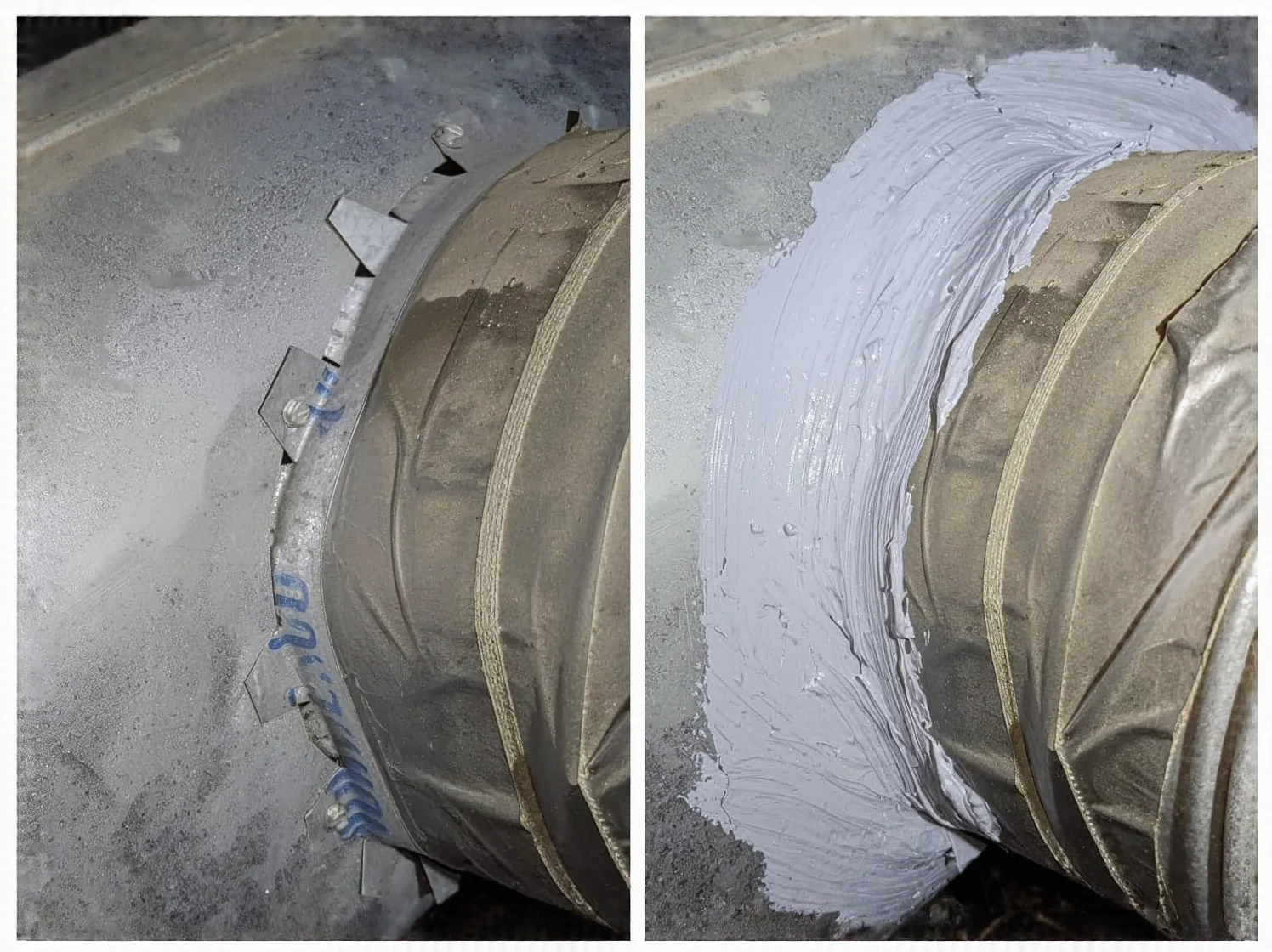
Let’s define our terms before comparing anything. Duct mastic is a thick, paste-like sealant, typically a water-based acrylic latex, that goes on with a brush, gloved fingers, or a putty knife straight onto joints and seams. Once cured, it stays pliable rather than hardening rigid — and that pliability is really the entire advantage.
Duct tape here doesn’t mean the gray roll from the hardware aisle. I’m talking specifically about UL 181-rated foil tape — a pressure-sensitive aluminum product engineered for HVAC use. General-purpose duct tape doesn’t meet HVAC code standards at all and has no business touching your ductwork. I still see this error constantly on DIY setups.
SMACNA (Sheet Metal and Air Conditioning Contractors’ National Association) covers both materials, and each must satisfy UL 181 or UL 181A/B, depending on the duct type involved. Mastic backed with embedded mesh clears that bar without much effort. Foil tape can too, but only when it’s the correctly rated product applied to a surface that’s clean, primed, and ready for it.
The Head-to-Head Test I Ran Myself
Two summers ago I sealed a split system where every variable stayed identical — same attic, same duct board, same connection type — except I ran mastic on one branch and premium foil tape on the other. The tape side got a UL 181B-FX rated product, nothing off-brand. Both runs sat in an unconditioned Phoenix attic where summer temperatures climb into the 140°F to 150°F range without much effort.
I photographed the install and returned at the six-month, twelve-month, and twenty-four-month marks. Here’s what showed up each time.
Six Months In
Everything still looked sound. No lifting on the tape, and the mastic had set into a firm, rubbery layer — visually, they were nearly identical. But pressing a gloved finger against the tape edges told a different story: two of the five joints already showed faint micro-lifting right at the seam, subtle enough to miss if you weren’t checking for it.
The One-Year Check
By now one taped joint had curled back roughly a quarter inch along one edge. The mastic side hadn’t budged at all. I re-taped the failing spot and logged it, but the mastic joints needed zero attention — not one touch-up.
Two Years Later
Three of the five taped joints now showed edge lifting to some degree, and one had opened up completely — a gap wide enough to feel air moving through with your hand. The mastic side remained flawless, all five joints intact with zero failures. That result settled the question for me for good: in an attic that punishing, mastic simply outlives tape.
So Which One Actually Wins Long-Term?
Here’s my honest verdict: mastic takes the durability contest in almost every scenario. The physics supports it — mastic keeps flexing as ductwork swells and contracts through temperature swings, while the adhesive on foil tape breaks down under repeated heat cycling. That bond is the weak link, and heat goes after it relentlessly over the years.
None of that means tape is useless. I still reach for UL 181-rated foil tape when I need a fast, temporary seal before returning to finish with mastic, or on smooth, clean sheet metal where adhesion holds up reliably. It’s also the right call for sealing vapor barriers and insulation jackets, spots where mastic simply doesn’t make practical sense.
But for duct board, flex connections, and any seam that’s going to flex and shift with heat — mastic is the only material I’ll stake my name on. Paired with fiberglass mesh tape, it bridges gaps up to a quarter inch without issue, a level of gap-filling no pressure-sensitive adhesive can sustain over ten years.
Weighing the Costs
A roll of foil tape runs $18 to $35 depending on width and manufacturer. A gallon of solid mastic runs $25 to $45 and stretches across a surprising amount of ductwork — enough for a typical home’s entire system with some left in the bucket. Tape, meanwhile, disappears faster than people expect, especially on odd-shaped surfaces where you end up doubling back over the same spot.
On a standard 2,000-square-foot home, I typically spend $35 to $55 in materials sealing the whole system with mastic — mesh tape and brushes included. Foil tape lands around the same upfront cost, but it tends to rack up added expense in repeat repairs within five years that mastic simply doesn’t require.
The Mastic Product That Held Up Past Three Years
After watching tape fail over and over, I moved to fiber-reinforced mastic for anything critical — joints exposed to constant temperature cycling and vibration. This is now my default on every job, especially anywhere I know the system is going to be put through real-world stress rather than lab conditions.
Where It Delivers
- The fiber reinforcement keeps it from cracking or pulling apart even after repeated years of ductwork expanding and contracting with the seasons
- It grabs hard onto rough, uneven seams that tape would only bridge and eventually peel from — no edge failures showing up on follow-up visits
- Being water-based, it spares you the fumes during application in a lived-in home and cleans up quicker than solvent-based options
Where It Falls Short
- It goes on slower than tape — no unroll-and-stick shortcut here; brushing or spreading it adds another 30 to 45 minutes to the job
- You can’t blower-door test right away because of the cure time; I always let it sit overnight before confirming the seal held
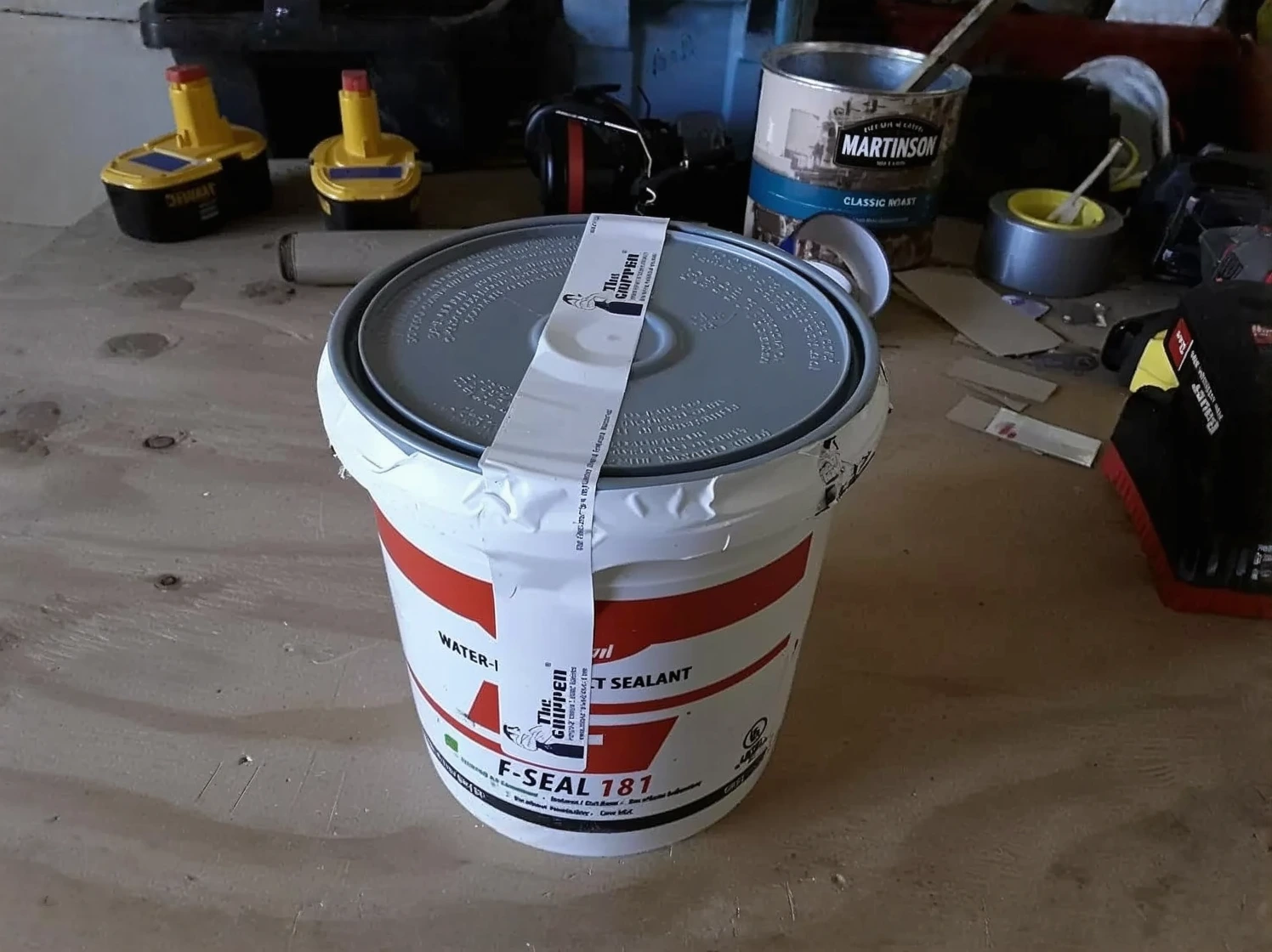
I’ll admit I was skeptical the first time I used mastic instead of tape on a difficult return-air plenum—worried I was overthinking it for a residential job. But when I pulled up the blower door numbers and saw the air leakage drop by 18 percent, I never looked back. Grab the Red Devil 0841DW F-Seal 181 Fiber Reinforced Water Based Duct Sealant, 1 Gallon and test it yourself on your next sealed run.

About This Article

Written by Dana Sorensen. Homeowner turned building-science obsessive. I help other homeowners understand attic insulation, ventilation, and air quality so they can stay comfortable year-round without overspending on energy bills. More about this site.
Scope and limits. Dana is a homeowner who studies building science, not an HVAC contractor or licensed tradesperson. Anything involving combustion appliances, gas lines, or electrical work belongs with a licensed contractor.
Verify this against a primary source
Specifics change, and your situation may differ from the one described here. These are the authorities worth checking directly:
- ENERGY STAR — recommended insulation R-values by climate zone
- U.S. Department of Energy — air sealing and insulation guidance
- EPA Indoor Air Quality — ventilation and indoor air quality standards