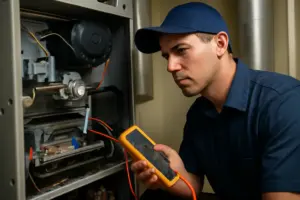
$6,800. That’s the price tag a contractor slapped on an emergency furnace replacement for a homeowner last February, insisting the same day that her heat exchanger was “severely cracked” and leaking carbon monoxide. Her kids were home, she was scared, and he wanted a signature before he pulled out of the driveway. She called me for a second look instead. I ran a full combustion analysis, checked CO at every supply register in the house, and scoped the heat exchanger with a camera. The registers came back at zero ppm, flat. That dramatic crack captured in his photo? A surface stress line — completely ordinary on an exchanger pushing 12 years, nothing structural, no combustion gas escaping anywhere. That furnace kept running for two more winters without a single hiccup. I’m not telling you this to paint contractors as villains — most of the ones I know are straight shooters — but because this one call sums up everything messy about this subject. A cracked heat exchanger ranks among the most genuinely dangerous failures your HVAC system can suffer. It’s also the single most abused excuse for an unnecessary upsell in this trade. Neither fact cancels out the other. What I want to do here is walk you through the carbon monoxide furnace cracked heat exchanger signs actually worth taking seriously, show you how a real failure differs from a sales tactic dressed up as an emergency, and give you steps you can take right now to protect your household.
How a Heat Exchanger Works — and Why a Crack Turns Deadly
Symptoms and fixes won’t mean much until you understand the actual job a heat exchanger performs inside your furnace. Grasp that piece first, and both the danger involved and the logic behind the diagnostic steps fall into place on their own.
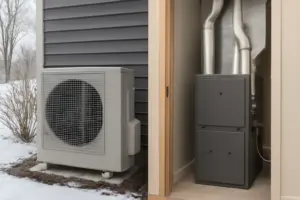
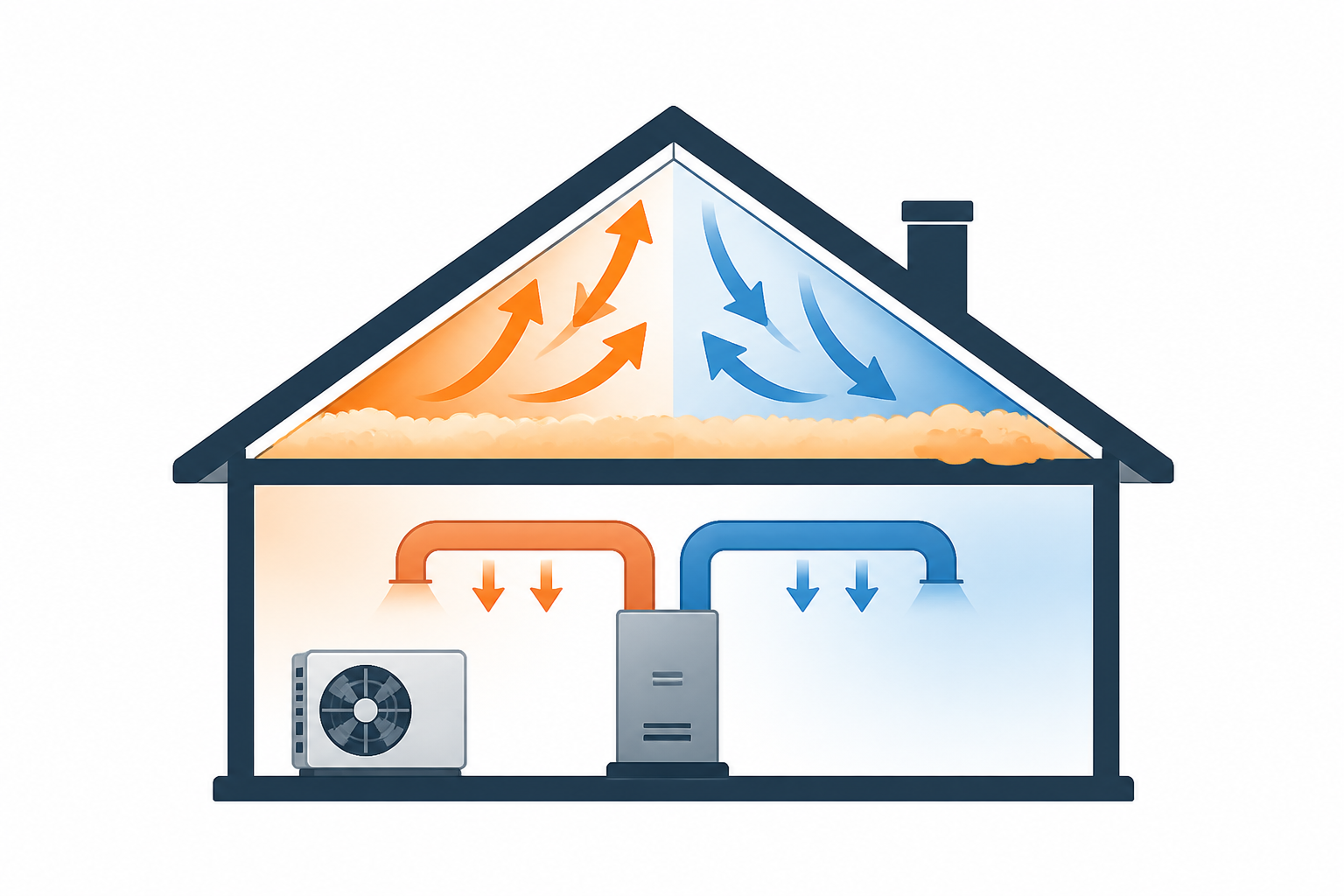
Picture your furnace running two separate airstreams side by side, streams engineered never to touch each other. On the combustion side, burning gas at the burner assembly produces hot exhaust gases — carbon monoxide, nitrogen dioxide, water vapor — that travel through a sealed metal chamber, the heat exchanger, before venting out through the flue pipe. On the distribution side, your blower motor pulls return air from inside your living space, pushes it across the outer surface of that same hot metal (heat moves via conduction), then sends the warmed air through your ductwork and out into every supply register in the house.
Think of the heat exchanger as the barrier standing between those two worlds. Once it develops a crack — and cracks do form, especially in systems past the 15-year mark — combustion byproducts can slip through that opening and blend straight into the air your family is breathing. Depending on system size, the blower moves anywhere from 400 to 1,200 CFM, and that airflow creates a pressure difference across the exchanger. On a compromised unit, that same pressure difference is precisely what pulls combustion gases through a crack and into your duct system.
Carbon monoxide is the real danger in all of this. You can’t see it, smell it, or taste it — no human sense will warn you it’s there. Once inhaled, it latches onto hemoglobin roughly 200 times more readily than oxygen does, which cripples your blood’s ability to carry oxygen to your brain and organs even at low levels of exposure. CDC data shows non-fire carbon monoxide incidents claim more than 400 American lives every year, and heating equipment is behind the majority of those deaths. Thousands more end up hospitalized with symptoms doctors frequently mistake for the flu or a migraine.
Here’s something most homeowners never hear: the heaviest stress on a heat exchanger doesn’t happen while the burners are firing — it happens during the heat-up and cool-down cycles, as the metal repeatedly expands and contracts between room temperature and surface temperatures of 900 to 1,600°F, over and over, thousands of times across the unit’s lifespan. That repeated flexing is exactly what produces fatigue cracks, usually in the clamshell-style primary heat exchanger found in older single-stage furnaces, or along weld seams in the secondary heat exchangers of high-efficiency condensing systems. Any system older than 20 years needs a yearly inspection, no exceptions. And any unit past 25 years showing carbon monoxide furnace cracked heat exchanger signs deserves a careful, thorough evaluation — not because a contractor insists on it, but because the math on metal fatigue simply isn’t working in your favor anymore.
Why Your CO Detector Alone Won’t Tell the Whole Story
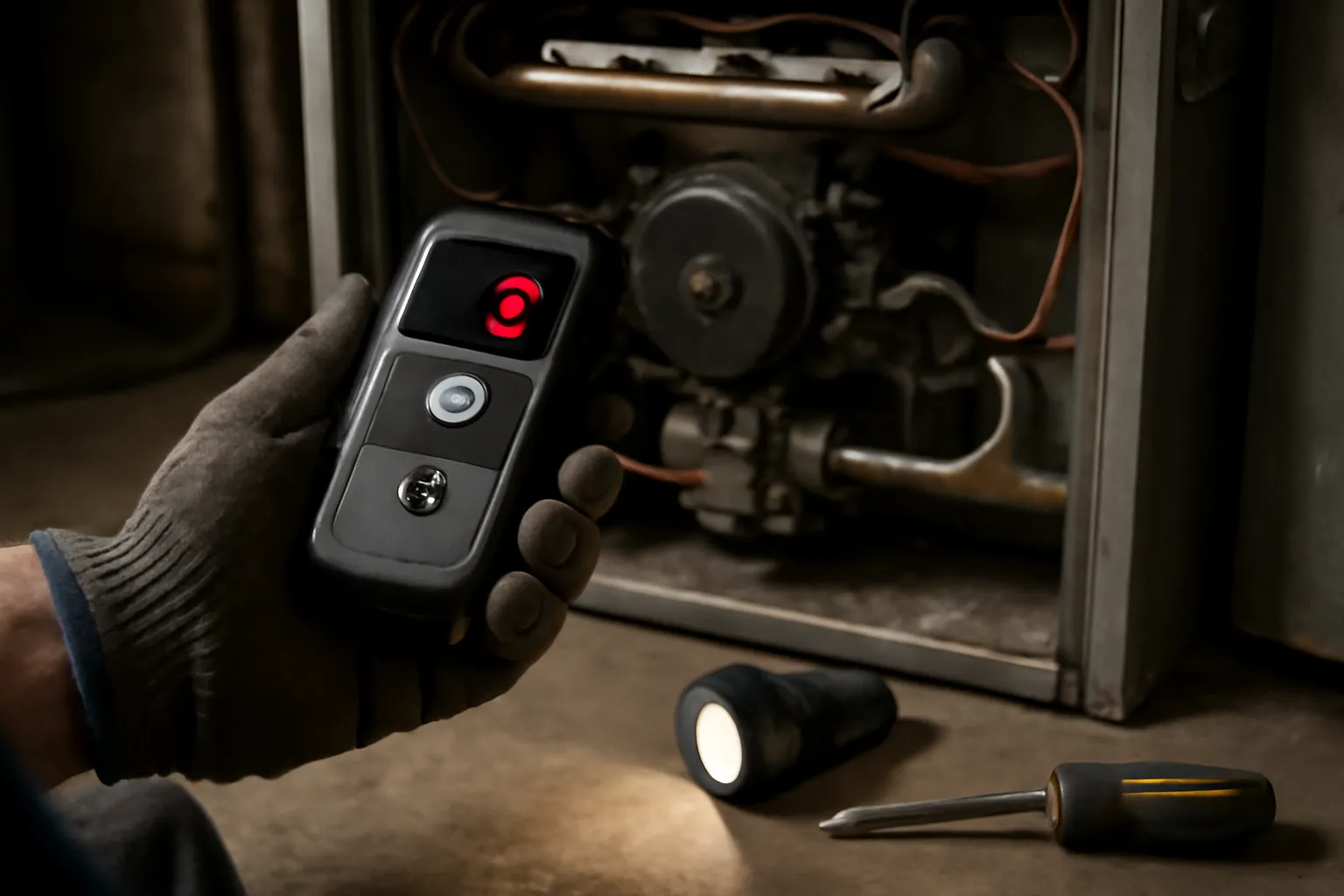
Here’s the uncomfortable reality: one CO detector mounted in your hallway can’t tell you where the carbon monoxide is actually coming from, or whether it’s leaking into your living space at all. To properly diagnose a suspected heat exchanger crack, I place multiple detectors right at the supply registers so I can map out exactly what’s happening and confirm whether a contractor’s claim actually holds up.
Where these units deliver
- A 10-year battery keeps it monitoring around the clock with none of the dead-battery excuses older models give you — I’ve personally found detectors sitting dead in homes where nobody realized a replacement was overdue.
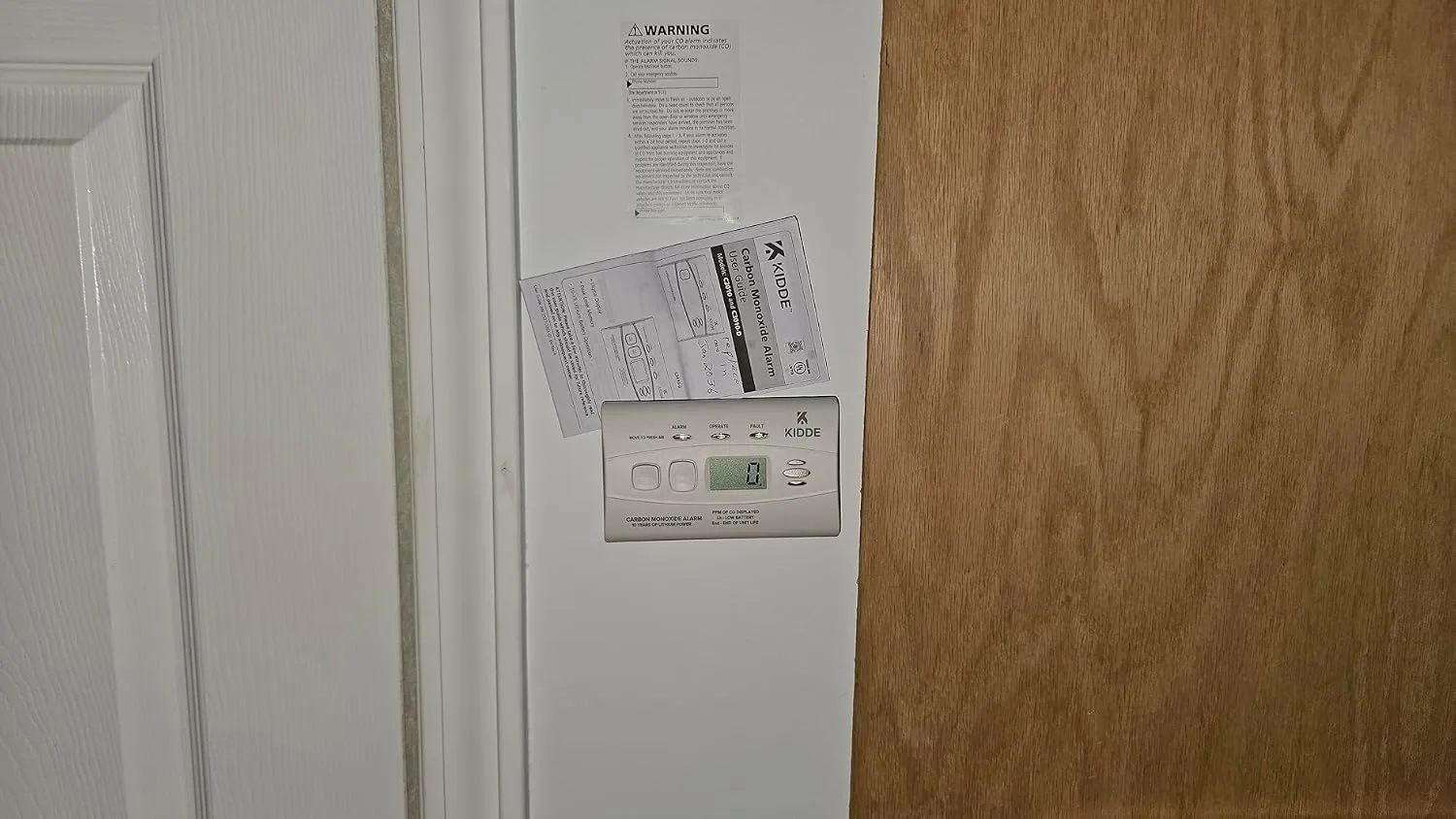
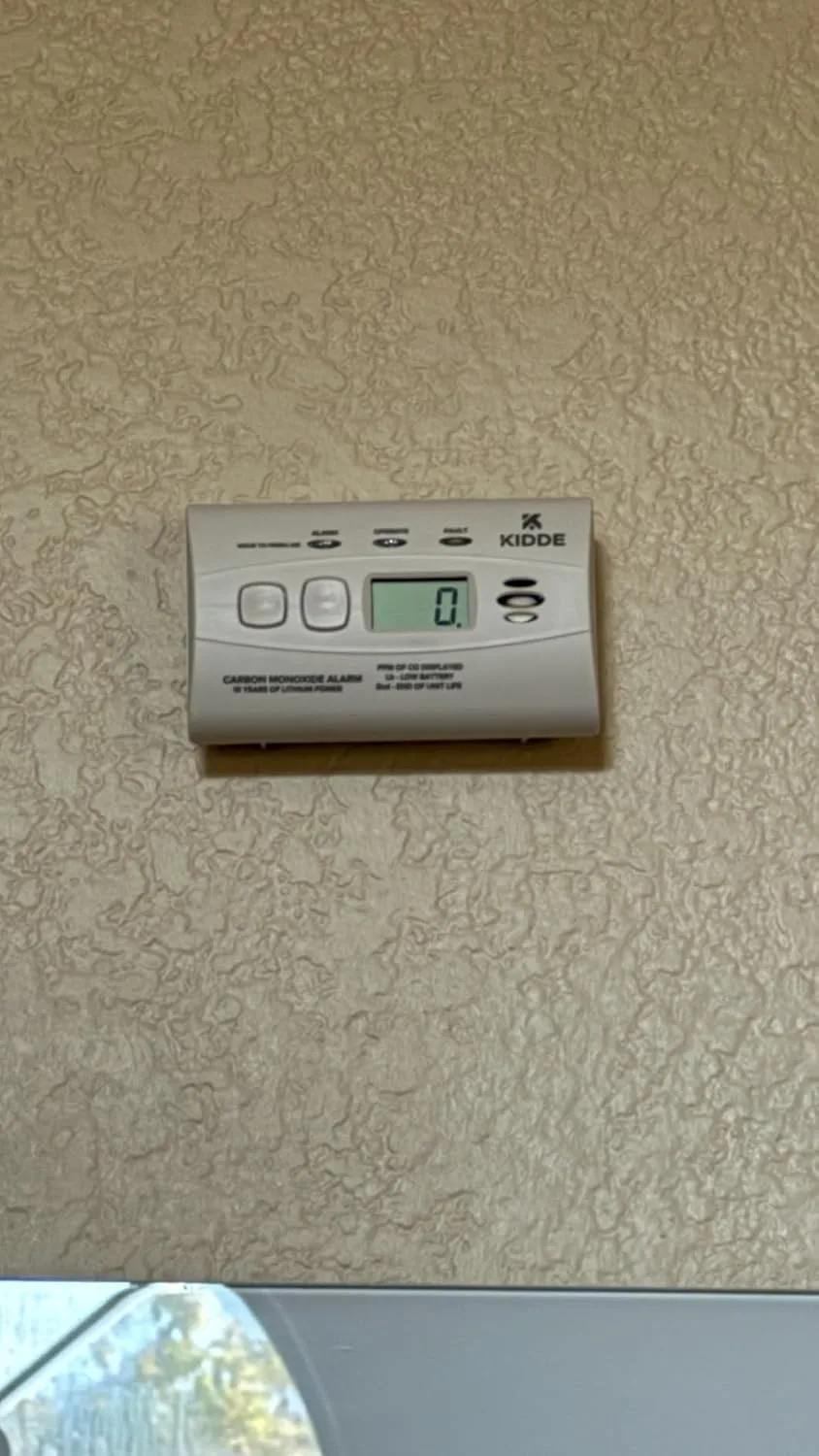
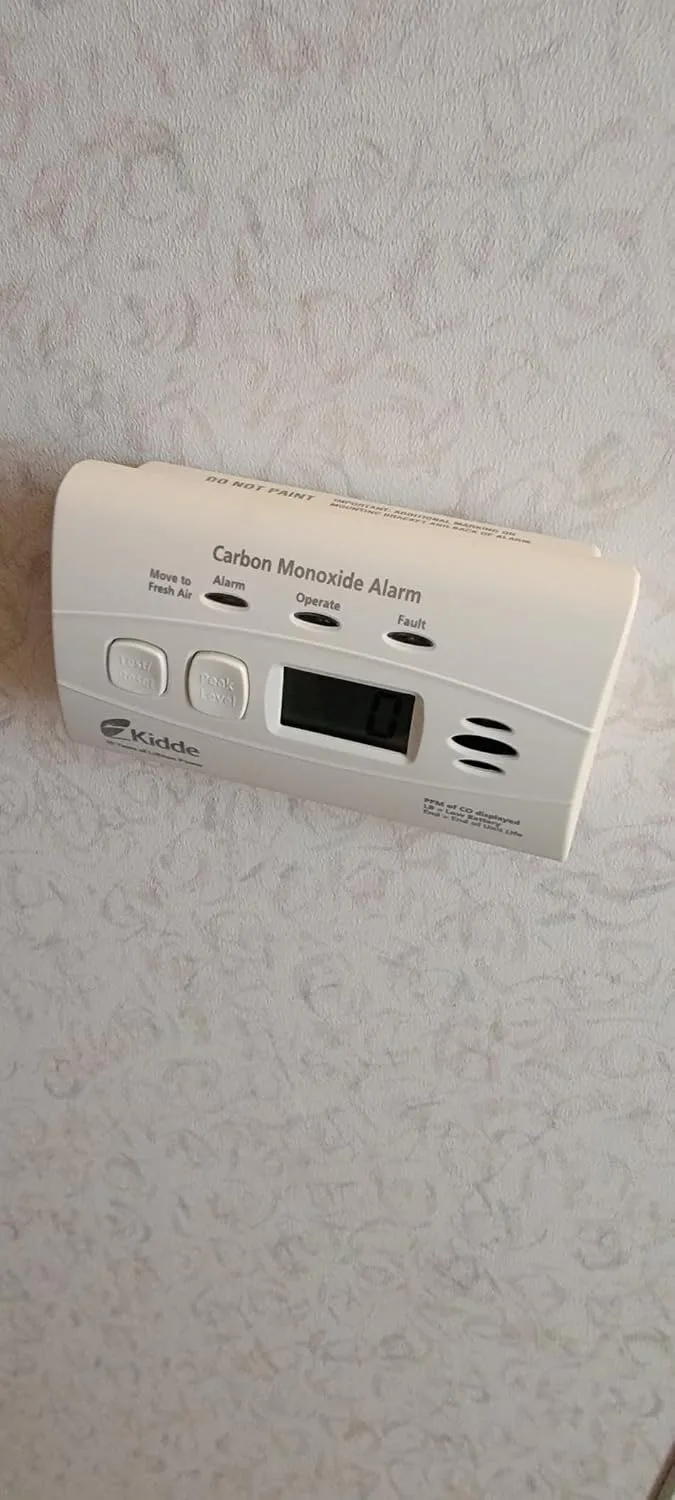
- A digital readout gives you actual carbon monoxide parts-per-million figures instead of just a red light, handing you and your HVAC tech real numbers to weigh against furnace output readings from a combustion analysis.
- A backlit screen stays legible after dark or in a dim basement, which matters when you’re checking registers in a furnace room or crawlspace right after a contractor’s claim has set off alarm bells.
Where they fall short
- A single unit isn’t enough — you’ll want at least three to four placed strategically to build an accurate picture, and that cost climbs fast once you’re running a real investigation the way I do.
- A detector will sound off when carbon monoxide is present, but it has no way of telling you whether a cracked heat exchanger, a venting problem, or something else entirely is the source — confirming the real issue still takes a professional combustion analysis.
I’ll admit, the first time I bought multiple detectors to verify a contractor’s claim, I was nervous I’d miss something or misread the data — but the moment those digital displays showed zero CO at every register, I knew exactly what to tell that homeowner. Pick up a Kidde Carbon Monoxide Detector, 10-Year Battery, Digital Backlit Display (COBD10) and trust the numbers, not the sales pitch.
About This Article

Written by Dana Sorensen. Homeowner turned building-science obsessive. I help other homeowners understand attic insulation, ventilation, and air quality so they can stay comfortable year-round without overspending on energy bills. More about this site.
Scope and limits. Dana is a homeowner who studies building science, not an HVAC contractor or licensed tradesperson. Anything involving combustion appliances, gas lines, or electrical work belongs with a licensed contractor.
Verify this against a primary source
Specifics change, and your situation may differ from the one described here. These are the authorities worth checking directly:
- ENERGY STAR — recommended insulation R-values by climate zone
- U.S. Department of Energy — air sealing and insulation guidance
- EPA Indoor Air Quality — ventilation and indoor air quality standards