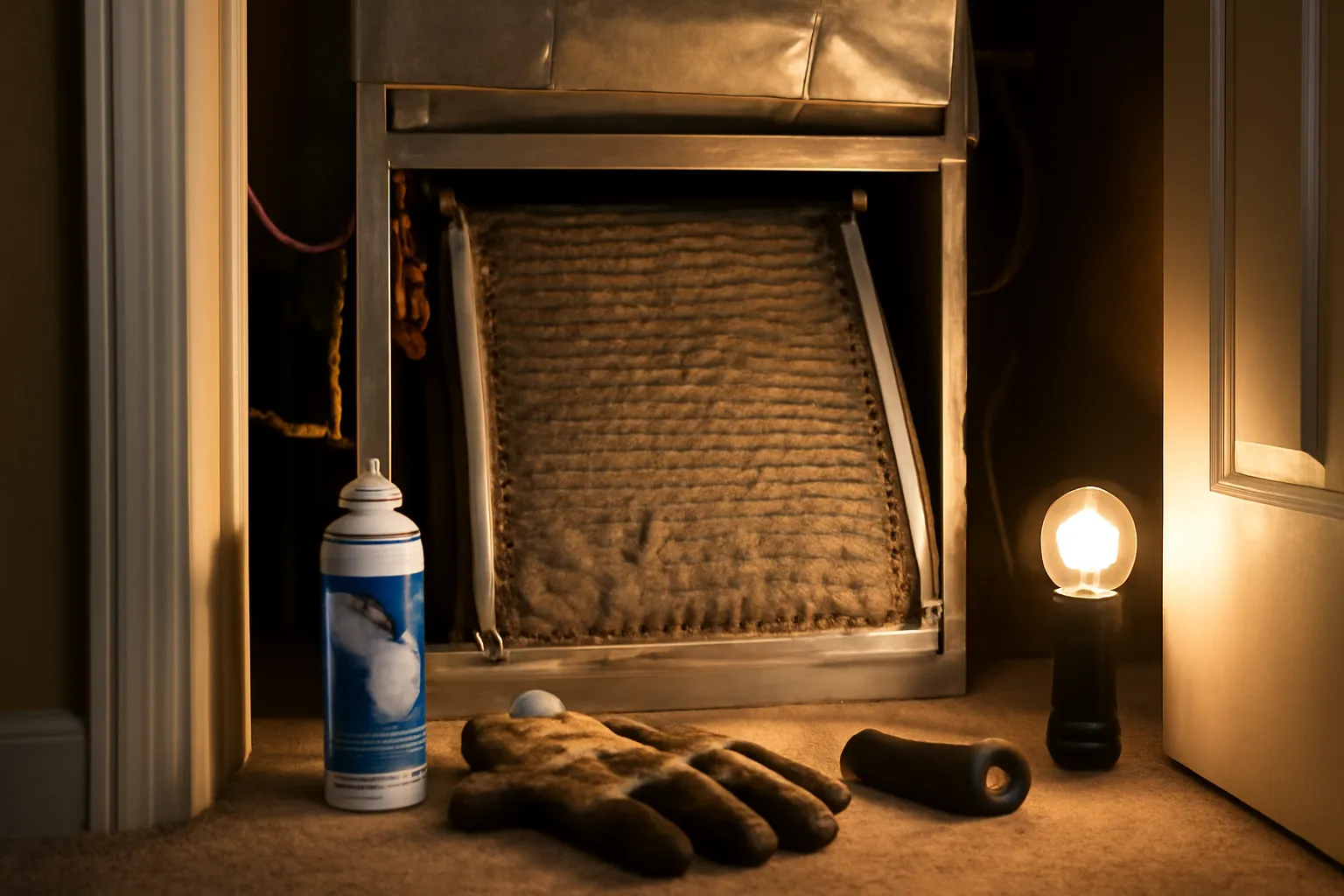
55°F on the supply air probe — that reading is what settled a very expensive standoff last August, inside a house that had already burned through two other contractor visits that same heat wave. The homeowner had one company tell her the system needed a fresh refrigerant charge. Another walked through, shrugged, and told her the equipment was simply worn out, handing her a quote for $7,800 worth of new equipment. She was hot, exhausted, and one signature away from writing that check. When I popped the panel off her air handler, the evaporator coil underneath was buried — dust, pet hair, and a layer of biological grime so thick the fins were nearly invisible. It looked less like an HVAC component and more like a furnace filter nobody had swapped out in half a decade. I cleaned it right then. Forty-five minutes later, that supply air probe was reading 55°F — precisely the number a healthy system should be hitting. The unit she’d been told was dying still had a solid ten years left in it. After enough years in this trade, I’ve learned that a filthy coil is one of the most consistently misread problems in residential cooling. Owners assume it’s the equipment’s age. Techs default to blaming refrigerant levels. All the while, the real offender — a coil nobody has cleaned in years — is quietly choking the system’s ability to move heat. If your cooling cycles have gotten longer, your utility bills keep climbing for no clear reason, or the air just doesn’t feel as cold as it should, stick with me here. This is the breakdown I wish every homeowner had in hand before a technician ever showed up.
The Real Damage: What a Grimy Evaporator Coil Does to Your Cooling System
The evaporator coil is where your air conditioner’s cooling actually happens. Tucked into your air handler or furnace cabinet — often up in the attic, down in the basement, or inside a utility closet — it’s the point where refrigerant pulls heat out of your indoor air. Your blower drags warm household air across the coil, the refrigerant inside flashes to vapor and grabs that heat, and what comes out the other side gets pushed through your ducts as cool air. The concept couldn’t be simpler. The execution, though, falls apart the moment anything interferes with it.
Here’s the physics you can’t ignore: how well heat transfers depends entirely on direct contact between moving air and the coil’s fin surface. A typical residential coil crams somewhere between 100 and 300 square feet of fin area into a cabinet that’s barely a foot and a half wide. That surface area is everything. The moment dust, pollen, pet dander, mold spores, and skin flakes start settling across those fins — and it doesn’t take much more than a thin film — you’ve effectively wrapped the coil in a blanket. Heat absorption tanks. The system ends up grinding away longer and harder just to remove the same number of BTUs from your house.
The data backs this up in a way that should worry you. Research from both ASHRAE and the EPA’s ENERGY STAR program shows a grimy coil can strip 20 to 40 percent off a system’s cooling capacity. Translate that into real numbers: a 3-ton unit rated for 36,000 BTUs can end up performing like a 2-ton system putting out 24,000 BTUs or worse — all while pulling the exact same amount of electricity. Your power meter has no idea the coil is filthy. It just keeps spinning at full rate.
The warning signs of a fouled evaporator coil tend to repeat themselves once you know what you’re looking for:
- The system runs nonstop, yet the house never hits setpoint. It’s working hard — it’s just not transferring enough heat to matter.
- Utility bills climbing steadily year after year with nothing to explain it — same house, same thermostat schedule, bigger bill each summer.
- Frost forming on refrigerant lines or directly on the coil. Homeowners find this alarming, but it’s simply what happens when restricted airflow lets the refrigerant get too cold and condensation freezes onto the coil. A frozen coil pushes zero air. None.
- A stale, mildewy odor coming from the vents, most noticeable right when the system fires up. That smell is biological growth on the coil doing exactly what biological growth does.
- The drain pan overflowing underneath the coil. A dirty coil alters how condensate sheds off the fins, and paired with a partially clogged drain line, that combination can produce water damage in a hurry.
There’s a bigger issue lurking behind all of this that most homeowners never connect: compressor failure. When the coil can’t pull heat properly, refrigerant heading back to the compressor doesn’t fully turn to vapor. Liquid slugging its way into a compressor is one of the top causes of compressor burnout — and swapping a compressor runs $1,200 to $2,500. A $15 can of coil foam suddenly looks like a bargain by comparison.
The Coil Cleaner That Kept Me From Selling a Homeowner a $7,800 System She Didn’t Need
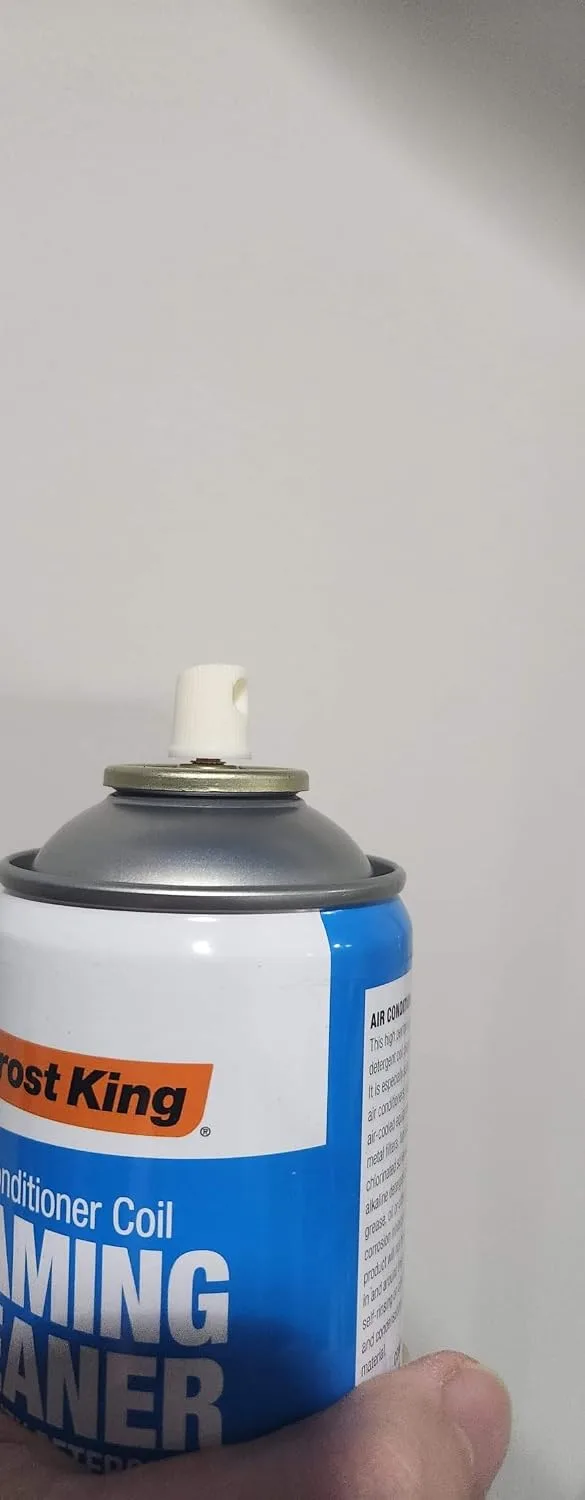
Once you’ve confirmed a clogged evaporator coil is the actual culprit, what you need is a cleaner strong enough to do the job without forcing you to tear the air handler apart. A quality foam coil cleaner cuts through years of packed dust, pet hair, and biological buildup in a matter of minutes — and it’s what separates a $30 repair from an unnecessary, panic-fueled equipment swap.
Where it delivers
- The foam pushes into tight fin gaps that compressed air and brushes simply can’t get to, breaking down stuck-on pet hair and mold without chewing up delicate aluminum fins
- Application is quick even in cramped spaces — spray it on, give it 10 to 15 minutes, hose it down with a pump sprayer, and you’re finished without ever removing the coil assembly
- The results speak for themselves, giving both you and the homeowner solid proof the coil was the actual problem — not a dying compressor or a low refrigerant charge
Where it falls short
- It can’t undo serious corrosion or physical fin damage — if the coil’s already leaking refrigerant, cleaner only masks the symptom, it doesn’t fix anything
- You’ll need water access and a pump sprayer on hand, which makes it a poor fit for calls where drainage is tricky or just not available
I’ll admit the first time I used this, I was skeptical that foam alone could clear what looked like three seasons of compacted debris—I almost defaulted to recommending coil replacement out of habit. But after 15 minutes of dwell time and a thorough rinse, that coil came back to life, and the homeowner’s system ran 8 degrees cooler. Pick up a Frost King ACF19 Foam Coil Cleaner before your next service call.
About This Article

Written by Dana Sorensen. Homeowner turned building-science obsessive. I help other homeowners understand attic insulation, ventilation, and air quality so they can stay comfortable year-round without overspending on energy bills. More about this site.
Scope and limits. Dana is a homeowner who studies building science, not an HVAC contractor or licensed tradesperson. Anything involving combustion appliances, gas lines, or electrical work belongs with a licensed contractor.
Verify this against a primary source
Specifics change, and your situation may differ from the one described here. These are the authorities worth checking directly:
- ENERGY STAR — recommended insulation R-values by climate zone
- U.S. Department of Energy — air sealing and insulation guidance
- EPA Indoor Air Quality — ventilation and indoor air quality standards