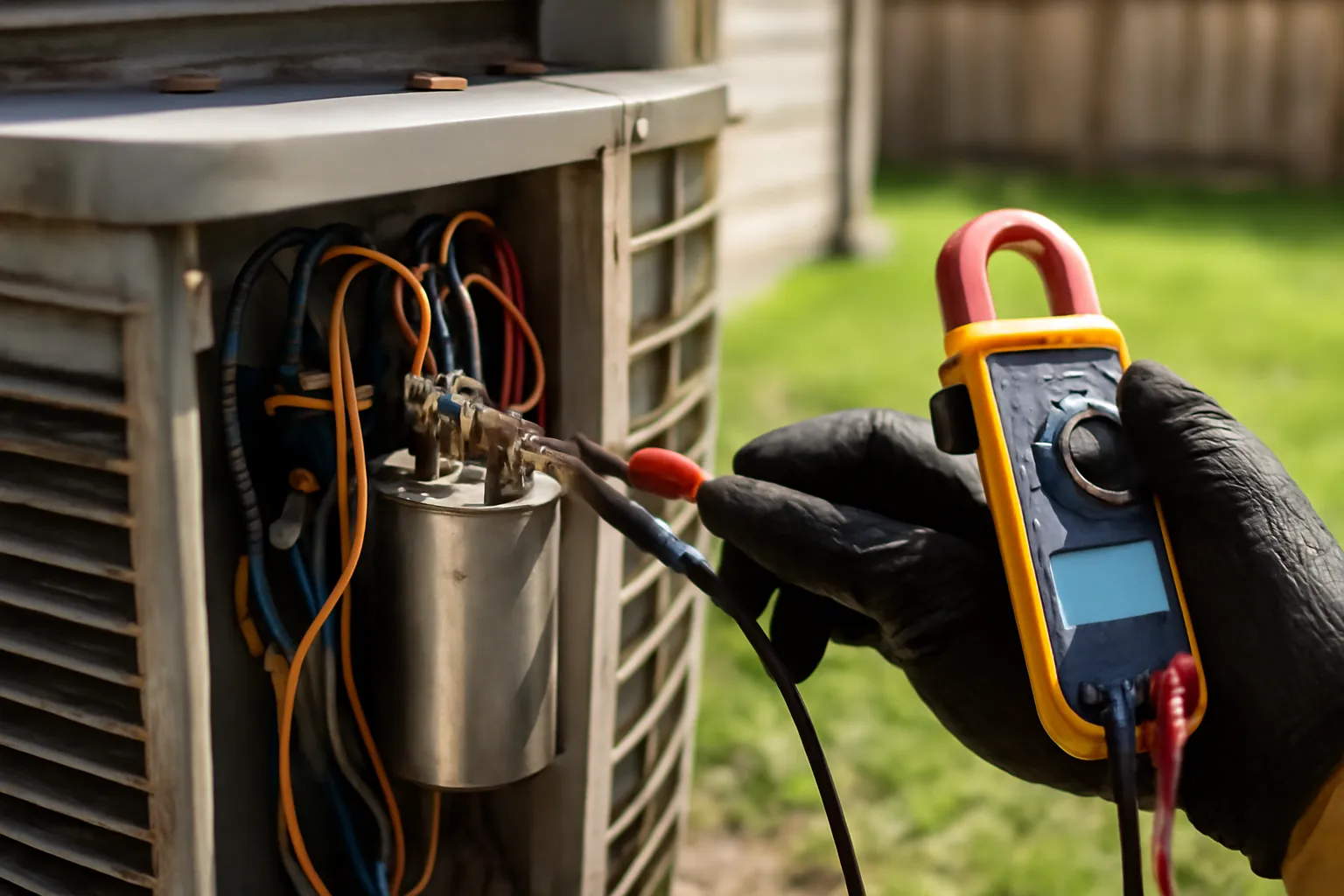
A hot compressor humming away doesn’t mean it’s dying — nine times out of ten, it’s a fifteen-dollar part standing between “system down” and “cooling again.” I proved this to myself again on a scorching Tuesday in late July, the kind of afternoon where the driveway feels soft underfoot and the phone won’t stop buzzing before the sun’s even fully up. A homeowner met me at her condenser, arms crossed, exhausted from a sleepless night. “It just hums,” she said. “Hums and hums, and that’s it.” Before I’d even unzipped my tool bag, I had a strong hunch what I’d find — I’d chased this exact complaint down more times than I could count that season. Sure enough: contactor clicking, power reaching the compressor, and the condenser fan blade sitting dead still. I rested the back of my hand on the dual run capacitor — warm, but nothing alarming — then pulled it and saw the top puffed out like a soda can baked in a closed car all afternoon. Textbook capacitor failure. Fix time: roughly twenty minutes. Parts cost: about $18. Had she waited for next-day service from another outfit, she’d likely have paid $200–$300 in labor and marked-up parts for the same fix. Learning to spot AC capacitor bad symptoms and when to replace yours might be the single most useful bit of HVAC knowledge you can carry into summer — so let’s get into how to diagnose it, test it safely, and swap it out yourself if you’re handy with basic electrical work.
What a Capacitor Actually Does — and Why Heat Kills It
Here’s something people rarely realize: your AC’s motors can’t kick themselves into motion on their own. Both the compressor and the condenser fan need a hard jolt of electricity to break from a standstill, then a steadier supply afterward to keep spinning smoothly. That job belongs to the capacitor. Picture something like a tiny rechargeable battery cycling dozens of times per minute — soaking up electrical charge, then releasing it the instant a motor calls for it.
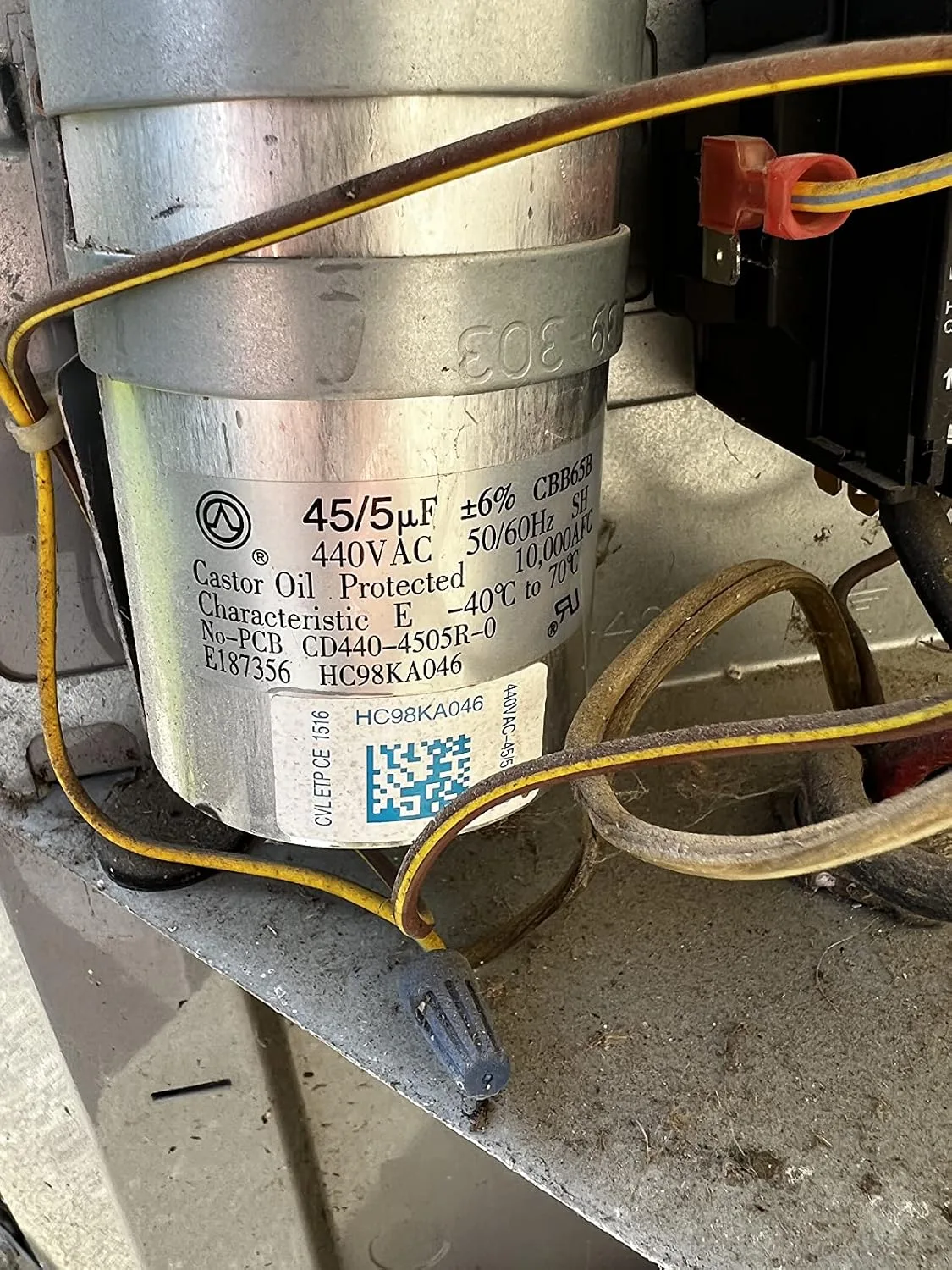
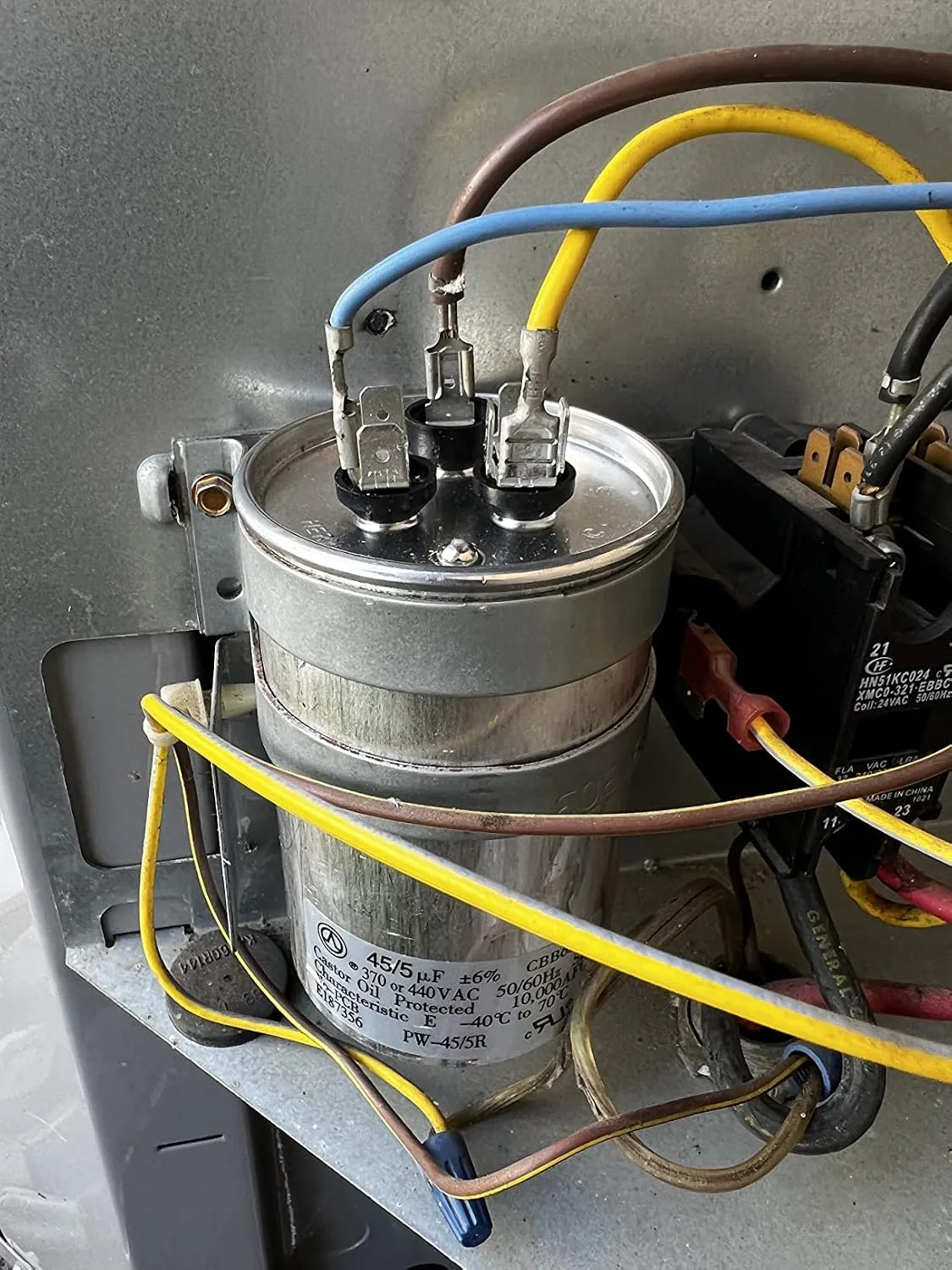
Whether you’re running a basic central AC or a heat pump, chances are your system relies on a dual run capacitor — one cylindrical unit doing double duty for two motors at once. Check the label and you’ll spot two numbers, maybe something like 45/5 MFD (sometimes written µF, for microfarads). The bigger number, 45 MFD, powers the compressor; the smaller one, 5 MFD, handles the condenser fan. Since both motors are engaged the whole time your system cools, that single component never really gets a break.
Let’s talk about HVAC capacitor failure signs and why they show up so often in July and August: capacitors are built to handle a certain voltage and internal heat ceiling — usually somewhere around 150–165°F. Trouble is, on a 95°F afternoon, the metal electrical box bolted to your outdoor unit can bake to 130–140°F internally. String together a few weeks of that kind of stress, and the fluid inside the capacitor starts to degrade. Pressure builds inside the casing, the metal warps outward — there’s your telltale bulge — and the capacitance rating slips. Once that number falls more than 10% under its rated MFD, the motors simply stop getting the power they need.
Five Telltale Signs Your Capacitor Is on Its Way Out
- The unit hums but the compressor never catches — By far the most frequent complaint. The contactor closes, juice reaches the compressor, but with no starting punch from the capacitor, all you get is a groan. Let that drag on more than a handful of seconds and the thermal overload cuts everything off. This is basically the definition of an AC unit humming not starting capacitor problem.
- The fan barely turns, or doesn’t turn at all — You might notice the blade crawling, or feel tempted to spin it yourself to get things moving (don’t — that’s a symptom to note, not something to fix by hand).
- It fires up, then dies almost instantly — The system attempts to run, struggles hard, and a high-pressure or thermal safety kills it within half a minute or so.
- A repeating clicking noise from the contactor — It keeps trying to engage the compressor, over and over, without success.
- An obviously domed or swollen capacitor housing — What should be flat, or slightly caved in, now bulges outward. If you see this, you have your answer — swap it right away.
Worth untangling here: people frequently mix up run capacitor vs start capacitor differences. A start capacitor only stays active for a split second at startup, delivering a heavy surge before disconnecting. A run capacitor, on the other hand, remains wired into the circuit for as long as the motor operates, boosting efficiency and holding torque steady. Nearly every modern home system runs on run capacitors, frequently paired in a dual unit. Certain older setups or higher-efficiency equipment add a separate start capacitor into the mix. When both exist, a dead start capacitor usually means the motor won’t start at all, whereas a failing run capacitor shows up as weak, inefficient operation — the kind that can eventually cook the motor if left alone.
The Fix That Cured Me of Blaming the Compressor Too Fast
When a compressor won’t turn over and just hums, most people jump straight to worst-case thinking — and end up paying for a replacement they never needed. In roughly 8 out of 10 of these calls, the actual problem is a blown capacitor, and fixing that takes about 15 minutes flat instead of the several thousand dollars a full compressor swap would run.
Where it delivers
- A 45+5 dual capacitor covers both the compressor and fan motor on the vast majority of standard residential AC units, so there’s no juggling two separate components
- Rated for 370/440V, it lines up with the voltage swings you’ll actually encounter in home equipment — no guesswork, no return trip
- The round metal body sits flush against the condenser frame, so cramped mounting spots aren’t a fight during install
Where it doesn’t
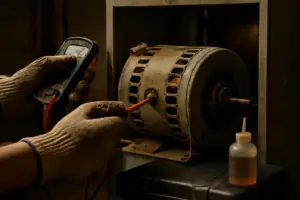
- Plan on using a discharge tool or working carefully by hand — these parts hold residual charge even with the power dead, and I’ve watched more than one technician get zapped for skipping this step
- If your equipment calls for an unusual MFD rating, skip this one — pull the specs off your existing capacitor before you order a replacement
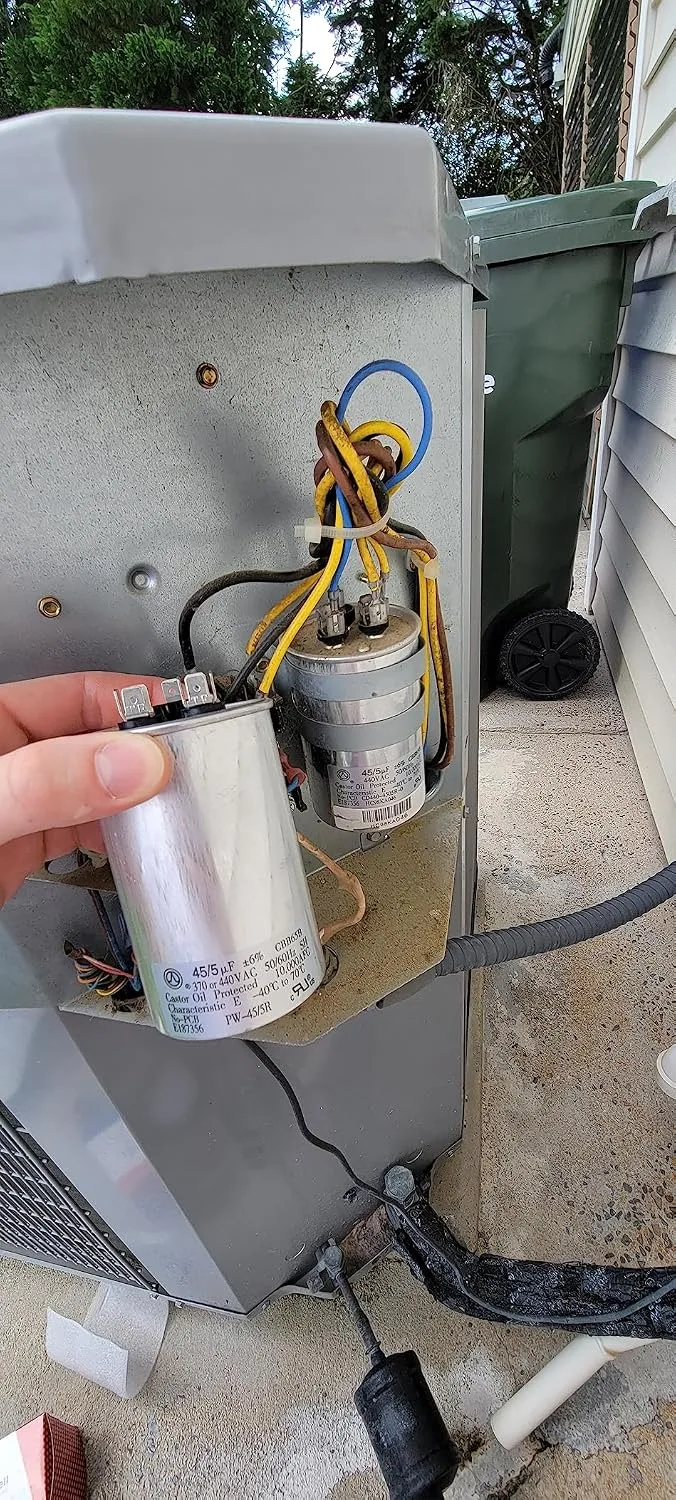
I once second-guessed myself on a humid August morning — the compressor was humming, the cap looked dark and bloated, but part of me worried I was missing something bigger in the electrical line. The moment I swapped in the PowerWell 45+5 MFD 370/440V Dual Run Round Capacitor and heard that compressor kick to life, I knew I’d made the right call.
About This Article

Written by Dana Sorensen. Homeowner turned building-science obsessive. I help other homeowners understand attic insulation, ventilation, and air quality so they can stay comfortable year-round without overspending on energy bills. More about this site.
Scope and limits. Dana is a homeowner who studies building science, not an HVAC contractor or licensed tradesperson. Anything involving combustion appliances, gas lines, or electrical work belongs with a licensed contractor.
Verify this against a primary source
Specifics change, and your situation may differ from the one described here. These are the authorities worth checking directly:
- ENERGY STAR — recommended insulation R-values by climate zone
- U.S. Department of Energy — air sealing and insulation guidance
- EPA Indoor Air Quality — ventilation and indoor air quality standards