Search online for humidity fixes and you’ll run into two contradictory answers within the first page of results: one site tells you to buy the biggest portable dehumidifier you can carry home, another insists you need a dedicated unit installed specifically for your crawl space. Only one of those answers fits most situations, and confusing the two wastes real money. I watched this exact mix-up play out with a homeowner in Raleigh not long ago. He’d bought a hefty 50-pint portable unit online after noticing a musty smell and mold spots spreading across his basement walls, convinced that more capacity meant better results. It didn’t. “Dana, I don’t understand what I’m doing wrong,” he told me.
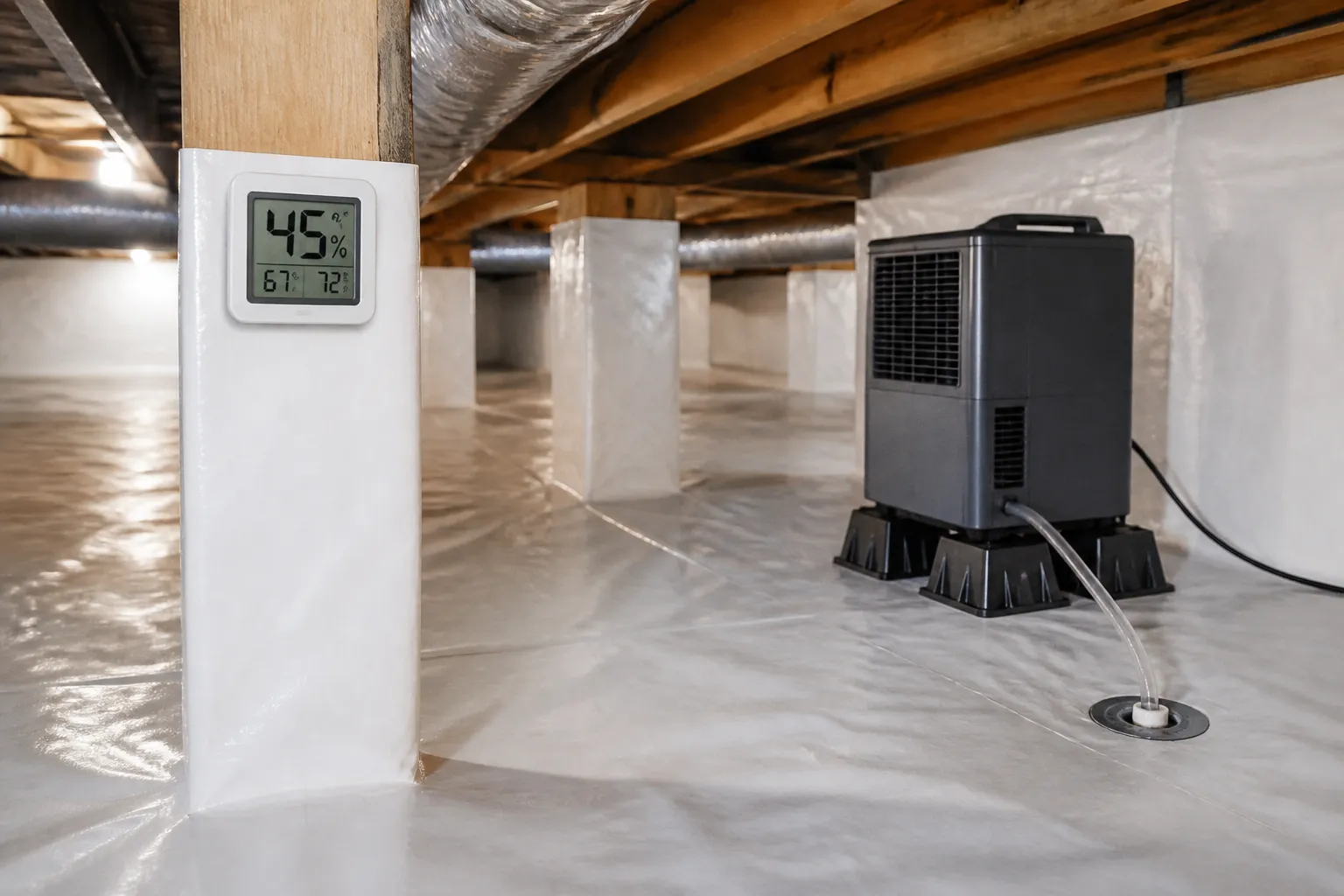
Once I got underneath the house, the real culprit revealed itself. His basement checked out fine — the trouble was sitting in his crawl space instead, a 1,200-square-foot vented area with zero vapor barrier, standing water pooled against the foundation wall, and joists that measured 22% moisture on my meter. That portable unit parked in the basement never stood a chance, because it wasn’t engineered to handle that kind of environment in the first place.
This mix-up happens more often than you’d think — homeowners grabbing the wrong category of dehumidifier, spending the money, and watching the same moisture problem stick around. After 18 years working in HVAC and home performance, I field this exact question on a regular basis: whole house vs crawl space dehumidifier — which one do you actually need? Here’s my breakdown of which unit fits which situation, how to size it correctly, and the mistakes that trip people up along the way.
Why a Single Dehumidifier Can’t Solve Every Moisture Problem
Not all moisture in a house comes from the same source, and it doesn’t behave the same way once it’s there. Missing that distinction is where most homeowners go wrong.
Inside your everyday living space — bedrooms, the kitchen, the family room — humidity builds from ordinary routines: showering, cooking, running the dryer, even just breathing. During summer, your central AC pulls some of that moisture out as a byproduct of cooling, something technicians call latent load removal. Yet in muggy regions like the Southeast, or in houses with vaulted ceilings and open layouts, the AC can run nonstop and still leave indoor humidity parked at 55-60% RH or higher. That’s the point where rooms start feeling sticky, windows sweat, and allergy symptoms flare up indoors.
Below the house — in the crawl space or basement, an unconditioned zone — the dynamics are entirely different. This area stays naturally cool and sits in direct contact with ground moisture. Vented crawl spaces routinely climb to 80-90% RH. That’s where dampness originates before it works its way upward through rim joists, cracks, and air leaks into the living space above. Mold growth, musty odors, and structural rot all take root down there first.
Here’s what matters most: a whole-house unit can’t correct a crawl space issue, and a crawl space unit can’t fix elevated humidity upstairs. Each is engineered for its own environment and its own operating conditions. Swapping one in for the other is like trying to patch a roof leak with a car tire — same rubber, completely wrong application.
Pinpointing where your moisture actually originates is step one, and that’s exactly what a home performance assessment is built to uncover. Since you’re already reading this, though, you likely have a hunch it’s one of these two scenarios — let’s nail down which.
Matching the Equipment to the Problem: Whole-House vs Crawl Space Units
Let’s get into what actually separates these two systems, since the product names alone don’t explain much.
Whole-House Dehumidifiers Explained
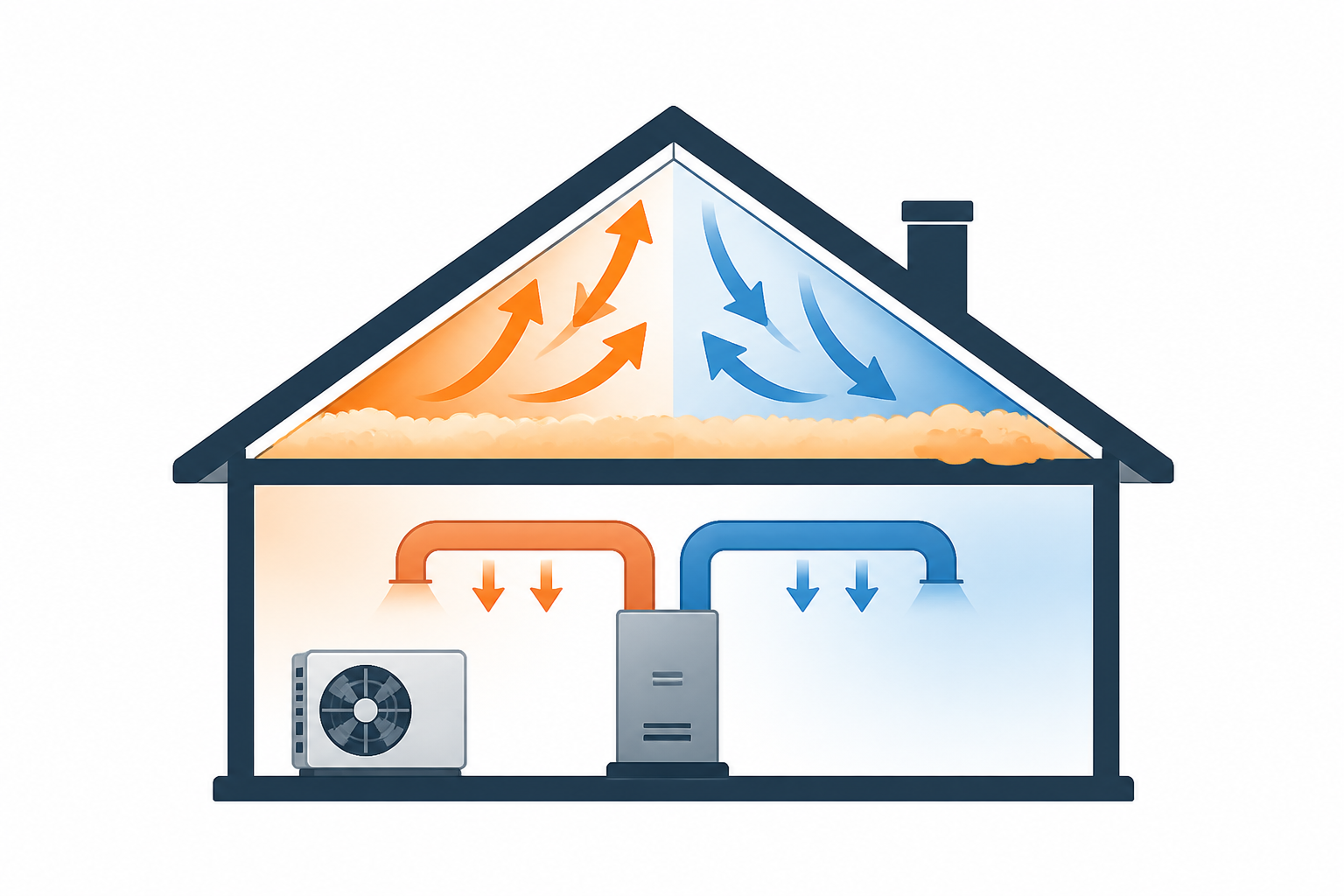
This type of unit ties directly into your HVAC system — usually mounted in the return duct or another central spot where it can pull air from across the whole house. A wall-mounted humidistat controls it, functioning much like a thermostat does for temperature. It kicks on automatically once humidity climbs past whatever setpoint you’ve chosen, typically 45-50% RH during summer months.
Depending on the model, output falls somewhere between 70 and 130 pints a day. Aprilaire, Santa Fe, and Honeywell dominate this market. Expect installation costs — ductwork changes and electrical work included — to land between $1,500 and $4,000. Manufacturers design these units for conditioned environments only: attic duct runs, finished basements, hallways — anywhere temperatures hold steady between 65°F and 85°F.
The catch: These units were never built for unconditioned crawl spaces or basements. Once temperatures fall below 60°F, condensation starts freezing right onto the evaporator coils. An auto-defrost feature might buy some time — though it adds complexity and drags down efficiency — but eventually the unit falters anyway. Push a compressor to operate outside its designed range long enough, and you’ll burn it out.
Ideal for: houses where the AC runs practically nonstop all summer yet humidity refuses to drop below 55% RH; homes with vaulted ceilings, open floor plans, or room additions that outpace what the air conditioner alone can handle; regions where dehumidification isn’t optional but a seasonal requirement; and homes showing window condensation or that lingering stuffy feeling indoors during summer.
Our Pick for Whole-House Coverage: Santa Fe Compact Dehumidifier
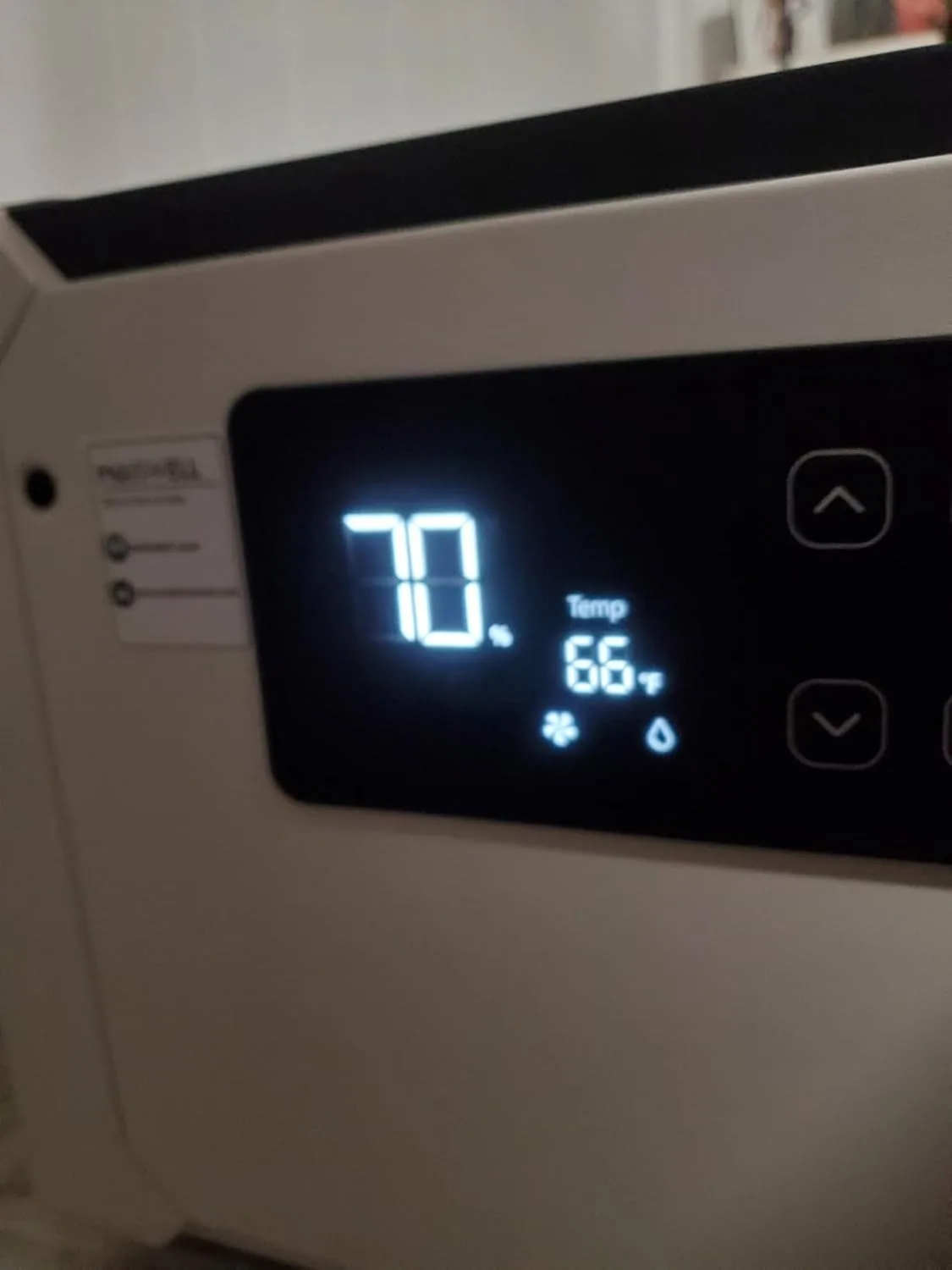
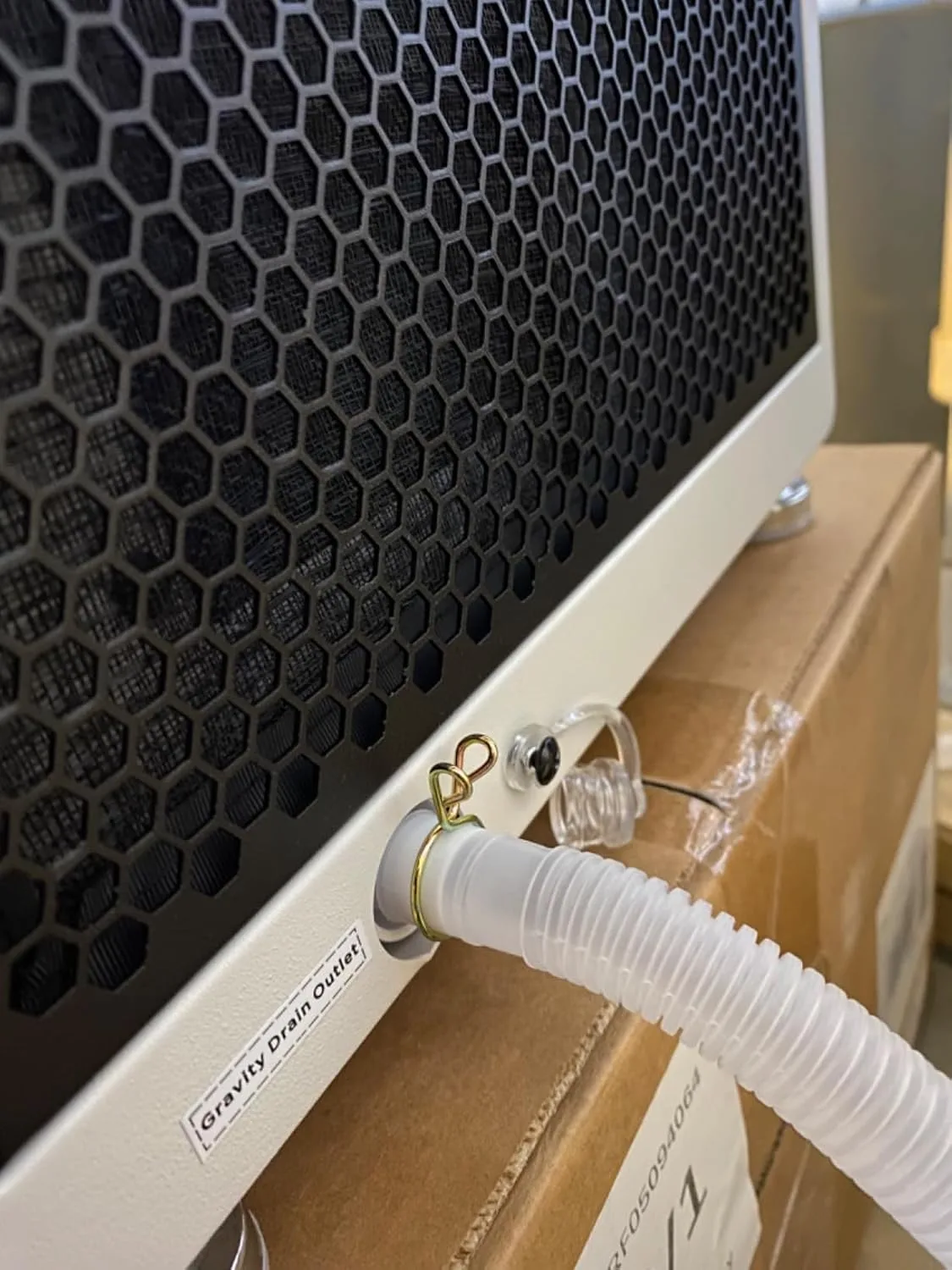
When crawl space moisture keeps working its way into the rest of the house, a whole-house unit such as the Santa Fe Compact ties into your HVAC system and controls humidity at its source, stopping it before it ever reaches the rooms you live in.
Where It Delivers
- Covers the whole structure, upper floors included, by tapping into ductwork you already have rather than treating one isolated space
- Handles moisture removal without demanding a separate drain line or upkeep down in a hard-to-access crawl space
- Runs continuously alongside your HVAC system, holding humidity steady between 30-50% in every room at once
Where It Falls Short
- Needs a qualified technician for installation, pushing upfront costs higher than a standalone crawl space unit
- Can be more system than you need if moisture trouble is confined strictly to the crawl space, burning energy on coverage you don’t require
About This Article

Written by Dana Sorensen. Homeowner turned building-science obsessive. I help other homeowners understand attic insulation, ventilation, and air quality so they can stay comfortable year-round without overspending on energy bills. More about this site.
Scope and limits. Dana is a homeowner who studies building science, not an HVAC contractor or licensed tradesperson. Anything involving combustion appliances, gas lines, or electrical work belongs with a licensed contractor.
Verify this against a primary source
Specifics change, and your situation may differ from the one described here. These are the authorities worth checking directly:
- ENERGY STAR — recommended insulation R-values by climate zone
- U.S. Department of Energy — air sealing and insulation guidance
- EPA Indoor Air Quality — ventilation and indoor air quality standards