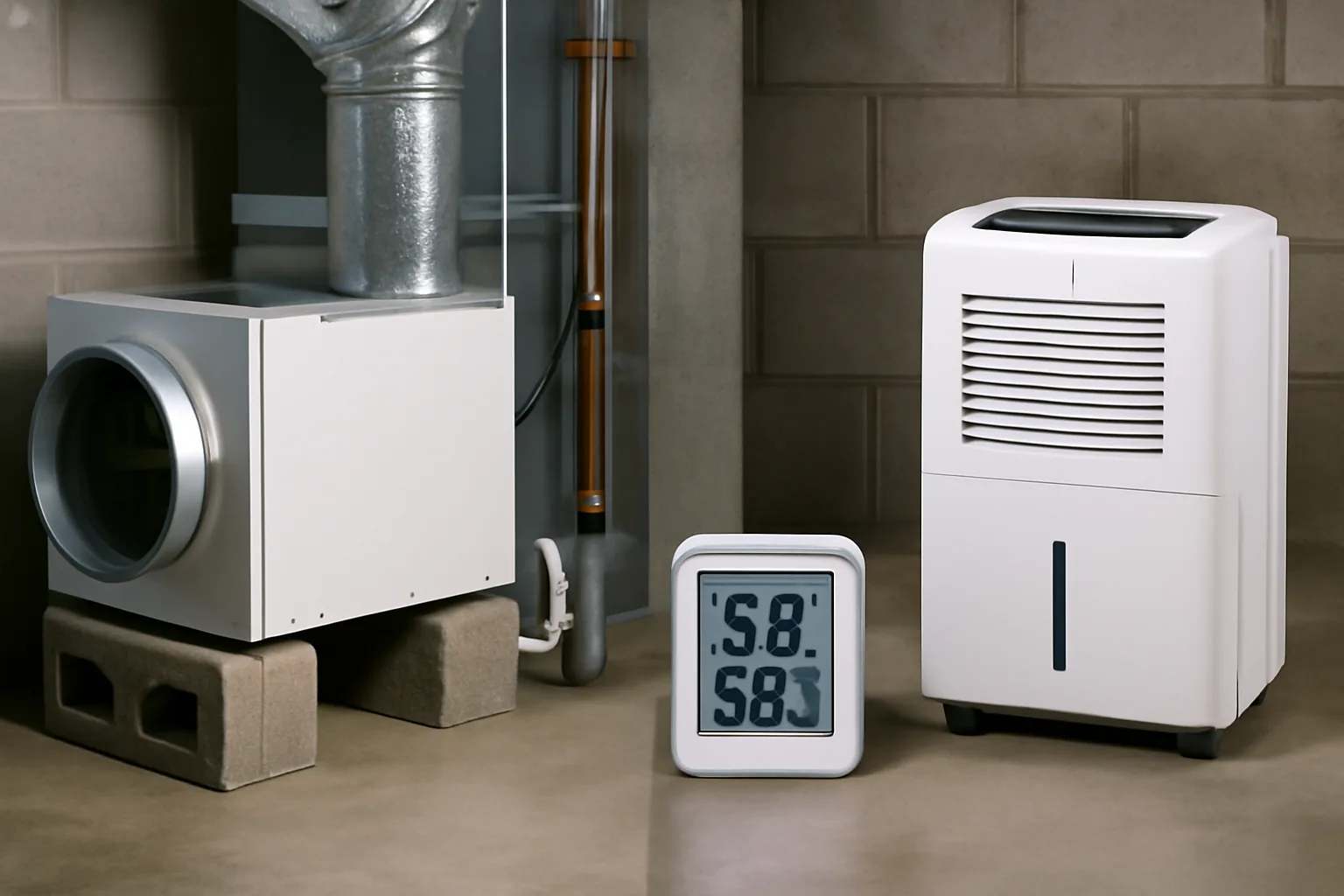
My own basement gave me the answer before any client ever did. Two summers ago I went down to grab a box of old invoices and stopped cold on the third step — the air down there had that heavy, wet-wool quality you can practically chew. I’d tucked a portable unit in the corner months earlier, confident it would handle a 1,400-square-foot footprint. The gauge told a different story: 74% relative humidity, unmoved, while the machine hummed away doing next to nothing. I’d sunk $180 into a box that was never built for a space that size. Standing there, dehumidifier humming uselessly beside me, I realized this exact miscalculation — whole house vs portable dehumidifier sizing — was quietly draining money from homeowners all over town every summer. Get the sizing wrong and you’re not just uncomfortable; you’re inviting mold, paying for wasted electricity, and watching a unit die at year two instead of lasting through year eight.
Here’s the reassuring part: none of this requires an engineering degree, just a handful of numbers you should know before money changes hands. I’ve spent more than ten years in HVAC and home performance work, which has put me in front of dehumidifier installs ranging from 800-square-foot condos up to sprawling 4,500-square-foot colonials. I’ve also opened up plenty of units that died young — overworked, undersized, run into the ground. The failure pattern repeats itself almost identically every time. So do the fixes, once you know what you’re actually looking at.
What follows is the same decision-making process I run through with clients directly. We’ll get into capacity ratings, the square-footage cutoffs that matter, the moisture-load variables that shift those cutoffs, and exactly which scenarios call for a portable versus a ducted system. By the time you’re done reading, you’ll have a clear answer — and the reasoning behind it.
Decoding Dehumidifier Pint Ratings — Why They’re Not as Simple as They Look
First stumbling block: the pint numbers stamped on these machines don’t mean what they used to. Before 2019, manufacturers tested units at 80°F and 60% relative humidity. Then AHAM (Association of Home Appliance Manufacturers) rewrote the testing standard to 65°F and 60% RH — conditions that mimic a cool, damp basement far more closely. The result was a sharp drop in advertised pint capacity across the board. A machine once marketed as “70-pint” might now carry a “50-pint” label under identical hardware. That means older reviews and current spec sheets simply aren’t speaking the same language anymore.
To complicate things further, some brands now print two separate numbers: the AHAM-standard figure alongside a “max” rating pulled from hotter, muggier test conditions — think 95°F and 90% RH. That second figure shows what the unit does in brutal summer swelter. A “32-pint” machine by today’s standard might actually pull 80 pints on a peak August day. Which number matters more depends entirely on your climate and where the unit will live in your house — so don’t buy based on just one of them.
What I see constantly is homeowners fixating on whichever number is bigger and printed larger on the box, assuming that’s the everyday output. It’s not — it’s a best-case ceiling. Size your purchase around the AHAM-standard figure as your realistic daily benchmark, then check the peak number just to make sure the unit still has headroom on the muggiest days of the year.
Matching Square Footage to Dehumidifier Type
Here are the rough cutoffs I actually rely on when I’m standing in someone’s house. These numbers assume typical conditions — a moderately humid region, no active leak or flooding, and ordinary construction. If your house falls outside that norm, I’ll walk through the adjustments further down.
Under 2,000 Square Feet: Portable Units Win
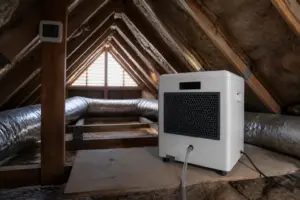
Below roughly 2,000 square feet — or when you’re targeting one trouble spot like a basement or crawl space — a standalone portable unit is usually the smarter buy. No professional installer needed, self-contained design, and pricing that typically lands between $150 and $350. Water either collects in a bucket you empty by hand or drains by gravity to a nearby floor drain. You can have one running within about 15 minutes of unboxing it. In the right context, that ease of setup is worth a lot.
But portables have a hard ceiling: they only dry the air directly around them, leaning on natural air movement to draw moisture in from other rooms. In an open-concept layout, a smartly placed unit can realistically cover somewhere between 1,200 and 1,800 square feet. Once you introduce closed doors, hallways, or multiple floors, one unit stops being enough — you’re either buying several or you’re looking at a whole-house system instead.
2,000+ Square Feet: Whole-House Systems Take Over
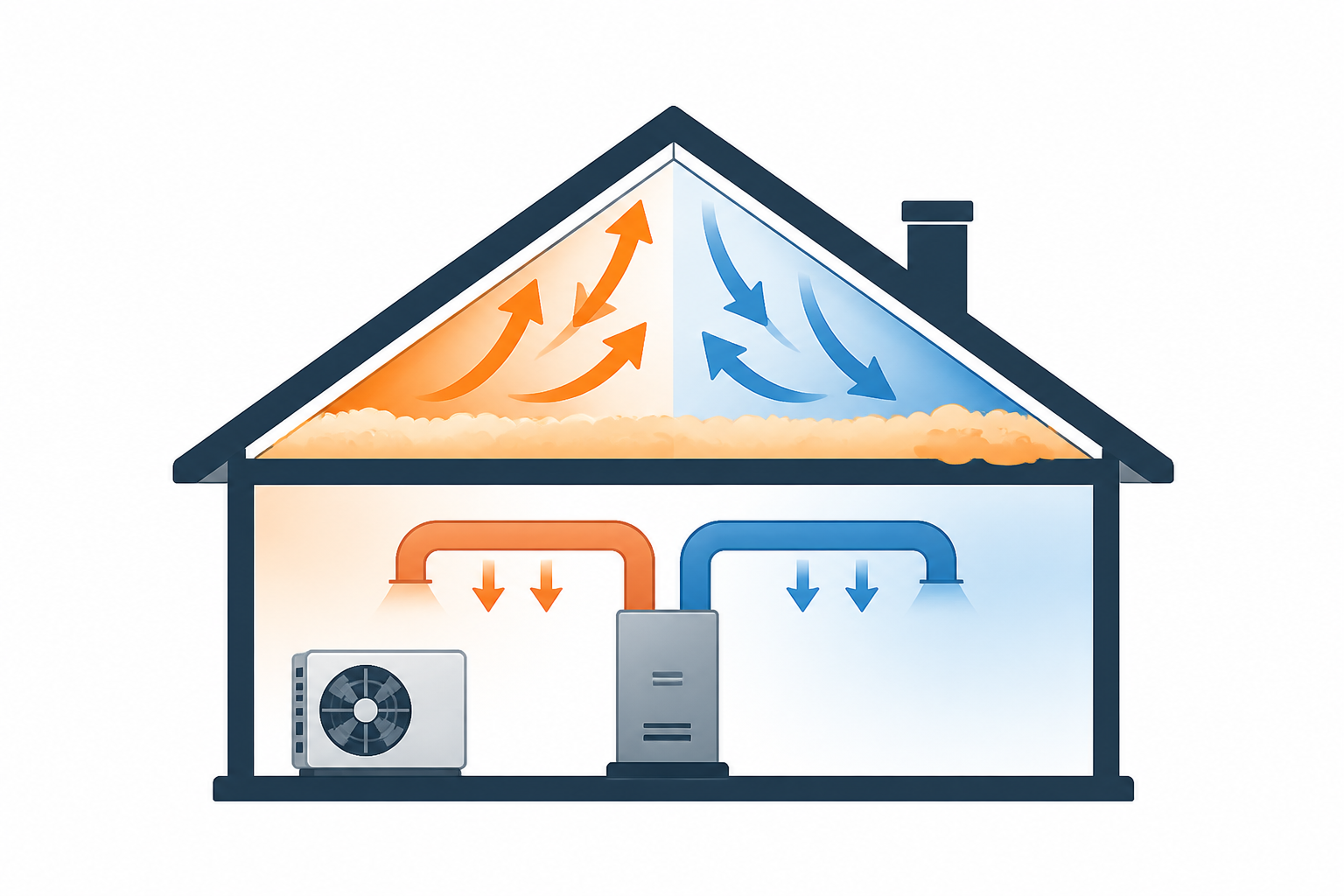
A whole-house dehumidifier ties directly into your existing ductwork, treating air as it moves through the HVAC system rather than sitting in one room waiting for humid air to drift by. These units generally pull 70 to 150 pints daily, run $1,200 to $2,800 fully installed, and need a licensed technician to connect them to both the duct system and a condensate drain. Plan on four to six hours for the install. In exchange, you get coverage across the entire house — every level, every room, riding on the ductwork you already have.
Once a home crosses 2,000 square feet and humidity is a problem in more than one zone, a ducted unit is almost always the right call. If your HVAC system is in good shape, the ducts are properly sealed, and the humidity trouble shows up throughout the house rather than one spot, whole-house dehumidification handles it all at once. The exception: if the ductwork leaks or the air handler is already undersized, bolting on a whole-house dehumidifier just means fighting the underlying problem with less success — it won’t actually cure it.
Four Moisture-Load Variables That Can Override the Square-Footage Math
Square footage gets you in the right ballpark, but it’s not the whole story. Before I ever recommend a unit, I walk through four other moisture-load variables. Skip even one of these and you can easily end up with a machine that runs nonstop and still never reaches the humidity target you’re after.
- Climate zone: Houses sitting in ASHRAE Climate Zones 1 and 2 — think the Gulf Coast, Florida, South Texas — carry noticeably heavier latent moisture loads than Zone 5 homes up in the Midwest. A 1,500-square-foot bungalow in Florida can easily need double the dehumidification capacity of a comparable house in Minnesota.
- Number of occupants: Every person in the house adds roughly 0.2 to 0.5 pints of moisture per hour just from breathing and sweating. Put five people in a 1,200-square-foot house and that internal moisture load starts to add up fast.
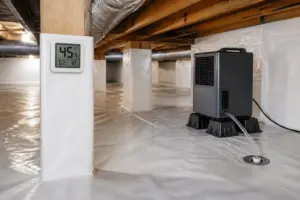
- Basement or slab conditions: Unfinished basements and crawl spaces are usually the single biggest driver of whole-home humidity — concrete and bare soil release moisture nonstop. This is where I catch most undersizing errors.
- How tight the building envelope is: A blower door test (part of ASHRAE 62.2 compliance testing) reveals just how much outside air is sneaking into the structure. A leaky home is constantly importing humid outdoor air, which piles extra work onto whatever dehumidifier you install.
I learned this lesson the expensive way early on. I recommended a portable for a 1,600-square-foot house without ever asking about the crawl space underneath it. It turned out to be unvented, with a vapor barrier that was falling apart. That crawl space was feeding moisture into the living area faster than any portable unit could ever keep pace with. We ended up encapsulating the crawl and installing a dedicated dehumidifier down there before the humidity inside the house finally settled down. That added $2,400 onto the job — cost that a more thorough walkthrough up front would have avoided entirely.
The Ducted System That Finally Fixed Her Basement’s Humidity for Good
Once you’re past 2,000 square feet, or you’re dealing with more than one problem zone — say, a basement that stays damp no matter what you throw at it — a single portable unit just can’t keep up. A whole-house dehumidifier wired into the HVAC system works around the clock and treats every room evenly, not just the corner where the machine happens to sit.
Where it delivers
- Handles up to 4,500 square feet — plenty of capacity for most ranch layouts and multi-story homes, with no leftover pockets of high humidity
- App-based Wi-Fi monitoring gives you real humidity readings across the whole house at once, instead of estimating based on a single room’s reading
- Runs quietly in the background around the clock, so there’s no hauling a noisy unit room to room or listening to it kick on and off all day
Where it falls short
- Getting it installed means modifying ductwork or tying into your existing HVAC setup — nothing about it is plug-and-play the way a portable is
- The steeper upfront price tag means you’re committing to solve the problem outright, rather than testing the waters with something cheaper first
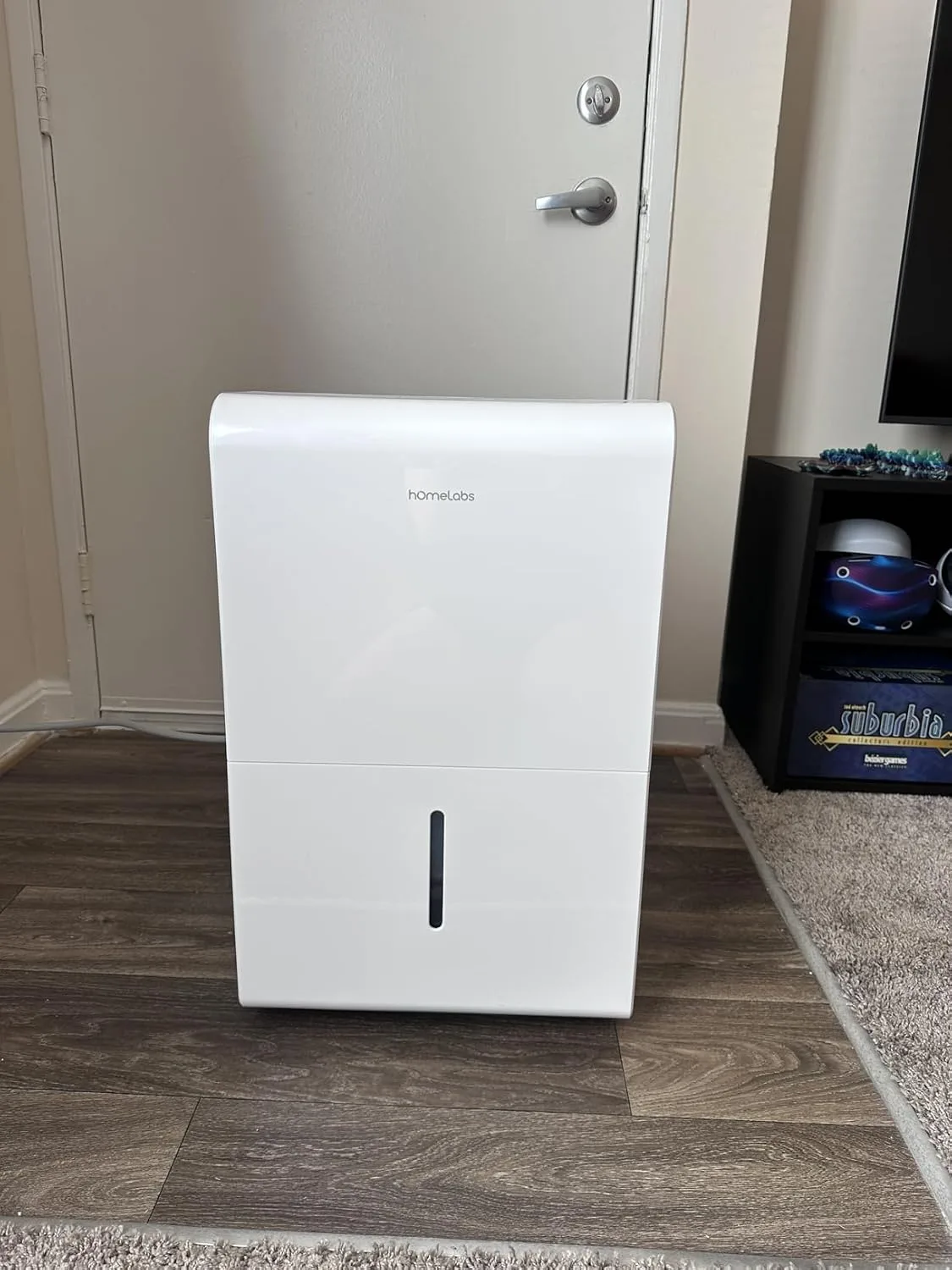
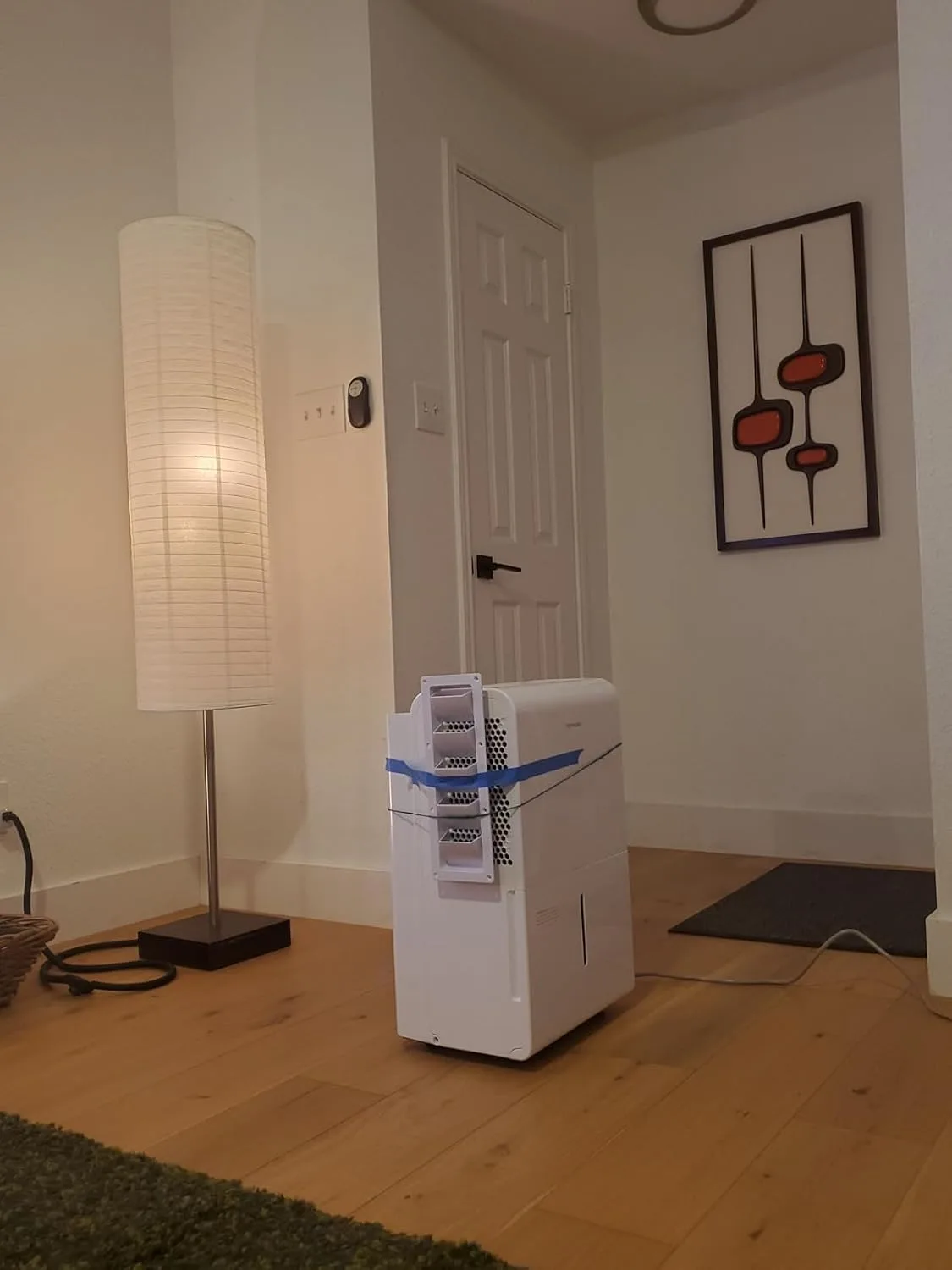
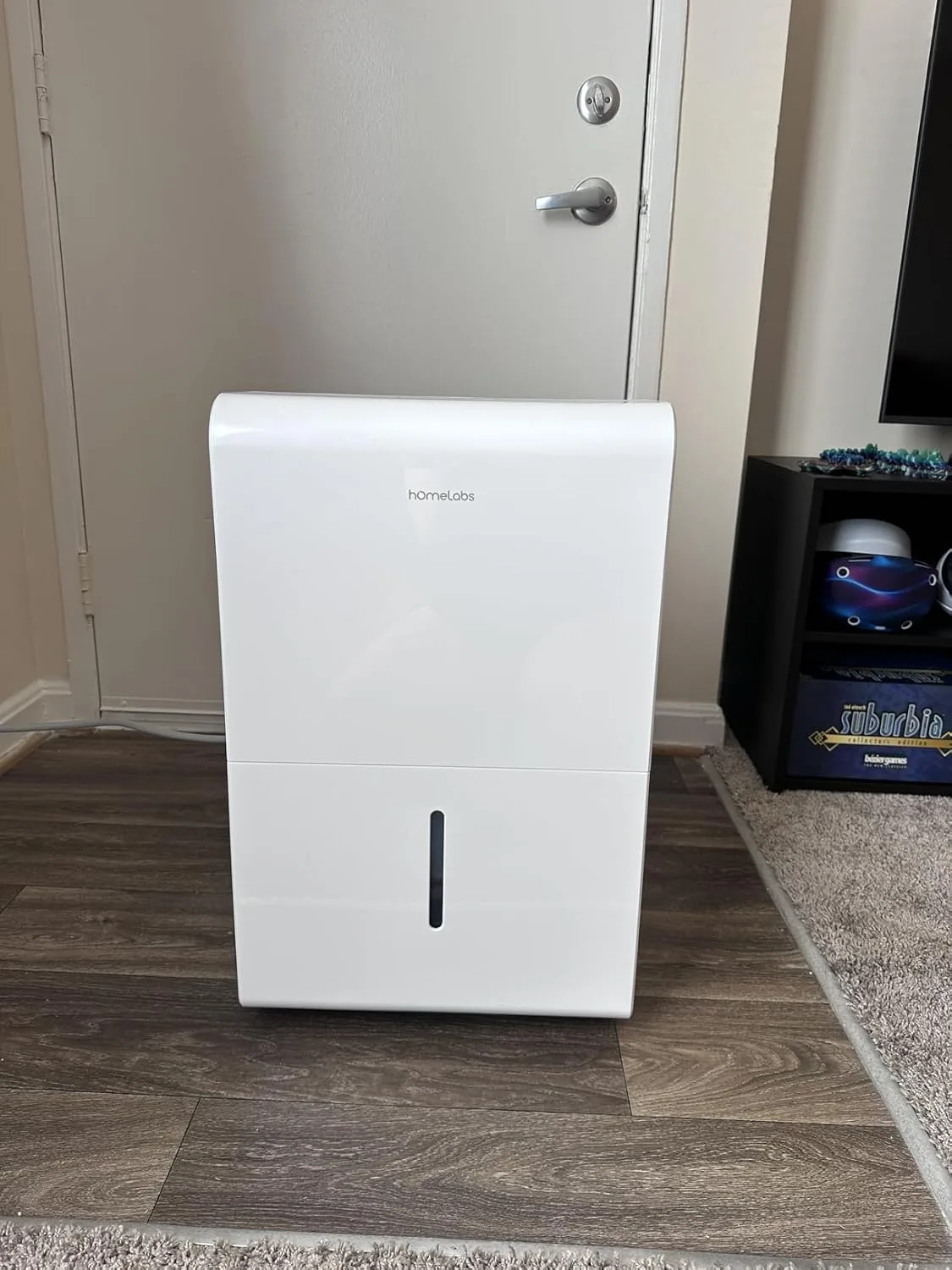
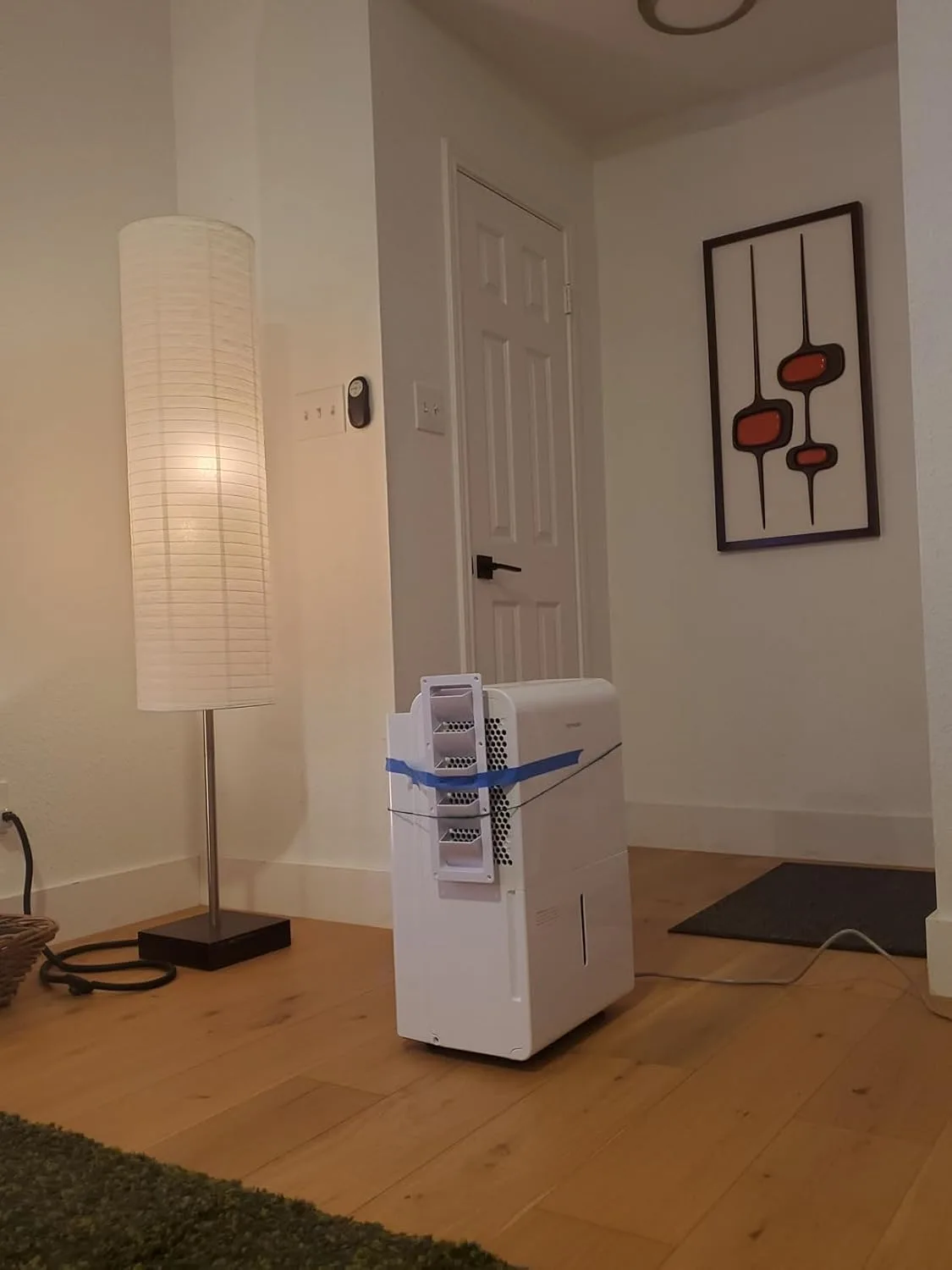
I’ll be honest — my first instinct with that homeowner was to recommend she return that $180 portable and invest in the right tool, but I knew that meant explaining ductwork and installation costs she wasn’t expecting. Once she understood how that basement would stay damp for months, she made the call. If you’re dealing with whole-house humidity creep, the hOmeLabs Dehumidifier 4 is the right starting point for a conversation with an HVAC tech.
About This Article

Written by Dana Sorensen. Homeowner turned building-science obsessive. I help other homeowners understand attic insulation, ventilation, and air quality so they can stay comfortable year-round without overspending on energy bills. More about this site.
Scope and limits. Dana is a homeowner who studies building science, not an HVAC contractor or licensed tradesperson. Anything involving combustion appliances, gas lines, or electrical work belongs with a licensed contractor.
Verify this against a primary source
Specifics change, and your situation may differ from the one described here. These are the authorities worth checking directly:
- ENERGY STAR — recommended insulation R-values by climate zone
- U.S. Department of Energy — air sealing and insulation guidance
- EPA Indoor Air Quality — ventilation and indoor air quality standards