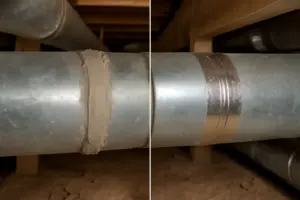
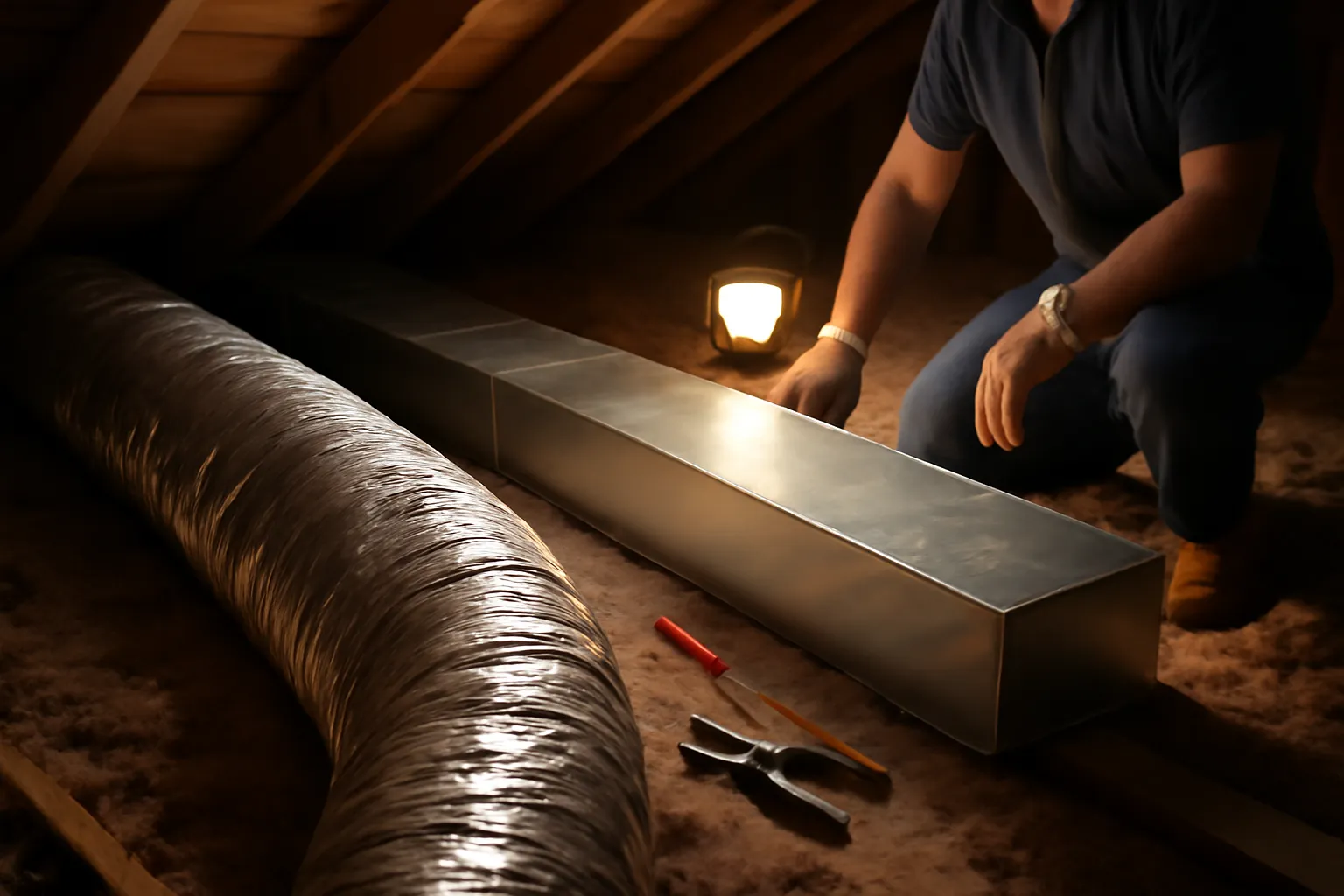
Halfway up the attic ladder in a Draper two-story last spring, I already had a good guess why the homeowner below me was so frustrated. She’d handed a contractor $4,800 to redo the ductwork in her house, and six months later the upstairs bedrooms were still baking every afternoon. One look at what was actually up there told the whole story — and it had nothing to do with whether she’d gotten flex duct vs rigid metal ductwork. It came down entirely to how the flex had been put in. We’re talking 40 feet of 6-inch flex crushed at two separate 90-degree bends, drooping in the middle like a hammock, and never pulled anywhere close to its full diameter. Air simply couldn’t get through. The material itself was fine — the workmanship wasn’t. And that’s a pattern I run into constantly in this trade. Flex duct takes the blame for problems that aren’t really its fault, while rigid metal gets treated like the automatic gold standard even when it isn’t. The truth, as usual with anything HVAC-related, sits somewhere in the middle that neither camp likes to admit. Eighteen years into this career, having installed and troubleshot both systems in more homes than I can count across the Wasatch Front, here’s what those dueling contractor bids never actually spell out.
Why Flex Duct vs Rigid Metal Isn’t a Straightforward Pick
Here’s something the industry rarely says out loud: flex duct and rigid metal aren’t rivals fighting for the same job. They’re two tools built for different tasks. Trouble shows up when one gets used in the other’s territory — usually because someone’s cutting costs, racing a deadline, or just doing what they’ve always done.
The Airflow-Resistance Physics Most Contractors Skip Over
Every length of ductwork fights back against the air moving through it — engineers call this friction loss, measured in inches of water column per 100 feet. Sheet metal, sized correctly, sits around 0.08 inches w.c. per 100 feet. Flex duct, stretched out fully straight with zero kinks, still comes in around 0.12 to 0.15 inches w.c. per 100 feet — call it 50 percent more resistance than smooth metal offers. That gap comes straight from the corrugated ribbing inside the duct, and no amount of careful installation erases it entirely.
Then factor in turns. A rigid metal elbow behaves like roughly 5 to 10 extra feet of straight pipe in your friction math. A bend in flex duct — even a soft, easy one — can act like 15 to 30 extra feet, depending on how sharp that radius is. Put two of those bends into a 30-foot flex run and you’ve basically doubled your resistance load. That’s the real reason so many flex installs fall flat on performance. Blame the layout, not the liner.
Sizing and CFM: The Figures You Can’t Ignore
There’s no fudging duct sizing. As a ballpark, a 6-inch duct — rigid or flex, doesn’t matter — installed correctly should push around 100 CFM (cubic feet per minute) at the typical residential static pressure near 0.1 inches w.c. Bump up to 8 inches and you’re looking at roughly 160 CFM; a 10-inch duct handles about 250 CFM. Those figures fall off fast the second flex duct picks up a kink, a bend, or extra unnecessary length. That’s precisely why a static pressure test matters so much — it shows you whether the system is actually moving the air the design assumed it would.
Matching the System to the Situation
Rigid metal — galvanized sheet metal or aluminum — earns its keep on trunk lines, any run past 25 feet, commercial jobs, and anywhere you need high, steady airflow no matter what. It’ll go 30-plus years with barely any upkeep, though it carries sound more easily (worth remembering near bedrooms) and holds its shape no matter what’s thrown at it. Expect to pay 40 to 60 percent more to install it than flex, mostly because the labor — cutting, fitting, sealing metal by hand — eats up real time.
Flex duct, installed the right way, genuinely earns its spot on short branch runs under 25 feet, linking rigid trunks to your diffusers, threading through tight spots metal could never reach, and retrofits where opening up ceilings or walls would cost a fortune. Expect 15 to 25 years of service life, depending on how well it was hung and what the attic throws at it. At the end of the day, the flexible vs hard pipe question comes down to three things: how long the run is, how many bends it has, and what job you’re asking the duct to do.
The Insulated Flex That Doesn’t Sag or Fail on Long Attic Runs
Push flex duct past 30 feet through an unconditioned attic and thin, poorly insulated material becomes the enemy fast. Heat loss and condensation don’t announce themselves — they just quietly chip away at comfort and drive up your utility bill until you notice. This is exactly where insulation quality and build durability start to matter.
What holds up
- R8-rated flex handles brutal attic swings well — on long runs I’ve measured, lighter insulation loses 5 to 8 degrees that R8 simply doesn’t
- The outer jacket shrugs off punctures and UV breakdown far better than thin-wall flex, so it holds up longer against loose insulation contact and the occasional rodent
- Coming in 25-foot pre-cut sections cuts down on field joints — and since every seam is a potential leak, fewer connections means better system efficiency across the board
Where it falls short
- Runs noticeably pricier than the basic flex builders default to, which is exactly why cost-cutting contractors steer clear of recommending it
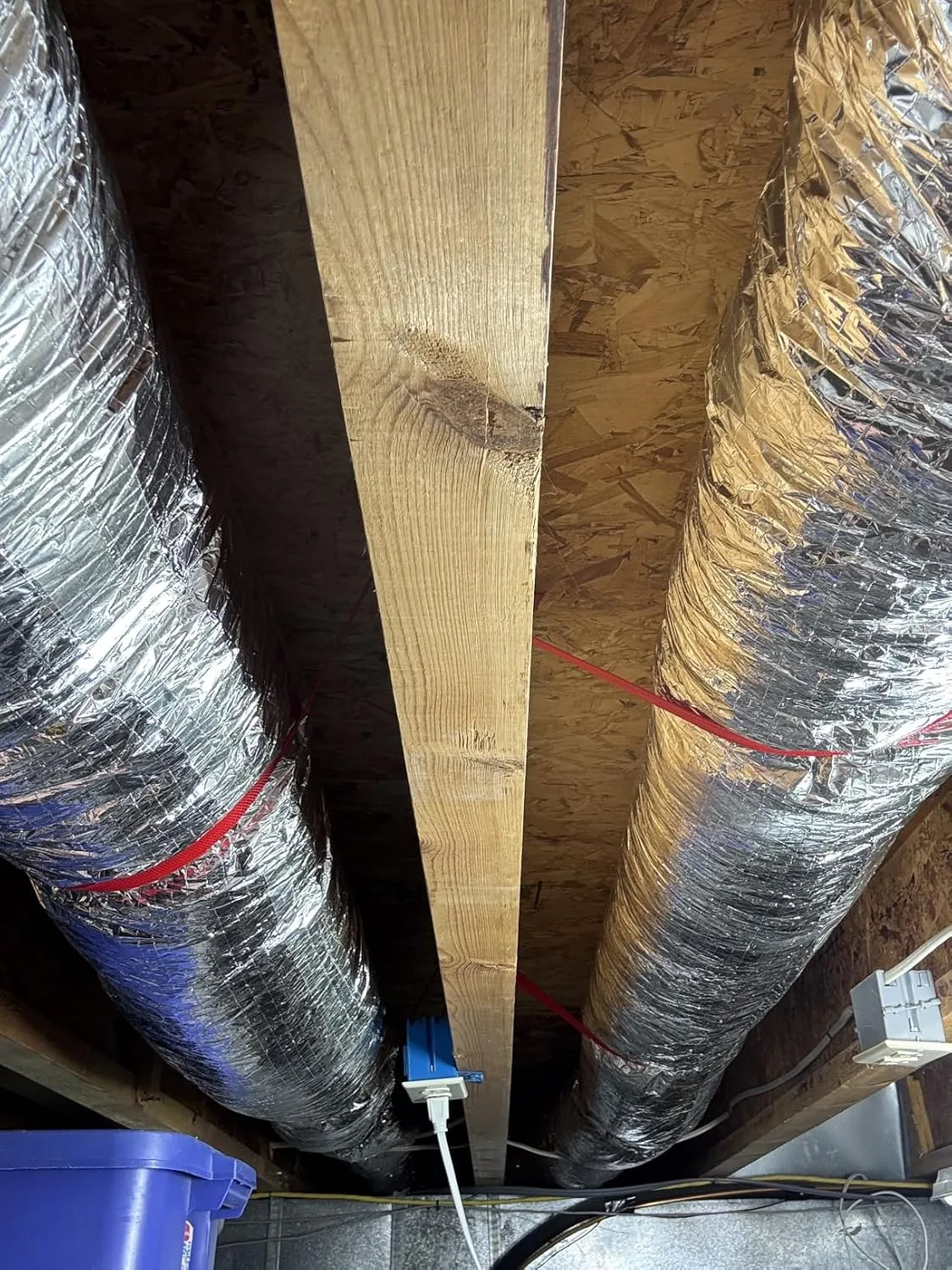
- Support and strapping still have to be done right — no insulation rating, R8 included, rescues a run drooping off two zip ties
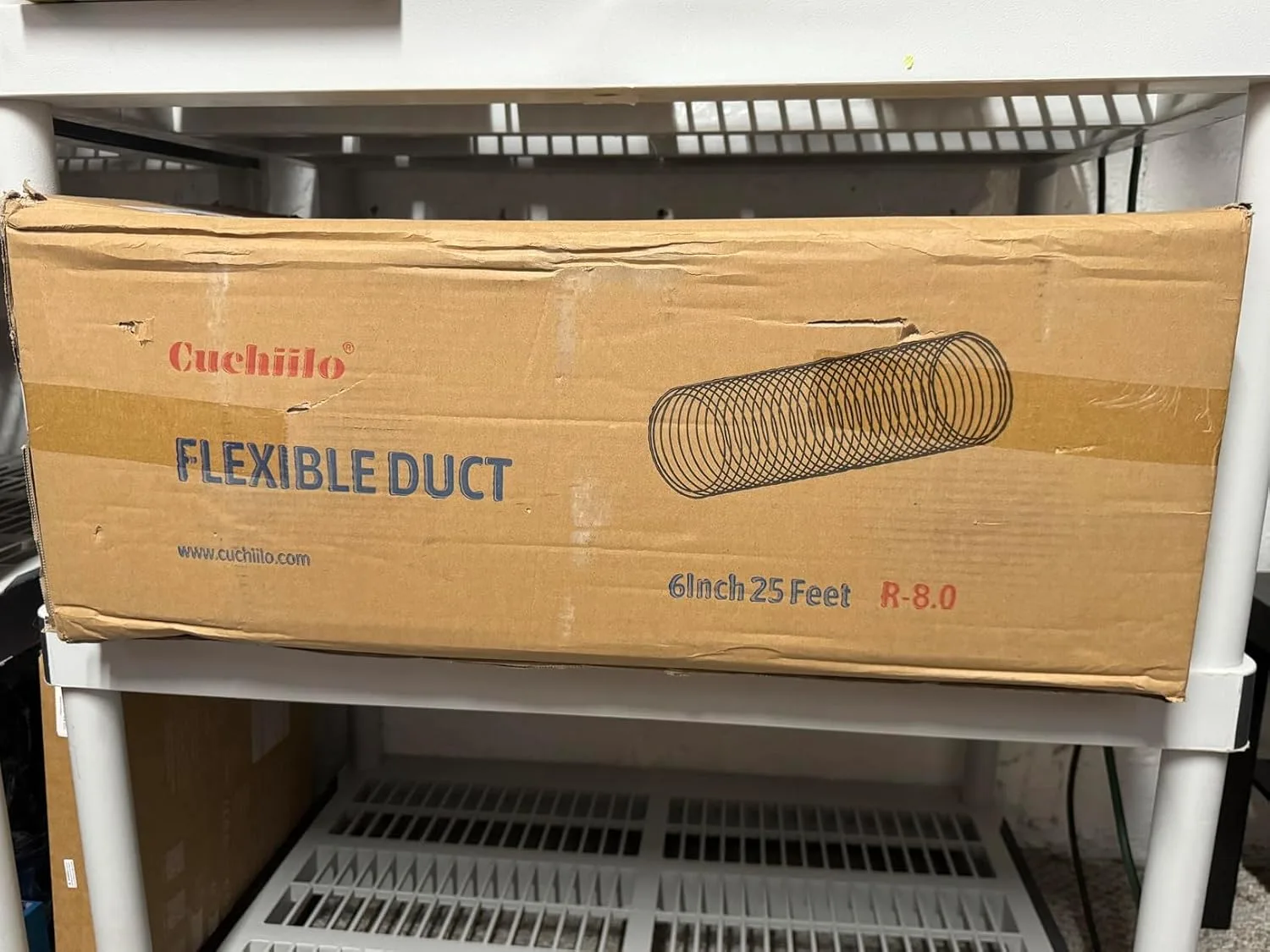
I’ll admit: the first time I priced R8 insulated flex against standard flex, I wondered if the homeowner would push back on cost. Then I ran the math on seasonal energy loss and realized the payback was less than two years. Check out the Cuchiilo 6 Inch 25 Feet Insulated Flexible Duct R8 if you’re serious about getting long runs right.

About This Article

Written by Dana Sorensen. Homeowner turned building-science obsessive. I help other homeowners understand attic insulation, ventilation, and air quality so they can stay comfortable year-round without overspending on energy bills. More about this site.
Scope and limits. Dana is a homeowner who studies building science, not an HVAC contractor or licensed tradesperson. Anything involving combustion appliances, gas lines, or electrical work belongs with a licensed contractor.
Verify this against a primary source
Specifics change, and your situation may differ from the one described here. These are the authorities worth checking directly:
- ENERGY STAR — recommended insulation R-values by climate zone
- U.S. Department of Energy — air sealing and insulation guidance
- EPA Indoor Air Quality — ventilation and indoor air quality standards