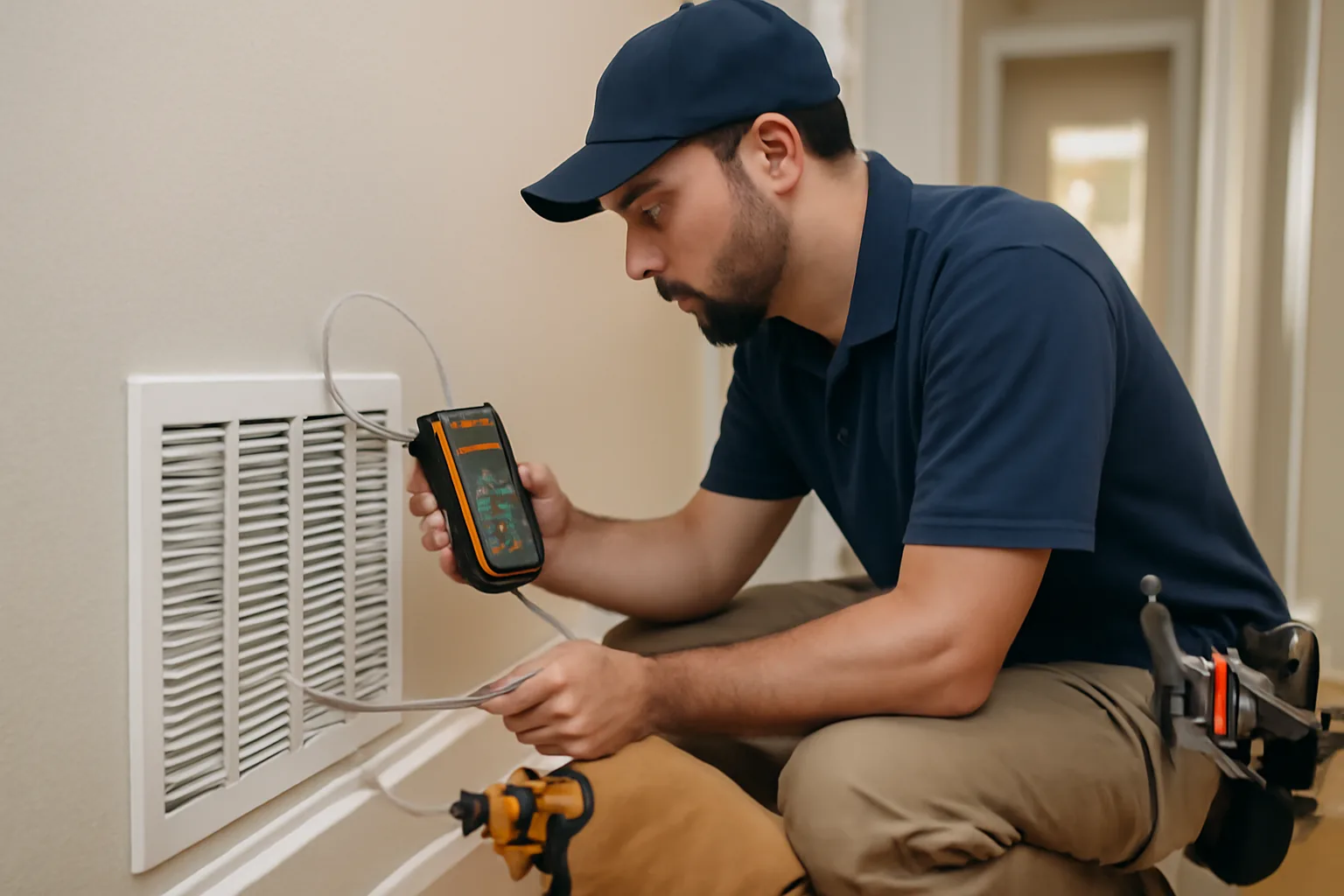
The first real heat wave of the season always exposes the same weak spot in a house. The rest of the rooms cool down just fine, but one bedroom stubbornly hangs onto its heat like it’s got its own microclimate — running a full 10 degrees warmer than everywhere else, no matter where the thermostat gets set. By the time I hear about it, the homeowner has usually swapped the filter already, and called their HVAC company at least once, sometimes twice, and they’re still miserable in there. If you’ve been hunting for why one room stays hot no matter what you try, here’s the short version: your equipment is probably fine. The real culprit is living inside your ductwork, in the form of pressure. And here’s what makes this so aggravating — almost nobody, including plenty of techs, ever bothers to actually measure that pressure. Everyone’s guessing instead of testing. The technical name for what’s going on is static pressure imbalance, and it happens to be one of the most consistently misdiagnosed comfort complaints in residential HVAC.
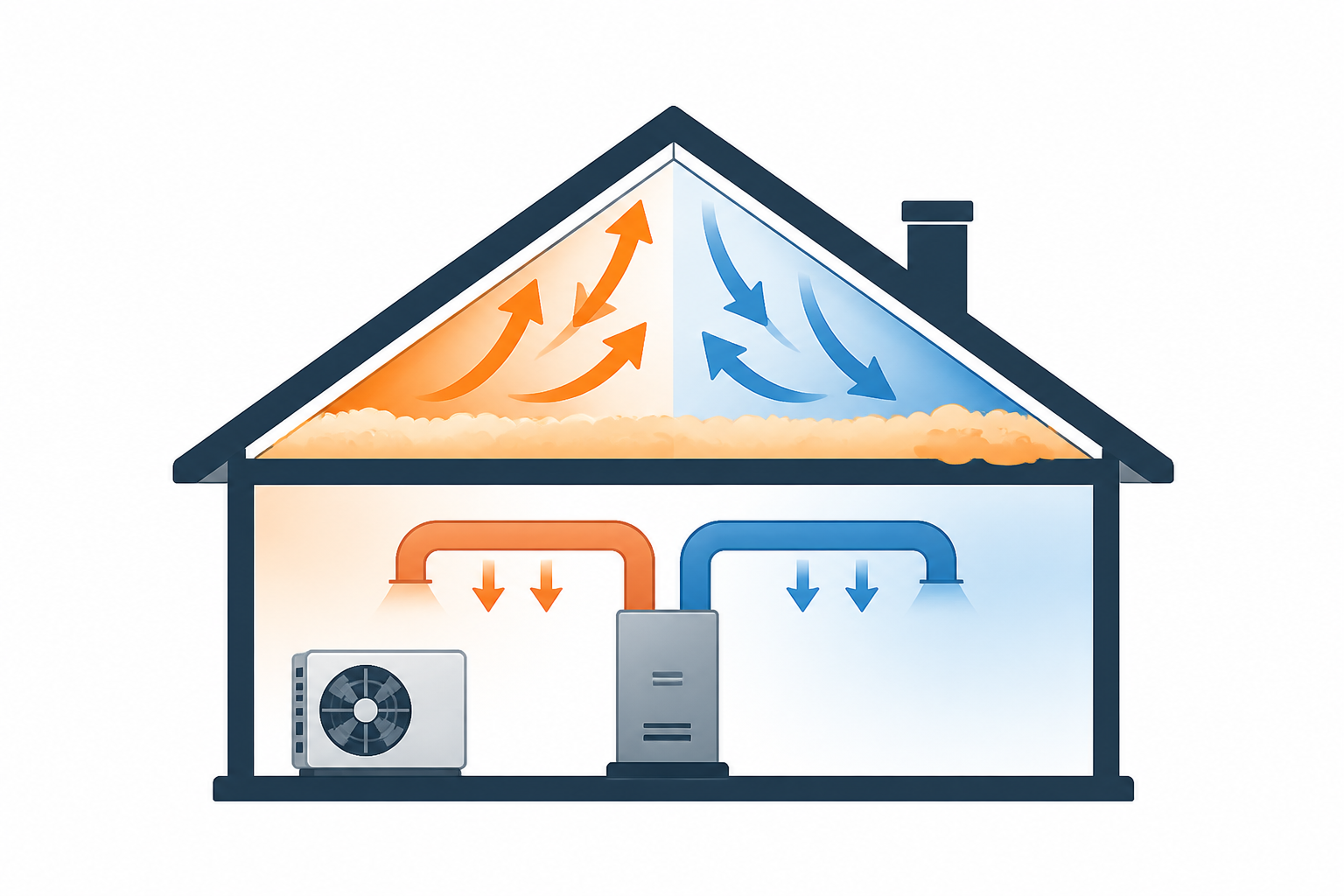
I’ve spent more than ten years doing this kind of work, and hot-room complaints have crossed my path by the hundreds at this point. Almost all of them lead back to one shared cause: the duct system working against itself. Conditioned air is supposed to travel freely from the air handler out to every room in the house. But once something along the way — a restriction, an undersized run, a design flaw — chokes that path, some rooms end up flooded with air while others barely get a trickle.
What follows is a breakdown of what static pressure really is, how you can check it on your own without a license, and what your actual options look like once you know — plus one product I’ve put into service myself that handles this issue better than I expected. Let’s dig in.
What Static Pressure Really Is — and Why You Should Care
Static pressure is basically the pushback your blower motor has to overcome to move air through the ducts. Picture a garden hose. Open and unobstructed, water moves through it with no effort at all. Pinch it partway shut, and the flow slows to a trickle — even though the pump behind it hasn’t backed off one bit.
Residential HVAC equipment is engineered to run inside a fairly narrow static pressure window. The ceiling for most systems is 0.5 inches of water column (IWC) of total external static pressure, a figure spelled out in ACCA Manual D, the standard the industry uses for duct design. Push past that number, and the rooms farthest from the air handler — or the ones with restricted ducts — start losing airflow fast.
The systems I’ve tested typically land somewhere between 0.7 and 1.0 IWC — that’s 40 to 100 percent beyond what the design ever called for. The blower strains, heats up, and still can’t shove enough conditioned air down to that back bedroom. The room stays hot. The utility bill climbs. And nine times out of ten, everyone jumps to the conclusion that the AC unit itself is too small. It almost never is.
What’s Usually Behind High Static Pressure
Before you attempt any fix, you need to pin down what’s actually creating the restriction. From what I’ve seen, it almost always traces back to one of five suspects.
- Return grilles that are too small: This is the number one offender I run into. Builders love putting in just one return grille per floor, and that’s rarely close to sufficient.
- Filters that are dirty or rated too high: Drop a MERV 13 into a system built for MERV 8, and you can tack on 0.2 to 0.3 IWC of extra restriction all by itself.
- Flex duct that’s kinked or squashed flat: Any bend sharper than 90 degrees can strip away as much as half the duct’s ability to carry air.
- Dampers stuck closed, fully or partway: Manual dampers on the trunk line get bumped shut and forgotten more often than you’d think. I’ve opened up systems where homeowners had no clue a damper even existed — and found it dead closed.
- Branch ducts sized too small for the room: Trying to condition a 200-square-foot bedroom through a 4-inch round duct just doesn’t work. It’s math, not opinion.
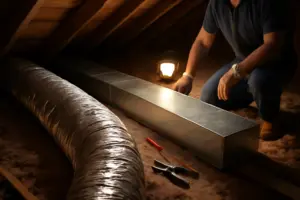
Last spring I worked a job where the master bedroom ran a solid 12°F hotter than the rest of the house, every single day. We opened up the ceiling, pulled back the flex duct, and found a 90-degree bend that had collapsed shut entirely after years of sagging. Standing at the grille, you’d never have guessed anything was wrong — but three feet up inside that ceiling, airflow was basically nonexistent. Rerouting that one section knocked out 80 percent of the problem, and the whole fix took under two hours.
Testing This Yourself Before Calling Anyone
You don’t need a license or a truck full of tools to get real data here. A manometer — a digital gauge that measures differential pressure — will tell you plainly what’s happening inside your ducts. I learned this lesson the expensive way early on, burning three separate visits trying to guess my way to the source of a hot room. The moment I started bringing a manometer to every job, my diagnosis time got cut by more than half.
The Tool That Confirmed the Pressure Problem Wasn’t in My Head
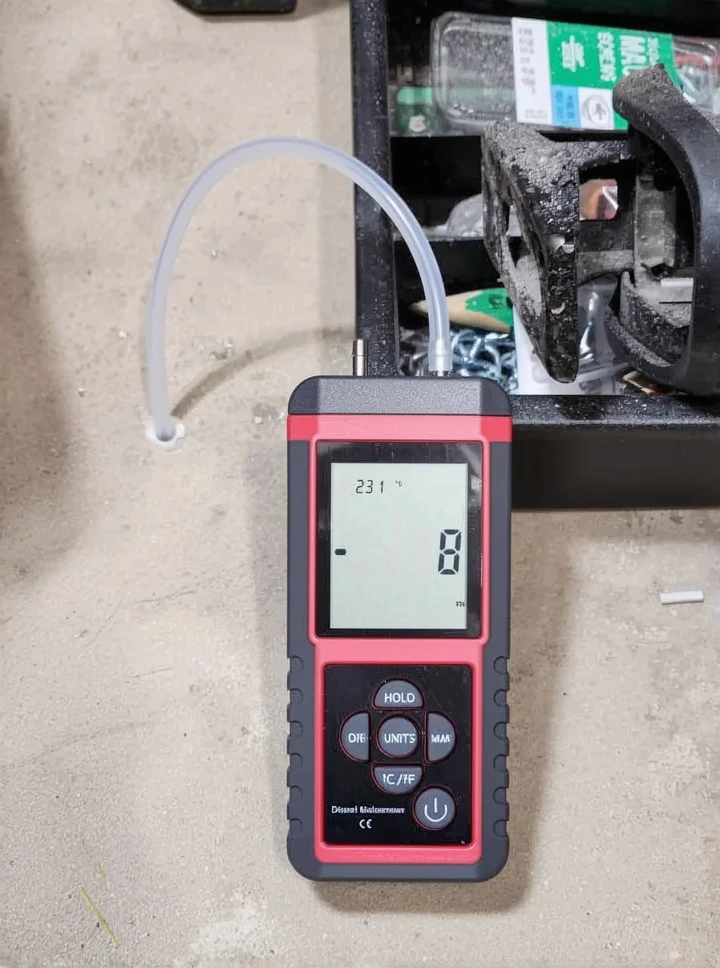
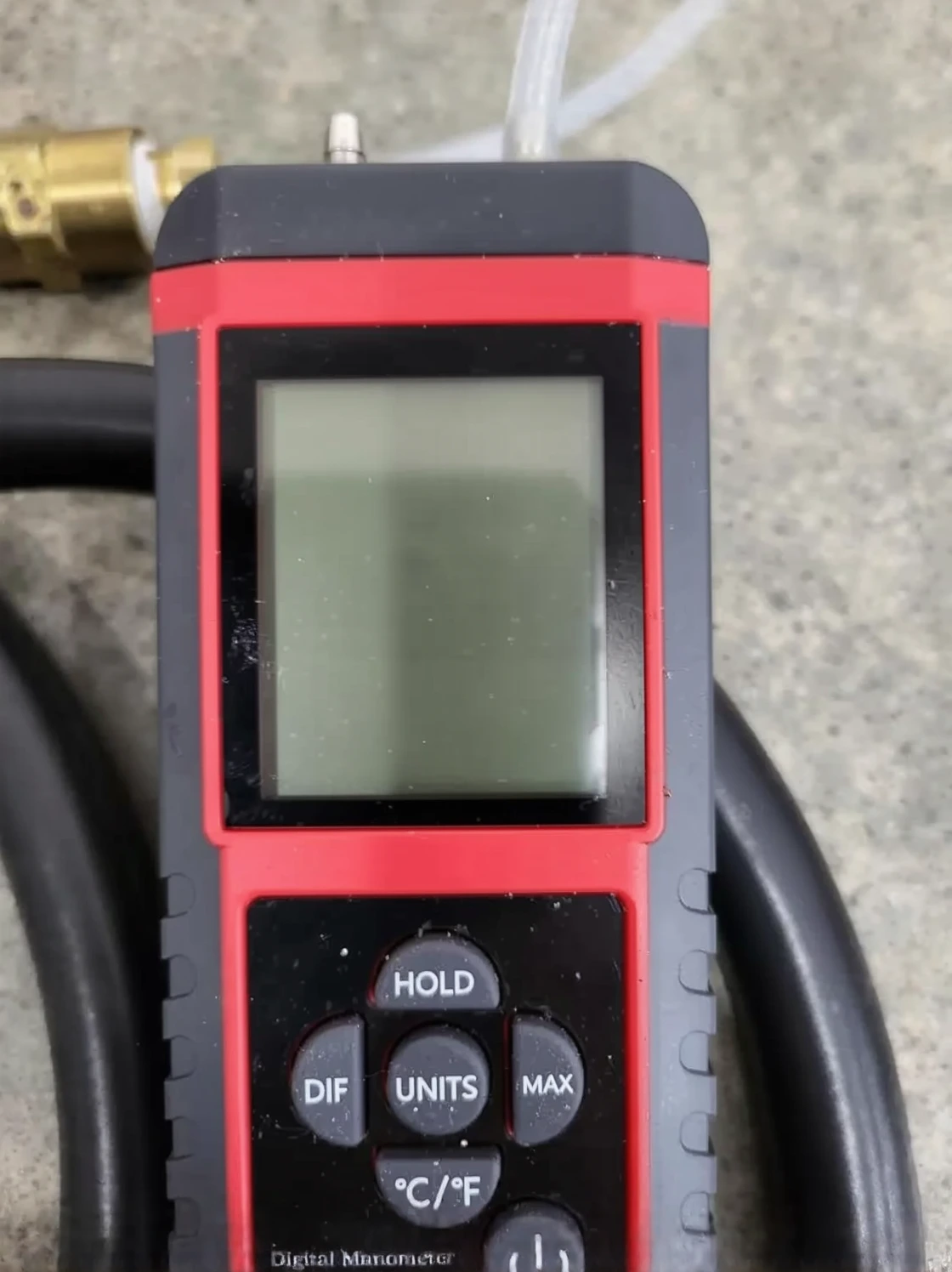
Measuring comes before fixing, always. A digital manometer is really the only device that will show you precisely where your duct system is bottlenecking airflow — and why one bedroom is being starved while the rest of the house stays perfectly comfortable.
Where it earns its keep
- Two ports mean you can measure the pressure differential across the furnace, or between the supply and return sides — exactly the numbers that reveal a static pressure imbalance.
- The digital display removes all the guesswork; you’ll know immediately whether static pressure has climbed past 0.1 inches of water column, which is often the real reason one room won’t cool.
- Compact enough to carry from room to room and access panel to access panel, letting you track down exactly where the pressure drops and the restrictions are hiding.
Where it falls short
- You do need some comfort with getting into your ductwork and setting the ports correctly — this isn’t something a fully hands-off homeowner will want to fumble through.
- The reading needs a few minutes to settle before it’s trustworthy; rush it, and you risk misreading the pressure and pointing the finger at the wrong component.
I’ll admit, the first time I pulled out a manometer on one of these calls, I half-expected to find something else entirely—but the data doesn’t lie, and once you see those pressure numbers spike, you know exactly what needs fixing. Grab the EHDIS Dual-Port Digital Manometer and measure your own system.
About This Article

Written by Dana Sorensen. Homeowner turned building-science obsessive. I help other homeowners understand attic insulation, ventilation, and air quality so they can stay comfortable year-round without overspending on energy bills. More about this site.
Scope and limits. Dana is a homeowner who studies building science, not an HVAC contractor or licensed tradesperson. Anything involving combustion appliances, gas lines, or electrical work belongs with a licensed contractor.
Verify this against a primary source
Specifics change, and your situation may differ from the one described here. These are the authorities worth checking directly:
- ENERGY STAR — recommended insulation R-values by climate zone
- U.S. Department of Energy — air sealing and insulation guidance
- EPA Indoor Air Quality — ventilation and indoor air quality standards