Almost every homeowner I talk to is operating on the same unspoken assumption: that a heat pump and a gas furnace are basically interchangeable, and whichever one gets crowned “better” will simply be better in every house, in every climate, full stop. That assumption falls apart the moment real winter weather shows up. I watched it happen last January with a homeowner in northern Minnesota whose furnace quit on him overnight, right as the outdoor temperature bottomed out at -12°F. He’d read enough online to start wondering if a heat pump alone could replace his furnace entirely. That question is really the whole heat pump vs gas furnace cold climate debate in miniature. And the internet’s answers to it are mostly garbage — a lot of it written by people who’ve never set foot in a mechanical room in their lives. So here’s my honest take, built on 14 years of working on my own house and reading the building science.
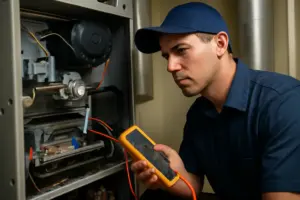
Both systems have passed through my hands more times than I can count. I’ve torn into failing heat pumps at -20°F and kept gas furnaces pushing 30 years old limping along for one more season. I’ve run Manual J load calculations, argued with contractors over HSPF2 numbers, and sat at kitchen tables walking confused homeowners through their utility bills. What I know comes from the field — not from a manufacturer’s glossy brochure.
What Cold-Weather Heat Pumps Actually Do When Temperatures Drop
There’s one line I hear constantly: “heat pumps quit working once it gets cold.” A decade ago, that was mostly true. It isn’t anymore. Today’s cold-climate heat pumps — units specifically certified to the NEEP (Northeast Energy Efficiency Partnerships) cold-climate standard — keep operating efficiently down to -13°F, sometimes lower. The real shift happened around 2015, when variable-speed inverter compressors entered the market. Instead of cycling on and off, these compressors ramp their output up and down continuously, which lets them pull heat from frigid air far more consistently and efficiently than older equipment ever managed.
Efficiency still slides as the temperature falls, though. At 40°F, a heat pump might post a COP (Coefficient of Performance) around 3.5 — 3.5 units of heat delivered for every unit of electricity consumed. Drop that same unit into 5°F air and the COP might fall to somewhere between 1.5 and 2.0. That’s still well ahead of electric resistance heat. But stack it against a 96% AFUE gas furnace in that same cold snap, and the gap narrows more than most people expect — especially in states where natural gas prices run high.
HSPF2 (Heating Seasonal Performance Factor, second edition) is the spec worth memorizing. Anything above 8.5 HSPF2 holds up well in a cold climate. Look specifically for units marketed as “cold-climate” or “hyper-heat” models — they’re engineered differently from the standard heat pumps sold in warmer regions.
The Cases Where Gas Furnaces Still Beat Heat Pumps in Cold Climates
Let’s not dance around it: in truly punishing climates — think International Falls, Minnesota, or Fairbanks, Alaska — a heat pump running solo still struggles to serve as your only heat source. That’s not a knock on the technology. It comes down to economics and grid dependence. Once outdoor temps sit below -15°F for several days straight, your heat pump is grinding hard, your electricity draw spikes, and your utility bill follows right along. Gas furnaces, meanwhile, keep delivering steady, high-output heat no matter what’s happening outside.
Supply air temperature is the other factor at play. Gas furnaces typically push air out of the registers somewhere between 120°F and 140°F. Heat pumps, at peak cold-weather load, often deliver air in the 90°F to 105°F range. In a tightly sealed, well-insulated home, that gap barely registers. But in an older house with a leaky envelope and thin insulation, that cooler supply air feels noticeably drafty. More than one client has called me convinced their new heat pump was broken — it wasn’t. Their house just wasn’t insulated well enough to handle it.
For whole-house heating in Climate Zone 6 or 7 (as defined by ASHRAE 90.1 and the IECC), I still steer most existing homes toward a high-efficiency gas furnace as the primary system. The infrastructure’s usually already in place, the fuel supply is dependable, and the upfront cost beats a full heat pump system with backup.
Why the Dual-Fuel Hybrid Setup Makes Sense
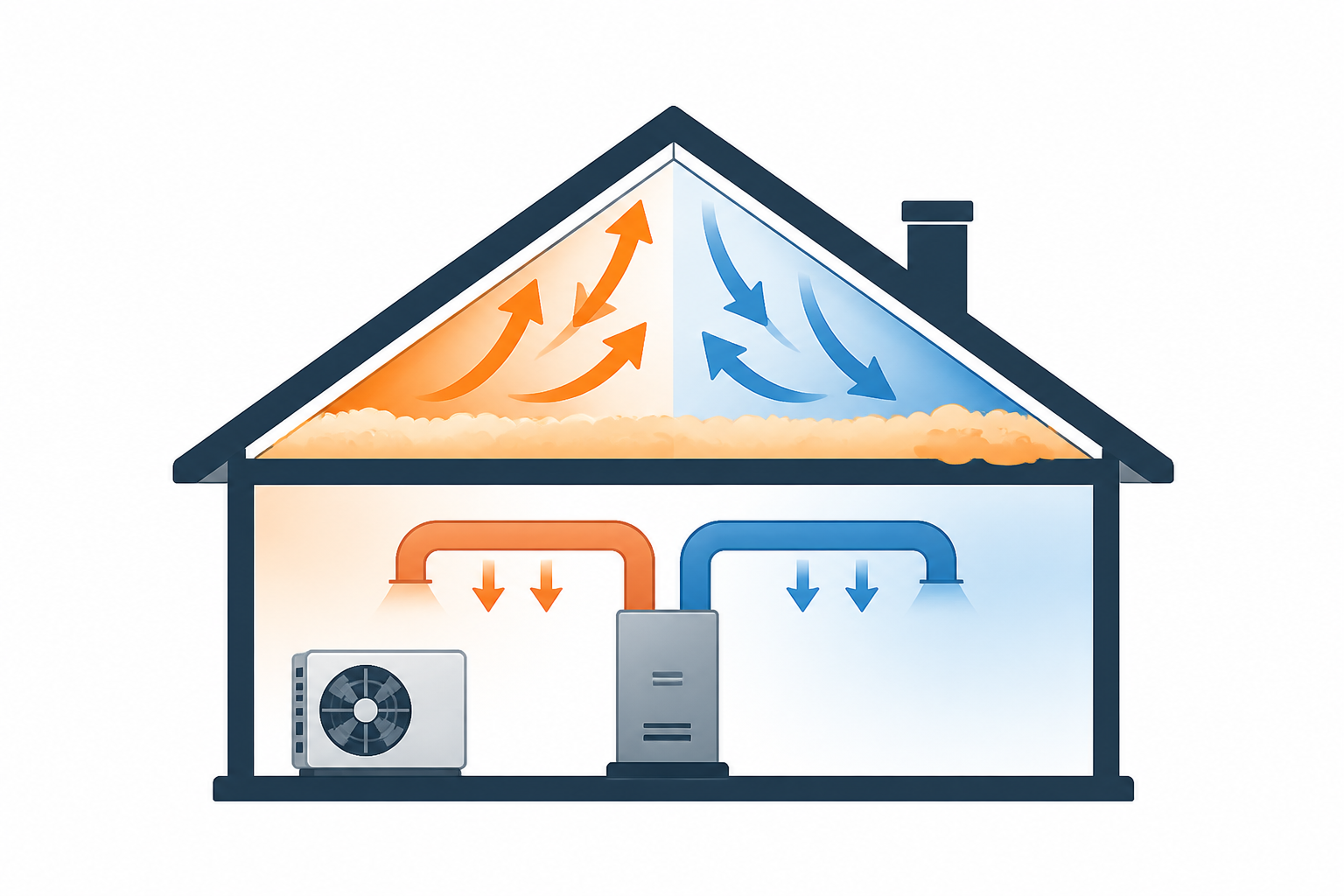
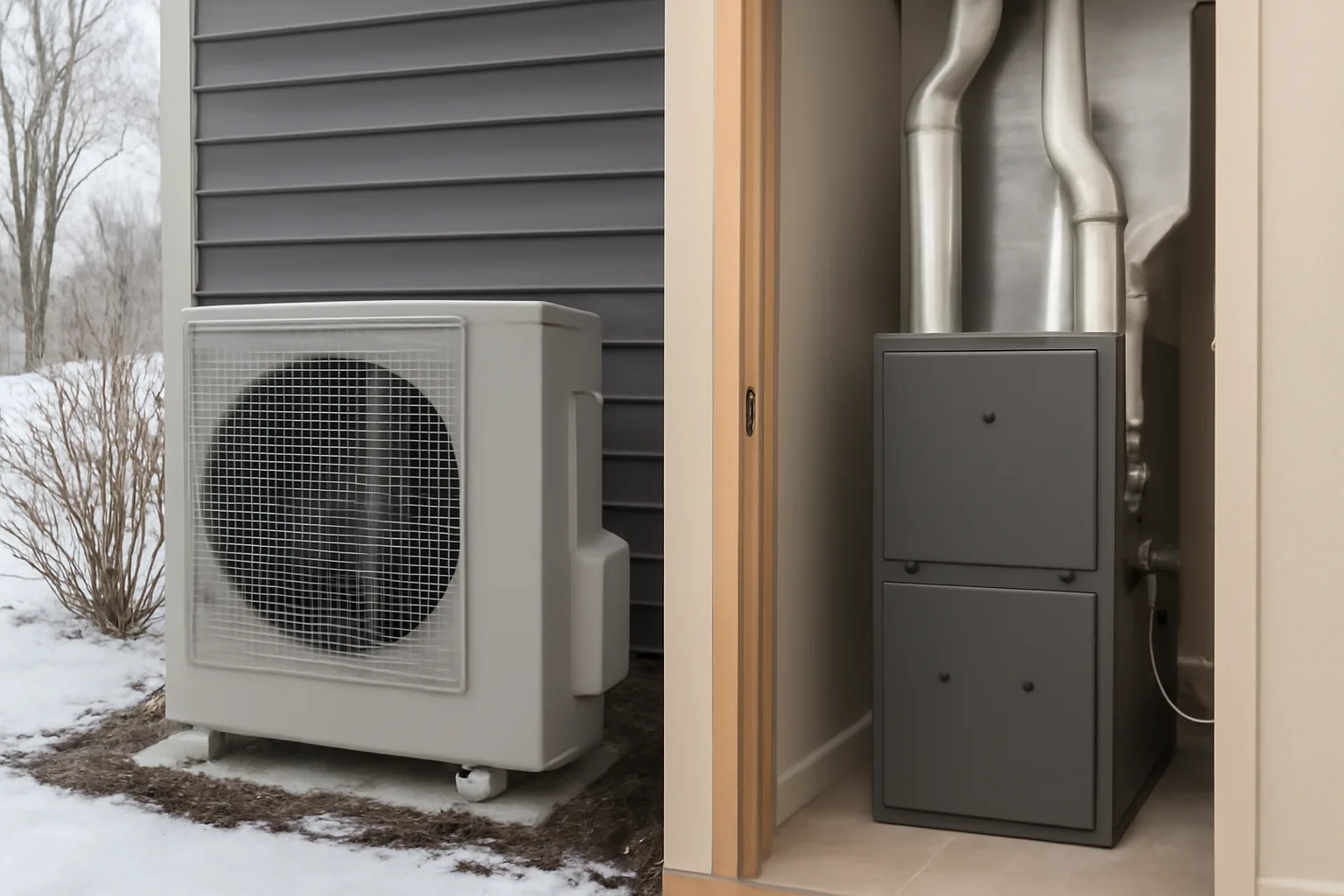
The setup I’ve seen work best in cold climates pairs a heat pump with a gas furnace — a dual-fuel hybrid. The heat pump carries the heating load down to a balance point, usually somewhere between 25°F and 35°F depending on local utility pricing. Once temperatures drop past that line, the gas furnace takes over. This arrangement banks the heat pump’s efficiency through the milder stretch of cold weather — which covers most of the heating season in many northern states — while keeping gas’s raw output on standby for the days you actually need it. I’ve watched homeowners cut 20 to 35 percent off their heating bills with this exact configuration.
Actual Dollar Figures From My Own Client Jobs
Here’s a real example. A client of mine in central Wisconsin — a 2,100-square-foot 1980s ranch with decent, not exceptional, insulation — was paying roughly $1,800 a year heating with natural gas. We installed a cold-climate mini split to cover the main living areas and kept his existing 80% AFUE furnace in place as backup. His gas bill dropped to about $820. His electric bill rose about $340. Net savings landed around $640 a year. The mini split ran about $4,200 installed, putting payback under seven years — and he picked up air conditioning for summer as a bonus, something he’d never had before.
Another client in the same region replaced an aging furnace with a brand-new 96% AFUE two-stage unit — no heat pump involved at all. His annual gas bill fell from $1,950 to roughly $1,390, a savings of $560 a year. The furnace cost him $3,100 installed, putting payback just under six years. For him, that was the right call — he was 68, had no interest in juggling two systems, and natural gas was cheap where he lived.
Here’s the takeaway: which option wins depends on your local utility rates, your home’s insulation level, the equipment you already have, and how much risk you’re willing to carry. In my experience, heat pumps win on efficiency math in moderately cold climates. Gas wins on simplicity and raw output in truly extreme cold. And the hybrid setup wins in nearly everything in between.
My Pick for Supplemental Heat in Cold-Climate Zones
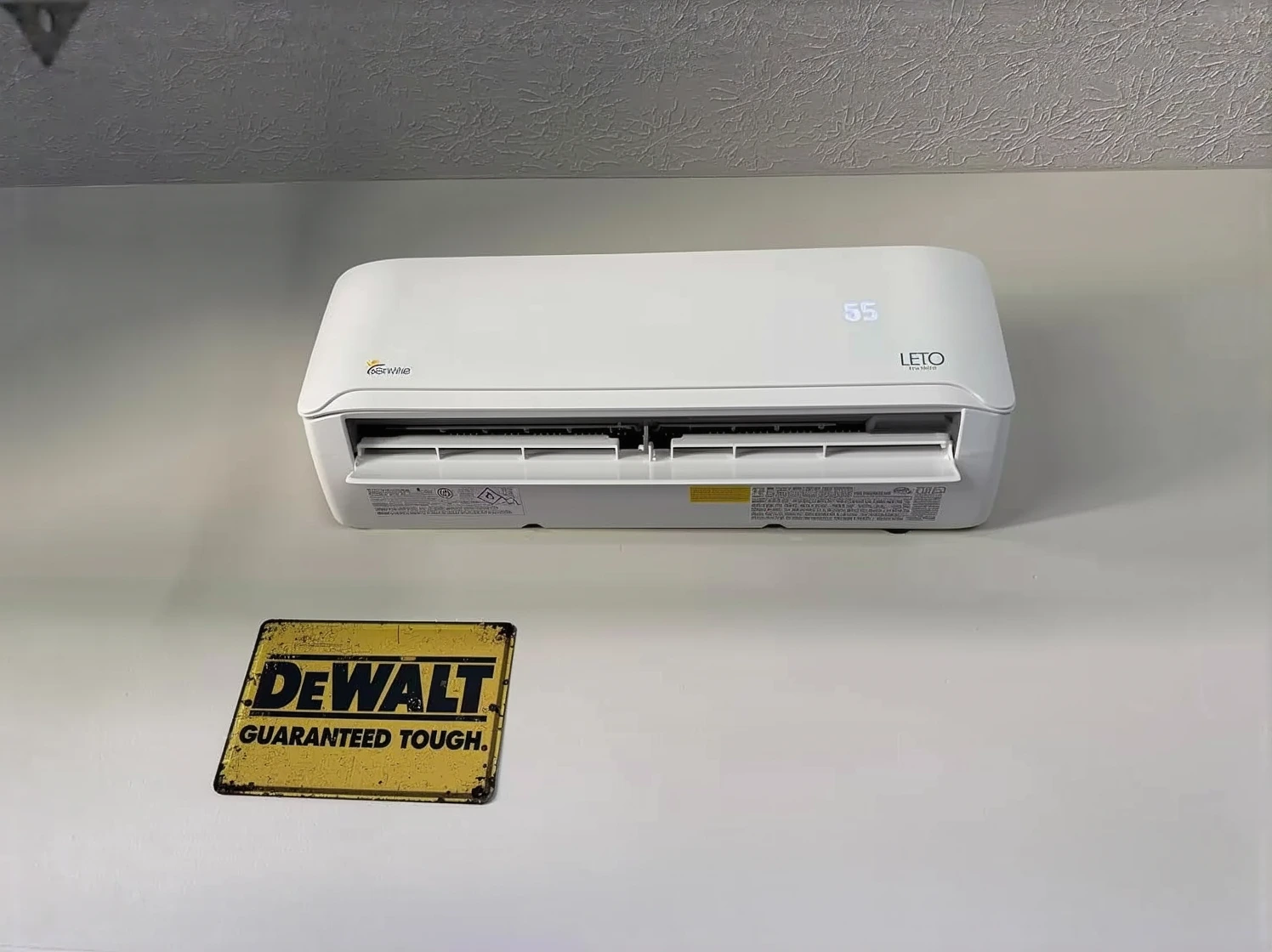
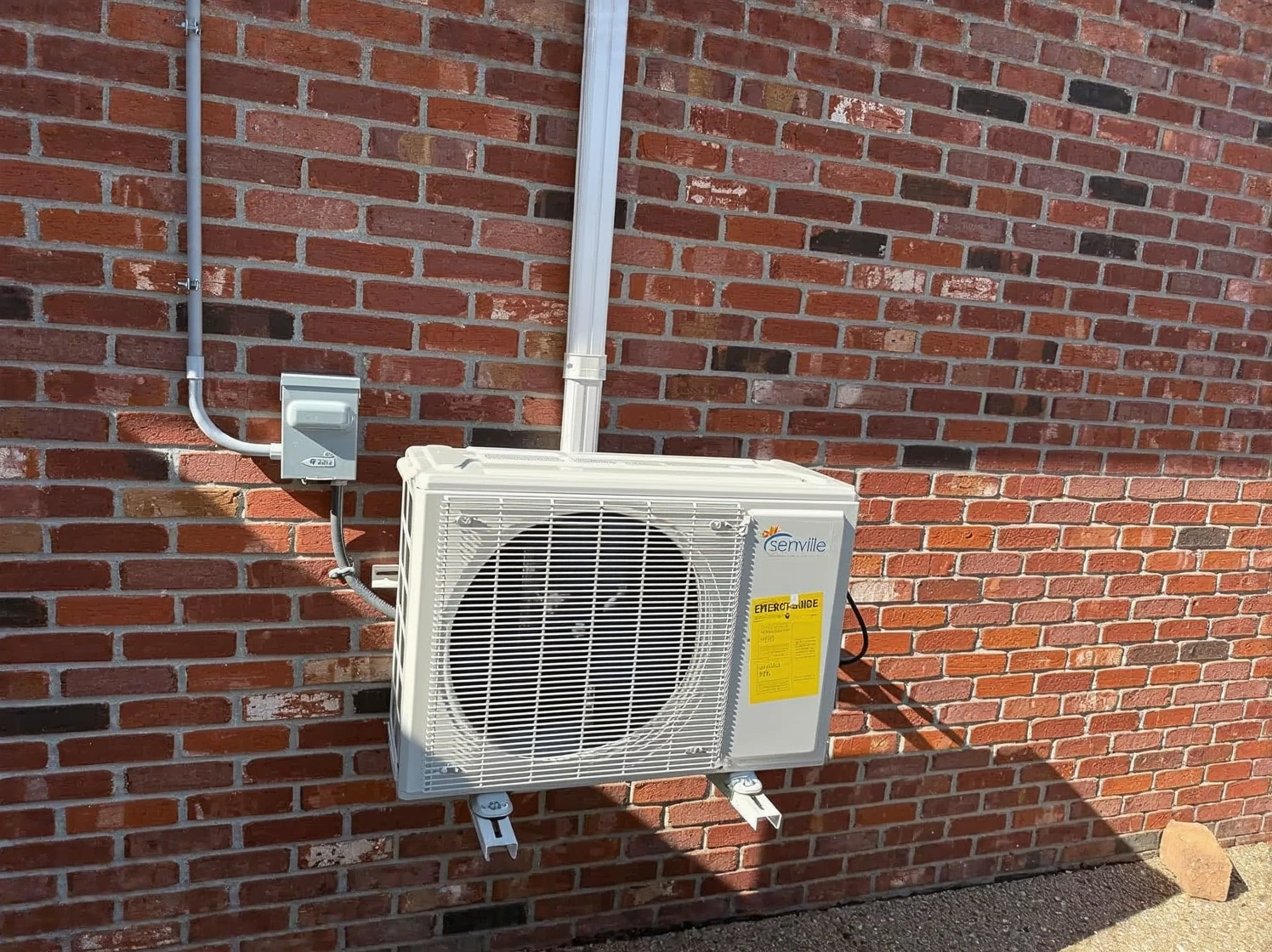
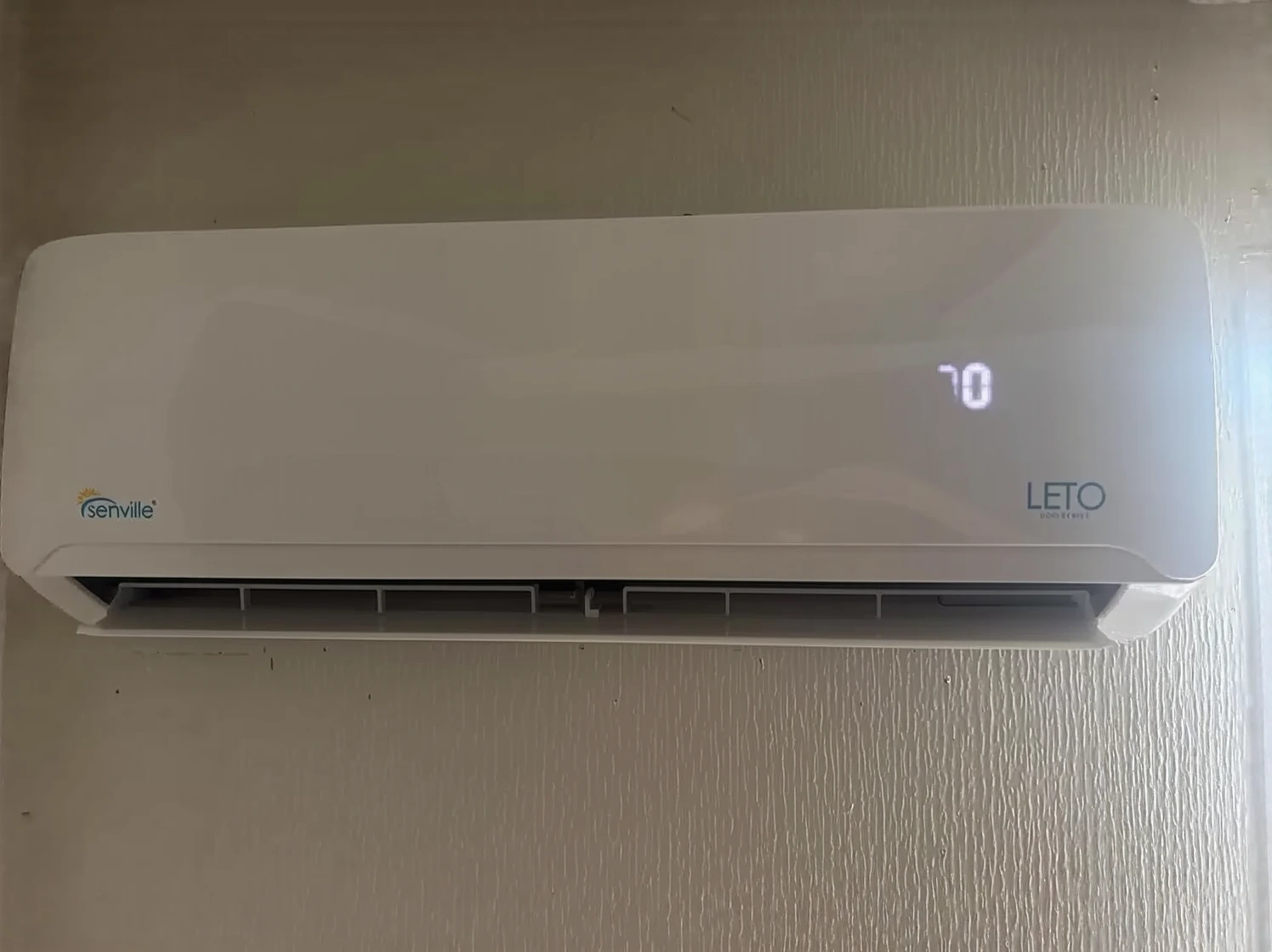
When clients ask me for a reliable mini split for supplemental heating — or for a zone they want to prioritize for efficiency — I consistently point them toward the Senville LETO Series 12,000 BTU Mini Split Heat Pump. I’ve recommended this unit more times than I can count over the past few years, and it’s held up well for neighbors.
Here’s specifically what stands out to me about this unit. It runs on a standard 110/120V circuit, which matters — most homes can skip installing a new 240V line for a single-zone application entirely. That alone saves $300 to $600 in electrical work before you’ve even started. Its SEER2 rating sits at 20.8, which is genuinely excellent; for reference, the federal minimum SEER2 for the Northern region is 13.4 as of January 2023 under DOE regulations. This unit clears that bar with room to spare. Its inverter-driven compressor modulates output smoothly instead of cycling on and off the way older equipment does.
The Alexa integration is a nice bonus — not something I’d buy a unit for, but clients who use it love the convenience. The unit is 1 ton (12,000 BTU), making it ideal for spaces in the 400–600 square foot range, depending on insulation quality. I’ve seen it handle a well-insulated 700 square foot open-plan living space in Wisconsin winters without breaking a sweat. For pricing and availability, check the current listing on Amazon here.
Runner-Up Pick: A Dependable Gas Furnace
If you’ve decided a gas furnace is the right primary system for your cold-climate home, I’d point you toward the Goodman 96% AFUE Two-Stage 60,000 BTU Gas Furnace (Model GR9T960603BN). Goodman gets a bad reputation in some circles, but the 96% AFUE two-stage units have been reliable in my experience. The two-stage burner is important — it runs at lower capacity most of the time, which improves humidity control and comfort. The multi-speed blower helps with that too.
At 96% AFUE, nearly all the fuel you pay for becomes heat in your house. The Low NOx design also meets California’s strict emissions standards (SCAQMD Rule 1111), so it’s a responsible choice if that matters to you. At 17.5 inches wide, it fits in most standard utility closets. This is a professional installation — I’ll be clear about that. But for sourcing the equipment, the Amazon listing gives you a solid benchmark for pricing when getting contractor quotes.
A Costly Lesson I Learned About Sizing Cold-Climate Heat Pumps
My hardest lesson landed early on. I installed a standard heat pump — not a cold-climate model — for a client in northern Wisconsin. The spec sheet rated it down to about 20°F. That first February, it fell apart. The electric resistance backup heat kicked on constantly, and her electricity bill spiked to nearly $400 that month. She called me, and she had every right to be furious.
I hadn’t spec’d a cold-climate inverter unit. I hadn’t run a proper Manual J heat load calculation. And I’d badly underestimated how many hours a year her location spent below 25°F. That mistake cost me the client relationship, and it cost her a miserable winter. Ever since, I pull weather data for every homeowner’s zip code before speccing any heating system — specifically the design temperature (the 99th-percentile outdoor temperature from ASHRAE data) and the annual hours spent below 20°F. Those two numbers tell me more than any spec sheet marketing copy ever could.
Never skip the Manual J load calculation. Any contractor who quotes you a system size without running one is guessing, plain and simple. An oversized furnace short-cycles and burns through fuel needlessly. An undersized heat pump can’t keep up on the coldest days. Both problems are avoidable with a proper load calculation, which typically runs $150 to $300 as a standalone service.
Knowing When to Call a Pro (And When Not to DIY This)
I’ll be straight about this one. Installing a gas furnace isn’t a do-it-yourself job in most jurisdictions. Working with gas lines requires a homeowner and a permit in nearly every state. A failed gas connection can cause carbon monoxide poisoning or fire — that’s not a gamble worth taking to save a few hundred dollars on labor. Hire a licensed homeowner, pull the permit, and have the work inspected.
Mini split heat pumps live in murkier territory. Certain units — the Senville LETO among them — are built to be DIY-friendly with pre-charged line sets. Even so, running line sets, penetrating exterior walls, and handling electrical work still demand real care. In most states, connecting refrigerant lines on systems requiring field charging calls for EPA 608 certification. Going with a 110V plug-in model cuts down the electrical complexity, but local codes still govern what’s permitted. Always check with your local building department before starting any of it.
Bring in a professional for Manual J load calculations, gas line work, permit filing, electrical panel upgrades, refrigerant handling, and any ducted system installation. You can reasonably handle on your own: basic thermostat swaps, filter changes, cleaning coils on systems you can easily reach, and smart control upgrades.
Where I Land on Heat Pump vs Gas Furnace in Cold Climates
My bottom line on heat pump vs gas furnace in cold climates is this: there’s no universal answer, but there is a workable framework. In Climate Zone 4 or 5 with reasonable electricity rates, a cold-climate heat pump as your primary system is a smart, efficient choice. In Climate Zone 6 or 7 with natural gas already available, a high-efficiency furnace paired with a mini split for supplemental zoning is likely your best move. And for homeowners chasing maximum efficiency without sacrificing comfort on the coldest nights, the dual-fuel hybrid beats both options.
What I tell every homeowner before they make this call: get your insulation and air sealing squared away first. No heating system performs as designed in a house that’s leaky and under-insulated. I’ve seen $6,000 heat pump installations disappoint homeowners because the attic still had 4 inches of decades-old fiberglass and the rim joists sat wide open to the outside air. Fix the envelope, then dial in the system. In that order. Always.
For supplemental zone heating, I stand behind the Senville LETO 12,000 BTU Mini Split as a practical, efficient, and reasonably priced option. For a new primary gas furnace, the Goodman 96% AFUE two-stage unit is a solid workhorse. Either way, don’t let anyone sell you a system without doing the math for your specific home, your climate, and your utility rates first.
About This Article

Written by Dana Sorensen. Homeowner turned building-science obsessive. I help other homeowners understand attic insulation, ventilation, and air quality so they can stay comfortable year-round without overspending on energy bills. More about this site.
Scope and limits. Dana is a homeowner who studies building science, not an HVAC contractor or licensed tradesperson. Anything involving combustion appliances, gas lines, or electrical work belongs with a licensed contractor.
Verify this against a primary source
Specifics change, and your situation may differ from the one described here. These are the authorities worth checking directly:
- ENERGY STAR — recommended insulation R-values by climate zone
- U.S. Department of Energy — air sealing and insulation guidance
- EPA Indoor Air Quality — ventilation and indoor air quality standards