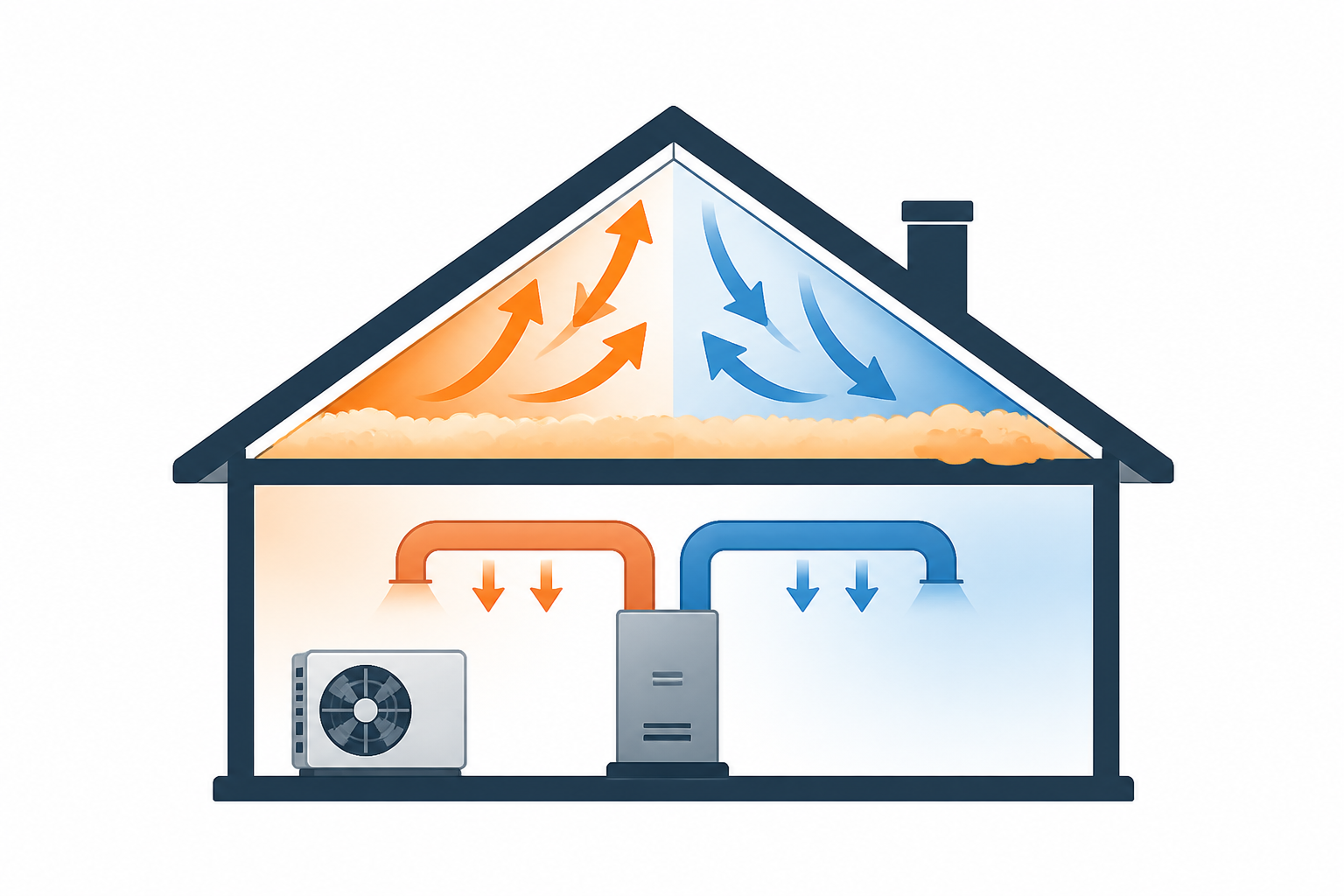
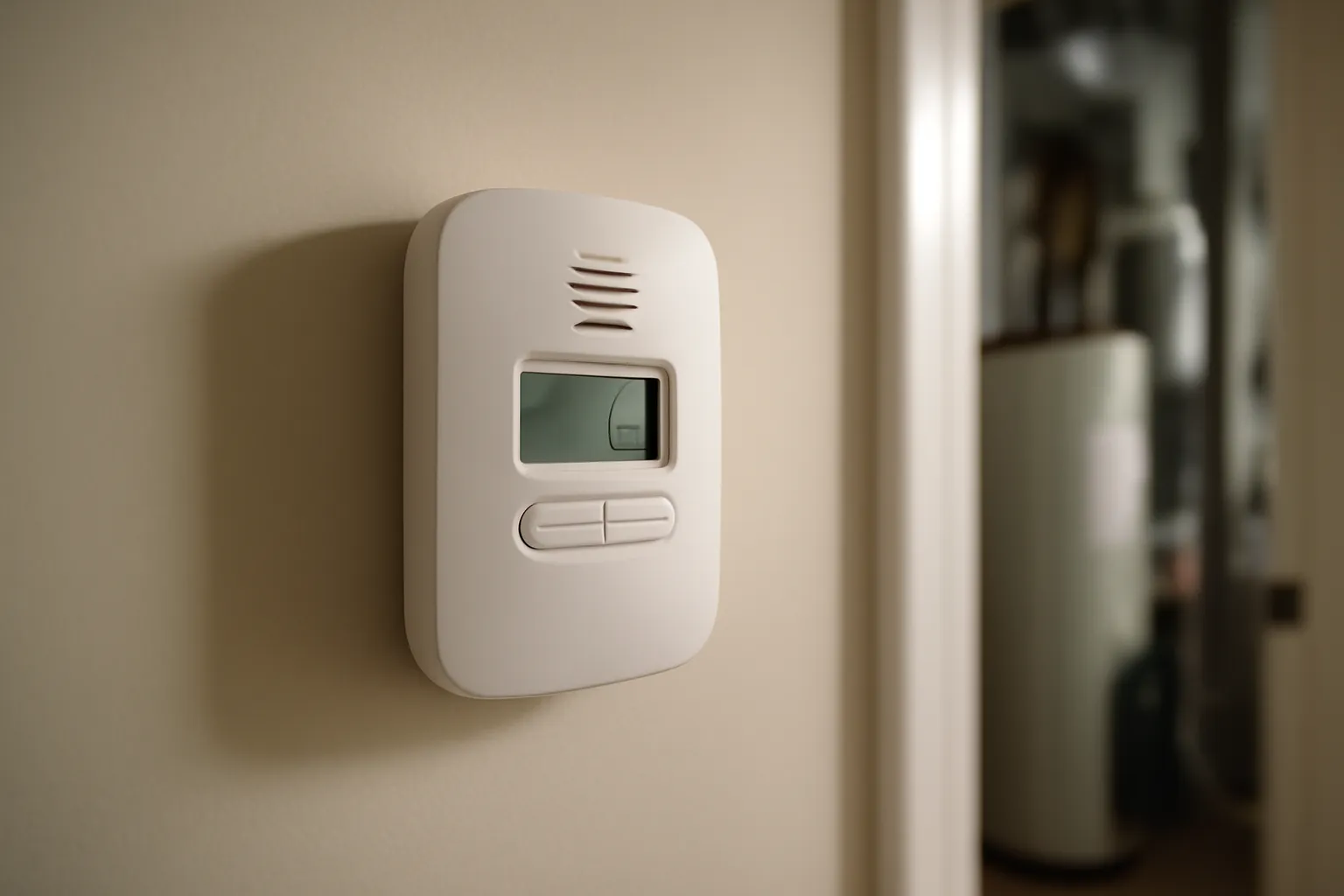
Owning a slick air quality gadget does not mean your household is protected from carbon monoxide poisoning — and that false sense of security nearly caught up with a client of mine. Picture a homeowner (we’ll call her Karen) who’d just splurged on one of those trendy smart air monitors, the kind with a polished app tracking temperature, humidity, VOCs, and CO2 levels. She was thrilled with it, convinced she’d finally cracked the code on her home’s air quality. Almost in passing, she mentioned her gas furnace had been acting “a little off” recently, and that she’d been waking up with headaches some mornings — a detail that, in hindsight, was the first sign something was seriously wrong. I asked her a simple question: “Does that thing measure CO?” Silence. Then: “Wait, isn’t that the same as CO2?” That exact confusion — mistaking carbon monoxide for carbon dioxide — is the single most common misunderstanding I run into on the job. Karen’s monitor was doing its job perfectly fine for CO2. Carbon monoxide, though? Completely invisible to it. Turned out her furnace had a cracked heat exchanger quietly leaking combustion gases into her living space. She wasn’t in immediate danger that morning, but give it until spring and that story ends very differently. This post exists so nobody else has to learn that lesson the hard way. If the line between CO and CO2 has always been a little blurry for you, or you’re second-guessing whether your current setup actually has your family covered, stick with me — this is the plainest explanation I know how to give, built from years of crawling attics and mechanical closets to see what actually keeps people safe.
CO and CO2: Two Very Different Gases Hiding Behind Similar Names
Let’s clear up the science, because this isn’t just a labeling mix-up — it’s an actual gap in home safety. Carbon monoxide and carbon dioxide share two letters in their names and almost nothing else. Different origins, different effects on the human body, and — this is the part that trips people up — completely different sensor technology required to detect each one. Treating them as interchangeable is like assuming a smoke alarm and a radon test kit do the same job. They don’t come close.
Carbon Monoxide (CO): The Threat You Can’t Sense
Incomplete combustion is where carbon monoxide comes from. Whenever a fuel source — natural gas, propane, oil, wood, gasoline — burns without adequate oxygen, CO gets produced as a byproduct. Around your house, that puts your furnace, water heater, boiler, gas range, fireplace, attached garage, and any portable generator squarely on the list of potential sources. Normally, these appliances push CO safely outdoors through venting. Trouble starts when something in that system fails: a cracked heat exchanger, a clogged flue, backdrafting, or a generator running indoors during an outage.
Here’s the unsettling part — CO has no color, no smell, no taste whatsoever. Nothing about it tips you off. Between 10 and 35 parts per million (PPM), extended exposure brings on headaches and exhaustion, symptoms most people chalk up to a cold or a rough night’s sleep. Once levels hit 70 PPM and stay there for one to four hours, residential CO alarms are engineered to sound, per the UL 2034 safety standard most units are certified against. Translation: your alarm might not go off until you’ve already been breathing elevated CO for a good stretch of time. Push that to 150–200 PPM and you’re looking at headaches and dizziness within two to three hours. At 400 PPM, the situation turns life-threatening inside three hours. And at 800 PPM or higher, consciousness can slip away in under sixty minutes. The mechanism behind all this: CO latches onto hemoglobin in your bloodstream — the very molecule responsible for carrying oxygen — and it does so with far greater efficiency than oxygen itself. The result is that your blood stops delivering oxygen to vital organs even though your lungs keep pulling in air normally. That’s the reason CO gets treated as a life-safety hazard, not merely a comfort concern.
Carbon Dioxide (CO2): Useful Data, Not a Danger Sign
Every breath you exhale contains carbon dioxide. Outdoors, it hovers around 420 PPM naturally, a number that’s crept upward for decades as atmospheric conditions shift. Indoors, anyone occupying a room adds a steady stream of CO2 into the air. A home with solid airflow keeps that number in check. A tightly sealed, energy-efficient home without enough fresh-air exchange, on the other hand, lets it build. ASHRAE recommends staying under 1,100 PPM indoors. Cross 1,000 PPM and studies show cognitive performance starts slipping — slower reaction times, foggier decision-making, drowsiness creeping in. Past 2,000 PPM, headaches and real fatigue show up. Beyond 5,000 PPM you’re in genuinely hazardous territory, though a residential space reaching that point without a combustion source involved is rare. At the levels typically found in homes, CO2 itself isn’t toxic — it’s a stand-in measurement, a signal that your ventilation isn’t keeping pace and that it’s time to bring in more fresh air. The sensors that track CO2 use NDIR (non-dispersive infrared) optical technology, which operates on completely different principles than the electrochemical sensors built into CO detectors. That’s precisely why a gadget billed as an “indoor air quality monitor” might happily report CO2, temperature, humidity, and VOC levels while leaving out CO entirely. Different sensor types, different purpose — and plenty of consumer air-quality devices simply skip the electrochemical component needed to catch CO. Leaving that out becomes a real hazard the moment a homeowner assumes their smart monitor already has them covered.
Here’s the takeaway on how CO and CO2 differ when it comes to home safety: carbon monoxide is a combustion byproduct that can kill you, and it needs its own dedicated life-safety detector. Carbon dioxide is a ventilation gauge — a nudge to crack a window or run your ERV. Both deserve your attention. One is not a substitute for the other.
The Device That Picked Up What Karen’s Smart Monitor Never Would
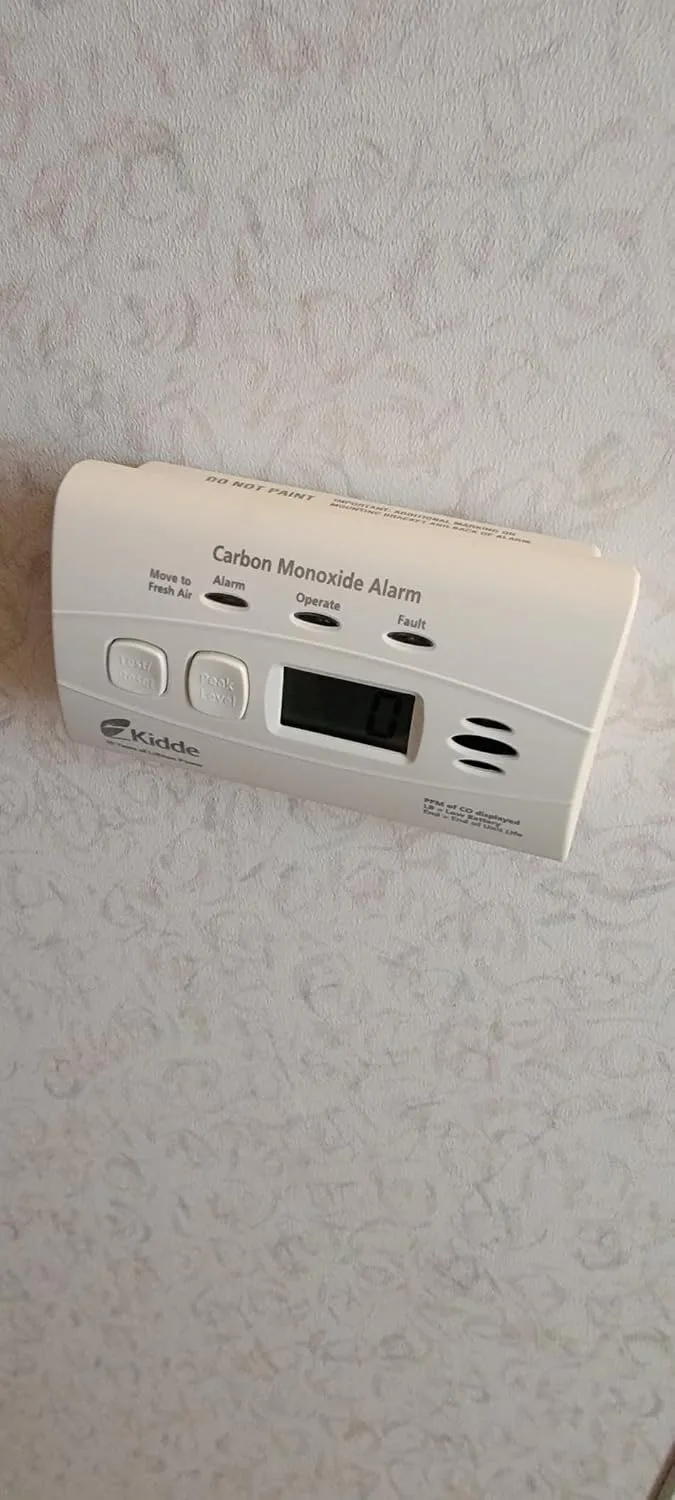
Karen’s air quality app had CO2 tracking down cold — but it was completely oblivious to the danger actually building in her home. Carbon monoxide from that failing furnace was already circulating through her air, unnoticed and unmeasured. A standalone CO detector is the one piece of safety equipment no smart home ecosystem can stand in for.
Where it delivers
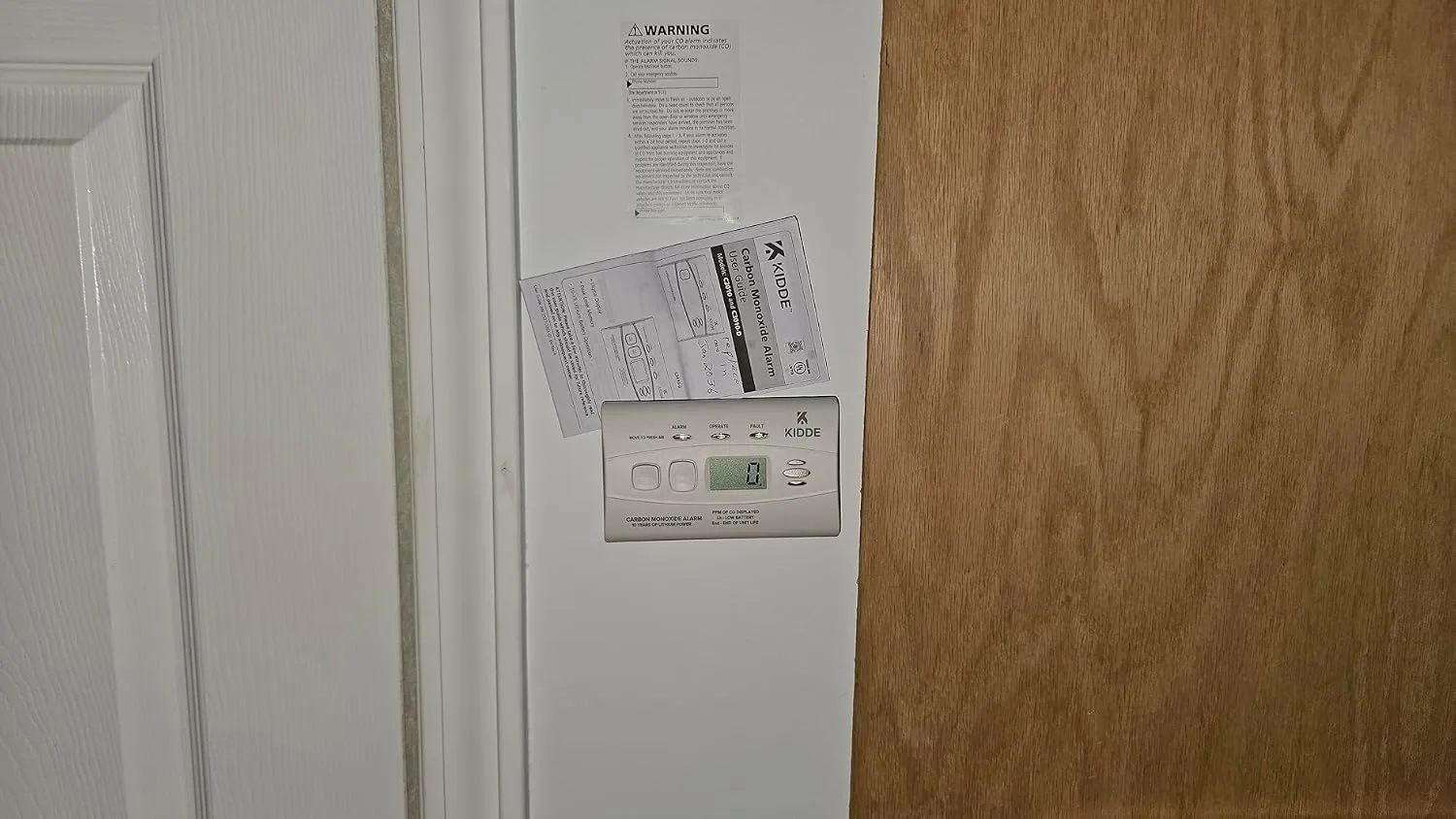
- A sealed 10-year battery means you’re never staring down a dead unit on the one winter night it actually mattered — I’ve walked into far too many homes where the detector had gone silent months earlier and nobody noticed.
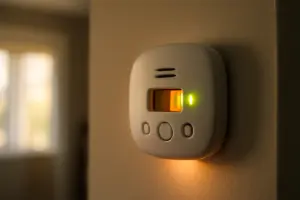
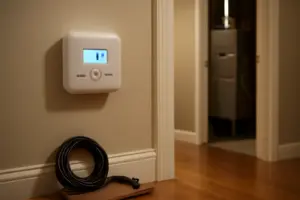
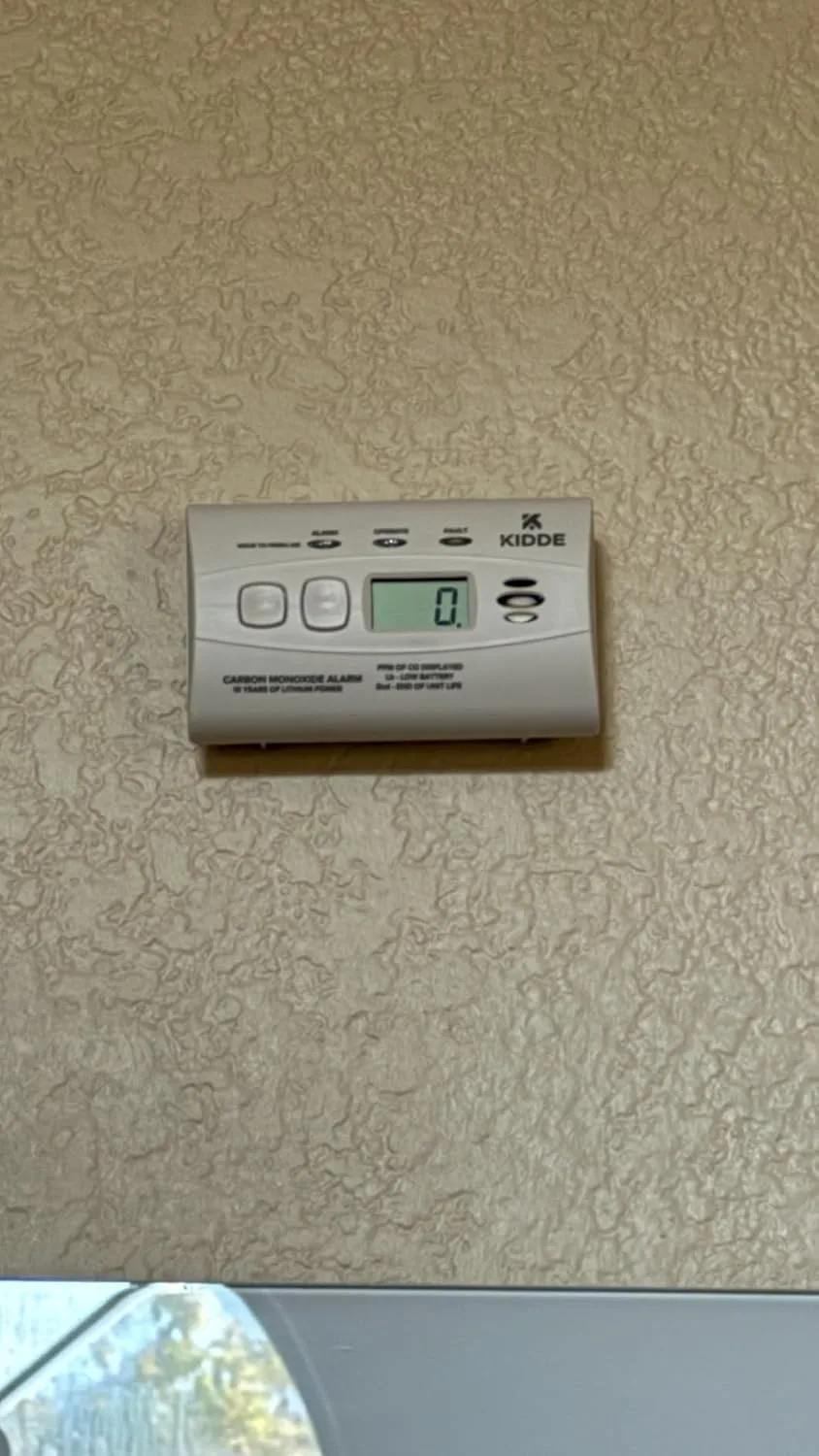
- A backlit digital readout shows the live CO count, letting you catch a climbing trend before it ever reaches alarm territory — exactly the kind of early warning that would’ve mattered for Karen while she was still troubleshooting her furnace.
- Its slim wall-mounted shape doesn’t shout “safety equipment” — it fits quietly into a bedroom or hallway instead of the bulky, obvious look that tempts people to tuck it away in a closet, which is exactly where it can’t do anyone any good.
Where it falls short
- The alarm volume will absolutely wake you, but that opening chirp-chirp pattern can be mistaken for a routine low-battery signal on some other device, leading some homeowners to brush it off instead of recognizing an actual CO event unfolding.
- Coverage is limited to whatever room the unit sits in — meaning you’ll need one on every floor, particularly near sleeping areas, which turns this into an investment across several units rather than a single fix-it purchase.
I’ll be honest: when Karen first called back after installing one, I held my breath waiting to hear if she’d found dangerous levels—part of me worried the damage was already done. But that detector caught what her app couldn’t, and it gave her the proof she needed to call a technician immediately. Get the Kidde Carbon Monoxide Detector, 10-Year Battery, Digital Backlit Display (COBD10) today.
About This Article

Written by Dana Sorensen. Homeowner turned building-science obsessive. I help other homeowners understand attic insulation, ventilation, and air quality so they can stay comfortable year-round without overspending on energy bills. More about this site.
Scope and limits. Dana is a homeowner who studies building science, not an HVAC contractor or licensed tradesperson. Anything involving combustion appliances, gas lines, or electrical work belongs with a licensed contractor.
Verify this against a primary source
Specifics change, and your situation may differ from the one described here. These are the authorities worth checking directly:
- ENERGY STAR — recommended insulation R-values by climate zone
- U.S. Department of Energy — air sealing and insulation guidance
- EPA Indoor Air Quality — ventilation and indoor air quality standards