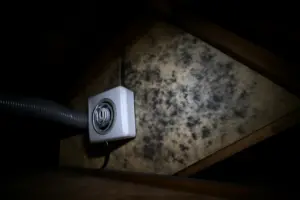
What a manufacturer’s spec sheet never mentions — and what no code inspector flags during a final walkthrough — is what happens to the air trapped inside a house once every last gap has been sealed shut. Mike, a homeowner just outside Charlotte, North Carolina, found that out the hard way last spring. He’d gone all-in on a whole-house spray foam job, swapped out every window and door, and cut his heating and cooling bills nearly in half. He was proud of how tight the place had become. Then, roughly six months later, mornings started coming with headaches, the air smelled stale no matter how often the family scrubbed the house, and his wife’s allergies were somehow worse than before the renovation ever happened. He called me assuming his HVAC equipment was the problem. It wasn’t. His house had sealed itself so completely it was, in effect, slowly suffocating his own family. Nothing was exchanging the air — carbon dioxide built up while everyone slept, Tuesday’s dinner smell was still lingering by Thursday, and moisture from showers and simple breathing had nowhere to escape the way it used to in his old, drafty house. Solving it wasn’t complicated once we pinned down the real culprit, but it hinged on choosing correctly between an ERV vs HRV — figuring out which fresh air ventilation system actually fit his climate and his home. That decision carries more weight than most homeowners assume, and getting it wrong ends up costing you comfort, energy dollars, or often both. Here’s exactly how I work through that decision and what I typically end up recommending.
The Building Science Behind Why Airtight Homes Turn On You
Here’s a piece of building science that plenty of contractors — never mind homeowners — never fully absorb: the very upgrades that shrink your energy bills also turn your house into a sealed container. And sealed containers don’t clean themselves out; they stockpile whatever ends up trapped inside them.
Houses used to breathe by accident rather than by design. Leaky window frames, drafty attic hatches, rim joists that were never properly sealed — all of it kept air trickling in and out around the clock. Wasteful? Absolutely. But that constant trickle also gave indoor pollutants, carbon dioxide, and excess moisture somewhere to go. The old benchmark held that a typical home swapped out its entire volume of air roughly once every hour purely through unintentional leakage. Today’s high-performance builds — especially once spray foam and aggressive sealing enter the picture — often drop to somewhere between 0.1 and 0.2 air changes per hour. That’s a massive reduction.
ASHRAE Standard 62.2, the industry’s yardstick for residential ventilation, sets the target at roughly 0.35 air changes per hour or a floor of 15 CFM of outdoor air per occupant — whichever figure comes out larger. Run that math for a four-person household in a 2,000-square-foot home and you land somewhere between 60 and 90 CFM of continuous fresh air as your goal. A drafty old house might clear that bar without any help at all. A tightly sealed modern one never will — not without a mechanical system doing the heavy lifting.
So what happens when that target goes unmet? Carbon dioxide climbs past 1,000 ppm, the threshold where mental sharpness starts slipping and fatigue sets in. VOCs off-gassing from flooring, furniture, and cleaning products build up in concentration. Moisture generated by cooking, bathing, and simple respiration has nowhere to escape to. In humid regions, that trapped moisture becomes mold fuel. Everywhere else, it just makes for stale, uncomfortable air.
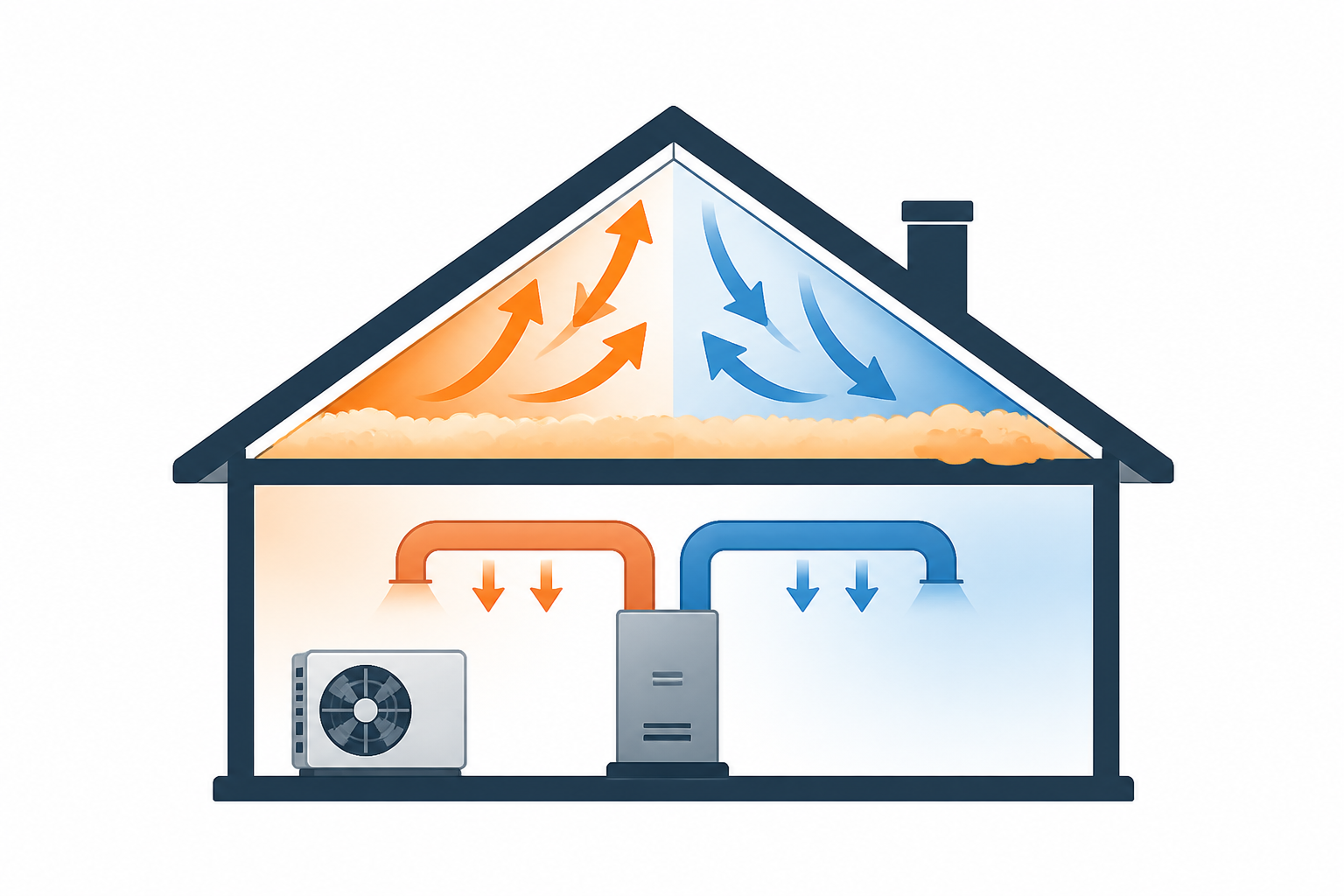
The mechanical fix comes down to installing whole-house ventilation — either an HRV (Heat Recovery Ventilator) or an ERV (Energy Recovery Ventilator). Functionally, both handle the identical task: pull stale air out of the house while drawing fresh air in, running both streams through a heat-exchanger core so energy transfers from one to the other. You end up with fresh air without dumping the heating or cooling dollars you’ve already spent. Where they split apart is in exactly what that core allows to cross over.
An HRV moves sensible heat only — plain temperature — between the two airstreams. Frigid incoming air gets a head start in warmth thanks to the outgoing exhaust air during winter. Moisture, though, stays locked in its own stream and never crosses over. An ERV goes a step further, transferring both heat and moisture — what’s known as latent energy. In practice, that means an ERV core can shuttle water vapor between the two streams, and depending on where you live, that single capability changes everything.
So which one wins the ERV vs HRV — which fresh air ventilation system — argument? Climate zone settles it:
- Cold, dry regions (Zones 5–7 — Minnesota, Maine, most of Canada): Go with an HRV. Winter air is already bone-dry, indoor humidity is precious, and the goal is holding onto whatever moisture you’ve got. An HRV keeps the two moisture streams from mixing, so parched outdoor air enters without stripping the humidity already inside your home.
- Hot, humid regions (Zones 1–3 — Florida, the Gulf Coast, the Southeast): Go with an ERV. Summer air outside is saturated with moisture, and an ERV hands that humidity off to the outgoing exhaust stream before it ever reaches your living space — essentially pre-drying the incoming air. That translates into a meaningfully lighter load on your air conditioner.
- Mixed climates (Zone 4 — Mid-Atlantic, Pacific Northwest transition areas): An ERV typically wins here too. It handles both the sticky cooling season and the moderately cold heating season without hitting the extremes that would push you toward a pure HRV.
Mike’s place near Charlotte lands squarely in Zone 4, leaning humid. That made the ERV call an easy one — no debate necessary.
How the Right ERV Ended Mike’s Headaches Without Bleeding Away Conditioned Air
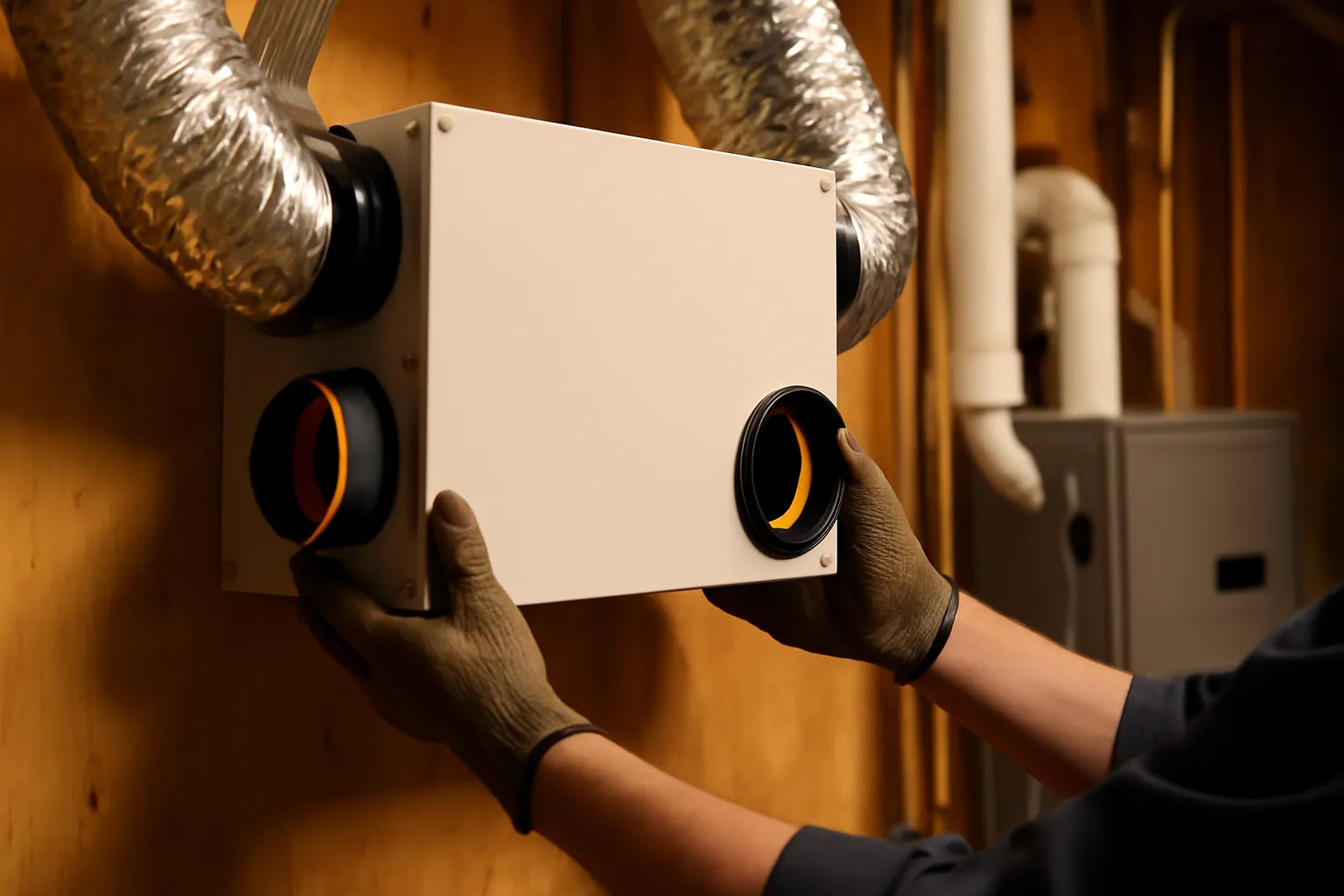
Mike’s airtight shell was, ironically, performing exactly as designed — which meant it was also holding onto stale air, CO2, and moisture with nowhere for any of it to go. An ERV (Energy Recovery Ventilator) fixes that by pulling in fresh outdoor air while reclaiming the heating or cooling energy carried in the air headed out, so none of the efficiency he’d already paid for gets thrown away.
Where it earns its keep
- Swaps stale indoor air for fresh outdoor air while reclaiming 60–80% of the temperature energy in the process, so heating and cooling costs stay in check even with constant fresh-air exchange running
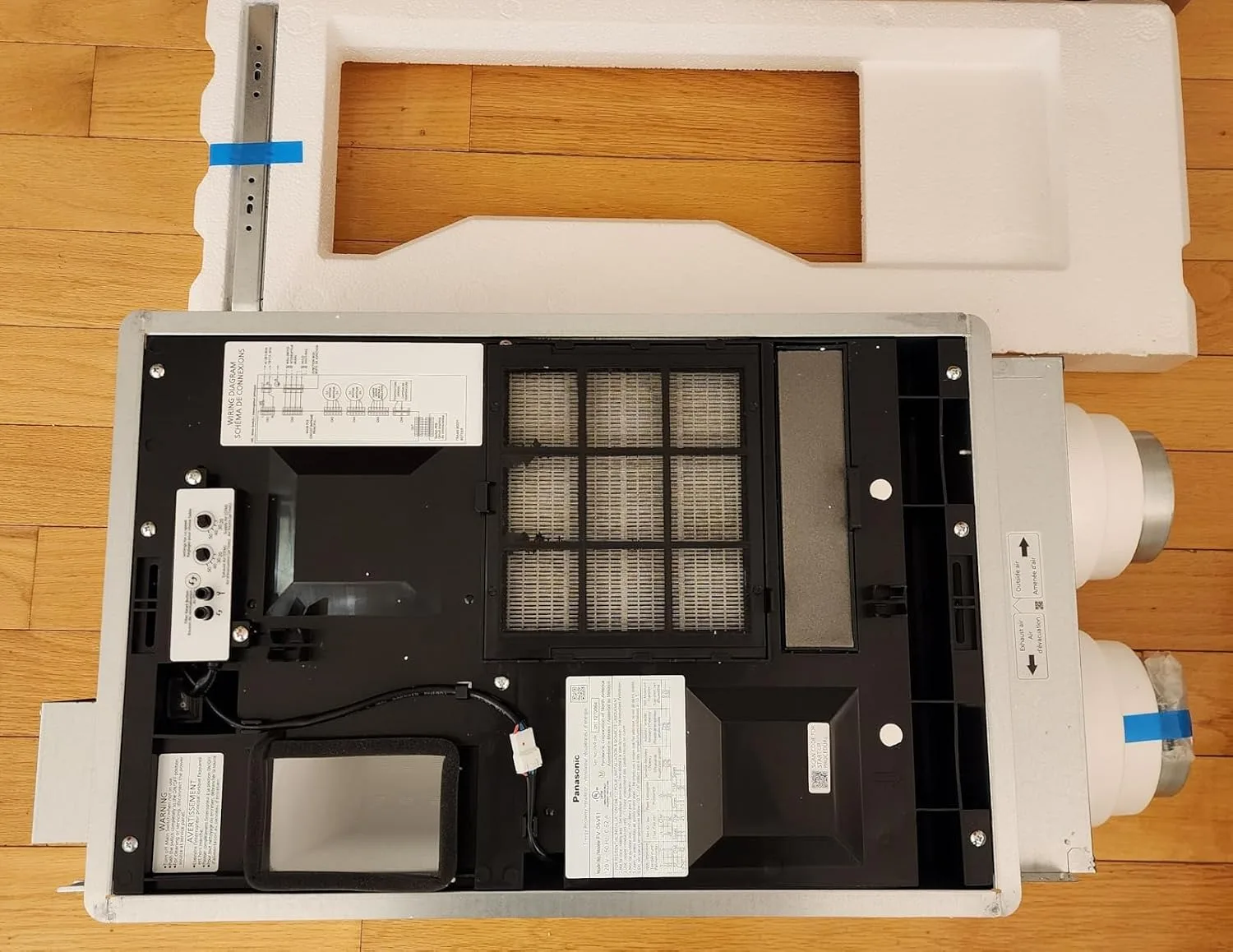
- Runs near-silently — the Panasonic unit moves 60 CFM while staying almost impossible to hear — so the household gets steady air changes without anyone noticing a fan’s even on
- Mounts to either wall or ceiling, giving you room to tuck it into a hallway, laundry area, or utility closet without cutting into walls that are already finished
Where it falls short
- Needs duct routing mapped out before install day — retrofitting new duct runs to bedrooms and living spaces in a house that’s already sealed up tight can get expensive in a hurry
- The core has to be cleaned somewhere between every 6 and 12 months in dusty climates or pet-heavy households, or performance drops noticeably and you lose part of that recovered energy benefit
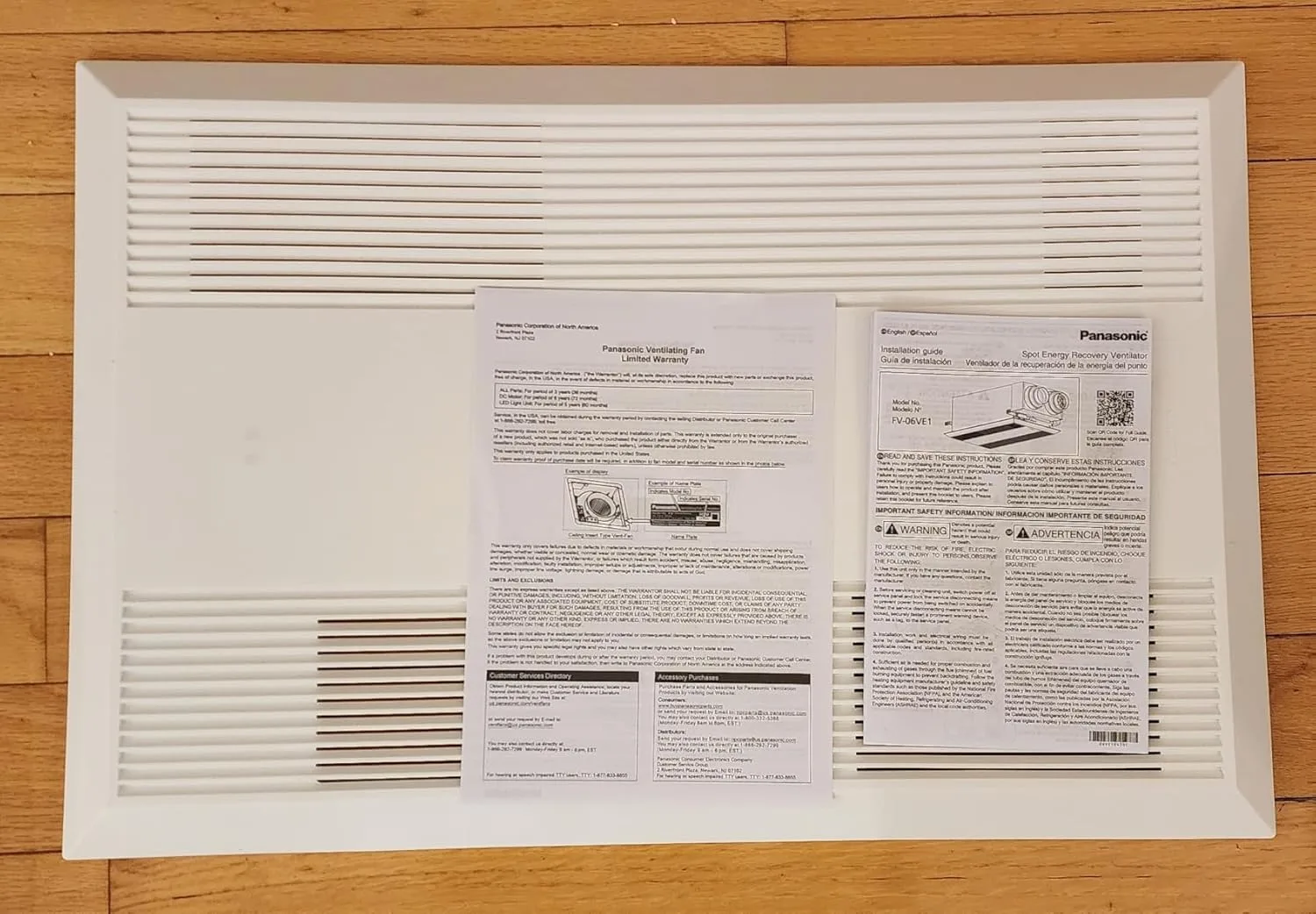
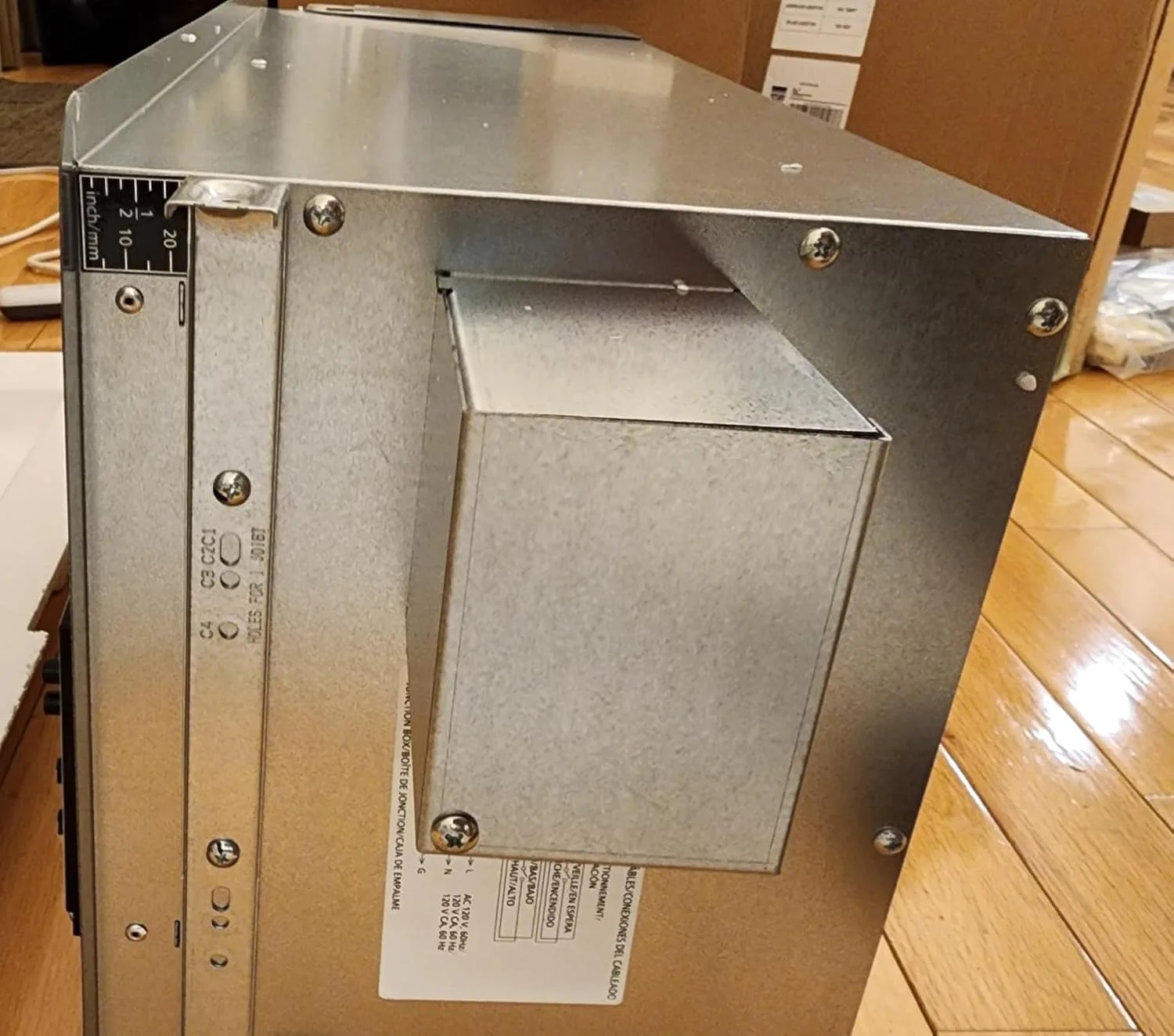
When I first quoted Mike an ERV install, I worried the ductwork cost might scare him off, but once I showed him the actual price of replacing his HVAC system in three years from mold and moisture damage, the decision became clear. Check out the Panasonic WhisperComfort 60 Energy Recovery Ventilator (ERV), Wall/Ceiling Mount, FV-06VE1 as a starting point for your own tight-home fix.
About This Article

Written by Dana Sorensen. Homeowner turned building-science obsessive. I help other homeowners understand attic insulation, ventilation, and air quality so they can stay comfortable year-round without overspending on energy bills. More about this site.
Scope and limits. Dana is a homeowner who studies building science, not an HVAC contractor or licensed tradesperson. Anything involving combustion appliances, gas lines, or electrical work belongs with a licensed contractor.
Verify this against a primary source
Specifics change, and your situation may differ from the one described here. These are the authorities worth checking directly:
- ENERGY STAR — recommended insulation R-values by climate zone
- U.S. Department of Energy — air sealing and insulation guidance
- EPA Indoor Air Quality — ventilation and indoor air quality standards