My meter clocks 2,400 PPM at seven in the morning, sensor still sitting on the nightstand where I left it overnight, inside the master bedroom of a newer, tightly built townhome. Fifteen-plus years running home performance assessments, and this is one of those readings that instantly reframes a whole case. The couple living here had spent months chasing chronic fatigue, morning headaches, and a mental fog that mysteriously cleared the second they stepped out the front door. Doctor visits, a new mattress, chalking it up to stress — none of it touched the actual cause. Thirty seconds after I pulled up the overnight CO2 log for their bedroom, the mystery wasn’t a mystery anymore. Two people breathing all night in a sealed-up room with zero mechanical ventilation had essentially built themselves a slow-release CO2 chamber. Nothing was wrong with them. Their bedroom was the problem. Grasping what a CO2 monitor’s indoor air quality numbers actually mean isn’t just trivia for HVAC nerds — it’s the line between blaming yourself for feeling wrecked every morning and identifying something you can actually fix. Consider this the primer I wish landed in every homeowner’s inbox before they burn money on supplements, air purifiers, or a stack of unnecessary lab tests. CO2 has no color, no smell, gives you zero warning — yet a $50–$100 sensor will put a number on it instantly, and that number tends to say something surprising about how your house actually breathes.
How CO2 Accumulates Indoors — and the Toll It Takes on You
Start with fundamentals most people skip past: CO2 isn’t some hazard confined to factories or gas furnaces. Every breath you exhale sends out roughly 40,000 PPM of CO2. A properly ventilated house dilutes that and pushes it back outside. A tightly sealed modern build without enough fresh-air exchange just lets it pile up — quietly, continuously — and that buildup has a direct line to your ability to think clearly, sleep well, and feel okay in general.
Outdoor air currently sits around 420 PPM as a baseline — climbed up from roughly 280 PPM before the home era, but that’s still the number we measure everything indoors against. Below is the breakdown of indoor CO2 ranges every homeowner ought to have memorized:
- 400–600 PPM: Top marks — ventilation is keeping pace, and the air inside is basically indistinguishable from outdoors.
- 600–800 PPM: Fine. A touch higher than baseline, but still normal for a room with people in it.
- 800–1,000 PPM: This is where stuffiness sets in — ventilation’s losing ground, so crack a window or take a look at your HVAC system.
- 1,000–1,500 PPM: Drowsiness creeps in, focus slips, sleep quality takes a hit — and this range is exactly where the average bedroom lands by morning.
- 1,500–2,500 PPM: Headaches, fatigue, genuine trouble concentrating. I run into this constantly in shut-door home offices and finished basements.
- 2,500–5,000 PPM: Nausea, an elevated heart rate, and noticeably worse decision-making. At this point you’re dealing with a genuine ventilation breakdown, not just a stuffy room.
- 5,000+ PPM: OSHA set this as the workplace exposure ceiling for good reason — hold at levels beyond this and you’re into oxygen displacement territory with real physiological risk.
The question that comes up constantly: what should CO2 levels actually be inside a house? Straight answer — stay under 800 PPM in rooms people occupy, and under 600 PPM is genuinely great. Once a space consistently sits above 1,000 PPM, that’s my cue that ventilation needs attention.
Here’s the part that trips people up about high CO2 levels home symptoms: they creep in slowly and look almost exactly like a handful of other, unrelated conditions. A slow, chronic rise in CO2 doesn’t announce itself like a gas leak would. It just feels like exhaustion, fuzzy thinking, a general sense of not being quite right. Since it builds gradually and the symptoms could describe half a dozen ailments, people chalk it up to stress, allergies, bad sleep habits, or simply getting older. The actual culprit, more often than not, is just a lack of fresh air moving through the space.
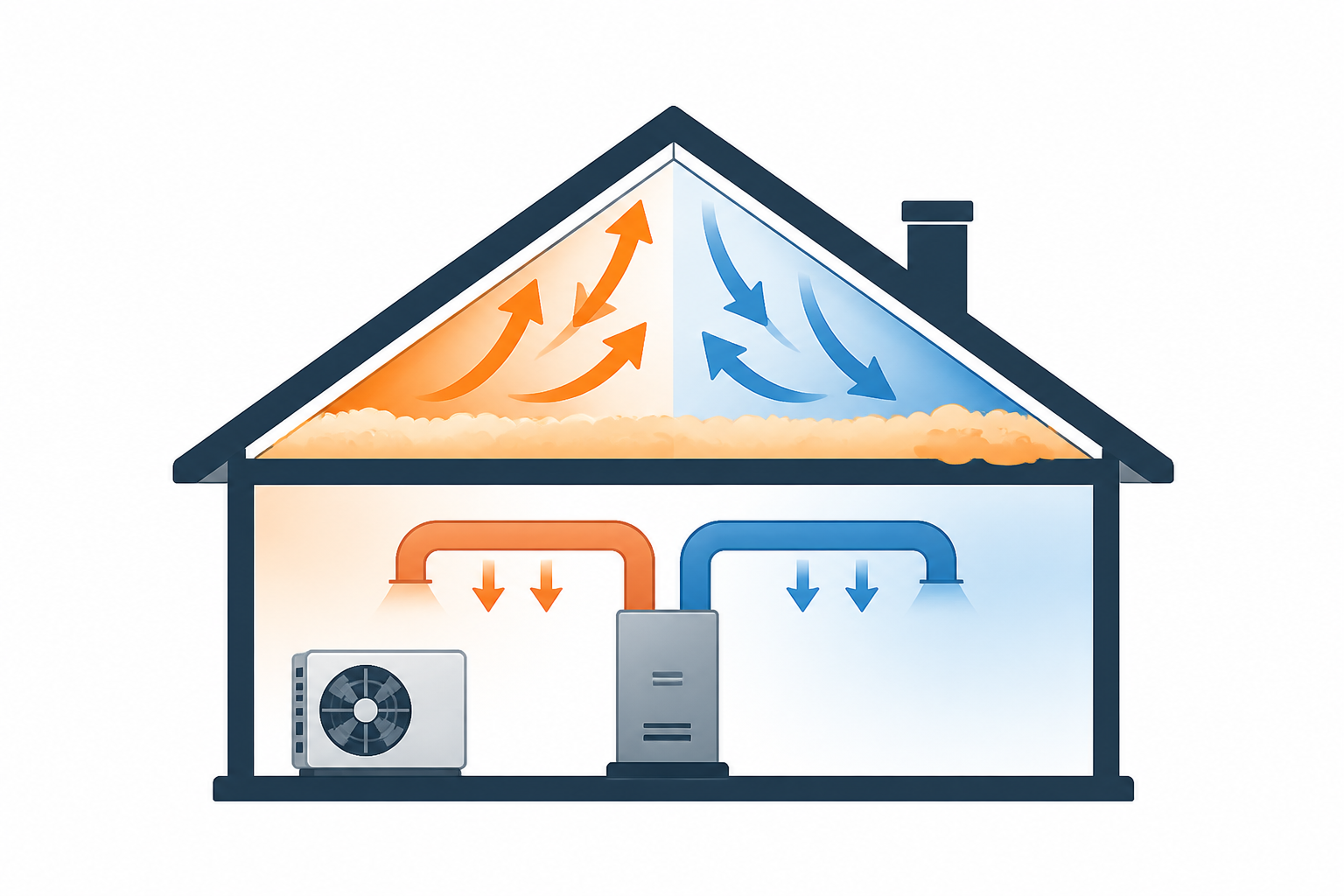
Once you understand the mechanics, it’s easy to predict where CO2 spikes hardest. Bedrooms are the worst offenders — two people in a closed-up room overnight with no ventilation can drive levels past 2,000 PPM before sunrise. That’s exactly why cracking a window, even in the dead of winter, leaves you feeling sharper the next morning. Home offices rank right behind bedrooms, particularly basement offices or interior rooms without operable windows. Basically, any room with the door shut, weak return-air coverage, and people in it regularly is a candidate for CO2 buildup. Ironically, newer energy-efficient homes are more prone to this than older, leakier ones — the tighter the envelope, the more the house depends on deliberate mechanical ventilation to replace the fresh-air exchange that random drafts used to provide for free.
CO2 Monitor Indoor Air Quality Levels Meaning — Why NDIR Sensors Are Non-Negotiable
Before naming products, it’s worth pausing on sensor technology — this is exactly where homeowners get burned buying cheap gadgets that don’t measure what the packaging claims.
Consumer CO2 sensors come in two flavors. The first is genuine NDIR — Non-Dispersive Infrared — and it’s the real deal. Here’s the mechanism: infrared light travels through a sample chamber holding the air being tested. CO2 molecules soak up particular infrared wavelengths, the sensor tracks how much of that light gets absorbed, and from that absorption it calculates concentration with tight precision — usually within ±30–50 PPM. These sensors also last — a typical NDIR unit runs 10–15 years before it needs replacing. This is the same tech used in home monitoring setups, lab instruments, and any serious IAQ tool.
The second category, and this distinction matters, is what’s marketed as “eCO2” — estimated CO2. These aren’t CO2 sensors at all; they’re VOC sensors that guess at CO2 concentration by measuring volatile organic compounds and running the numbers through an algorithm. No actual CO2 detection happens. They’re notoriously unreliable for real CO2 measurement, they drift badly over time, and readings can swing based on anything from a spray cleaner to last night’s dinner smell. I’ve personally watched an eCO2 gadget claim 600 PPM in the same room where my calibrated NDIR unit read 1,800 PPM. Not even in the same ballpark. If your goal is figuring out whether your home actually has a CO2 issue, an eCO2 sensor won’t get you there.
Shopping for a best CO2 monitor for home NDIR technology means the sensor type is the very first spec to verify — before price, before styling, before anything else. If a listing doesn’t explicitly call out “NDIR sensor,” treat it as though it isn’t one.
The Device That Confirmed Their Symptoms Were Real, Not Imagined
Measurement comes first — fix comes second. Skip the CO2 monitor and you’re left guessing whether stale air is behind your household’s exhaustion and mental fog, and most people default to blaming themselves before they ever suspect the air itself.
Where It Delivers
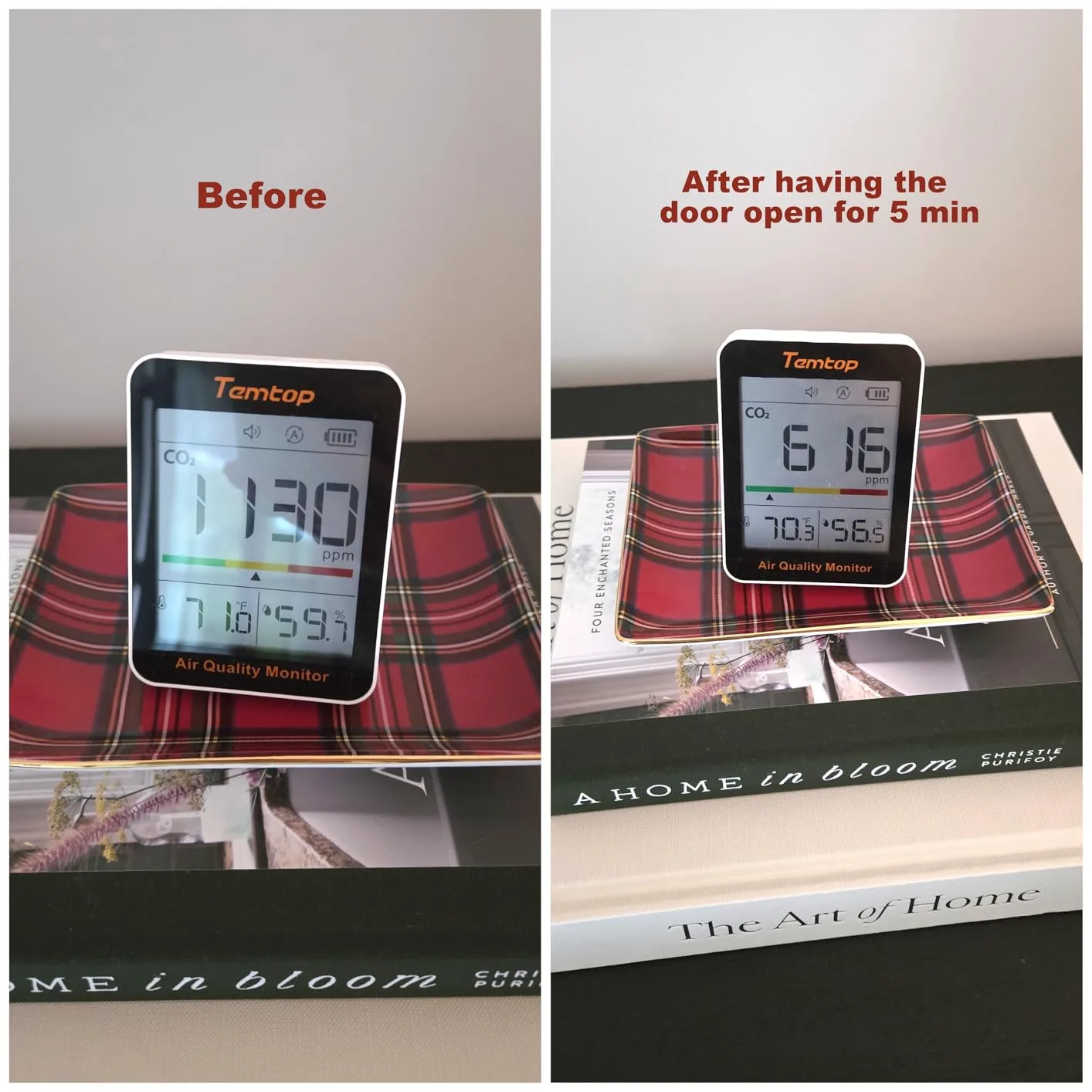
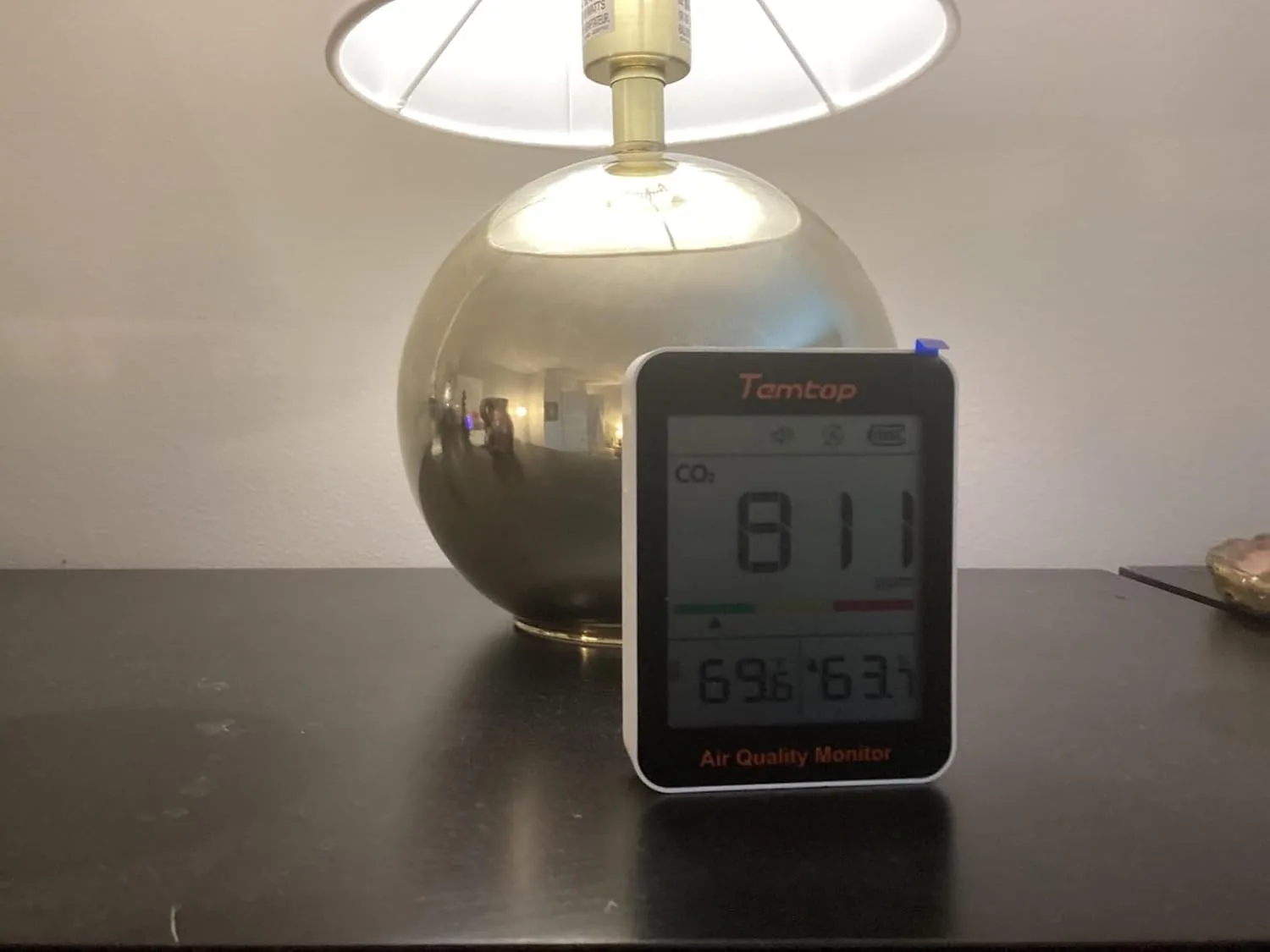
- Live CO2 numbers hand you immediate confirmation of a ventilation issue — no lab turnaround, no contractor speculation. I saw that couple’s expressions shift the instant the display hit 1,200 ppm in their bedroom overnight.
- Compact enough to carry from room to room, letting you pinpoint the trouble spot before you spend a dime on upgrades. It’ll tell you straight up whether the bedroom, the office, or the basement is the actual offender.
- Built-in threshold cues (healthy under 1,000 ppm, borderline at 1,000–1,500, poor above 1,500) turn the vague word “stuffy” into an actual number you can act on.
Where It Falls Short
- Battery performance is okay, not great — expect more frequent charging than you’d like if you’re running a multi-day survey through the whole house.
- It won’t diagnose *why* CO2 is elevated (poor ventilation vs. occupant density vs. HVAC failure) — it only proves the problem is real, so a proper performance assessment is still needed to actually solve it.
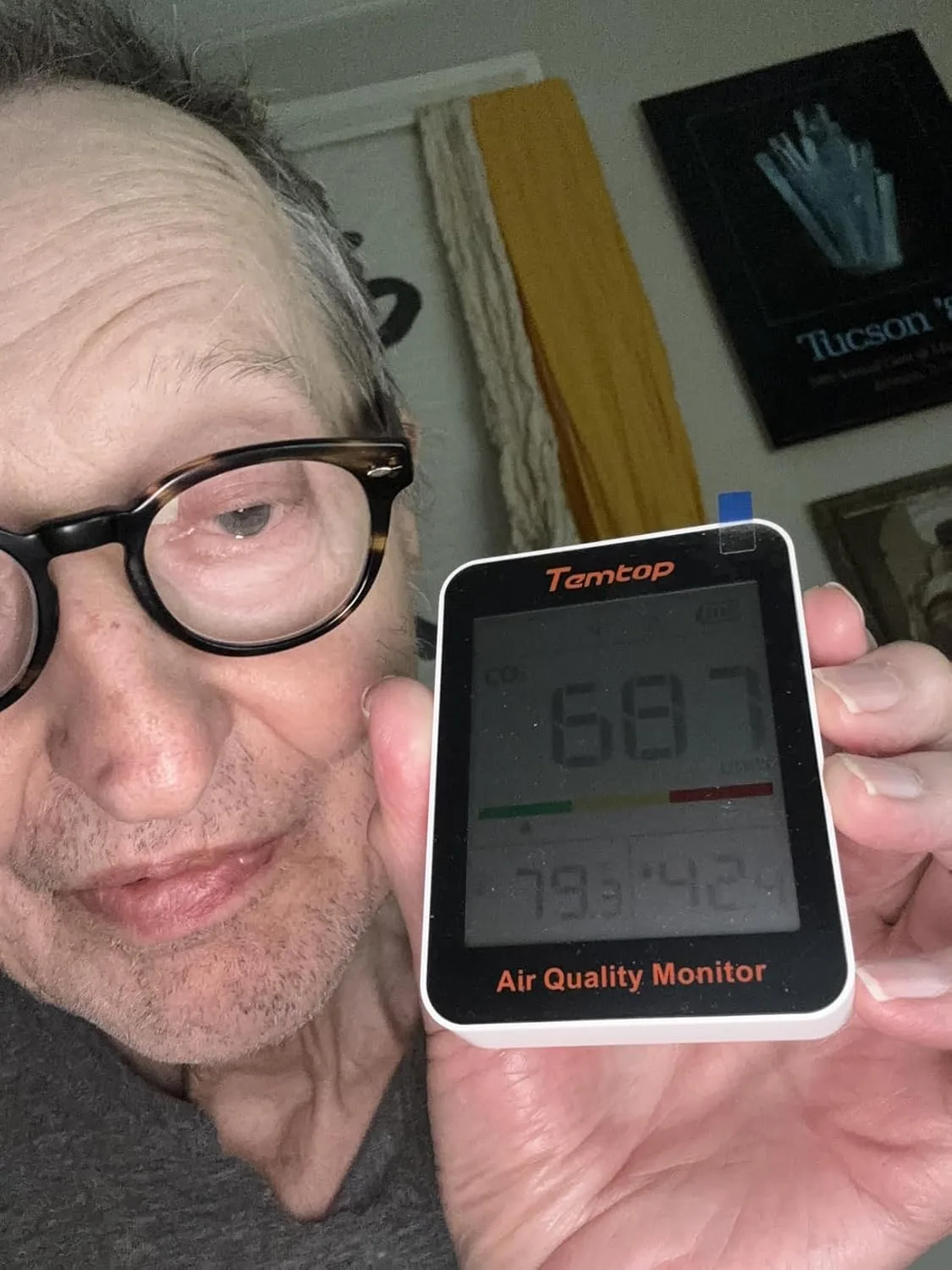
I’ll admit, my first reaction to home CO2 monitors was skepticism—I thought they’d give false readings or overcomplicate a simple ventilation question—but watching objective data change a homeowner’s perspective from “we’re paranoid” to “we have a real problem to solve” made me a believer. Get the Temtop CO2 Monitor Indoor Air Quality Monitor and start measuring.
About This Article

Written by Dana Sorensen. Homeowner turned building-science obsessive. I help other homeowners understand attic insulation, ventilation, and air quality so they can stay comfortable year-round without overspending on energy bills. More about this site.
Scope and limits. Dana is a homeowner who studies building science, not an HVAC contractor or licensed tradesperson. Anything involving combustion appliances, gas lines, or electrical work belongs with a licensed contractor.
Verify this against a primary source
Specifics change, and your situation may differ from the one described here. These are the authorities worth checking directly:
- ENERGY STAR — recommended insulation R-values by climate zone
- U.S. Department of Energy — air sealing and insulation guidance
- EPA Indoor Air Quality — ventilation and indoor air quality standards