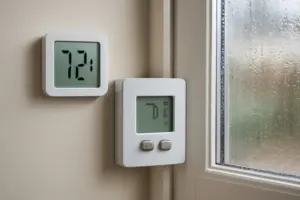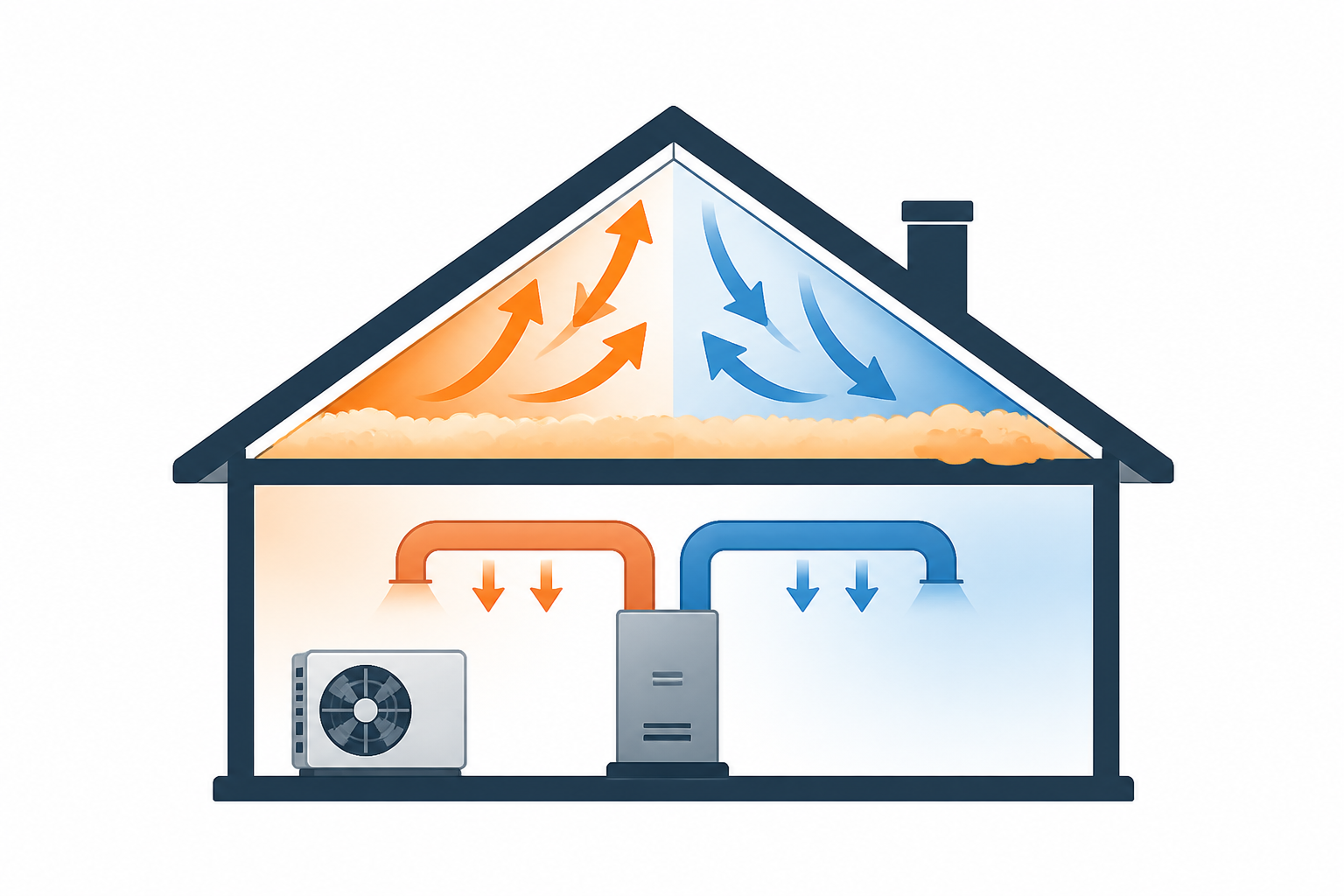

My thermal camera is lit up like a heat map gone wrong — a bright orange band tracing the seam where Greg’s contractor tied his new 400-square-foot sunroom into the existing trunk line. The manometer reading confirms what the image already told me: static pressure is climbing, airflow to that room is barely a trickle, and the $4,200 he paid to stretch his ductwork out here bought him a space that’s sweltering by noon and ice-cold by midnight. His central system had been short-cycling for weeks, his power bill jumped $90 a month, and by the time I showed up, he’d had enough. Standing in that addition with the readings in front of me, I already knew what had gone wrong — and none of it traced back to the equipment itself. The real mistake happened long before anyone pulled a wire or cut into a duct. If you’re trying to decide between a mini split and central AC for your own addition, this is the conversation Greg wishes he’d had before he ever signed that contract.
Fourteen-plus years into doing HVAC installations and home-performance consulting, I’ve watched both approaches work beautifully and fail miserably in this exact situation — a fresh addition bolted onto an older home. There’s no single right answer that applies every time. But the failure patterns and the success patterns repeat often enough that once you can spot them, the right call stops being a guess. Let me walk you through it.
What Makes an Addition Behave Differently Than the Rest of the House
An addition is cut off, thermally, from the rest of your living space in a way no other room is. Usually it ties into the house along a single shared wall — everything else is new exterior wall, a fresh roof assembly, and either a slab or crawlspace underneath, each carrying its own set of insulation gaps. That combination means additions swing in temperature more widely and pick up more heat than any other room under your roof.
The central system already running your home was sized around your original floor plan. Tack on another 300 to 600 square feet and that original math no longer holds up. Proper sizing comes from a Manual J load calculation, done to ACCA standards — and running new duct off an existing trunk without redoing that calculation is a code violation in plenty of jurisdictions. Even where nobody checks, skipping it sets you up for exactly what happened to Greg.
I’ve opened up plenty of these duct extensions and found the same shortcuts every time: flex duct snaking off an undersized takeoff, zero balancing dampers anywhere in the run. The addition ends up starved for airflow while the rest of the house gets blasted with cold air trying to compensate. Nobody wins. That’s the backdrop you need before you can honestly weigh mini split against central AC for your addition.
Breaking Down the Real Costs: Mini Split vs. Central AC for an Addition
Here’s what the math actually looks like. A single-zone ductless mini split, fully installed, typically lands somewhere between $1,800 and $4,500 — the spread comes down to your region and how complicated the line set routing turns out to be. That figure covers the indoor and outdoor units, the line set itself, electrical work, and labor. A 12,000 BTU unit will comfortably cover up to roughly 750 square feet in most climate zones.
On paper, stretching your existing ductwork looks like the bargain option — often $800 to $2,500 just for the extension itself. What that number leaves out, though, is the air handler upgrade, the new zone damper, and the re-sizing work your system probably needs. Once those get added in, you’re realistically looking at $3,000 to $6,000 or beyond. And even after spending that much, the addition still might not be comfortable.
Running costs tilt heavily toward the mini split. An inverter-driven unit rated at 22 SEER2 pulls 30 to 40 percent less electricity than a standard central system doing the same job. Stretch that out over a decade, and the efficiency savings comfortably cover the higher price tag you paid going in. As an example: at $0.14 per kWh, running a 12,000 BTU mini split for eight hours a day across a five-month cooling season lands you around $100 to $140 annually. The equivalent load through a central system typically runs $190 to $260 for that same stretch.
The One Situation Where Central AC Is Actually the Smarter Pick
I won’t dance around it — there’s exactly one scenario where central air comes out ahead. If your current system is already undersized and a full replacement is already on your to-do list, it can make sense to size the new equipment to cover the addition from the start. That works when the addition backs up to a good chunk of interior wall, the duct run stays short and well-insulated, and the replacement system gets properly sized through a Manual J calculation. That’s three conditions that all have to line up — and in my experience, most retrofit jobs miss at least one of them.
Where Mini Splits Pull Ahead on Comfort
An inverter-driven mini split is constantly adjusting its output rather than slamming on at full power, hitting the setpoint, and shutting off. It eases back to a quiet hum and holds the room within roughly half a degree of whatever you’ve set. That’s an entirely different comfort experience compared to a single-stage central system that just cycles on and off.
Rooms with a lot of glass — sunrooms, three-season rooms, Florida rooms — take on radiant heat gain fast, and a mini split can track that shifting load in real time. A central system just can’t react quickly enough. That’s why even a duct extension sized correctly on paper still leaves a south- or west-facing room feeling off.
I found this out the hard way early on, on a 500-square-foot addition with a vaulted ceiling and six windows facing due west. The existing system had spare capacity on paper, so I talked the homeowner into a duct extension instead of a mini split. By four o’clock on a July afternoon, that room had climbed to 82°F with the thermostat set at 72°F. Six weeks later we went back and put in a mini split — the problem disappeared the same day it was installed. That job is where I learned that when peak heat hits matters just as much as how much total capacity you’ve got on paper.
How Complicated Is Installation, and Can You DIY It?
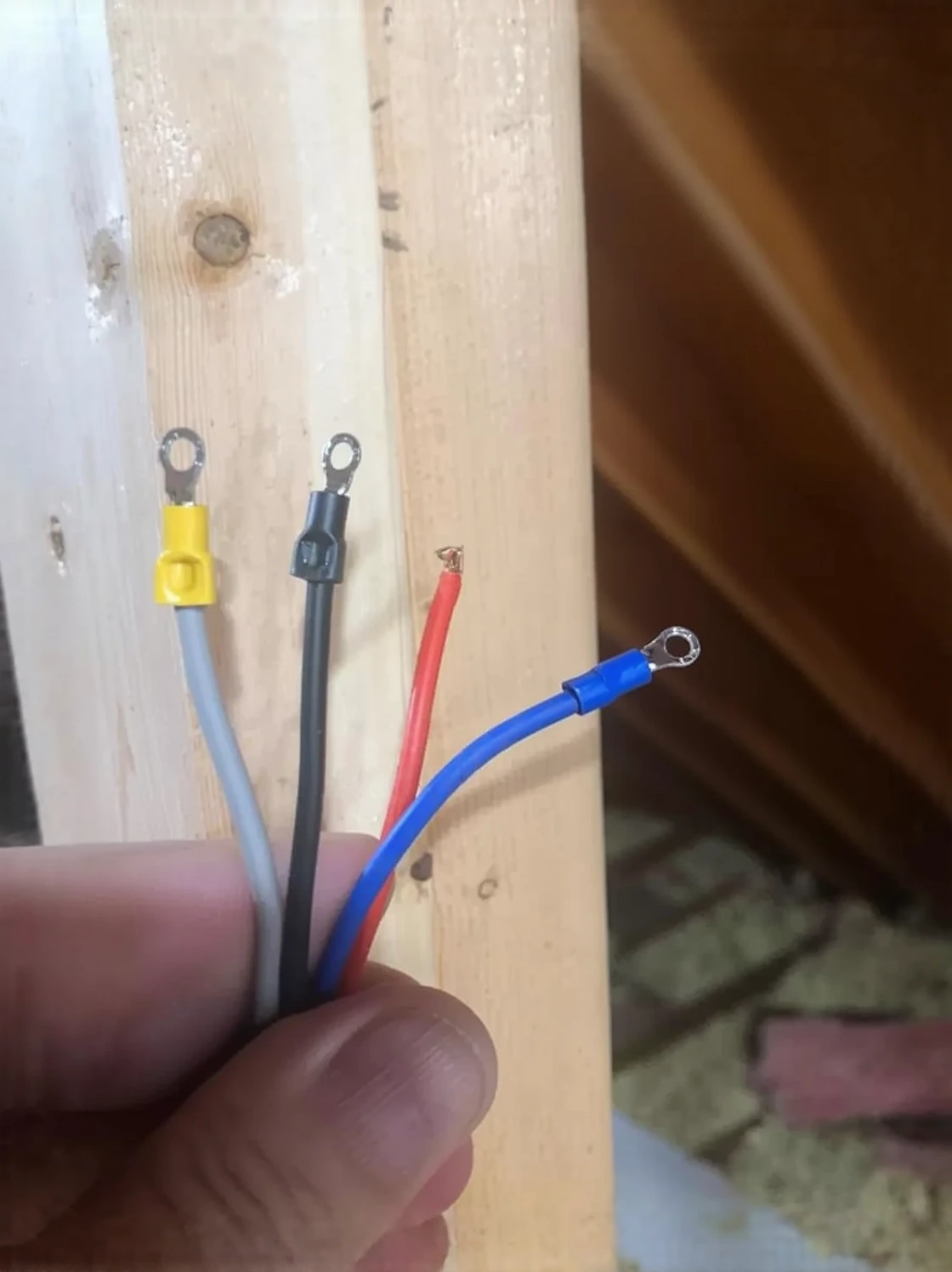
Mini splits have earned a DIY-friendly reputation, and that’s true to a point — pre-charged line set kits have made the install a lot more approachable for homeowners. That said, the electrical side still calls for a dedicated 15- or 20-amp 115V circuit that gets pulled with a permit and inspected. Don’t try to skip that step; unpermitted HVAC work is a common reason insurance companies deny claims down the road.
The trickiest piece is almost always the line set. You’re running refrigerant lines, a condensate drain, and an electrical whip from the indoor head all the way out to the condenser, which usually means punching through an exterior wall, snaking everything through a chase or attic space, and making flare connections tight enough that nothing leaks. A patient DIYer can generally manage the mechanical portion. Handling refrigerant itself, though, requires an EPA 608 certification — a pre-charged unit sidesteps that requirement, but then you’re boxed in by however long that pre-charged line set happens to be.
What You Should Know About Line Set Length
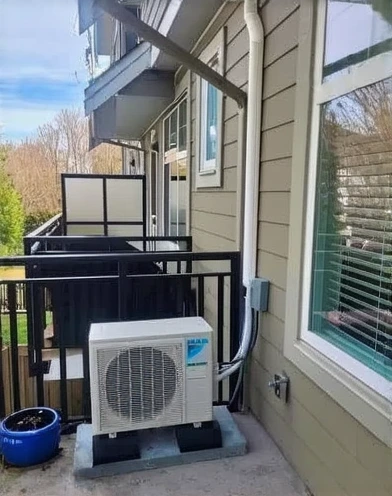
Most DIY mini split kits include a 16 to 25-foot line set. That’s sufficient for many addition scenarios where the condenser can be mounted on an adjacent exterior wall. However, some addition layouts require 40 to 50 feet of line set. In those cases, you’ll need an extension kit. I’ve used the findmall 50FT Air Conditioning Tubing Hose Extension on a couple of projects where the condenser had to be placed around a corner. It uses 1/4-inch and 3/8-inch insulated copper lines and has held up well. That said, verify that your specific unit supports the extended run length — exceeding the manufacturer’s rated line set length can reduce efficiency and void the warranty.
The Refrigerant Tubing Lesson That Kept Me From Overextending a Central System
If the plan is to stretch your current central AC lines out across a long addition, the quality of that tubing matters more than most people assume. Cheap or undersized refrigerant lines bleed cooling efficiency, put extra strain on the compressor, and can be exactly what turns a $4,200 ductwork project into a $90-a-month headache.
What Actually Works
- Running a full 50-foot length skips the mid-run splices that otherwise cause pressure drop and refrigerant loss on long stretches out to an addition
- A pre-insulated line keeps the refrigerant temperature steady and cuts down on heat gain — essential when the run crosses an unconditioned attic or exterior wall
- Getting the diameter right — matched to the correct gauge for your BTU load — is what keeps you from the compressor short-cycling Greg dealt with
Where It Falls Short
- The line size still has to match your system’s actual capacity—a generic 50-foot kit can’t fix an undersized unit on the source end
- Swapping out existing lines means evacuating and recharging the refrigerant, which isn’t something to DIY and adds to your labor bill
I almost made the mistake of reusing Greg’s original undersized lines when we pivoted to a mini split strategy—I caught it only when I measured the compressor outlet. A quality, properly-sized line set like the findmall 50FT Air Conditioning Tubing Hose Extension is cheap insurance against that kind of oversight.

About This Article

Written by Dana Sorensen. Homeowner turned building-science obsessive. I help other homeowners understand attic insulation, ventilation, and air quality so they can stay comfortable year-round without overspending on energy bills. More about this site.
Scope and limits. Dana is a homeowner who studies building science, not an HVAC contractor or licensed tradesperson. Anything involving combustion appliances, gas lines, or electrical work belongs with a licensed contractor.
Verify this against a primary source
Specifics change, and your situation may differ from the one described here. These are the authorities worth checking directly:
- ENERGY STAR — recommended insulation R-values by climate zone
- U.S. Department of Energy — air sealing and insulation guidance
- EPA Indoor Air Quality — ventilation and indoor air quality standards