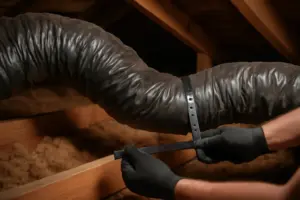
Picture a snapshot I keep on file from a job a few weeks back: strips of gray fabric tape, curled and separated at the seams of flex duct, hanging loose in an attic like old wallpaper. That image sums up nine out of ten comfort complaints I see. The homeowner who called me was dealing with upstairs bedrooms running 8 degrees hotter than the main floor all summer, plus a utility bill that had climbed $40 in a single month. Once I got into the attic to trace the ductwork, the culprit was obvious — the same failure I run into at least twice a week. That familiar gray cloth tape, the roll anyone can grab off a hardware store shelf, had gone brittle and was peeling loose at every connection, with a few sections already detached entirely. This wasn’t fresh damage; the edges were curled and stiff, consistent with maybe two years of exposure at most. Yet the homeowner insisted a contractor had sealed those same ducts five years earlier and called it permanent.
Here’s the part that rarely gets explained: the product marketed as “duct tape” was never designed with ductwork in mind — full stop. That’s not a personal theory; it’s documented in how the product came to exist. Trace its origin story and the pattern of failures I keep encountering on jobs like this one suddenly makes complete sense.
The Real Origin: A 1940s Wartime Fix, Not an HVAC Standard
Back in 1942, engineers at Revolite working alongside Johnson & Johnson created a cotton-duck fabric tape sealed with waterproof polyethylene and backed with a rubber-based adhesive — a product commissioned by the U.S. military. Nothing about its intended use touched climate control. The goal was keeping moisture out of ammunition crates in field conditions. Legend has it a munitions worker, Vesta Stoudt, grew frustrated watching flimsy paper seals fail on ammo boxes and took her concern all the way to President Roosevelt in writing. Troops started calling it “duck tape,” likely a nod to the tightly woven duck cotton it was made from, and it rolled out in standard-issue olive drab.
Roughly ten years passed before anyone thought to wrap residential heating ducts with the surplus tape left over from the war — it was inexpensive, adhesive, and stockpiled in garages nationwide once soldiers came home. Around that point, “duck” morphed into “duct” in common usage, and manufacturers switched the color from military green to silver so it would visually blend with metal ductwork. Pay attention to that sequence: the ductwork application came after the renaming and the color switch, not before. No one at Revolite or Johnson & Johnson ever ran tests on how that rubber adhesive would hold up through years of attic heat swinging past 150°F, because in 1942, that scenario simply wasn’t part of the brief.
Boil the myth down to one line: the name “duct tape” is a leftover from postwar marketing, not evidence of any performance rating. And in this trade, unrated materials aren’t a small technicality — they’re the direct reason my phone keeps ringing.
The Real Reason the Adhesive Gives Out on Ducts
That familiar gray cloth tape relies on rubber-based glue. Rubber adhesives excel at one thing: gripping hard and fast the moment you apply them — perfect for sealing a cardboard box once and forgetting about it. What they can’t handle is being cooked and cooled repeatedly over years. An attic duct run might sit near 70°F during winter and blow past 130°F on a summer afternoon, sometimes cycling through both extremes twice in a single day as the sun climbs and sets. Each of those swings expands and contracts the duct surface and the adhesive layer at different rates, and they don’t move in sync.
That constant mismatch slowly wears down the rubber compound underneath. It oxidizes, stiffens, and eventually loses the grip that once held it to the duct. Once the adhesive can no longer flex along with the ductwork, separation begins at the edges and works its way inward — which is precisely the curled, brittle pattern I encounter on nearly every service call involving this material. It’s almost never a dramatic, sudden blowout. Instead it’s a gradual loosening that most people never clock until the energy bill starts drifting upward or a room simply stops staying comfortable.
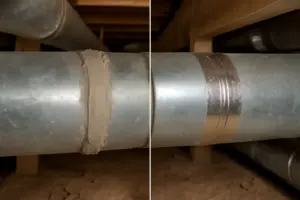
Compare that to UL 181-rated foil tape, which uses a pressure-sensitive acrylic adhesive engineered and tested specifically for HVAC temperature swings as part of earning that certification. That’s the whole story condensed: cloth tape’s adhesive was proven against an ammo crate back in 1942; UL 181 foil tape’s adhesive is proven against a duct joint today. Different chemistry, different purpose, and a completely different outcome five years down the line.
EPA Figures on How Much Air Ductwork Actually Leaks
This goes well beyond appearances. According to EPA estimates, a typical house loses somewhere between 20 and 30 percent of the air traveling through its ducts — lost to leaks, sloppy connections, and adhesive that’s given up — and a substantial chunk of that traces back to exactly this kind of tape failure. That figure isn’t 20–30% shaved off your energy bill; it’s 20–30% of the conditioned air your system is actively producing, vanishing into an attic or crawlspace before it ever makes it to a vent.
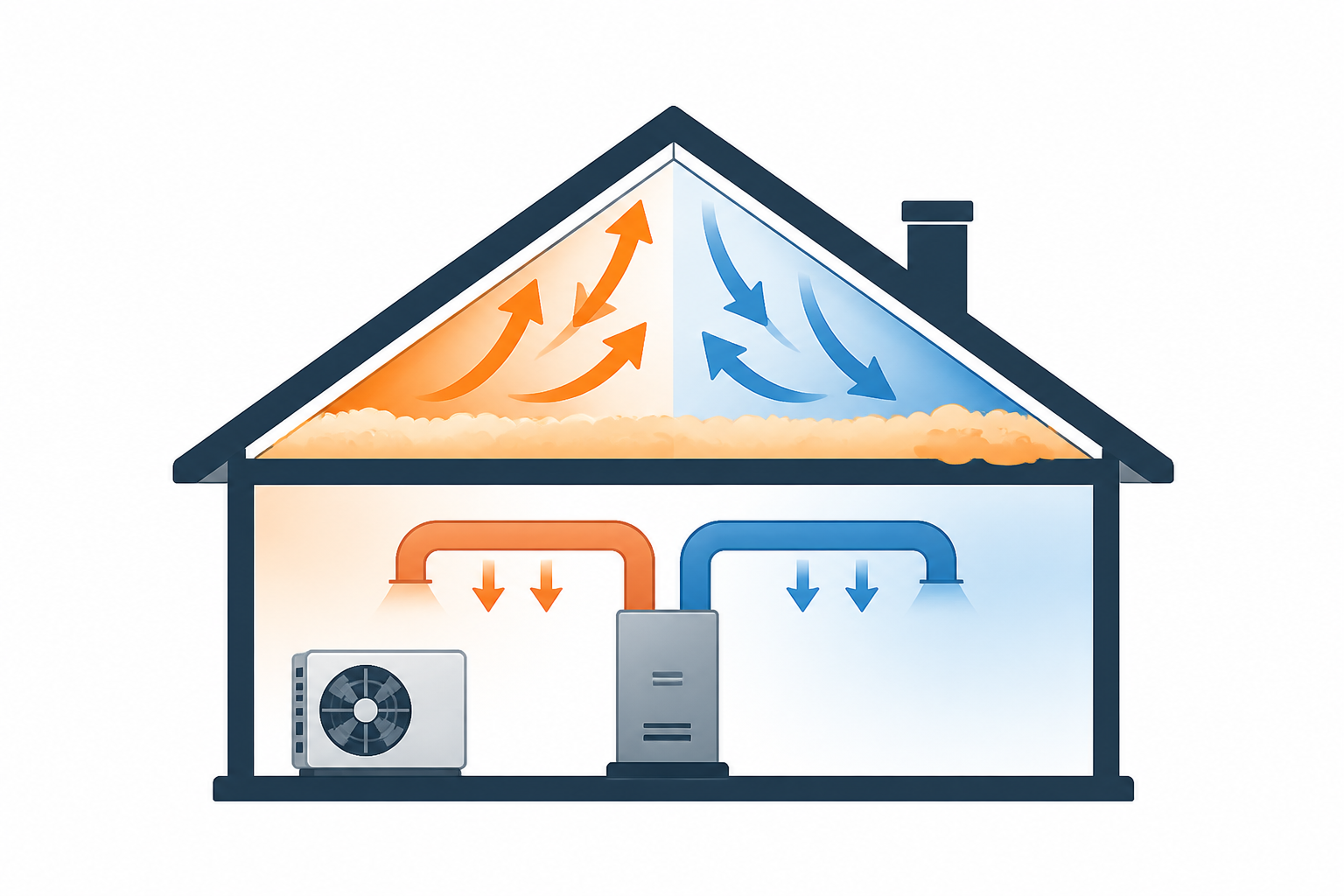
What that means day-to-day: your system runs longer to reach the same thermostat setting, rooms farthest from the air handler stay stubbornly hot or cold, and — just like the homeowner in the story above — bills creep up anywhere from $30 to $80 a month for no reason anyone can point to. Now multiply that across every house on a block still relying on cloth tape from some “permanent fix” performed five or ten years back, and it’s easy to see why this single detail matters so much.
Quick Checks to Confirm Your Duct Tape Is Actually HVAC-Rated
- Scan the tape’s backing for the marking “UL 181” or “UL 181B-FX” — no printed rating means you should treat it as unsuitable for ductwork, no exceptions.
- Examine what it’s actually made of. Real HVAC foil tape is solid metallic aluminum — not a woven gray or silver fabric. Spot a visible weave pattern up close, and it’s the wrong product no matter what the label claims.
- Test an edge with your thumbnail. Cloth-tape adhesive typically feels soft and tacky even fresh out of the package; a properly set mastic or correctly installed UL-listed tape stays firm and won’t budge under light pressure once cured.
What Actually Works Instead
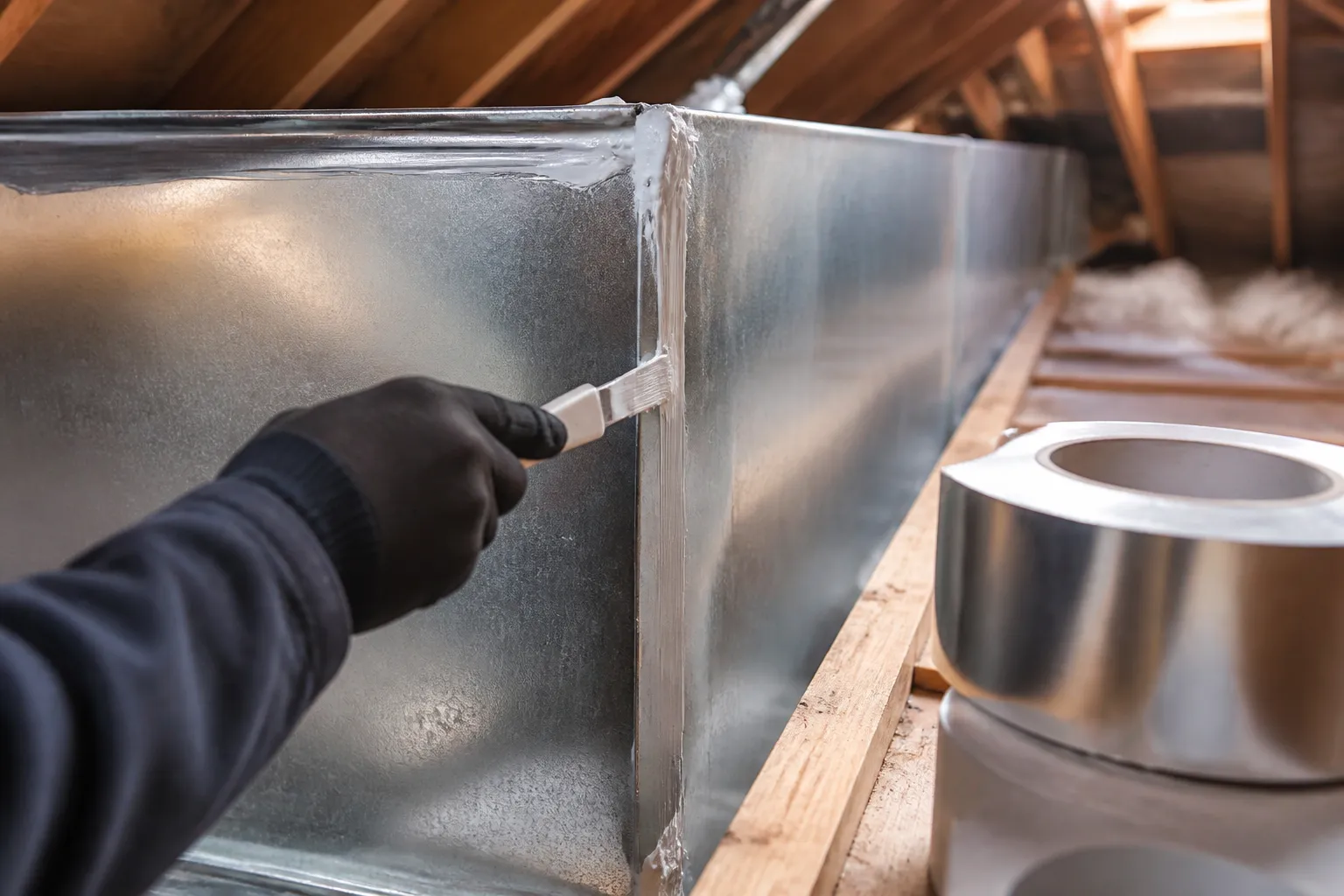
Cross gray cloth tape off the list entirely, and you’re left with two materials that actually earn their keep: UL 181-rated foil tape and duct mastic. Foil tape performs well on smooth, clean sheet metal and gets the job done for a fast repair that needs an immediate seal. Mastic wins out anywhere a joint is uneven, coated in dust, or destined to endure serious thermal expansion and contraction over years — since it’s a spreadable paste rather than a strip, it fills irregular gaps instead of just stretching across them.
If you’re a homeowner tackling this yourself rather than calling a contractor, mastic is also the more forgiving option to work with. You don’t need a spotless, primed surface the way tape adhesion demands — you’re troweling or brushing a thick sealant into the gap. For a first attempt on a handful of accessible attic joints, a budget kit like the No. 7 Mastic® Premium Air Duct Sealing Kit Grey is a reasonable starting point. It’s not the fiber-reinforced, contractor-grade mastic I’d spec for a full whole-house reseal, but compared to gray cloth tape, it’s a different universe of durability — and that’s really the bar you’re trying to clear here.
The real lesson here has less to do with brand names and more to do with history: “duct tape” was never built for ducts in the first place — it started life as ammunition-crate sealant that stumbled into a new identity by chance. Once that fact sinks in, the EPA’s 20–30% leakage figure stops sounding like an abstract statistic and starts predicting exactly what you’ll find the next time you climb up into your own attic.
About This Article

Written by Dana Sorensen. Homeowner turned building-science obsessive. I help other homeowners understand attic insulation, ventilation, and air quality so they can stay comfortable year-round without overspending on energy bills. More about this site.
Scope and limits. Dana is a homeowner who studies building science, not an HVAC contractor or licensed tradesperson. Anything involving combustion appliances, gas lines, or electrical work belongs with a licensed contractor.
Verify this against a primary source
Specifics change, and your situation may differ from the one described here. These are the authorities worth checking directly:
- ENERGY STAR — recommended insulation R-values by climate zone
- U.S. Department of Energy — air sealing and insulation guidance
- EPA Indoor Air Quality — ventilation and indoor air quality standards