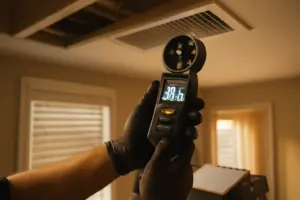
Last summer I got a call from a homeowner in a 1960s ranch-style house. She’d been fighting hot bedrooms for years — her master bedroom sat at 78°F while the living room where the thermostat lived stayed a comfortable 72°F. She’d already had two other HVAC companies out. One replaced her capacitor. Another cleaned her coil. Neither fixed the problem. When I pulled up to the house and walked through the front door, I noticed it immediately: one single large return grille in the hallway ceiling, about 16×25 inches, serving the entire 1,800-square-foot home. Every bedroom door was closed at night. The living room and hall had all the return. The bedrooms had none. Her system wasn’t broken — it was starving. The blower was pulling so hard against that single restricted return that I measured total external static pressure at 0.72 inches of water column — nearly 50% higher than the 0.5″ w.c. maximum for that unit. The bedrooms were pressurized like little balloons, pushing conditioned air out through every crack in the walls and attic bypasses. This is one of the most common comfort problems I see in older homes, and it almost never gets diagnosed correctly. It’s a residential return air system design failure, plain and simple — and it’s fixable.
Understanding the Problem: How a Single Return Starves Your HVAC System
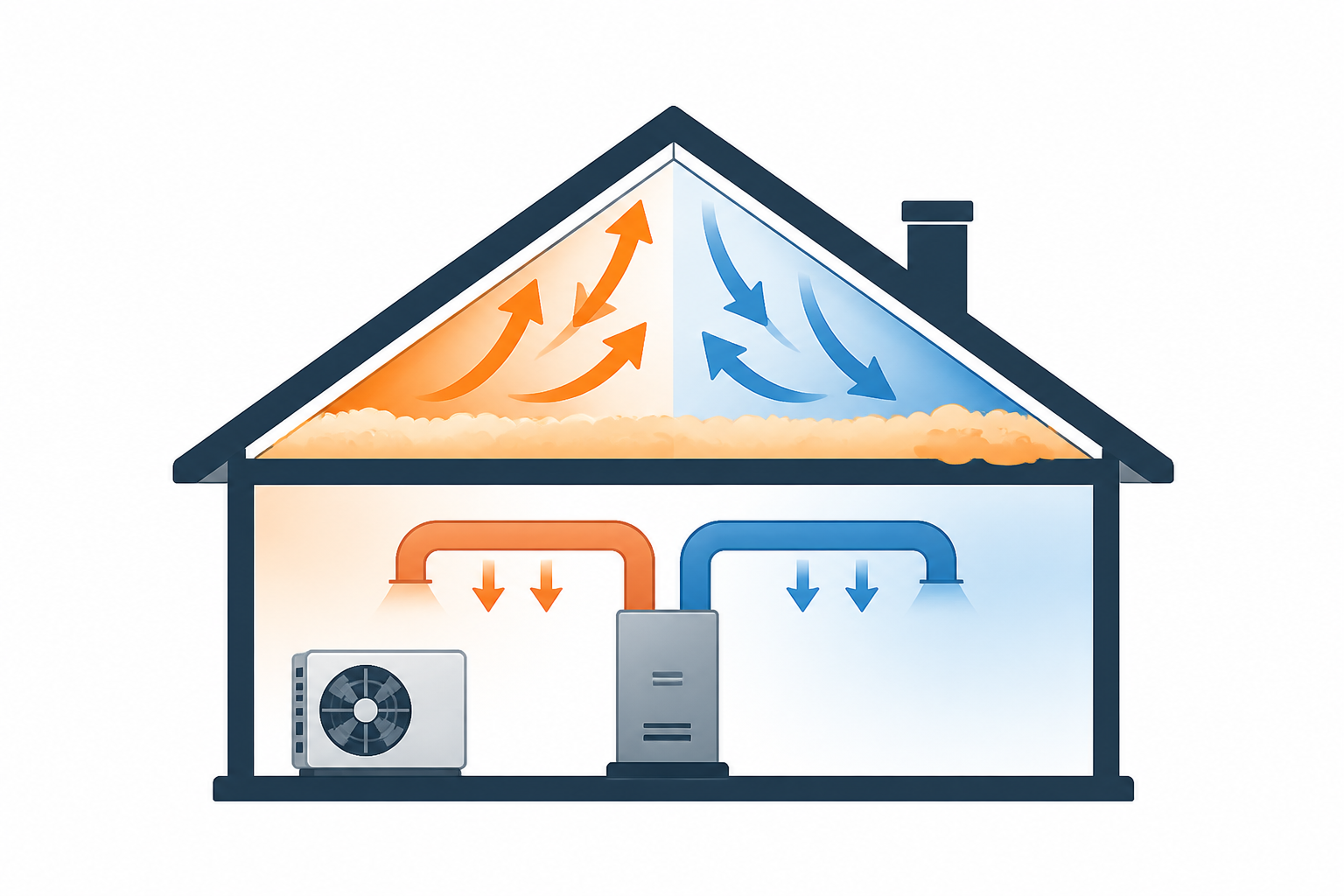
Here’s the physics in plain English. Your HVAC system is a closed loop. The blower pushes conditioned air out through the supply ducts into each room. That air has to go somewhere — and it needs a path back to the air handler through the return system. If the return path is undersized, restricted, or just plain absent from certain rooms, the system develops what we call a pressure imbalance.
Rooms with supply registers but no return path become positively pressurized. Rooms near the return become negatively pressurized. In a house with closed interior doors — which is most houses at night — this effect is dramatic. That positive pressure in the bedrooms doesn’t just make them uncomfortable. It physically pushes conditioned air out of the building envelope through outlet boxes, light fixtures, attic bypasses, and wall gaps. You’re literally paying to cool air and then ejecting it into your attic.
The CFM Math You Need to Know
Proper residential return air system design starts with matching airflow numbers. A standard residential system moves roughly 400 CFM (cubic feet per minute) per ton of cooling capacity. So a 3-ton system needs about 1,200 CFM of return airflow. Your return system — every grille, every duct, the filter, the filter rack — has to pass that air with minimal resistance.
Here’s the sizing table I use in the field:
| System Size | CFM Needed | Min. Return Duct Area | Grille Size (approx.) |
|---|---|---|---|
| 1.5 ton | 600 CFM | 144 sq in | One 16×12 or 20×10 |
| 2 ton | 800 CFM | 192 sq in | One 20×14 or 20×16 |
| 2.5 ton | 1,000 CFM | 240 sq in | One 20×20 or two 16×14 |
| 3 ton | 1,200 CFM | 288 sq in | One 24×20 or two 20×14 |
| 4 ton | 1,600 CFM | 384 sq in | Two 20×20 or one 24×24 |
| 5 ton | 2,000 CFM | 480 sq in | Two 20×20 plus one 16×12 |
The velocity limit matters too. I design return ducts for a maximum of 600 FPM (feet per minute) face velocity at the grille. Exceed that and you get noise — that annoying whooshing roar you sometimes hear from a return grille when the system kicks on. A standard 20×20 return grille has a free area of roughly 256 square inches after accounting for the frame and blade losses, which translates to approximately 500 CFM at 600 FPM. That’s your benchmark number for a single 20×20 grille.
The question of central return vs multiple returns HVAC layouts comes down to one thing: do your interior doors create isolated rooms? If yes, you need returns in those rooms — or at minimum, a transfer grille or jump duct between the room and the hallway. Manual D, the ACCA standard for residential duct design, is explicit about this. Every room that can be closed off should have a return path. Most homes built before 1990 simply weren’t designed this way.
The Return Grille That Finally Let Me Balance a Ranch House Without Closing Vents
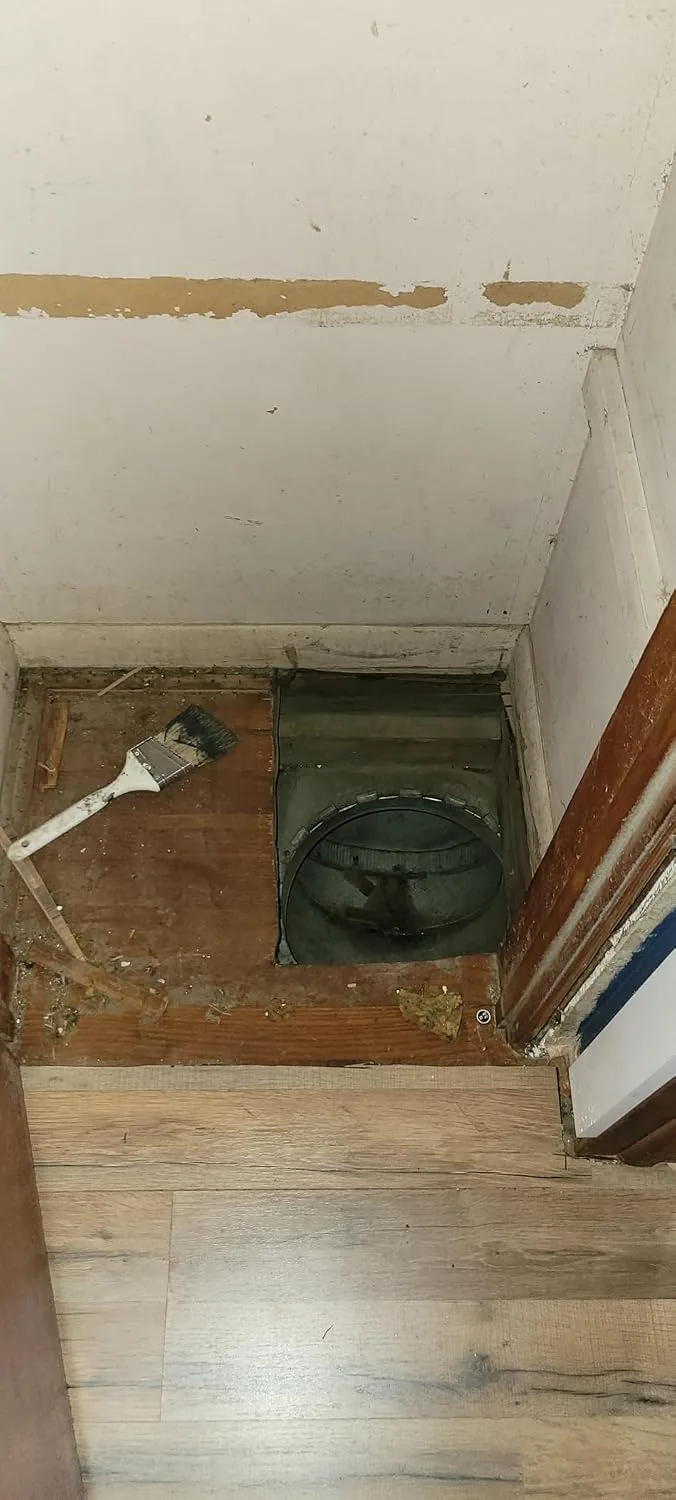
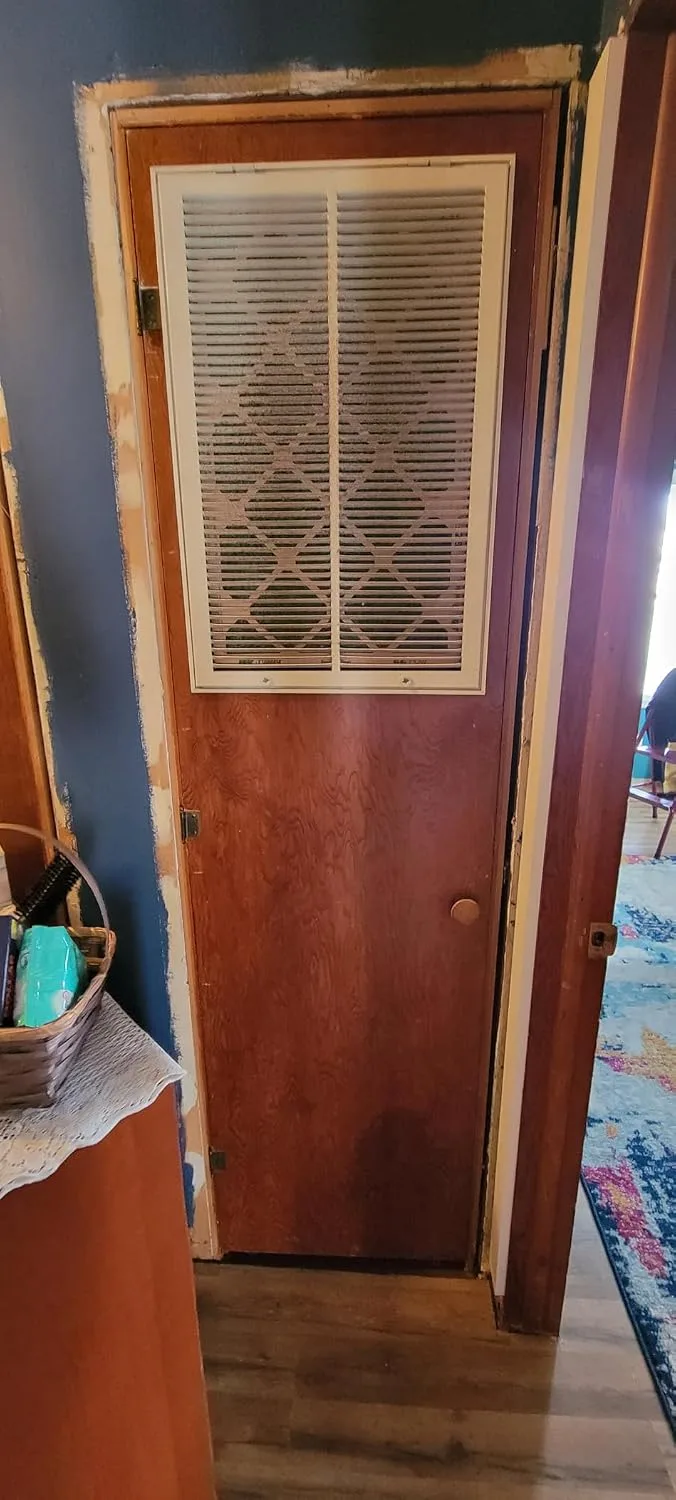
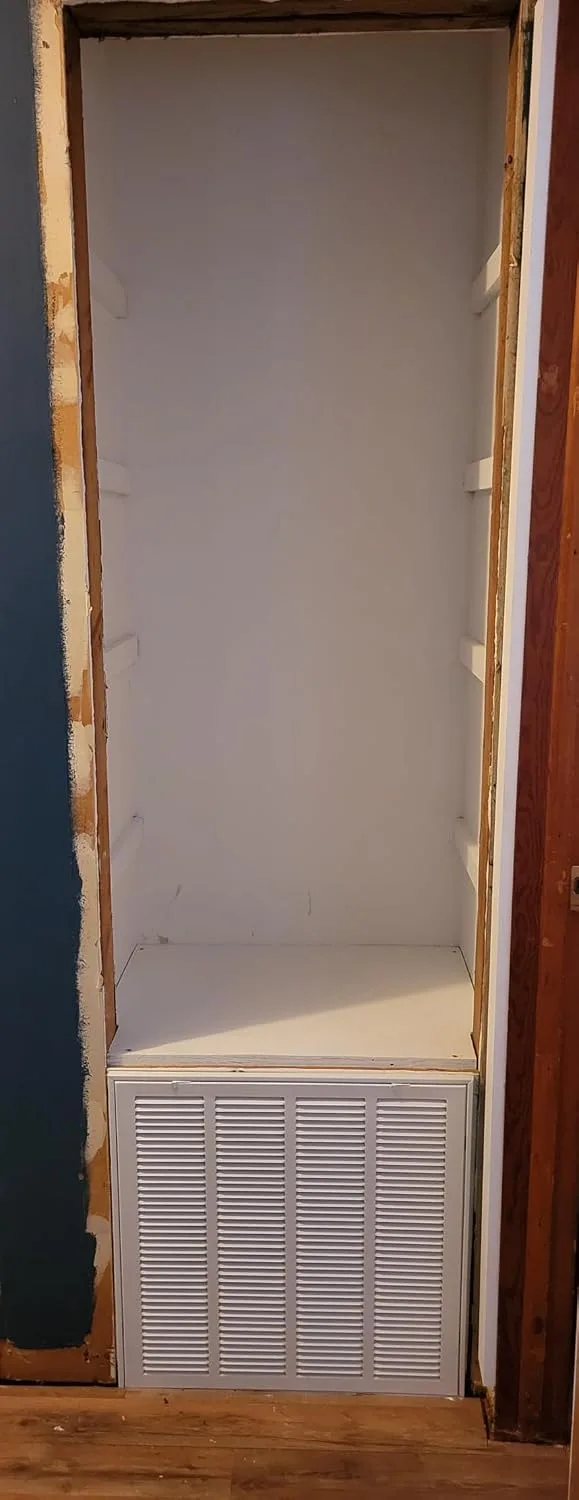
When you’ve got bedrooms 30 feet away from a single hallway return, air simply doesn’t make the trip back to the furnace efficiently. Adding a second return in a problem zone—especially in a bedroom or far corner—creates the pressure balance that actually lets conditioned air reach those dead zones instead of pooling near the thermostat.
What works
- Standard 16″×20″ or 20″×20″ dimensions fit most ceiling cavities and retrofit ductwork without major reconstruction.
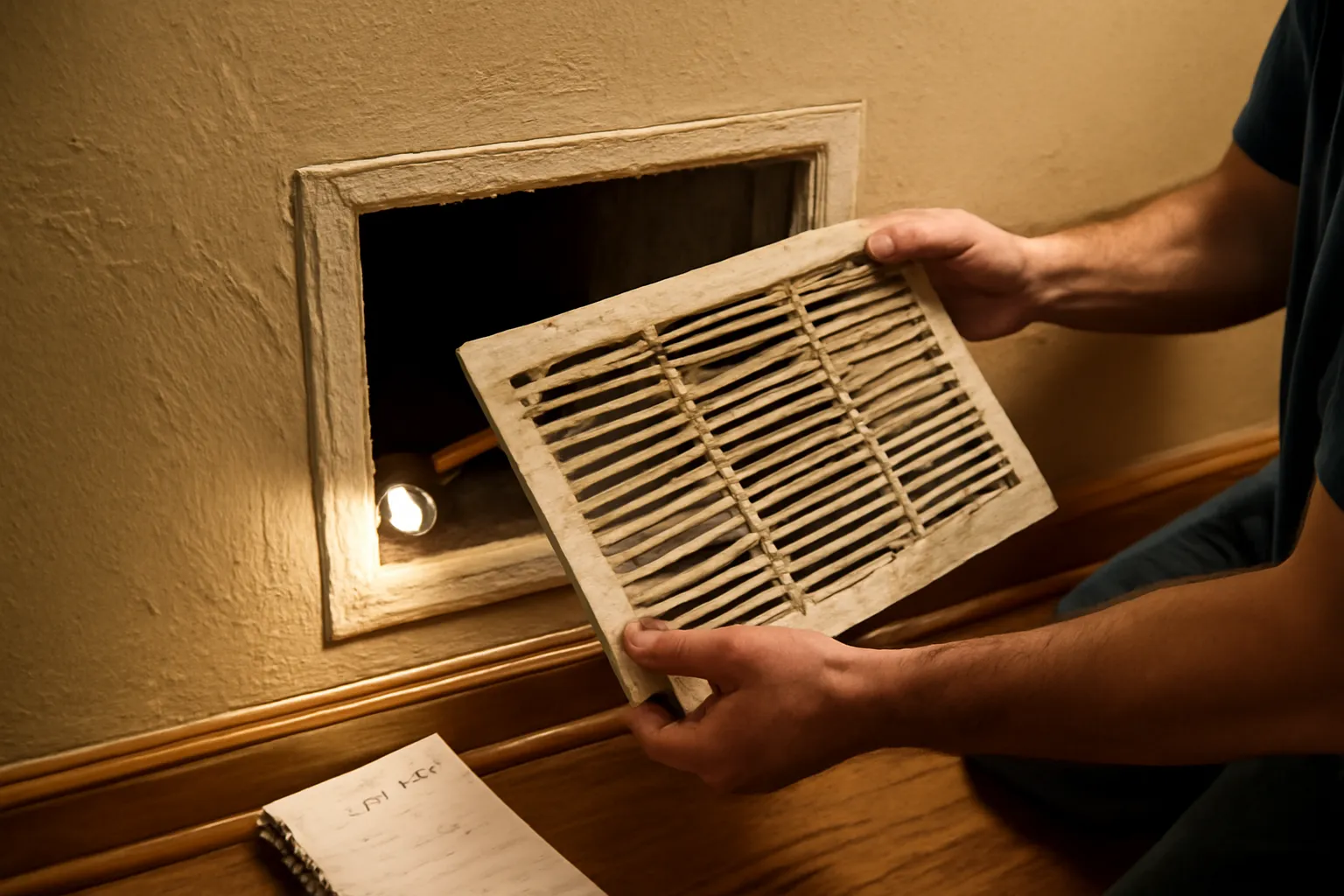
- Static mesh filter grille catches dust at the point of collection, reducing the load on your main filter and keeping bedroom air cleaner.
- Simple friction-fit mounting means you can test placement before committing to permanent duct connections—I’ve moved returns mid-job when the temperature spread told me I needed it 6 feet over.
What doesn’t
- Installing the return grille itself is only 20% of the work—running new ductwork from that grille back to your return plenum is where the real labor and cost land, and no grille can bypass that reality.
- Filter maintenance matters more than it sounds; a clogged secondary return defeats the whole purpose and can actually make imbalance worse by blocking airflow.
I once installed one of these in a bedroom closet, confident the existing cavity would work—only to discover the previous owner had stuffed fiberglass insulation directly behind where the duct needed to go, eating up two hours of my morning. I almost regretted the choice until I realized a quality grille and proper planning would have caught that. The VEVOR Return Air Filter Grille ships with clear dimensions and a sturdy collar that makes pre-fit inspection realistic.
This post contains affiliate links. As an Amazon Associate, I earn from qualifying purchases at no extra cost to you.