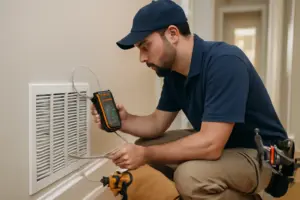
0.94 inches of water column — that’s what my manometer read on a three-year-old system in a newer subdivision last Tuesday, nearly double what that equipment was ever built to handle. The homeowner had phoned about two bedrooms that turned into ovens in summer and iceboxes in winter, no matter where she set the thermostat. Walking her ductwork, I spotted the culprit right away: six supply registers snapped completely shut. She explained, with a note of pride, that she’d read somewhere that shutting vents in rooms you don’t use trims your energy bill and “pushes more air” where it’s actually needed. I’ve lost count of how many times I’ve heard that exact line. I clipped on the anemometer, logged a few static pressure numbers, and walked her through what that closed-up duct system was actually doing to itself. It wasn’t a pretty picture. That visit reminded me of something important: homeowners aren’t wrecking their systems out of carelessness. They’re doing it because the internet is loaded with HVAC airflow myths that sound perfectly reasonable and happen to be completely wrong — and a few of them are quietly shortening the life of equipment that should easily run two decades. Let’s put these to rest for good. Think of this as your field-tested rundown of HVAC airflow myths debunked.
Why These Airflow Myths Do Real Damage
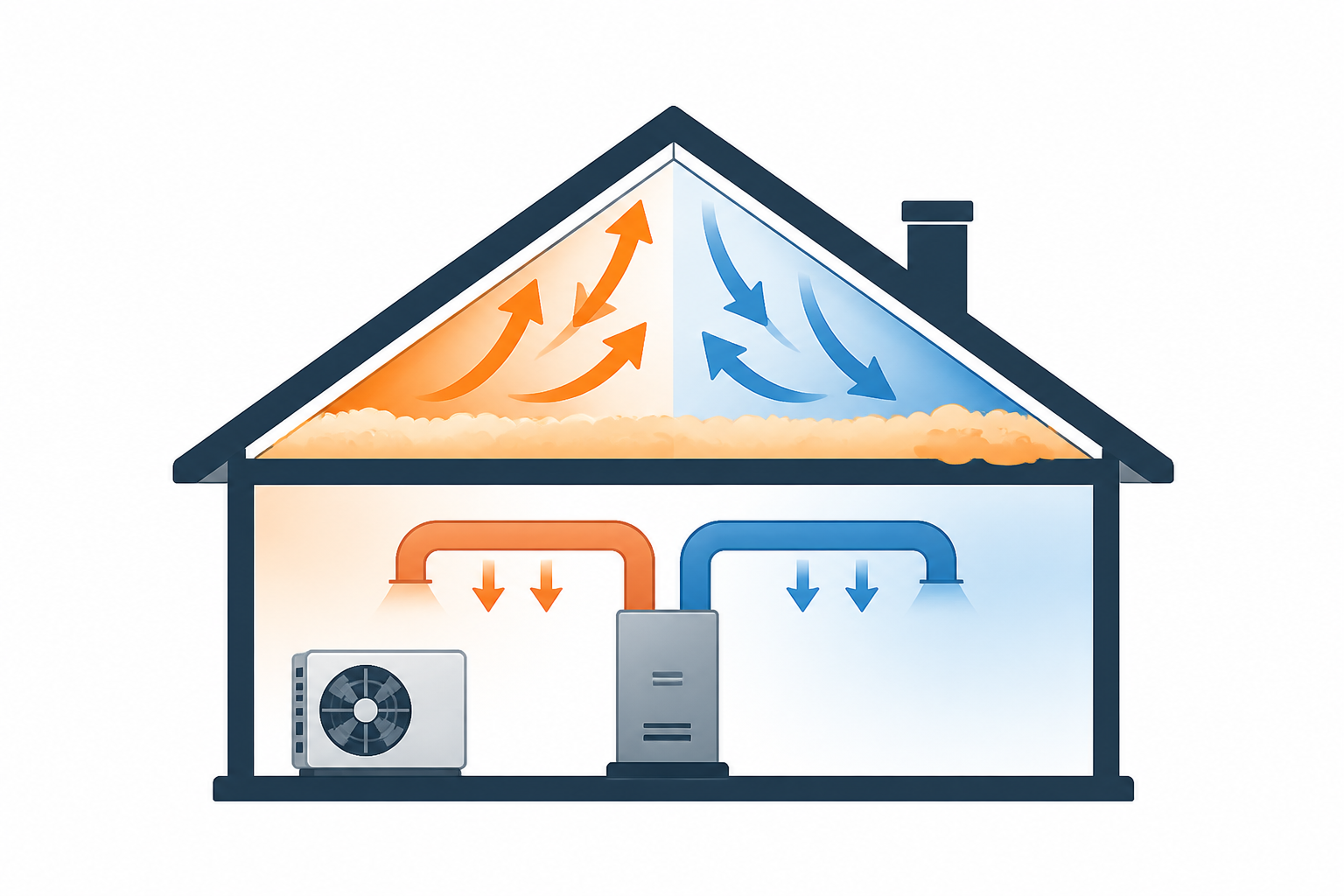
An HVAC system isn’t simply a box pushing air through a house. It’s a balanced pressure network — the blower, the ductwork, the registers, and the air handler are all engineered to operate together inside narrow tolerances. Tinker with any single piece of that network based on faulty advice, and you set off a chain reaction throughout the whole thing. The tricky part is that most of the fallout happens somewhere you can’t see it — buried in equipment and behind walls — long before a homeowner notices anything’s off.
Here’s the concept that ties all of this together: static pressure. It’s the resistance a blower motor has to overcome to push air through the entire duct system. Manufacturers engineer their equipment for a specific static pressure window — usually 0.5 to 0.8 inches of water column (iwc) on residential systems. Push past that design ceiling and the failures come quickly: frozen coils, overheated motors, cracked heat exchangers, compressors that die well ahead of schedule.
Very few homeowners have ever had their system’s static pressure measured, and fewer still know it’s something worth checking. But after years of running diagnostics, I can tell you that most of those “mystery” comfort complaints — a room that refuses to cool, equipment short-cycling, energy bills that don’t make sense — trace straight back to airflow issues rooted in the very myths I’m about to break down.
Airflow gets measured in CFM, cubic feet per minute. A typical 3-ton residential setup is engineered to move roughly 1,200 CFM while staying within its static pressure spec. Strangle that airflow by even 20% and the system starts fighting itself on every single cycle. Keep that up for three cooling seasons and you’re likely staring at a compressor replacement that never had to happen.
There’s also the duct design side of this equation. Ductwork obeys fluid dynamics — velocity, friction rate, and pressure drop are all tangled together, and touching one shifts the others. That’s exactly why so many well-meaning duct “fixes” homeowners attempt end up backfiring. Physics doesn’t grade on intentions.
8 Airflow Beliefs That Sound True But Aren’t
Myth #1: Shutting Vents in Empty Rooms Cuts Your Energy Costs
This is the granddaddy of every airflow myth out there. The logic seems airtight — why condition a room nobody’s in? Except your duct system isn’t a garden hose you can pinch to redirect flow. Close a supply register and that air doesn’t magically travel somewhere useful; instead, the blower just fights harder against added resistance. Static pressure spikes. On a system already running near its limit, that can send static pressure from a healthy 0.6 iwc up beyond 1.0 iwc — nearly twice the design number.
And the fallout is measurable, not theoretical: evaporator coils ice over once airflow drops beneath the minimum needed to absorb heat (roughly 350-400 CFM per ton), duct leaks worsen as pressurized air muscles its way through seams and joints, and compressors take on damage from cycling repeatedly under abnormal strain. Shutting vents doesn’t help your system — full stop. Keep them open.
Myth #2: Larger Ducts Automatically Improve Airflow
This “oversized ducts perform better” idea trips up plenty of DIYers, and honestly, more than a few contractors who should know better. It falls apart because airflow performance hinges on velocity, not just how much volume a duct can hold. Oversize a duct relative to the system’s CFM output and velocity tanks — sometimes falling under 400-500 FPM (feet per minute) in the supply trunk. Low velocity kills “throw,” meaning conditioned air stalls out before it reaches the far corners of a room. It also cripples air mixing, so you end up with hot and cold zones even when the equipment is running exactly as designed.
Proper sizing relies on the friction rate method — ducts are sized to deliver the necessary CFM at a friction rate around 0.08-0.10 inches of water column per 100 feet of run. That’s not a rule of thumb; it’s engineering standard. Bigger isn’t the goal. Correctly sized is.
Myth #3: Every Single Room Needs Its Own Return Air Vent
This one requires some nuance. Central return setups — one or two large returns handling the whole house — are widespread and work fine when the system was designed around that layout. The trouble starts when interior doors get shut. A bedroom with a closed door, a supply vent, and no return path builds positive pressure inside the room while creating negative pressure in the hallway. Air gets squeezed out through every crack and gap in that room’s envelope, and the hallway sucks in replacement air from wherever it can — often the attic or crawlspace.
You don’t necessarily need a dedicated return in every bedroom to fix this. Transfer grilles (basic louvered openings connecting adjoining rooms) or jump ducts (short duct runs linking a room’s air back to the return side) solve the pressure imbalance for a fraction of the cost. It’s one of the most overlooked fixes in residential HVAC, and the comfort payoff is huge.
Myth #4: Duct Tape Belongs on Ductwork
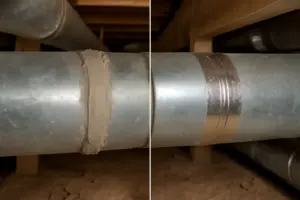
I still run into duct tape slapped over duct joints in houses built during the ’90s and 2000s. By the time I find it, it’s brittle, cracked, and peeling away — sealing exactly nothing. That cloth-backed tape was never rated for HVAC duct sealing in the first place. Heat cycling, humidity swings, and pressure fluctuations chew through the adhesive within a few short years. For sealing actual duct connections, reach for mastic sealant (a brush-applied paste compound) or genuine UL-listed foil tape — not the cheap shiny knockoffs, but real UL 181-rated foil tape. Mastic is my go-to for any joint with visible gaps. It stays pliable, resists cracking, and actually gets better with age as it cures into the seam.
Myth #5: Adding Registers Automatically Boosts Comfort
Tacking registers onto a system that’s already moving its correct volume just splits that same air across more openings — which can drop velocity at each register below what’s needed for proper throw. More outlets only help if the system’s capacity and the ductwork behind it can actually support them. Any register you add should come from a Manual D calculation, not a hunch.
Myth #6: Leaving the Fan on Constantly Saves Energy and Cleans the Air
This one really comes down to your specific system. In a tightly sealed, well-filtered setup, running the fan continuously can genuinely help with mixing and filtration. But in a leaky duct system — which describes the majority of homes — nonstop fan operation constantly hauls unconditioned air in from attics and crawlspaces. In humid regions, that dramatically ramps up the latent (moisture) load on your equipment. It also means your filter clogs faster and your blower motor logs a lot more run hours. Get a handle on your duct leakage before you commit to running the fan around the clock.
Myth #7: Any Filter That Fits the Slot Will Do
This might be the sneakiest myth on the list because it sounds so reasonable on the surface. But filter efficiency and airflow resistance are tightly linked. Drop a MERV 13 filter into a system built for MERV 8 and pressure drop across that filter can jump from around 0.10 iwc to 0.30 iwc or higher — piling extra resistance onto a system that might already be flirting with its static pressure ceiling. I’ve measured this myself, more than once. The outcome is reduced airflow, a real risk of coil freeze-up in cooling mode, and added stress on the heat exchanger during heating mode. Check the MERV filter ratings guide before swapping filters, and measure the actual pressure drop across your filter cabinet both before and after any change.
Myth #8: A Running System Must Mean the Airflow Is Fine
Equipment can run nonstop and still be moving 30% less air than it should. There’s no error code for weak airflow — the system just labors harder, runs longer cycles, and wears itself out faster while your space stays only marginally comfortable. Measuring airflow is the only real way to confirm it’s fine. Which leads to the fix.
The Gauge Reading That Confirmed Closed Vents Were the Culprit
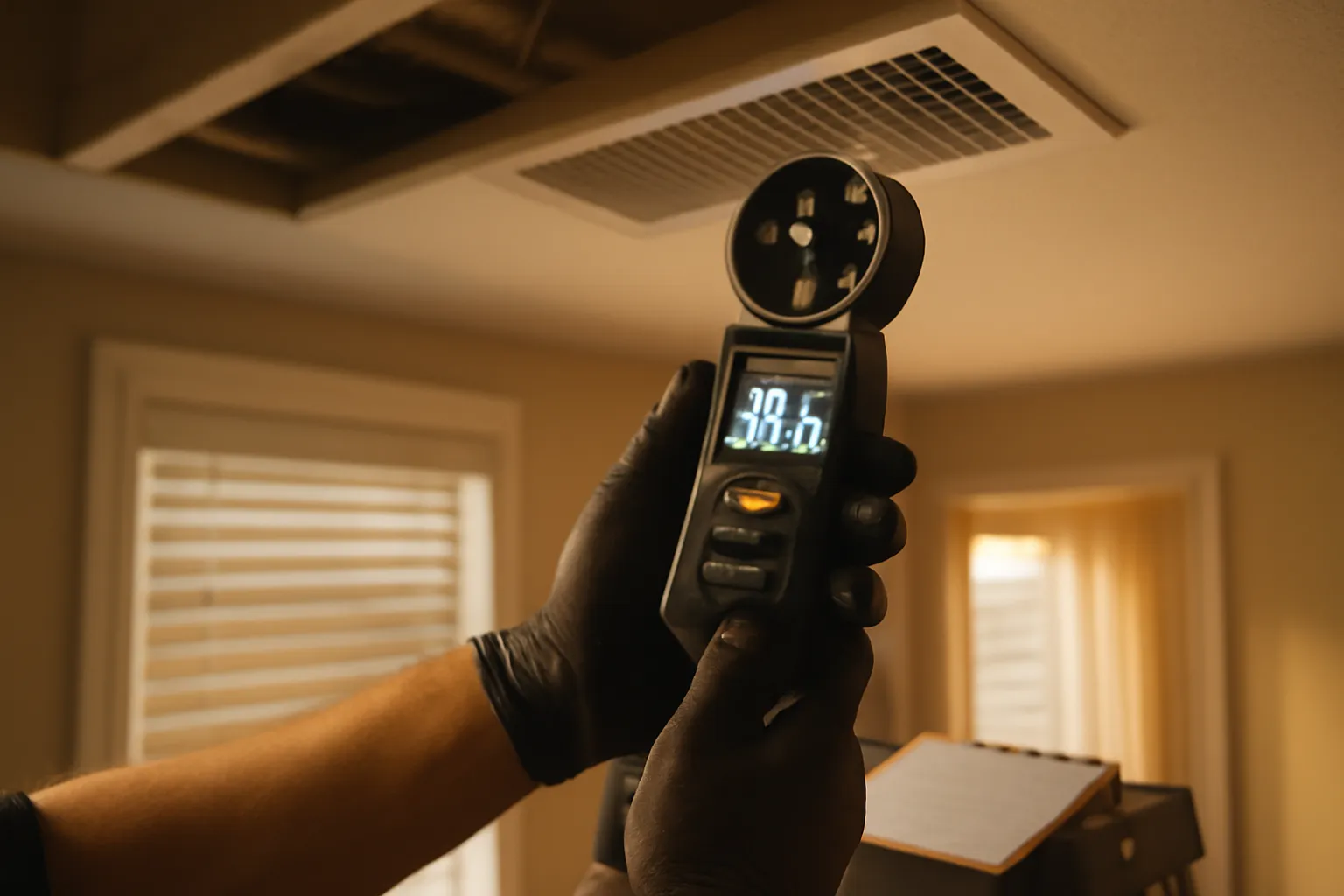
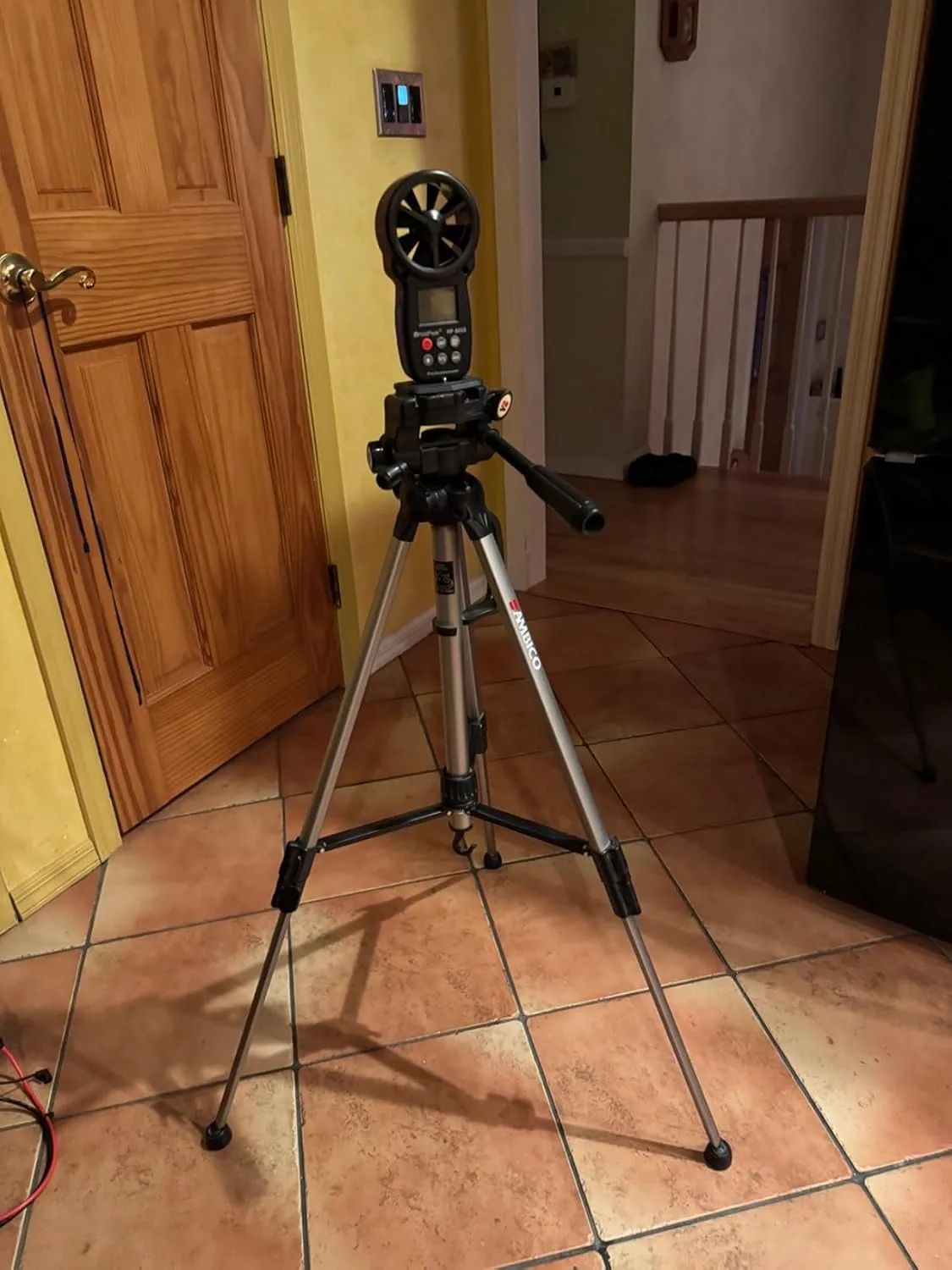
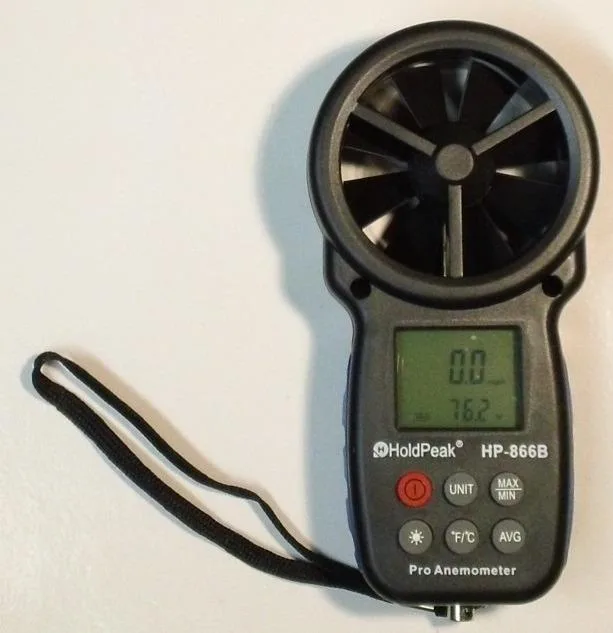
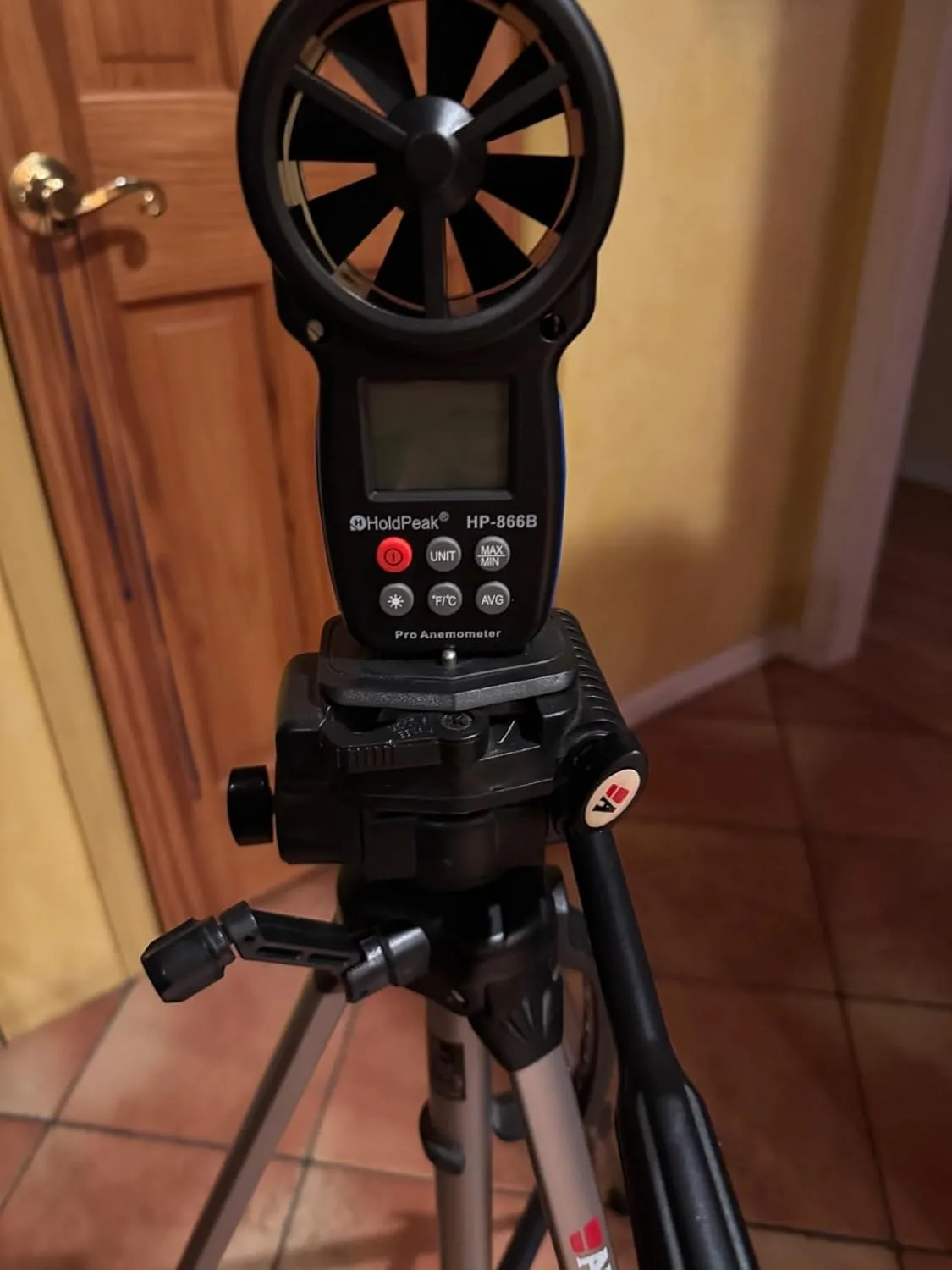
When a homeowner insists they closed vents to “save energy,” I need actual numbers to show them what’s really happening to their airflow. A digital anemometer eliminates the guesswork and delivers the proof — it measures air velocity in feet per minute so you can see, in black and white, exactly how hard that system is straining.
What works
- Instant velocity readings put the gap between an open vent and a closed one right in front of a homeowner — that kind of visual proof ends the “I read online” argument faster than any lecture could.
- It’s compact enough to check register after register without hauling gear around, so you can prove the problem live, right there during the walkthrough.
- Built-in data logging lets you track readings over time and show a client exactly how their temperature swings line up with the vents they closed — a great tool for seasonal complaints.
What doesn’t
- You still need to know the target airflow figures for various duct sizes yourself — this tool measures, it doesn’t diagnose on its own.
- Battery life runs short during a full-house audit, and the display is small enough that you’ll find yourself squinting up close in a dim basement.
I hesitated to invest in one because I thought I could just “feel” airflow with my hand, but the first time I showed a skeptical homeowner the actual numbers—3.2 feet per minute through a closed vent versus 18 feet per minute when we opened it—she became my evangelist. If you’re serious about proving airflow problems to clients, grab a HoldPeak 866B Digital Anemometer.
About This Article

Written by Dana Sorensen. Homeowner turned building-science obsessive. I help other homeowners understand attic insulation, ventilation, and air quality so they can stay comfortable year-round without overspending on energy bills. More about this site.
Scope and limits. Dana is a homeowner who studies building science, not an HVAC contractor or licensed tradesperson. Anything involving combustion appliances, gas lines, or electrical work belongs with a licensed contractor.
Verify this against a primary source
Specifics change, and your situation may differ from the one described here. These are the authorities worth checking directly:
- ENERGY STAR — recommended insulation R-values by climate zone
- U.S. Department of Energy — air sealing and insulation guidance
- EPA Indoor Air Quality — ventilation and indoor air quality standards