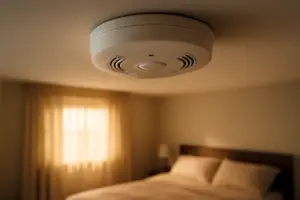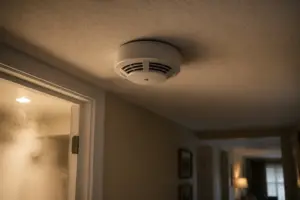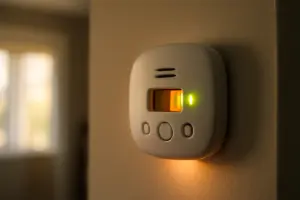
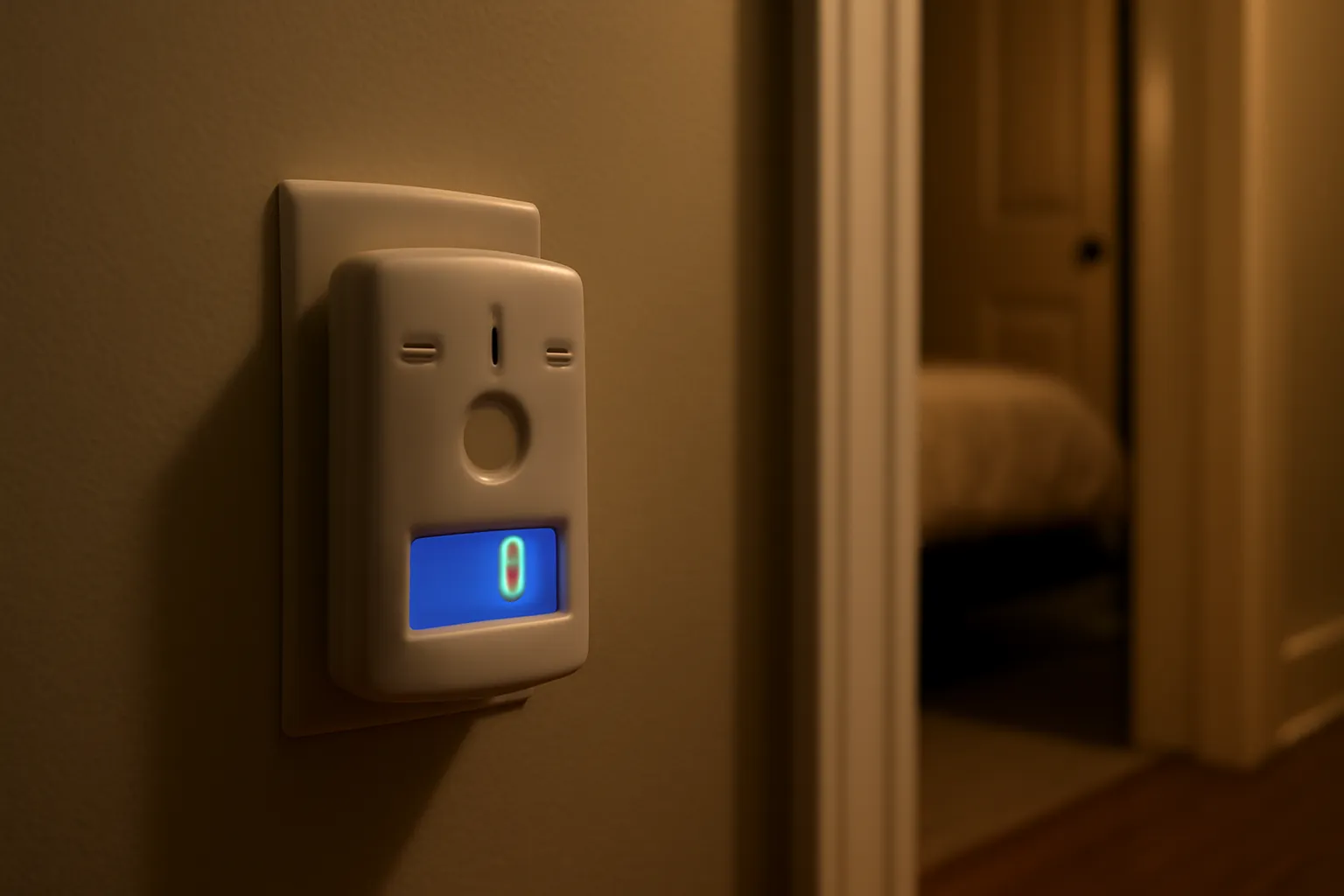
No spec sheet, no installation manual, and no code book will ever spell this out for you: an alarm can be fully compliant and still fail your family completely, purely because of where it happened to get mounted. I relearned that the hard way last spring on a call where a homeowner woke to her CO detector sounding and had no idea whether to trust it. “It’s been going off for thirty seconds and stopped,” she told me. “Should we leave?” I told her to get everyone outside immediately and call 911. Once the fire department cleared the house and I ran my own inspection, we tracked the problem to a cracked heat exchanger on her furnace, quietly feeding carbon monoxide into the living space. The unit that caught it was a plug-in detector in the hallway outside the bedrooms — sitting right where every sleeping person in that house would hear it. What still gnaws at me is the other detector she owned: one mounted in the basement, directly above the furnace. That one stayed silent the entire time. Not a single beep. The CO had traveled up to the living level along the return-air path, while the basement unit sat inside the furnace’s own combustion draft, getting diluted and swept past by moving air faster than it could ever accumulate — completely oblivious to what was unfolding twenty feet above it. After more than fifteen years in HVAC work and home performance consulting, I’ll say this without hedging: carbon monoxide detector placement where to install matters more than the brand stamped on the box. A $100 detector hung in the wrong spot will do less for you than a $30 detector hung in the right one. Fixing that gap is the whole point of this guide.
Why CO Detector Location Is a Life-and-Death Question, Not a Formality
Here’s the chemistry lesson that never makes it onto the packaging. Carbon monoxide weighs in at 28 grams per mole. Ordinary air averages roughly 29 grams per mole. Those two numbers are close enough that CO doesn’t behave like a gas that floats to the ceiling the way helium does, or sinks to the floor the way propane does — instead, it mixes evenly through whatever air surrounds it. That single fact wrecks one of the most persistent myths I run into: “Mine’s up on the ceiling next to the smoke alarm, so I’m set.” You’re partly set. CO can drift upward slightly right when it’s leaving a hot combustion source, simply because warm air rises. But once it cools and blends into the room’s air, it’s everywhere, not clinging to the ceiling. A ceiling-mounted alarm is entirely within code — both UL 2034 and NFPA 72 permit CO alarms on the ceiling or at any wall height, and most manuals echo that. What actually matters far more than mounting height is which room the unit sits in and whether it’s near enough to sleeping bodies to actually rouse them. One exception worth flagging: if you’re dealing with a combo smoke/CO alarm, defer to the smoke detector’s placement rules, since smoke genuinely does layer by height in a way CO doesn’t.
Let’s talk code minimums next, because code sets a floor, not a ceiling — no pun intended. Most local codes lean on NFPA 72 (Chapter 29 folded in the old NFPA 720 once that standard was retired in 2019), the IFC, or IRC Section R315. Broadly, these require at least one CO alarm per level of the home, one positioned outside each separate sleeping area near the bedrooms, and one in any room adjacent to an attached garage. A handful of states, California and New York among them, push those requirements further. But keep in mind that code minimums are built around the average home facing an average scenario — they’re not tailored to your particular layout, your specific gas appliances, or the fact that your bedrooms might sit at the opposite end of the house from your furnace.
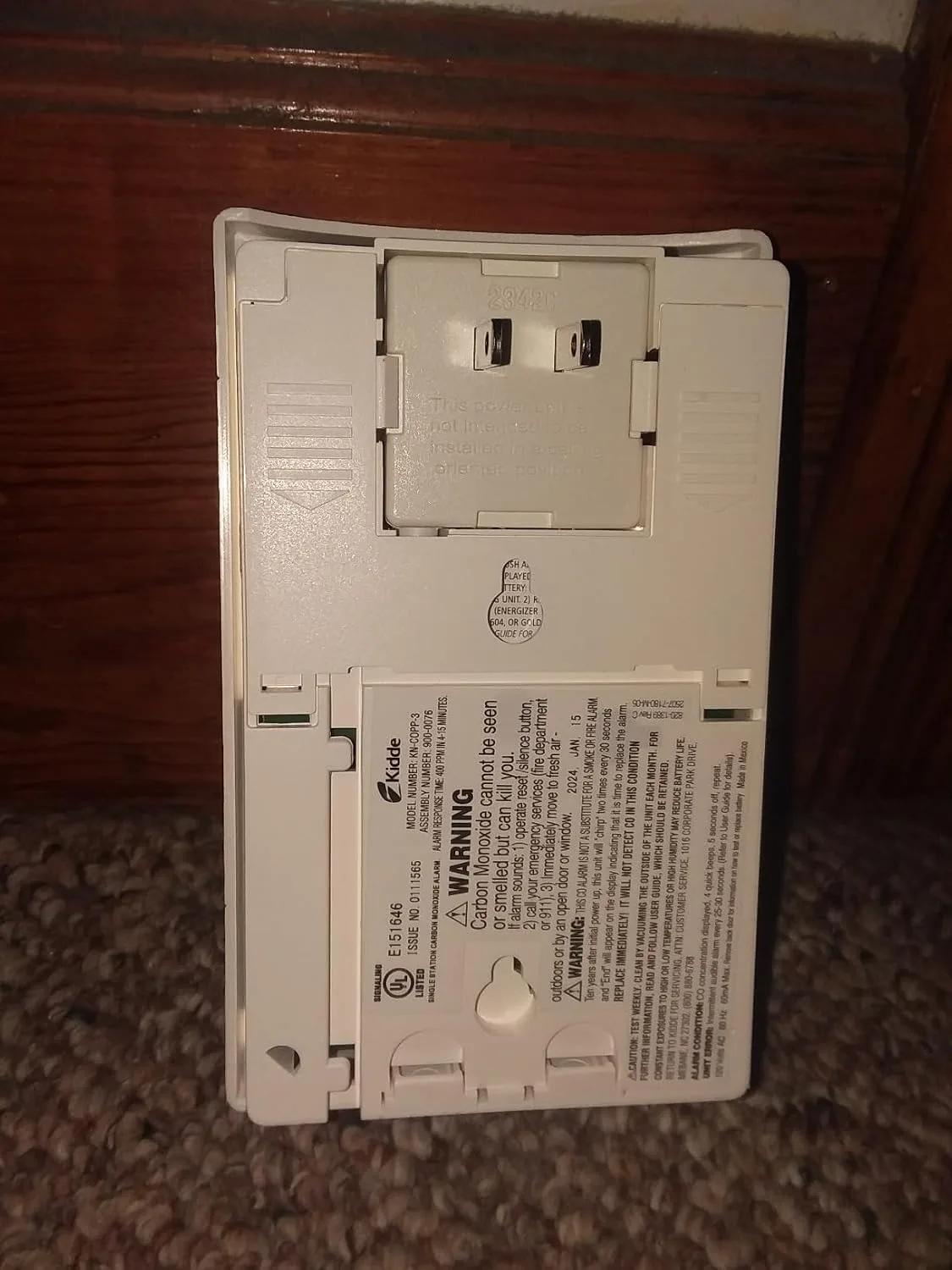
There’s a second issue tangled up in placement that deserves mention, because it produces the exact same failure: a detector hung in the perfect spot is still worthless once its sensor has aged out. Electrochemical cells degrade over time. Most units reach the end of their useful life at five to seven years from the manufacture date — not the date you installed it — while the newer sealed-battery models push out to ten years. Turn yours over and look for the date stamp. If there’s no stamp, or you genuinely can’t recall when you bought it, just replace it. And keep testing every unit monthly using the button, which only confirms the horn and circuitry are functioning — it tells you nothing about whether the sensor itself still works.
So what actually unfolds during a real leak? Right around 35 parts per million — the exposure limit NIOSH recommends — you’ll experience headache and dizziness after six to eight straight hours of exposure, and no UL-listed detector is even allowed to sound an alarm at that concentration. Push past 200 PPM and dizziness and nausea arrive within two to three hours. Cross 400 PPM and symptoms turn life-threatening inside three hours. Above 800 PPM, dizziness, nausea, and convulsions hit within 45 minutes, unconsciousness follows around the two-hour mark, and death can occur within two to three hours. UL 2034, the certification standard governing residential CO alarms, actually works backward from what most people assume: the higher the CO concentration, the faster the alarm is legally required to trigger. At 70 PPM, a approved unit must sound somewhere between 60 and 240 minutes in. At 150 PPM, that window tightens to 10 to 50 minutes. At 400 PPM, it’s 4 to 15 minutes. The standard also sets a lower boundary — a compliant detector can’t alarm at 30 PPM or under across a 30-day span, and it can’t sound below 70 PPM before the 60-minute mark, which is the mechanism manufacturers use to keep false alarms rare. Here’s the trap, though: if your detector sits somewhere that dilutes the gas, blocks it, or simply delays its arrival, you’ve already burned through a chunk of that response window before the countdown even starts.
The mirror-image problem on the smoke side is a detector mounted too close to a kitchen or bathroom. See where an over-sensitive smoke alarm should go instead.
The riskiest setup I come across is a lone CO detector parked in the basement near the furnace, with absolutely nothing covering the sleeping level upstairs. Homeowners assume the basement placement is smart because it’s “closest to the source.” In practice, that unit is sitting right inside the furnace’s own combustion-air draft — exactly the reason manufacturers recommend keeping a CO alarm 15 to 20 feet clear of any fuel-burning appliance. At that range, ordinary startup surges trigger false alarms, while moving air scatters a genuine leak past the sensor before it ever registers. Meanwhile, the bedrooms upstairs have no protection whatsoever. Once you grasp the underlying physics, figuring out where to put a CO detector in your house stops being complicated — but it does mean walking through your home room by room rather than guessing.
The One Detector That Spoke Up Before Things Turned Deadly Quiet
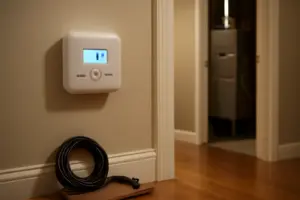
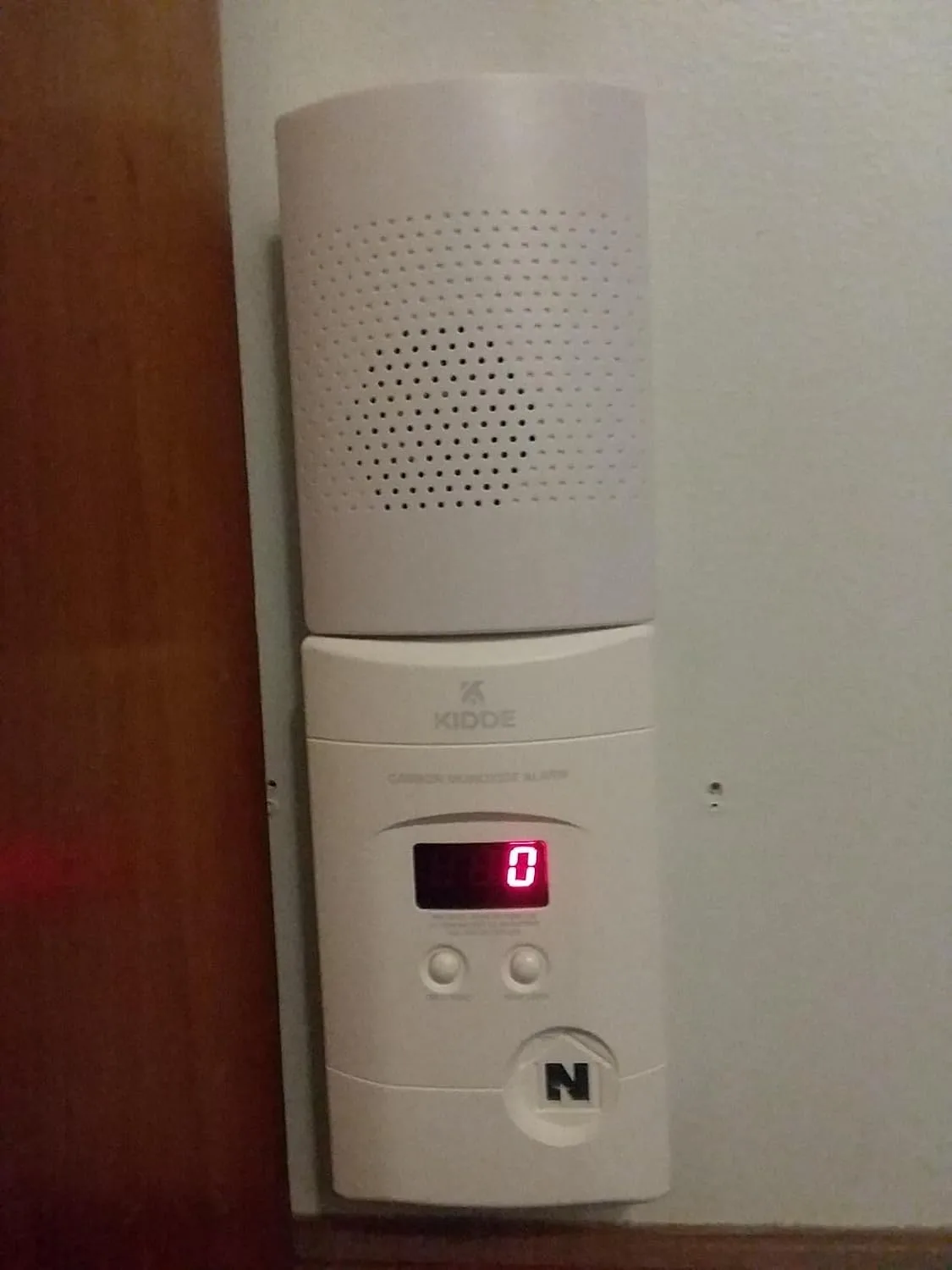
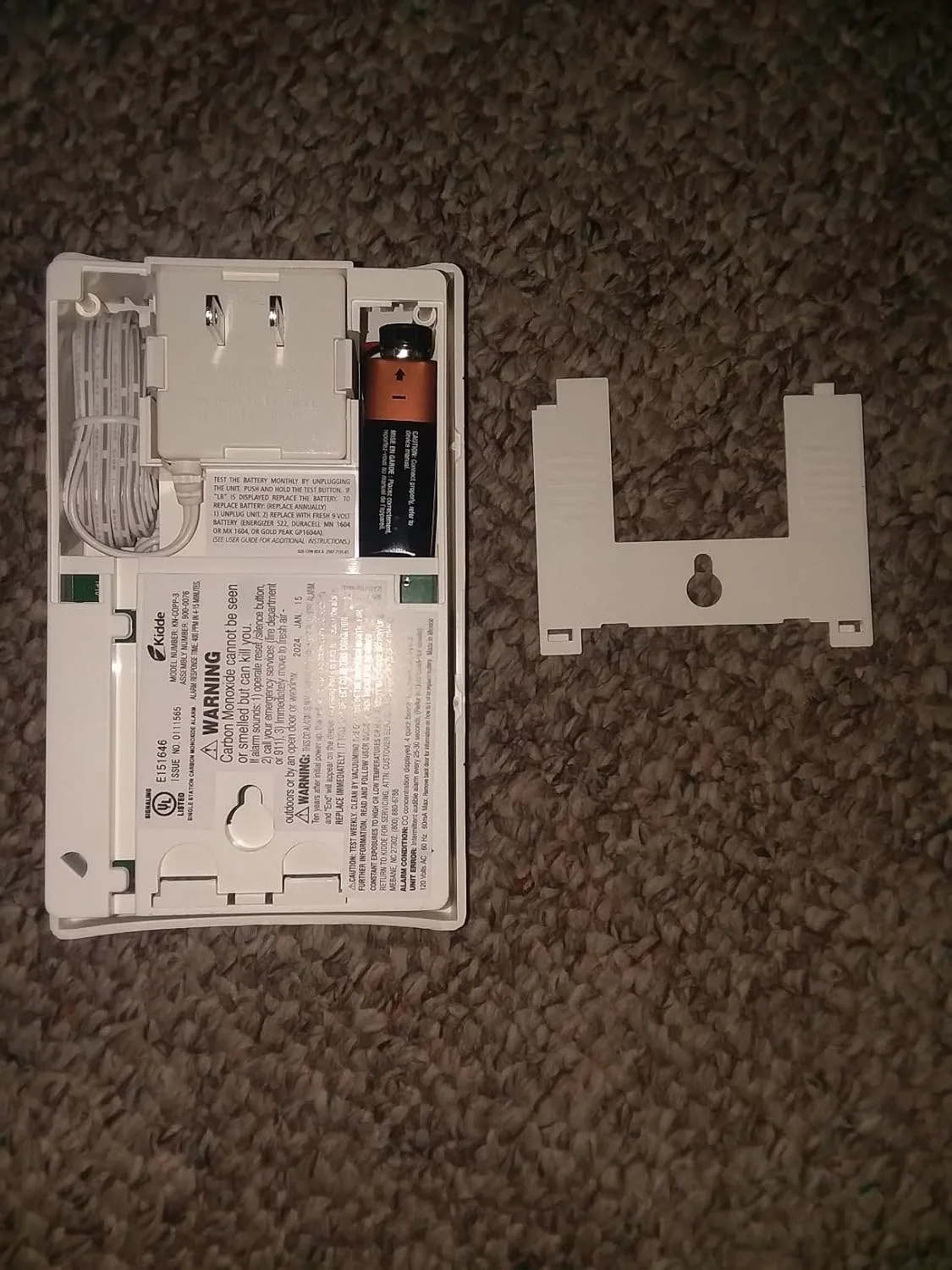
Here’s something a lot of people overlook: a CO detector planted in the wrong location — or one lacking a dependable alert — can fail without anyone noticing, right when the stakes are highest. What you want is a unit with an alarm loud enough to be impossible to ignore, paired with a digital readout that shows you exactly what’s happening in real time, instead of leaving you to interpret a faint chirp in a dark hallway.
Where it earns its keep
- Because it plugs directly into an outlet, it stays powered continuously — there’s no battery-only design leaving you exposed to dead cells, and the AA backup keeps it running straight through a power outage.
- The digital readout changes everything: instead of wondering whether a faint beep actually means something, you watch the CO number climb in real time. I’ve personally used this feature to diagnose furnace problems and catch the exact moment levels start climbing dangerously.
- The alarm itself is loud enough to leave no room for second-guessing — the kind that jolts you awake and cuts through hesitation. When the homeowner from that call heard hers trigger, she didn’t pause to debate it; she got her family out right away.
Where it comes up short
- Outlet location makes or breaks this thing — tuck it behind furniture or into a basement corner, and the alarm sound won’t reach you asleep upstairs. Its effectiveness is only as good as where you plug it in.
- Digital displays get tough to read once the lights are off, and some people glance at a low number and assume “a little CO is nothing”— that mindset doesn’t replace actually knowing the safe thresholds or backing up with additional detectors around the house.
I’ll admit, the first time I installed one in my own home, I second-guessed whether a plug-in detector was truly reliable enough—I almost went with battery-only for “simplicity.” Then I did the math on power outages and forgotten battery replacements, and realized I was betting my family’s safety on a coin flip. Get the Kidde Carbon Monoxide Detector, Plug-in with AA Battery Backup and Digital Display and place it where it’ll actually be heard and seen.
About This Article

Written by Dana Sorensen. Homeowner turned building-science obsessive. I help other homeowners understand attic insulation, ventilation, and air quality so they can stay comfortable year-round without overspending on energy bills. More about this site.
Scope and limits. Dana is a homeowner who studies building science, not an HVAC contractor or licensed tradesperson. Anything involving combustion appliances, gas lines, or electrical work belongs with a licensed contractor.
Verify this against a primary source
Specifics change, and your situation may differ from the one described here. These are the authorities worth checking directly:
- ENERGY STAR — recommended insulation R-values by climate zone
- U.S. Department of Energy — air sealing and insulation guidance
- EPA Indoor Air Quality — ventilation and indoor air quality standards