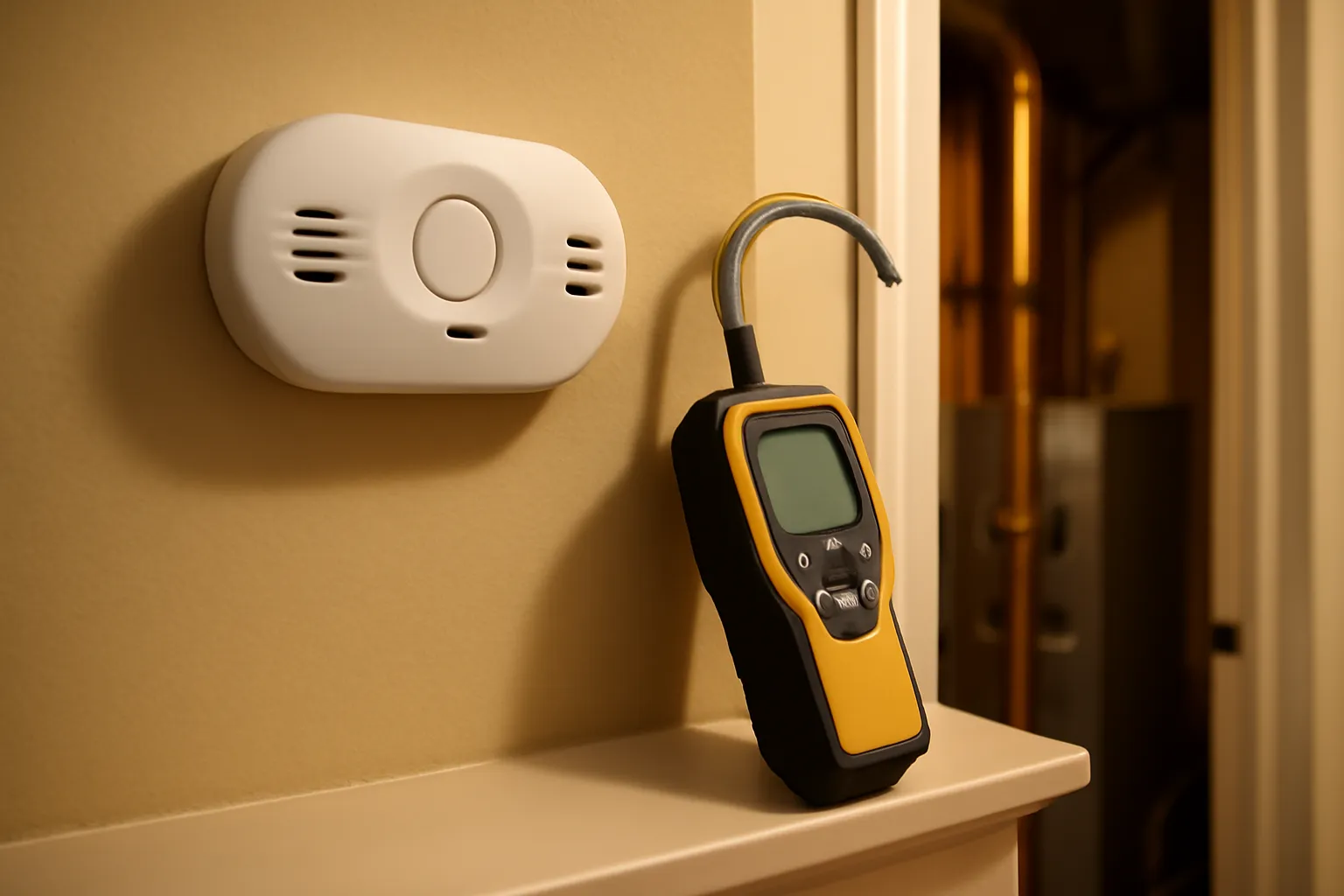
Years back, I made the same call the fire marshal ended up making on Greg’s case — I told a worried neighbour their detector was probably just faulty and needed swapping out. That bit of advice very nearly cost someone their safety, and it’s a lesson I’ve carried ever since. Take Greg, a neighbour of mine: he’d already had the fire department at his house three separate times in six weeks before he mentioned it to me. Every visit played out the same way — crew shows up, sweeps the rooms with their meters, finds nothing, packs up and leaves. After the third trip, the fire marshal decided the detector itself must be the problem and told Greg to replace it. So Greg did exactly that — bought a new unit from the hardware store, mounted it in the same spot — and four days later it went off again. That’s when he called me. Here’s what I found: his gas furnace was throwing a serious CO spike during the first two to three minutes of every heating cycle, textbook cracked-heat-exchanger behavior — but by the time any crew arrived fifteen or twenty minutes later, natural air exchange had already scrubbed the CO out of the house completely. His detector hadn’t lied to him once. It wasn’t glitching. It was doing precisely what it was built to do. The trouble was that the whole event came and went faster than any responder carrying a handheld meter could ever catch it. Had Greg followed the fire marshal’s advice and pulled that detector off the wall, he and his family would have kept sleeping through a genuine carbon monoxide hazard every single night the furnace ran. I bring this story up because it captures both the maddening and the genuinely dangerous side of trying to figure out what sets a CO detector off — sometimes it really is a nuisance trip. Often, though, it isn’t.
What’s Really Happening Inside a CO Detector When It Trips
Before we get into troubleshooting, it helps to understand how a residential CO detector actually functions — this is where most homeowners lose the thread. Most consumer-grade CO alarms rely on an electrochemical sensor: a small cell that produces a measurable electrical current the moment carbon monoxide molecules touch it. Once that current crosses a set threshold, the alarm fires. UL 2034 — the certification every residential CO detector sold in the US must carry — dictates how quickly a unit has to respond at different concentration levels. At 70 ppm, the alarm must sound somewhere between 60 and 240 minutes. At 150 ppm, that window shrinks to 10 to 50 minutes. At 400 ppm, it’s 4 to 15 minutes. None of these are narrow, precise windows. They’re built to protect people sleeping through prolonged low-level exposure, not to hand you a live, exact readout.
That design choice matters when you’re troubleshooting, because your CO alarm isn’t a meter — it’s a threshold device with a built-in delay curve. And electrochemical sensors carry real quirks that produce what the industry calls “nuisance alarms”: triggers that have nothing to do with actual carbon monoxide. Here’s what comes up most often.
Old Sensors Cause More False Alarms Than Anything Else
A CO sensor cell only lasts so long — five to seven years is typical. As it ages, the electrolyte inside dries out, sensitivity drifts, and readings get unreliable. An aging sensor rarely fails silently; instead it starts tripping falsely, often overnight when temperatures dip and airflow in the house slows down. Flip your detector over right now and check the manufacture date. Past the five-year mark? Replace the whole unit, not just the batteries. This is by far the most frequent reason behind a false carbon monoxide alarm, and it’s also the simplest one to fix.
If it is the smoke alarm rather than the CO alarm that keeps sounding, see the smoke side of the same problem.
Hydrogen Gas Can Trick the Sensor
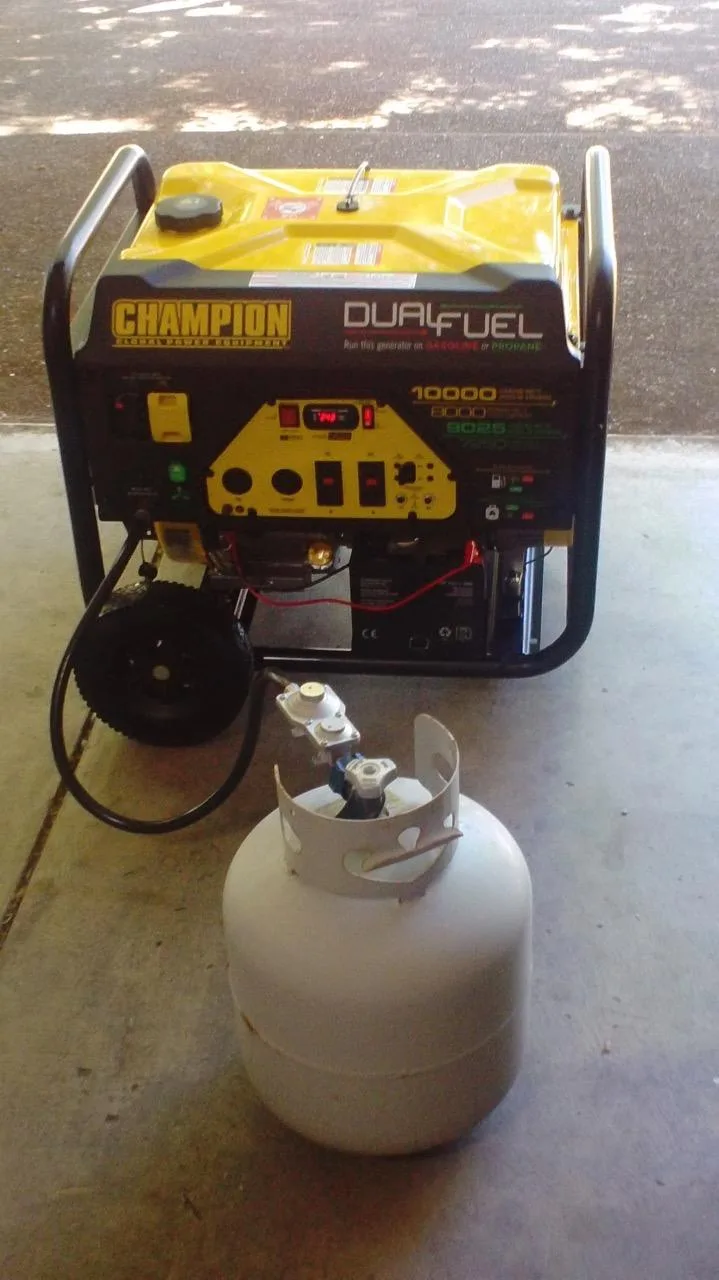
I bring this one up and it catches homeowners off guard every time. Electrochemical CO sensors will sometimes cross-react with hydrogen gas (H₂), setting off a false positive. So where does hydrogen show up inside a house? Most often, it’s a lead-acid car battery charging in an attached garage. A standard automotive battery on a charger releases hydrogen as it charges — sometimes a fair amount, especially with older batteries or older trickle-style chargers. If your detector sits in the garage, close to it, or on a wall shared with it, that hydrogen drifting over could be exactly what’s setting it off. Beyond that, certain cleaning products, some adhesives, and new carpet or flooring can off-gas enough during the first few weeks after installation to do the same thing.
Humidity Spikes and Temperature Swings
Relative humidity climbing above 90% can throw off certain sensor types. I’ve run into detectors mounted right outside bathroom doors that false-alarmed over and over — not from CO, but from getting blasted with steam every single morning. The same goes for units near exterior doors, in garages, or anywhere temperatures swing wide, say from 20°F overnight to 75°F by afternoon — that kind of thermal stress leads to erratic readings. An electrochemical cell handles extremes about as well as we do, which is to say, not great.
The Hardest Case to Catch: Real CO That’s Gone by the Time Anyone Checks
This is exactly what Greg was dealing with, and it’s the most dangerous scenario on this list. A furnace that spikes CO only during startup. A water heater that backdrafts only when the bathroom exhaust fan happens to be running at the same time. A flue that downdrafts whenever the wind swings out of the northwest. By the time someone arrives with a meter, the CO has already cleared out. The detector alarmed on something that was real but had already come and gone. This is exactly why “why does my CO alarm keep going off for no reason” almost never has the answer “it’s broken” — and why proving what actually happened calls for a different kind of instrument entirely.
The Instrument That Backed Up the Detector Over the Fire Department
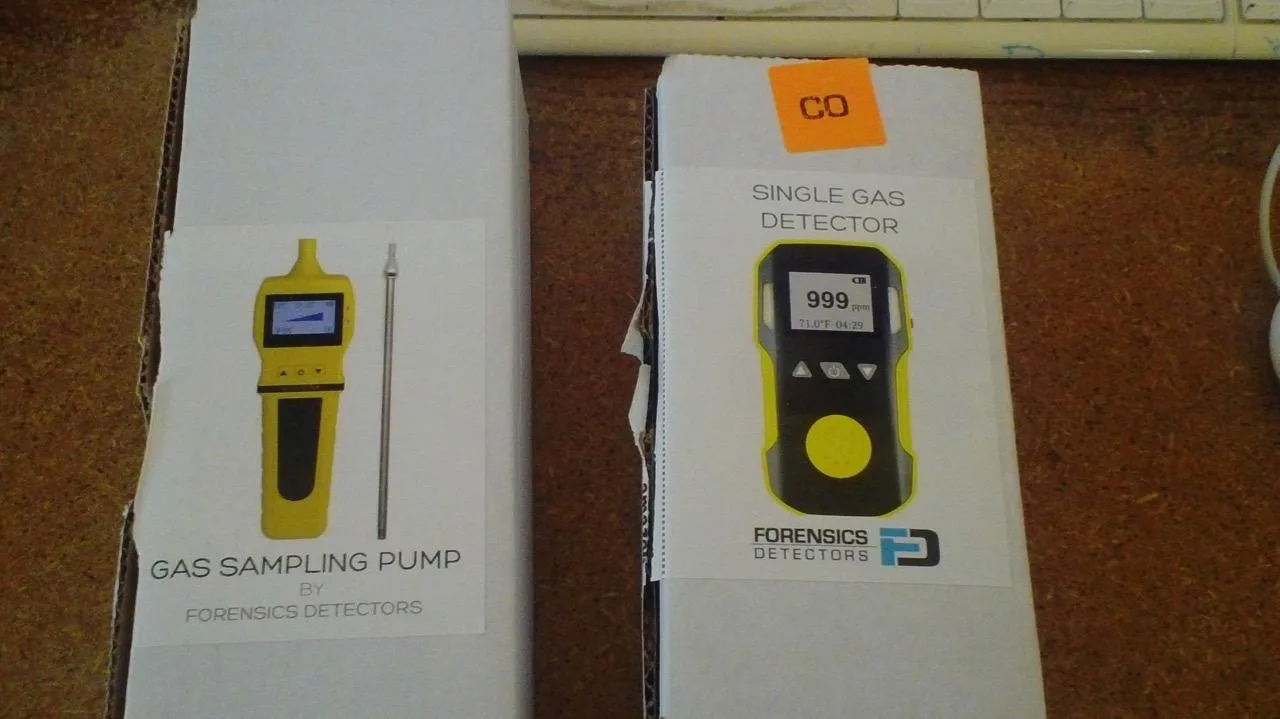
When a detector won’t stop alarming and your local fire crew keeps coming up empty, you need something that digs deeper than their standard sweep. A dedicated CO analyzer with a pump attachment lets you nail down actual concentrations room by room, duct by duct — instead of just guessing whether the detector itself is the problem.
Where it earns its keep
- Delivers actual ppm numbers instead of a simple yes-or-no alarm, so you can log whether CO is truly present, zone by zone, in the house
- The pump attachment draws air samples out of tight, awkward spots — return ducts, furnace cabinets — where a wall-mounted detector might never pick up a low-level leak
- Hands you documented evidence you can bring to an homeowner or an insurance adjuster — turns the conversation from “the detector’s probably bad” into hard proof
Where it falls short
- Runs pricier than just buying a replacement detector, so it only makes sense if you’re committed to solving this yourself or backing up a contractor’s findings
- Takes some getting used to — reading the output and keeping the pump steady isn’t the same one-glance simplicity you get from a basic wall detector
I almost sent Greg back to buy yet another detector from the hardware store until I remembered I had one of these analyzers in my kit. When I pulled actual readings from his furnace plenum and saw 35 ppm, everything clicked. Get the Carbon Monoxide Detector CO Analyzer + Pump by Forensics if you’re past the point of trial and error.
About This Article

Written by Dana Sorensen. Homeowner turned building-science obsessive. I help other homeowners understand attic insulation, ventilation, and air quality so they can stay comfortable year-round without overspending on energy bills. More about this site.
Scope and limits. Dana is a homeowner who studies building science, not an HVAC contractor or licensed tradesperson. Anything involving combustion appliances, gas lines, or electrical work belongs with a licensed contractor.
Verify this against a primary source
Specifics change, and your situation may differ from the one described here. These are the authorities worth checking directly:
- ENERGY STAR — recommended insulation R-values by climate zone
- U.S. Department of Energy — air sealing and insulation guidance
- EPA Indoor Air Quality — ventilation and indoor air quality standards