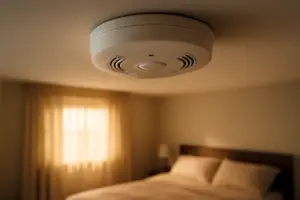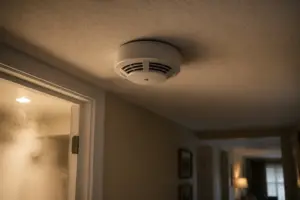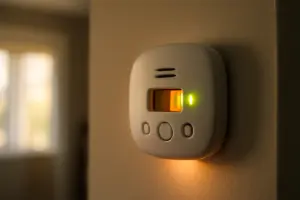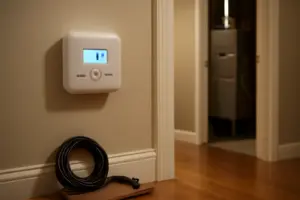
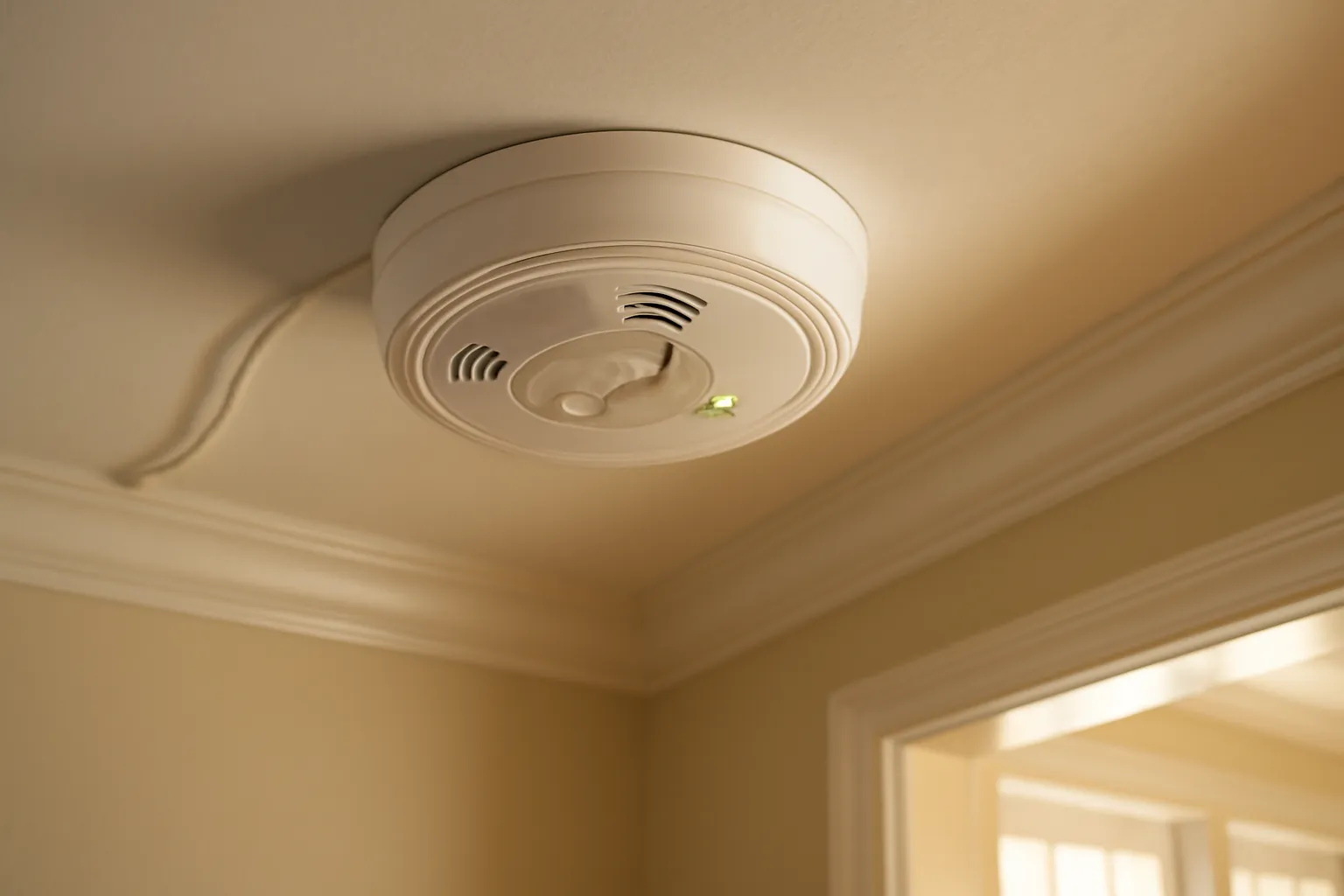
Owning a carbon monoxide detector does not automatically mean your family is safe — that’s the myth I want to dismantle right now, and a job from last spring proves exactly why. The house was a tidy 1960s ranch, nothing about it screaming trouble: solid construction, an owner who clearly kept up with maintenance. She’d recently had a new gas furnace put in by a different contractor and simply wanted a second set of eyes on a faint odor drifting near the utility room. Once I got my meter running in that space, I picked up low-level carbon monoxide leaking from a hairline crack in the heat exchanger. The reading sat around 35 PPM — not an emergency-room number, but high enough that prolonged exposure brings on headaches, exhaustion, and a mental fog people usually blame on stress or bad sleep. “I’ve just been tired lately” is the phrase that comes to mind, because that’s likely what she’d been telling herself for weeks. She wanted to know how the installer had missed it, and honestly, it was a fair question — the truth was, without an always-on hardwired unit actually covering that zone, she’d been unknowingly breathing low-grade CO for who knows how long. Here’s the detail that really got me: she wasn’t unprotected on paper. There was a plug-in CO alarm sitting in the kitchen, roughly forty feet away from the furnace. It stayed silent the entire time — not because it was broken, but because it was in the wrong spot and wasn’t linked to any other unit in the house. Meanwhile, the bedroom where she slept every night, furnace running the whole time, had zero coverage. I’ve walked into this exact situation more times than I can count. People assume they’re covered simply because some detector exists somewhere under their roof. But the real danger lives in the space between owning a detector and owning the correct detector, correctly placed, with power you can actually count on. That gap almost always traces back to one decision: hardwired vs battery vs plug-in smoke and CO detection — and most people make that call based on what’s easiest to install, not what actually keeps a family safe.
Why the Type of Detector You Choose Actually Changes the Outcome
I want to break down the real engineering differences between these systems, because once the “why” clicks, picking the right setup for your own house stops being guesswork.
The Mechanics Behind Smoke and CO Sensing
Smoke detection relies on one of two sensor styles: ionization sensors, which react faster to open flame, or photoelectric sensors, tuned for slow, smoldering smoke. Newer combo units usually blend both technologies into one housing. CO detection instead uses an electrochemical cell that responds specifically to carbon monoxide molecules, and that cell has a shelf life — often just 5 to 7 years in budget models, which is exactly why manufacturers push the 10-year replacement rule. Per NFPA 72 guidelines, smoke alarms belong on every floor of the home, inside every bedroom, and just outside each sleeping area. CO alarms follow a similar rule: one on every level, positioned within 10 feet of each bedroom door. Add it up and that’s a lot of hardware — and every unit only works if its power supply is reliable.
Comparing the Three Power Options, No Sugarcoating
Hardwired units (120V with battery backup) draw power straight from your home’s wiring. But the real benefit isn’t just uninterrupted electricity — it’s the ability to interconnect. Wire a set of hardwired detectors together on one circuit, and setting off one triggers every single unit at once. That’s not a bonus feature; it’s often the deciding factor in survival. NFPA data consistently shows that in fatal house fires, victims are often located in a part of the home where the closest alarm never sounded. Interconnected systems close that gap. Building codes have required this setup in new construction since 1993, per the International Residential Code. The catch is cost: if wiring doesn’t already run to each spot, expect to pay an electrician roughly $50 to $100 per location just to run cable and mount a box. There’s also a shared vulnerability — trip the breaker on that circuit, and every alarm on it goes dark together. Battery backup handles power outages, but those backup batteries still need swapping every 2 to 5 years unless you spring for the sealed 10-year lithium versions.
Battery-powered units have come a long way over the past ten years. Sealed 10-year lithium cells wiped out the most common failure point — the dead battery yanked out at 2 a.m. because of an annoying chirp, then never reinstalled. These mount anywhere without any wiring, which makes them a genuinely smart choice for older homes and rental properties. The trade-off is interconnection: basic battery models sound off on their own, independent of every other unit in the house. Wireless linking is available, but it usually tacks on $30 to $50 per detector and forces you to keep every networked unit the same brand and same generation.
Plug-in models really only make sense for CO and gas monitoring — they’re a poor fit for smoke. Smoke rises, so smoke detectors need to sit high, either on the ceiling or within 12 inches of it on a wall. A plug-in unit sitting at outlet height — usually 12 to 18 inches off the floor — will completely miss smoke in its early stratified layer. CO behaves differently, though: it spreads through a room fairly uniformly, so a plug-in unit with constant AC power and a digital PPM readout can actually give you useful, ongoing data instead of just a binary alarm. The real limitation is placement — you’re stuck wherever the outlets happen to be, which isn’t always the ideal detection spot.
So when people ask which detector setup is genuinely best, there’s no single answer — but there is a clear ranking. Hardwired, interconnected, with battery backup sits at the top as the gold standard. Battery-only with wireless interconnect is the smart fallback when running new wiring isn’t realistic. Plug-in units earn their keep as a CO-detection supplement, not as your primary smoke protection.
The Hardwired Unit That Picked Up What a Battery Model Would Have Missed
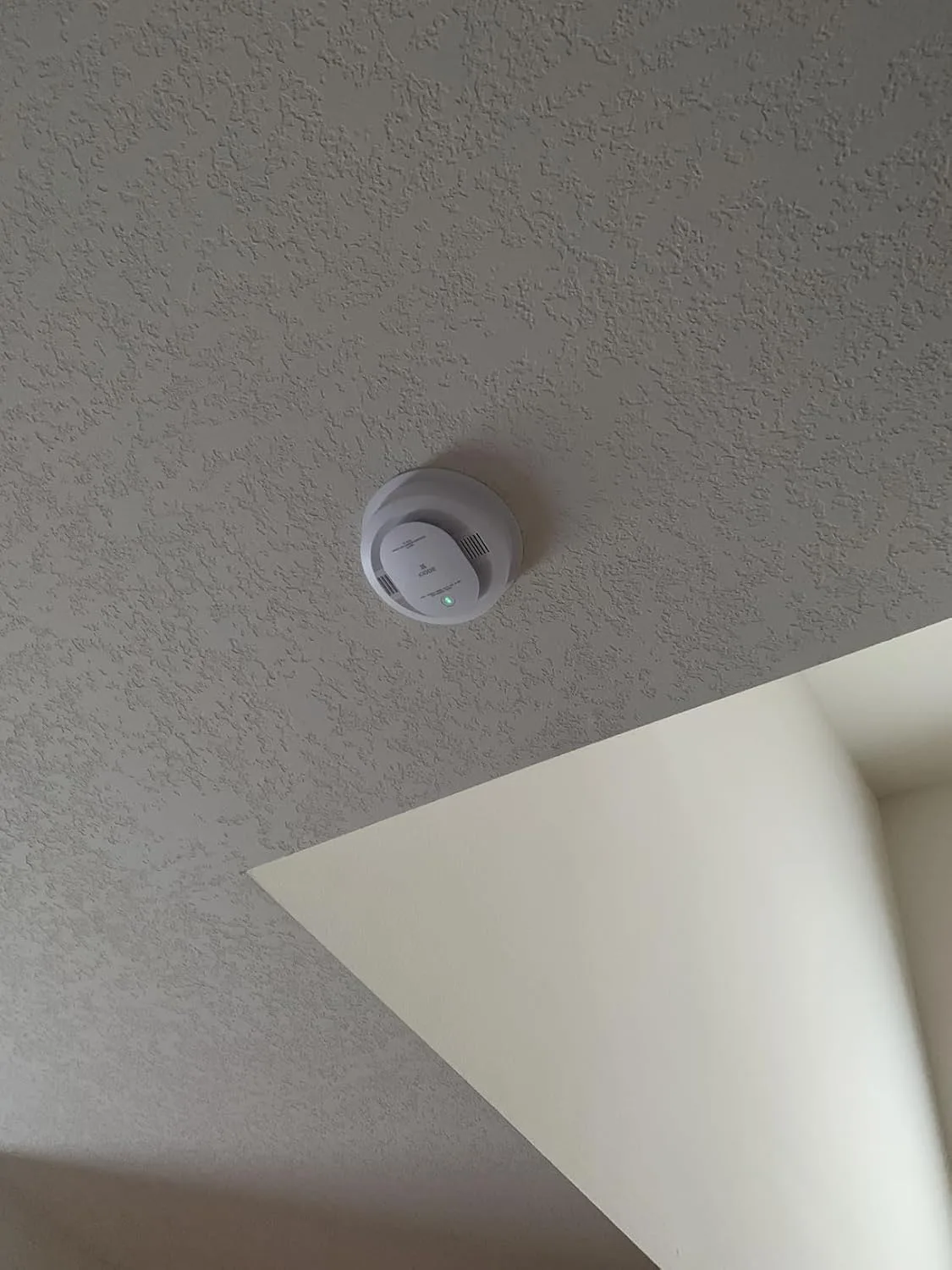
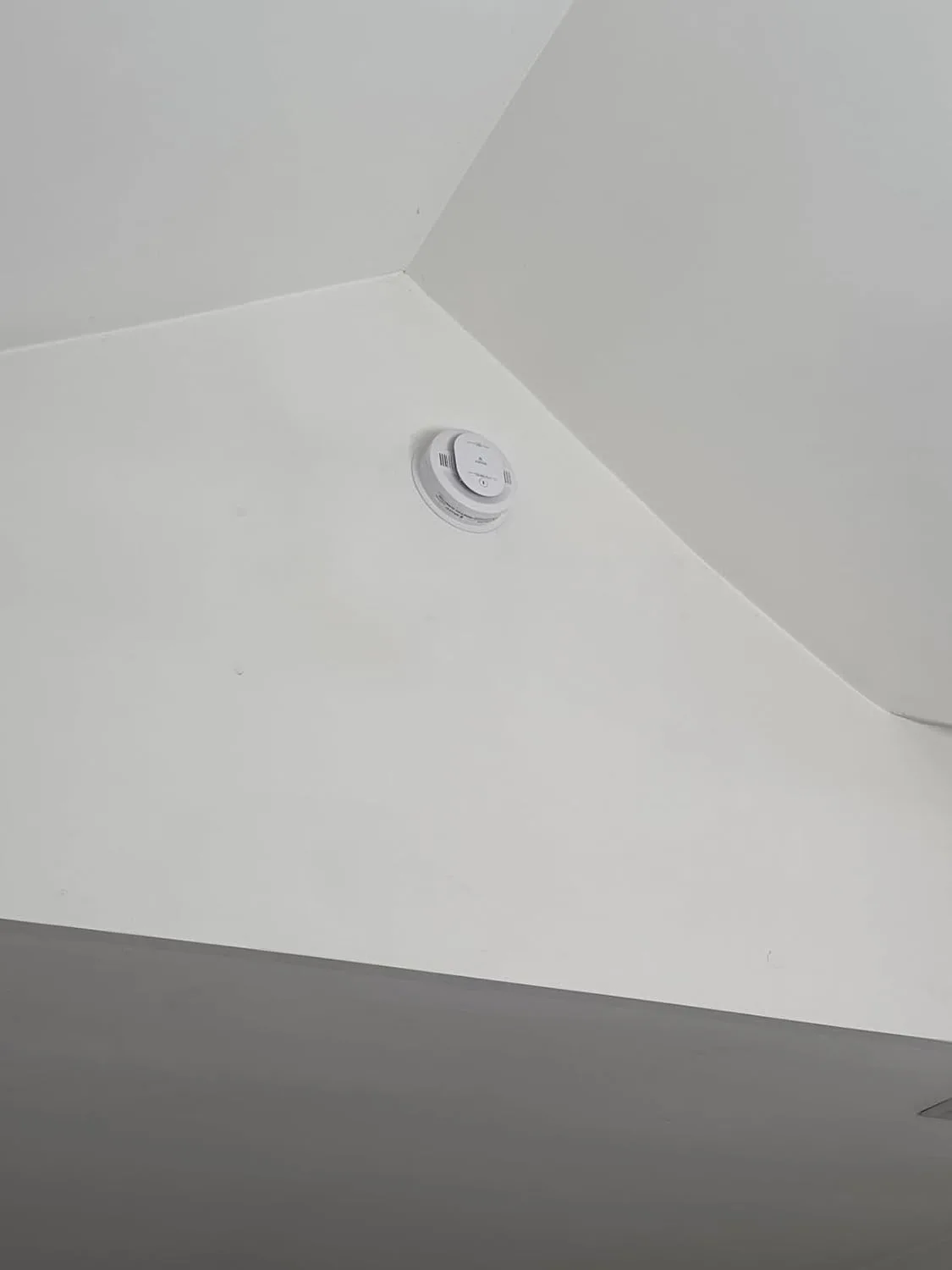
Plenty of homeowners lean on battery-only CO alarms — the type you tend to forget about until the low-battery chirp finally annoys you into action. Hardwired units with backup power, on the other hand, stay on guard around the clock, which is exactly the kind of protection you need when a cracked heat exchanger or a bad vent starts quietly leaking carbon monoxide into your home.
Where it delivers
- Because the units interconnect, one triggering means all of them sound off together — you’ll hear the alert no matter which room you’re standing in, and that matters far more in a two-story home than most people expect.
- A built-in 10-year battery backup keeps you covered even if the power goes out; I’ve seen too many households trust outlets that don’t always stay live.
- Spoken alerts spell out the actual threat — “Carbon monoxide” versus “Fire” — so you’re not stuck guessing whether to grab the family and leave or call the gas utility first.
Where it falls short
- Setup means routing wire through your walls and tying into a 120V circuit — this isn’t a device you just plug in and walk away from, so if electrical work isn’t your comfort zone, plan on hiring a licensed electrician.
- A 4-unit pack handles most standard homes just fine, but bigger houses or ones running multiple HVAC zones may need a fifth detector, so it pays to map out placement before you buy.
I’ll admit—when I first learned that homeowner had no hardwired CO detectors, I second-guessed whether recommending this model was worth the upfront cost and installation hassle. Then I realized that same hesitation is exactly why families stay unprotected. Kidde Hardwired Smoke & Carbon Monoxide Detector, 10-Year Battery Backup, Voice Alerts, Interconnectable LED Warning Light Indicators, 4 Pack
About This Article

Written by Dana Sorensen. Homeowner turned building-science obsessive. I help other homeowners understand attic insulation, ventilation, and air quality so they can stay comfortable year-round without overspending on energy bills. More about this site.
Scope and limits. Dana is a homeowner who studies building science, not an HVAC contractor or licensed tradesperson. Anything involving combustion appliances, gas lines, or electrical work belongs with a licensed contractor.
Verify this against a primary source
Specifics change, and your situation may differ from the one described here. These are the authorities worth checking directly:
- ENERGY STAR — recommended insulation R-values by climate zone
- U.S. Department of Energy — air sealing and insulation guidance
- EPA Indoor Air Quality — ventilation and indoor air quality standards