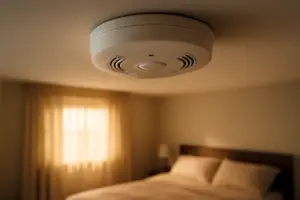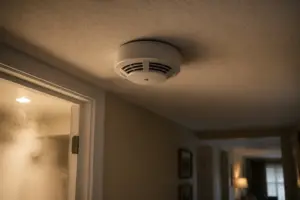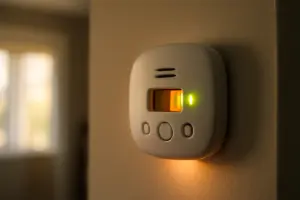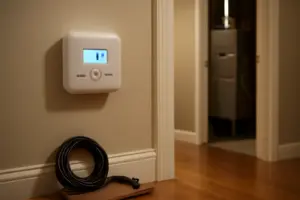
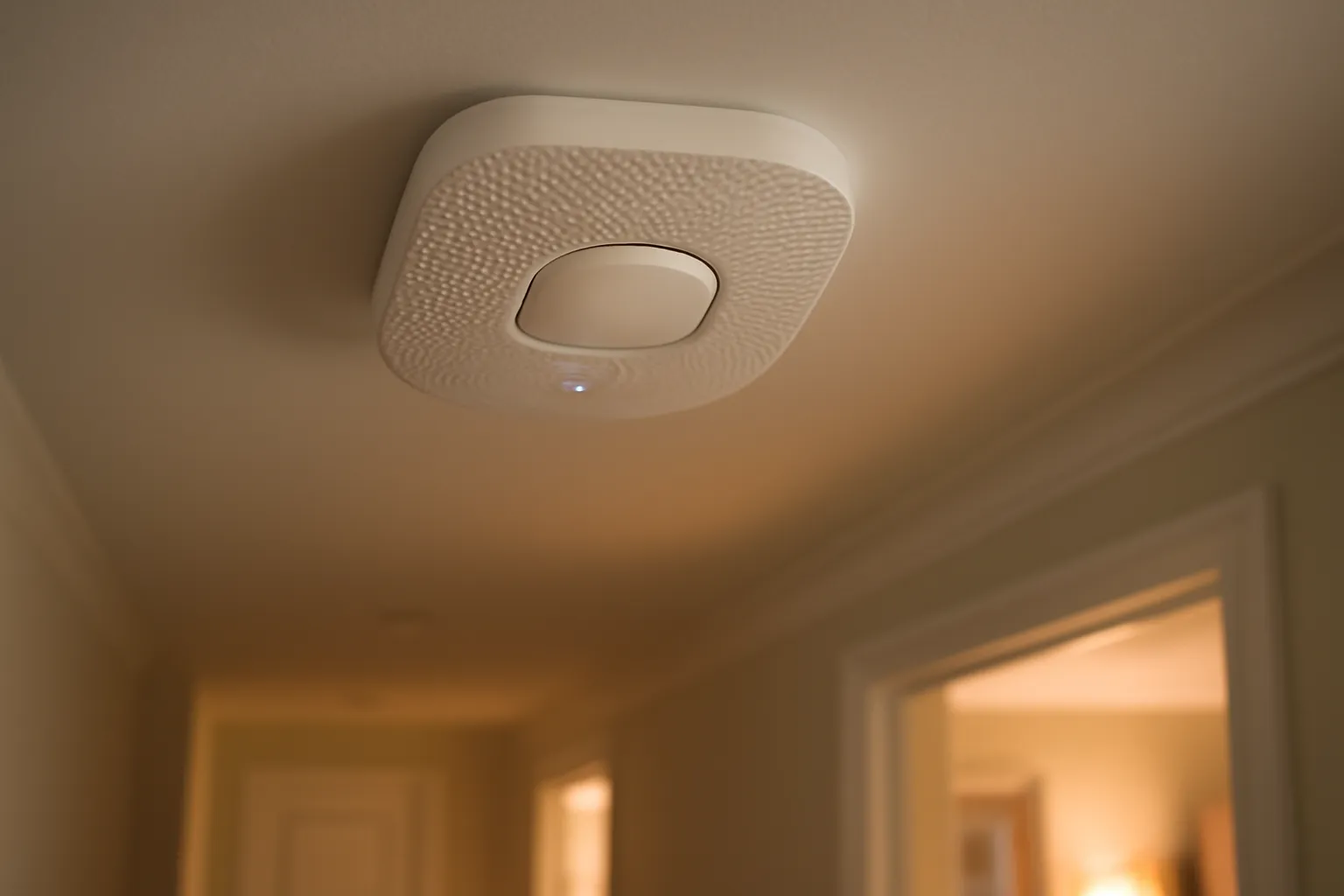
I still have a screenshot saved on my phone from last spring — the kind of evidence that sums up an entire argument in a few lines. A homeowner’s neighbor snapped a photo of smoke rolling out of her garage and texted it to her mid-afternoon, while she sat at a desk forty minutes across town with no idea anything was wrong. Meanwhile, inside that empty house, three hardwired smoke alarms — every single one up to code — were blaring at full volume with nobody around to hear them. The fire department eventually showed up, but not before her water heater had already scorched half the utility room black. Nothing failed mechanically. The alarms did precisely what they were built to do: they made noise, loudly, into a house with no one in it. That screenshot has stayed with me because it captures exactly what I try to explain to clients while steering them toward the best smart smoke and CO detector WiFi options: a fully code-compliant, perfectly working alarm system can still have a glaring blind spot — it only does its job if you’re close enough to hear it. What I want to lay out here is why that gap exists, what a smart detector actually does differently under the hood, and how I’d approach choosing one for a house like mine. Think of this less as a sales pitch and more as the same conversation I’d walk you through standing in your own utility room.
The Real Reason Standard Smoke Alarms Leave a Gap
I want to say this plainly before going further: a basic smoke alarm beats having nothing at all, no question. The National Fire Protection Association’s NFPA 72 standard mandates alarms in every bedroom, just outside each sleeping area, and on every floor — and that requirement exists precisely because these devices have proven, time and again, that they save lives. Still, three built-in shortcomings sit inside conventional detectors that most people never think twice about until they’re the one dealing with the fallout.
The first shortcoming is how it communicates — or doesn’t. A conventional alarm has exactly one language: a piercing beep. It won’t text you, won’t dial your cell, won’t alert a neighbor watching the house. If you’re out running errands, sitting at your desk, or asleep with earplugs in, that alarm might as well be silent as far as you’re concerned. This gets especially dangerous with carbon monoxide, since CO has no smell and no color — meaning you can absorb enough of it to cloud your judgment (OSHA marks 70 PPM as the point where headache and fatigue set in) well before you’re sharp enough to even register that an alarm is going off.
The second shortcoming is pinpointing where the danger actually is. With a properly interconnected hardwired system — which is the setup you want — every alarm in the house fires the instant one unit senses trouble. That’s great for waking the whole household up. The catch is that every unit sounds identical, so unless you’ve memorized your home’s wiring zones, you’re guessing whether the danger is coming from the kitchen or the basement. In an actual emergency, those few seconds spent figuring out which direction to run can matter enormously.
The third shortcoming is false-alarm fatigue. Photoelectric sensors — tuned to the bigger particles produced by slow, smoldering fires — trigger fewer false alarms than ionization sensors do, but they’ll still go off from cooking steam or a smoky pan. The usual fix is climbing onto a chair, yanking the battery, and fanning a towel at the ceiling, which quietly trains everyone in the house to treat the alarm as an annoyance rather than a warning. Studies out of the National Institute of Standards and Technology point to nuisance alarms as one of the top reasons people disable or rip out their detectors entirely. Compare that to silencing a false alarm from your phone with two taps while you keep cooking — you’re far less likely to disconnect the unit out of frustration.
Before you assume the alarm is faulty, it is worth understanding why a detector trips when nothing is burning.
None of this is a criticism of how basic alarms are engineered. It’s simply that a beeping box installed back in 1998 was built to solve a 1998-era problem. Add a connectivity layer, and the whole equation shifts in ways that genuinely matter for keeping a home safe in practice.
The Connected Detector That Reached Me the One Time It Mattered
A hardwired alarm going off inside an empty house is nothing more than costly noise. What you actually need is a unit that finds you no matter where you happen to be, the instant it senses smoke or carbon monoxide. That single difference separates learning about a fire once it’s already spread from stopping it before it wipes out everything you own.
What It Gets Right
- Alerts land on your phone instantly, whether you’re forty minutes away or on the other side of the country — you find out before the neighbor even reaches for their phone.
- One unit handles both smoke and carbon monoxide detection, so you’re not juggling separate devices and you close off more of the blind spots in your overall safety setup.
- Through the Ring app, you can check status, run a test, or silence a false alarm right from your phone, no need to sprint home or knock on a neighbor’s door.
Where It Falls Short
- It depends on both your home WiFi and your phone’s cellular signal — lose either one and you’re back to a plain hardwired alarm with no remote alerting.
- Backup battery life doesn’t match a fully hardwired unit, so on top of any WiFi hiccups, you’ll still need to stay on top of periodic battery swaps.
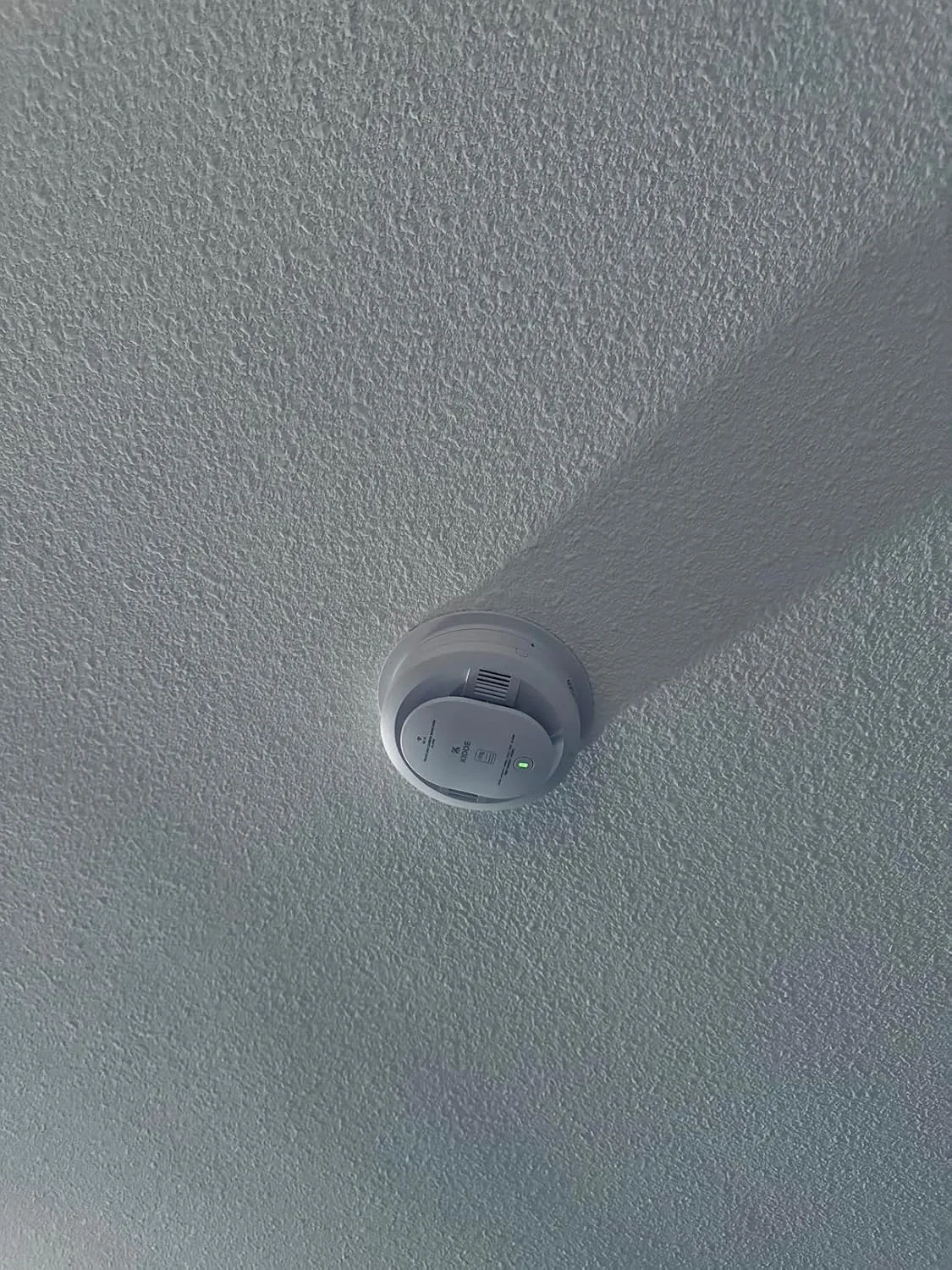
I hesitated the first time I installed one—I kept wondering if I was overcomplicating a simple problem—but the moment I got that first test notification on my phone from three rooms away, the friction disappeared. Get the Kidde Smart Smoke and Carbon Monoxide Detector on your priority list.
About This Article

Written by Dana Sorensen. Homeowner turned building-science obsessive. I help other homeowners understand attic insulation, ventilation, and air quality so they can stay comfortable year-round without overspending on energy bills. More about this site.
Scope and limits. Dana is a homeowner who studies building science, not an HVAC contractor or licensed tradesperson. Anything involving combustion appliances, gas lines, or electrical work belongs with a licensed contractor.
Verify this against a primary source
Specifics change, and your situation may differ from the one described here. These are the authorities worth checking directly:
- ENERGY STAR — recommended insulation R-values by climate zone
- U.S. Department of Energy — air sealing and insulation guidance
- EPA Indoor Air Quality — ventilation and indoor air quality standards