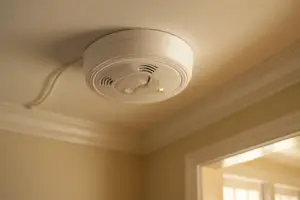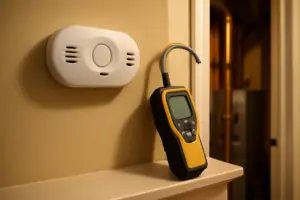
I’ve been doing combustion safety inspections for over fifteen years, and the call that still haunts me came from a family in a suburb outside of Salt Lake City. Mom, dad, teenage daughter — all three of them had been seeing their doctors on and off for nearly four months. Persistent headaches, crushing fatigue, nausea that never quite turned into vomiting, and a general brain fog that made the daughter’s grades slip enough that her school flagged it. Two doctors suspected stress. One suspected mold. Nobody asked the question that would have cracked the whole case open in about thirty seconds: “Do your symptoms get better when you leave the house?” Because they did. Every weekend that family spent at grandma’s place across town, everyone felt fine. By Tuesday, the headaches were back. When I finally got called in — not even for a safety concern, but for an annual furnace tune-up — I put my combustion analyzer in the supply plenum and watched the CO reading climb past 40 PPM. Their standard CO alarm on the hallway ceiling? Silent. Hadn’t made a sound in four months. This is the most dangerous gap in residential carbon monoxide poisoning symptoms signs home safety — and it’s exactly what this post is about.
Understanding Low-Level CO Exposure: Why Your Alarm Was Designed to Stay Quiet
Here’s the thing most homeowners don’t realize: your standard CO alarm is not designed to protect you from carbon monoxide poisoning at low levels. It’s designed to wake you up before you die in your sleep at high levels. That’s an important distinction, and it’s written right into the standard the alarm was built to meet.
The UL 2034 standard — which governs virtually every consumer CO alarm sold in the United States — sets alarm thresholds that look something like this: an alarm must sound within 35 minutes at 150 PPM, within 15 minutes at 200 PPM, and within four minutes at 400 PPM. Importantly, the standard explicitly states that alarms should not trigger at 30 PPM or below, even with prolonged exposure. Below 70 PPM, an alarm can legally take hours to respond, or never respond at all. This was intentional. The standard was written to prevent false alarms from things like car exhaust drifting in through an open window, and to focus protection on the acute, life-threatening scenario.
That makes sense for acute CO poisoning — the kind where a generator is running in a garage or a furnace flue suddenly disconnects and CO spikes to 500 PPM within an hour. That scenario is a medical emergency, and your alarm will catch it. But chronic, low-level CO poisoning is a completely different physiological situation.
At sustained exposures between 10 and 50 PPM — levels your standard alarm will never react to — carbon monoxide binds to hemoglobin in your blood and reduces your body’s ability to carry oxygen. The effects accumulate over days and weeks. Carboxyhemoglobin (COHb) saturation builds in your blood. At 2–5% COHb saturation, you get headaches and fatigue. At 10–20%, you’re looking at serious neurological symptoms. The insidious part is that at these low concentrations, the symptoms mimic so many other conditions — tension headaches, seasonal depression, anemia, anxiety, viral illness — that most people never connect the dots. Their doctor doesn’t either, because physicians rarely think to ask about indoor air quality and almost never order a COHb blood test unless someone shows up in an obvious acute crisis.
The diagnostic clue that should always raise a red flag: symptoms that improve when you leave home and return when you come back. Symptoms that follow a seasonal pattern — worse in winter when the furnace runs constantly. Multiple family members with overlapping complaints. Pets that seem lethargic or ill. If any of those boxes are checked, chronic CO exposure needs to be ruled out before anything else.
Vulnerable populations face even greater risk at these concentrations. Infants, the elderly, pregnant women, and people with heart or lung disease are affected at lower CO levels than a healthy adult. A 30 PPM exposure that gives a healthy adult a mild morning headache can cause measurable cardiac stress in someone with coronary artery disease, and can interfere with fetal oxygen delivery in a pregnant woman. The margin for error is much smaller for these groups — which is exactly why waiting for a standard alarm to trigger is not acceptable protection.
The Detector That Caught What Four Months of Doctor Visits Missed
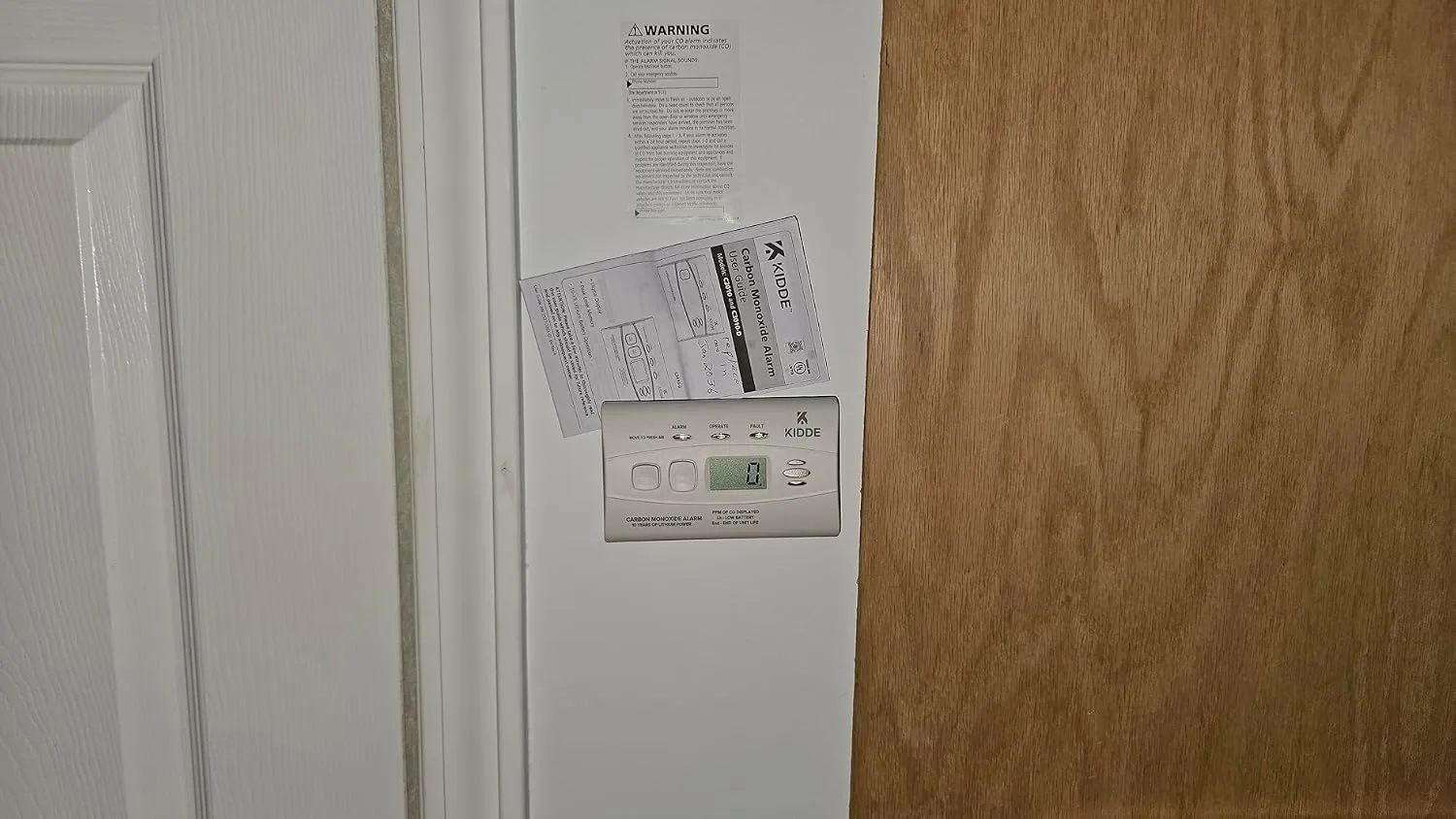
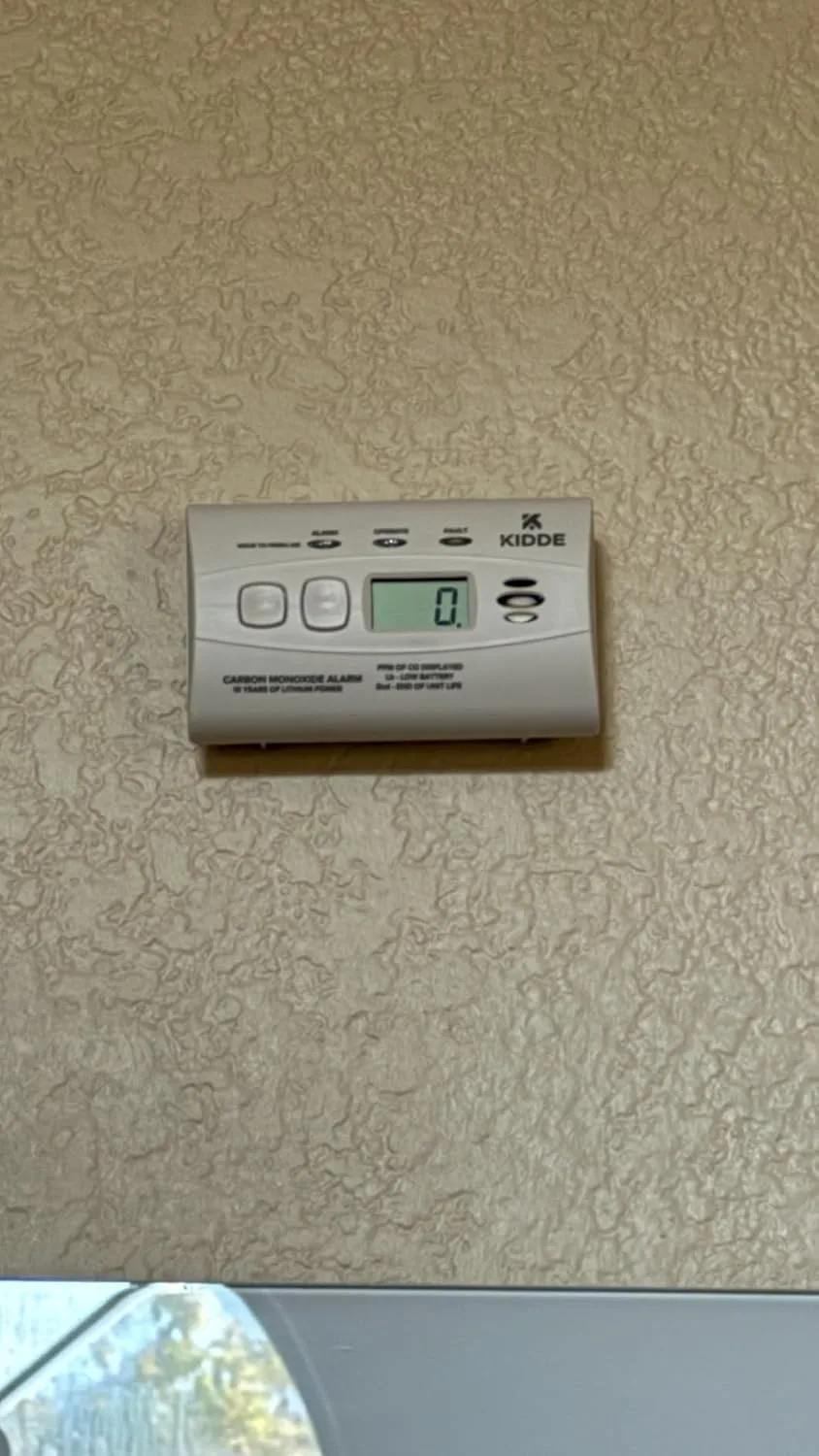
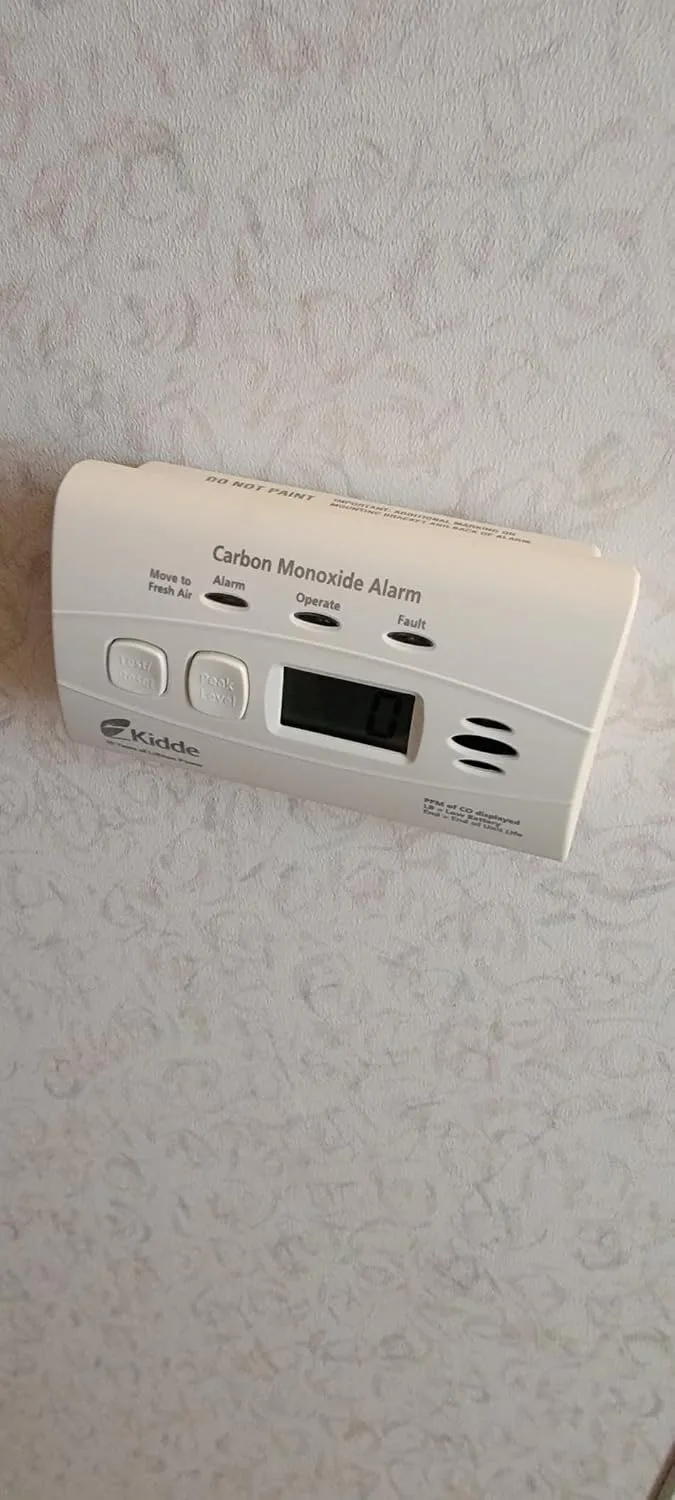
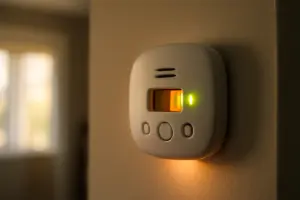
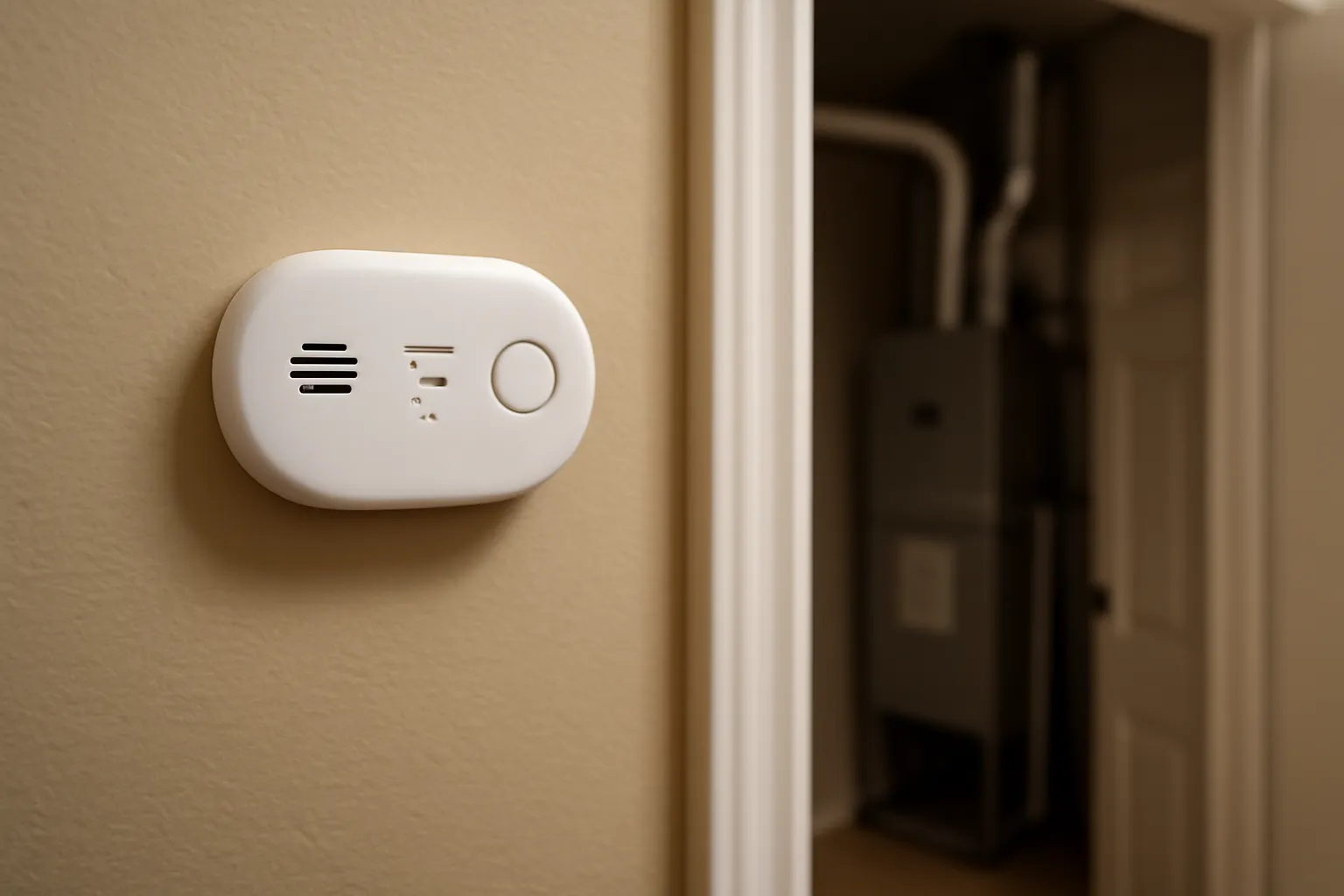
Standard CO alarms are calibrated to alarm at dangerous levels—but dangerous and symptomatic aren’t the same thing. A battery-powered detector with a digital display lets you actually see the real-time CO concentration in your home, not just wait for the alarm to scream.
What works
- Digital display shows actual CO parts per million—you can spot creeping levels (30–70 ppm) that cause symptoms long before the 70 ppm alarm threshold triggers
- 10-year battery eliminates the dead-battery gamble that silences too many detectors in American homes
- Backlit display works in basements and furnace rooms where you need it most but can’t always see the indicator clearly
What doesn’t
- Requires you to actually look at it—a silent digital readout won’t wake you at 2 a.m. the way an alarm will
- Battery-powered units need placement flexibility, which can mean mounting it where family members walk past it regularly (not buried behind a door)
I almost dismissed this step as redundant—I had an alarm, wasn’t that enough?—until I saw the numbers climb to 45 ppm on a winter morning with a plugged furnace exhaust. That’s when I realized I’d been gambling with my own family’s health. Get the Kidde Carbon Monoxide Detector, 10-Year Battery Powered with Digital Backlit Display (COBD10) and stop guessing.
This post contains affiliate links. As an Amazon Associate, I earn from qualifying purchases at no extra cost to you.