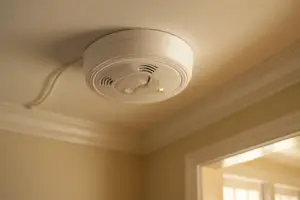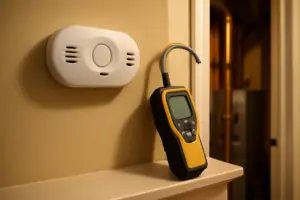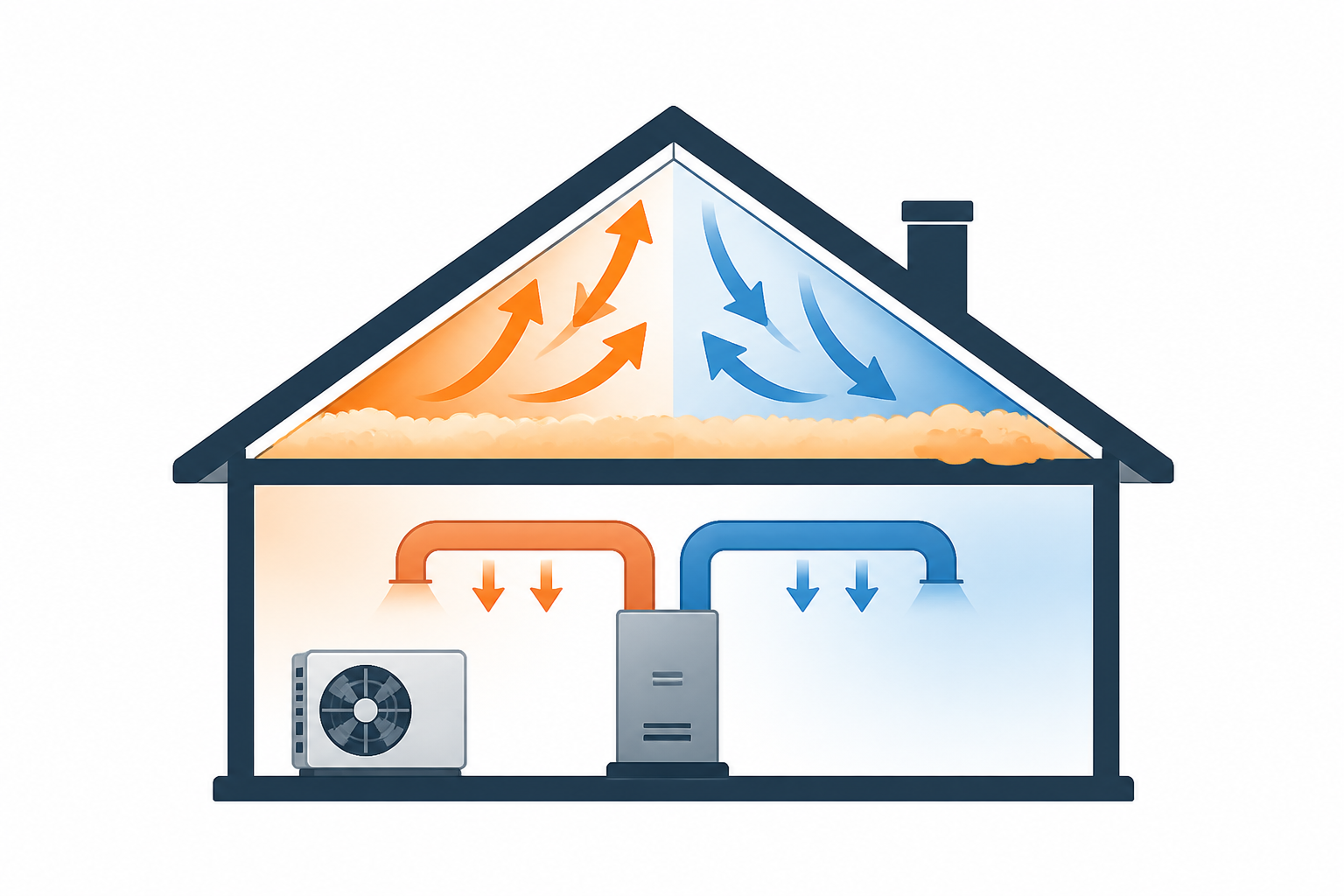
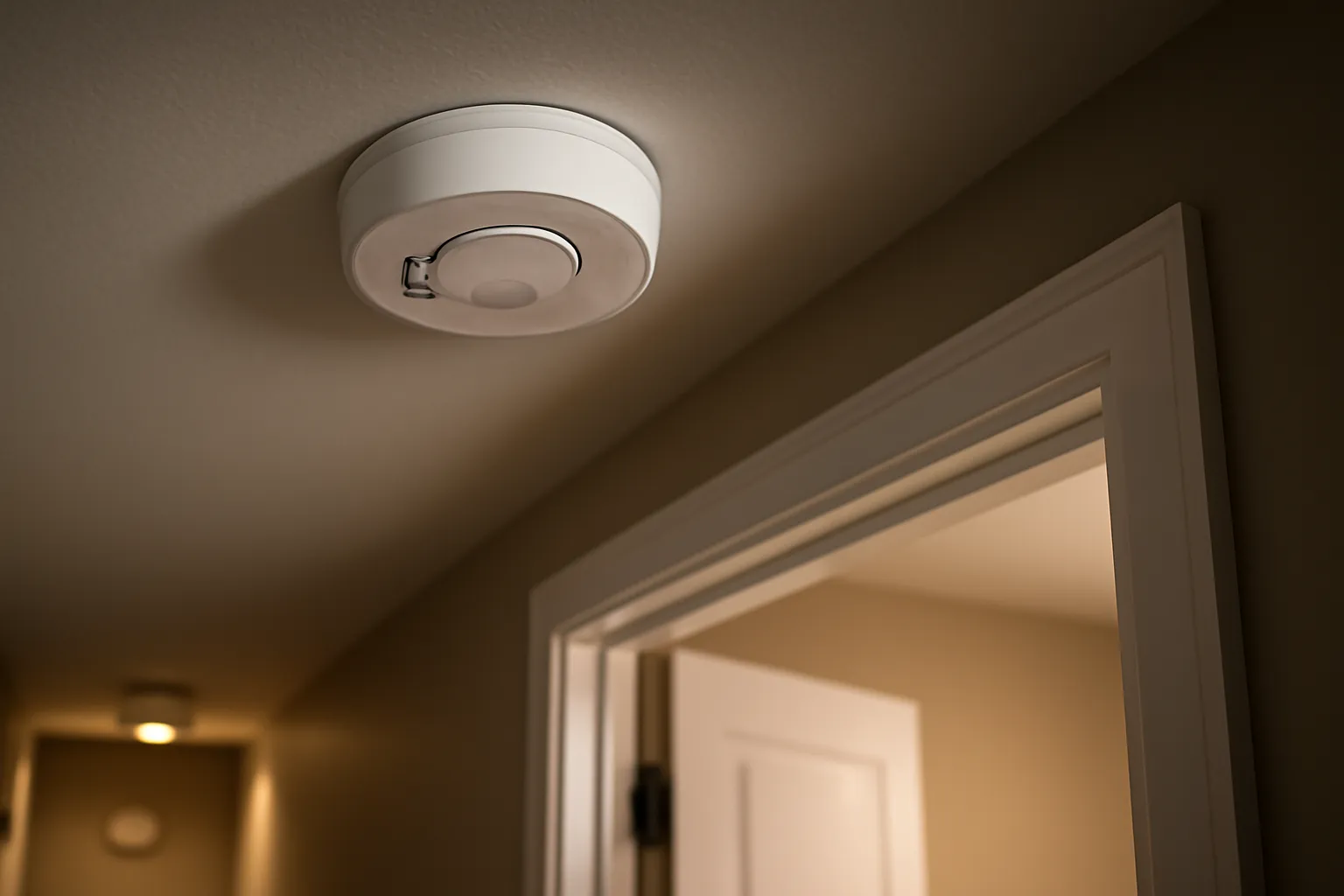
Last spring, I got a call from a homeowner in a suburb outside Salt Lake City — nice family, two kids, three-bedroom ranch with a finished basement. They’d just had a small kitchen fire, caught it early, no injuries. But here’s what got me: not a single detector in the house had gone off. Not one. When I walked through with them afterward, I found four smoke detectors. One had a dead battery. Two were manufactured in 2008 — sixteen years old, providing exactly zero protection regardless of how cheerfully they beeped when tested. The fourth was an ionization-only unit mounted about eight feet from the stove, the worst possible location for that sensor type. They thought they were covered. They had detectors on the ceiling. They tested them occasionally. But their whole house smoke CO detector plan — if you can call it that — had more holes than a screen door. That experience is not unusual. It’s actually the norm. Most homeowners I visit have never thought about how many smoke detectors they actually need, let alone whether those detectors form a complete, interconnected system that works together. This guide is going to change that for you.
Understanding the Problem: Why Your Current Detectors Might Be Doing Nothing
Here’s the safety science that most homeowners — and frankly, a lot of contractors — don’t fully grasp. Smoke detectors don’t last forever. They have a hard expiration date of ten years from the manufacture date, printed on a label on the back of the unit. After ten years, the sensing chamber degrades, the radioactive element in ionization detectors decays below effective levels, and the photoelectric sensors in PE units accumulate enough contamination that their sensitivity drops dramatically. The unit may still beep when you press the test button — that button only tests the horn circuit, not the actual sensor. A detector that passes the button test can be completely blind to real smoke. This is one of the most dangerous misconceptions in home safety.
Then there’s the sensor type problem. There are two main smoke detection technologies. Ionization sensors use a tiny amount of Americium-241 to ionize air in a detection chamber. They respond quickly to fast-flaming fires with small combustion particles — think a grease fire or burning paper. Photoelectric sensors use a light beam and a receiver; when smoke particles scatter that light onto the receiver, the alarm triggers. Photoelectric is significantly better at detecting slow, smoldering fires — the kind that produce heavy smoke before open flame. These are statistically the deadlier fires because they often happen at night when occupants are sleeping. NFPA 72, the national fire alarm code, recommends that homes have both sensor types represented, ideally in combination units.
Carbon monoxide is an entirely separate threat. CO is colorless, odorless, and produced by any incomplete combustion — gas furnaces, water heaters, fireplaces, attached garage vehicles, generators. At 70 PPM sustained exposure, CO causes symptoms in healthy adults. At 150–200 PPM, you can lose consciousness within two to three hours. The UL 2034 standard sets the alarm trigger thresholds: CO detectors must alarm within 90 minutes at 70 PPM, within 35 minutes at 150 PPM, and within 15 minutes at 400 PPM. A smoke detector does not detect CO. A CO detector does not detect smoke. Many homes I inspect have smoke detectors everywhere and zero CO detectors — in houses with gas furnaces, gas water heaters, and attached garages. That’s a serious gap.
Finally, there’s the interconnection problem. Building codes (IRC Section R314 and most local amendments) require that in new construction, all smoke detectors be interconnected so that when one alarms, all alarm. Older homes are grandfathered, but the practical reality is this: if a fire starts in your basement at 2 AM and you’re sleeping on the second floor, a single local-alarm detector in the basement may not wake you in time. Interconnection is not a luxury — it’s a life-safety feature.
The Interconnected System That Finally Caught What Four Separate Detectors Missed
That Salt Lake City family’s kitchen fire exposed a hard truth: scattered, aging detectors create blind spots. What you need isn’t just more units — it’s detectors that talk to each other so one alert reaches every corner of your home instantly.
What works
- Interconnected design means when one detector senses smoke or carbon monoxide, all units sound — you’ll know about a threat in the basement even if you’re upstairs with a door closed
- 10-year sealed batteries eliminate the “dead battery” problem entirely — no more quarterly checks or forgotten replacements, and they meet UL 217 and UL 2034 standards for both smoke and CO detection
- Six-pack covers a typical multi-story home with proper placement (hallways, bedrooms, basement, kitchen perimeter) without the cost of buying units individually
What doesn’t
- Interconnection requires hardwiring or a wireless hub setup — you can’t just swap these into old battery-only mounts without some basic electrical work or planning
- Ten-year batteries sound convenient until one unit fails — you’ll replace the whole detector rather than just the battery, so budget accordingly after the decade mark
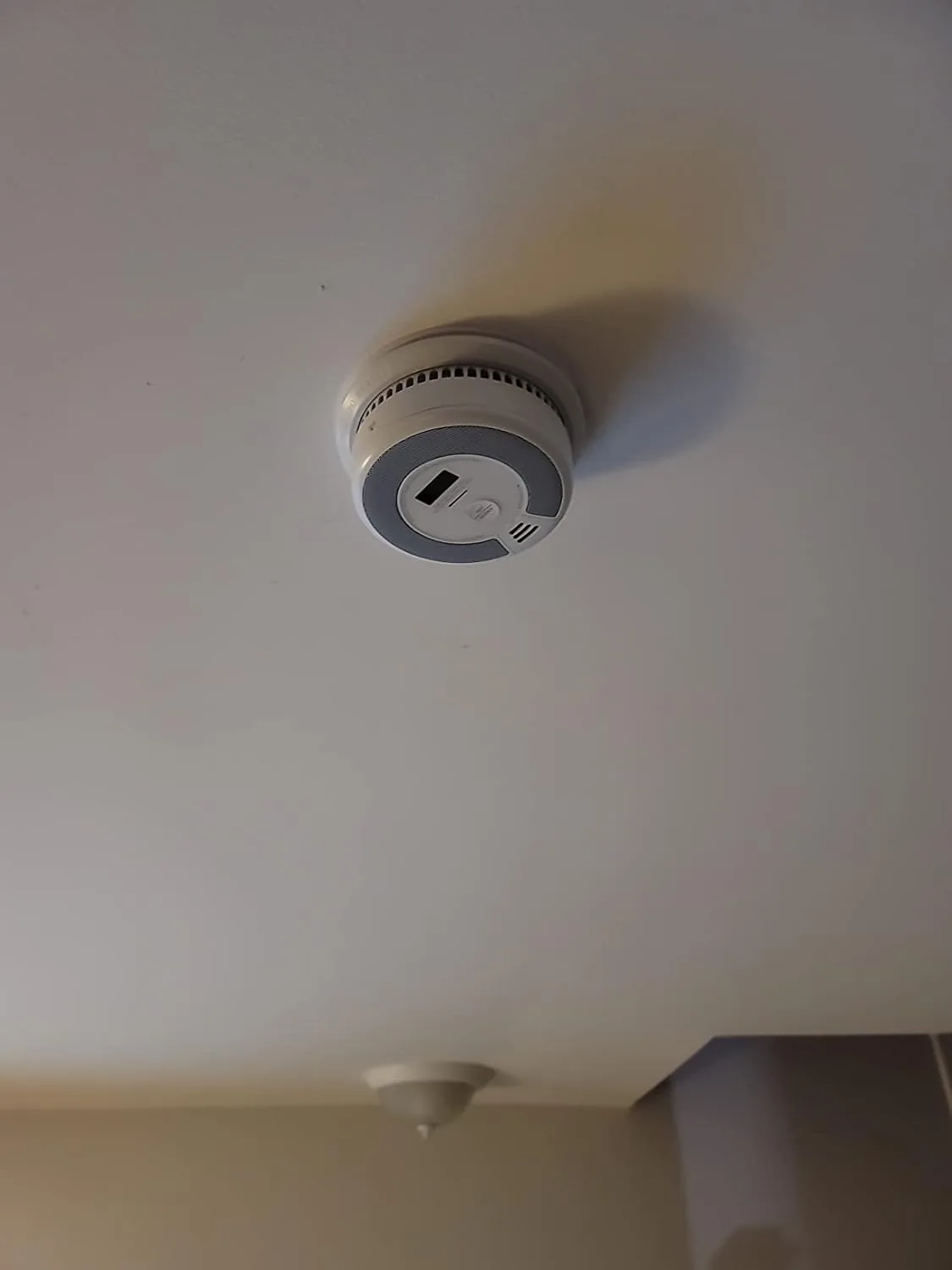
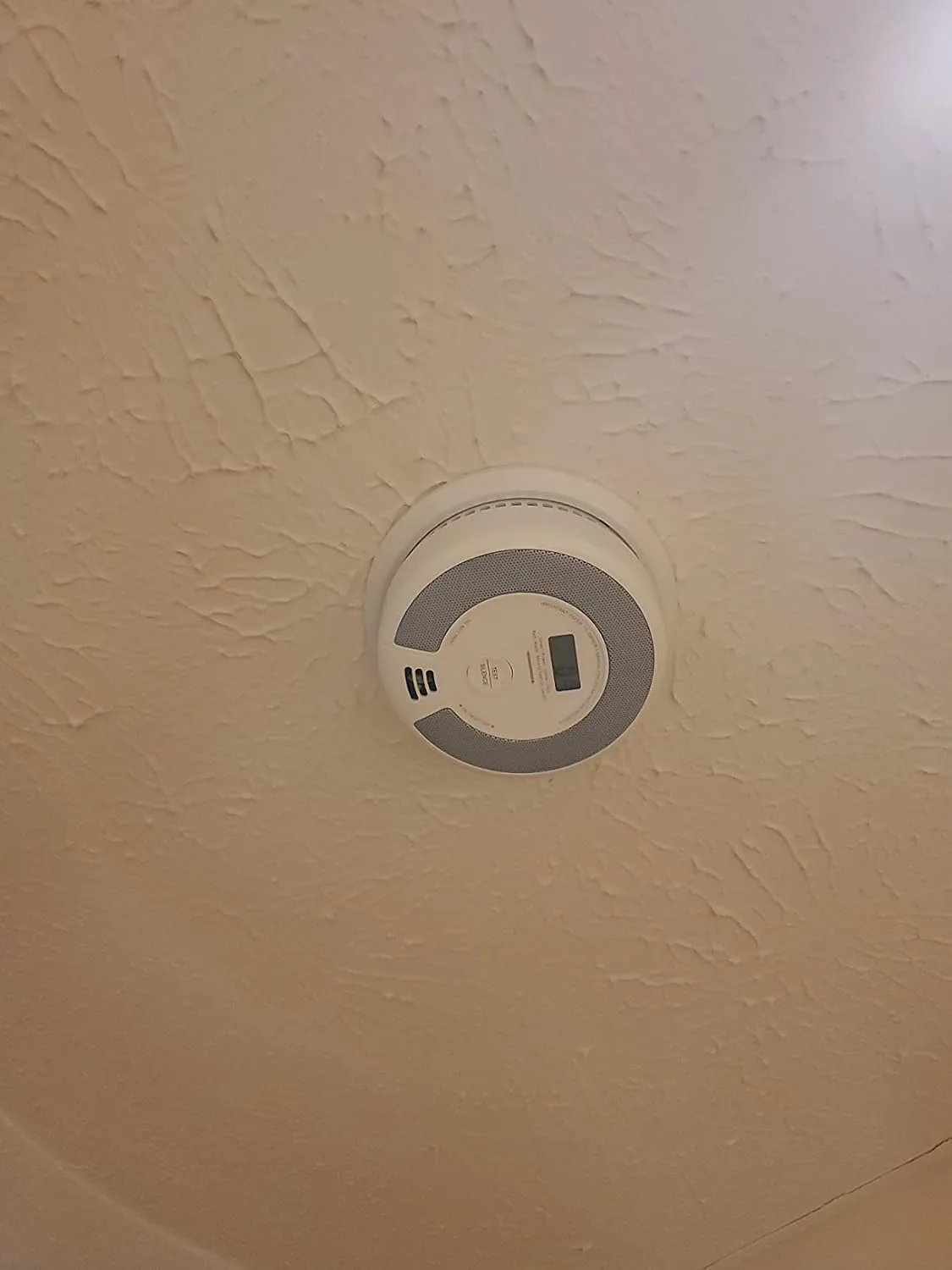
I’ll admit, I hesitated on recommending hardwired systems to DIY homeowners at first — I worried about the installation friction. But seeing that Salt Lake City kitchen fire and knowing those four detectors never communicated changed my mind. X-Sense Interconnected Smoke and Carbon Monoxide Detector — 10-Year Battery, 6-Pack (UL 217 & UL 2034 Certified) is the closest thing to foolproof coverage I’ve found for homes that need real protection.
This post contains affiliate links. As an Amazon Associate, I earn from qualifying purchases at no extra cost to you.
![Customer photo of [describe what's visible in the image]](https://atticandair.com/wp-content/uploads/2026/06/B0GGHMYGXS-1.webp)