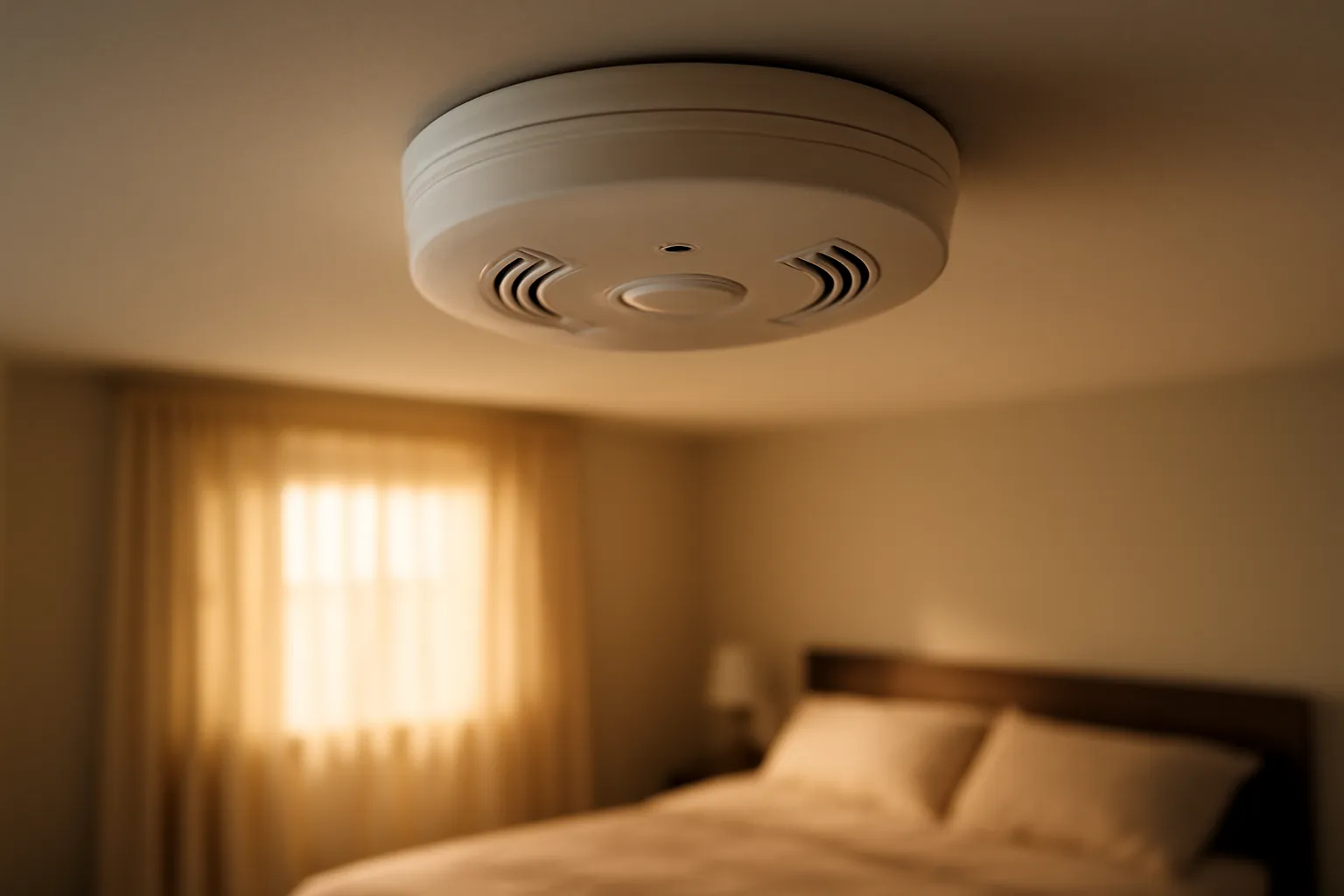
Last spring, I was doing a home performance audit for a family in a newer suburb — nice house, well-insulated, the kind of place you’d assume was buttoned up tight on safety. I spotted three smoke detectors in the hallway and kitchen area. All three were ionization units. Standard stuff you’d grab off a hardware store shelf for eight bucks. The homeowner told me she’d pulled the batteries out of the kitchen one because it kept screaming every time she made toast. The hallway unit near the master bedroom? Dead battery for who knows how long. The only working detector in the house was one in the living room, fifteen feet from where her kids slept. When I explained the photoelectric vs ionization smoke detector difference to her — specifically that ionization detectors are dangerously slow at detecting the kind of fire most likely to kill her family while they sleep — she went quiet. That silence told me everything. She’d never been told any of this. She just assumed a smoke detector was a smoke detector. That’s the mistake I see in almost every home I walk into, and it’s the one I want to fix today.
This isn’t about fear-mongering. It’s about understanding a real, documented gap in how most homes are protected — and making a simple, inexpensive change that could matter more than almost anything else you do for your family’s safety this year.
Understanding the Problem: Why Your Smoke Detector Technology Matters More Than You Think
Here’s something most homeowners don’t know: there are two completely different technologies inside residential smoke detectors, and they respond to fires in fundamentally opposite ways. Choosing the wrong type — or tolerating one that’s been disabled because of constant false alarms — leaves a serious gap in your home’s protection.
How Ionization Detectors Work
The vast majority of smoke detectors sold in the U.S. over the past four decades are ionization units. Inside each one is a tiny amount of Americium-241, a radioactive material. Don’t panic — the quantity is minuscule and sealed behind metal, but it’s worth understanding what it does. That material continuously ionizes air molecules inside a small chamber between two electrically charged plates, creating a steady, low-level electrical current. When smoke particles enter the chamber, they disrupt that ion flow and the drop in current triggers the alarm.
Ionization detectors are genuinely fast at detecting fast-flaming fires — think a curtain catching fire from a candle, or paper igniting near a heat source. Lots of visible flame, rapid combustion, rising heat. For that fire profile, ionization technology responds quickly and effectively.
The problem is that fast-flaming fires are not the primary killer in residential fires.
The Smoldering Fire Problem
Smoldering fires — a cigarette left on upholstered furniture, an electrical short behind a wall, overheated wiring inside an outlet box — burn slow and produce large, dense smoke particles long before any visible flame develops. These fires can smolder for hours, quietly filling a home with toxic smoke while everyone sleeps. This is the fire scenario responsible for the majority of residential fire fatalities. And ionization detectors are notoriously slow to respond to them.
The National Fire Protection Association (NFPA) has studied this extensively. Research data shows that ionization alarms can respond 15 to 50 minutes slower to smoldering fires compared to photoelectric detectors. In a slow-burning fire that’s already been developing for an hour, 15 additional minutes can be the difference between escape and tragedy.
How Photoelectric Detectors Work — and Why They’re Different
Photoelectric smoke detectors use an entirely different sensing method. Inside the detection chamber, a light source (typically an LED) fires a beam at an angle away from a photosensor. Under normal conditions, that beam passes through the chamber without hitting the sensor. When smoke particles — particularly the large, dense particles produced by smoldering fires — enter the chamber, they scatter the light beam. Some of that scattered light hits the photosensor and triggers the alarm.
This technology is tuned to exactly the kind of fire that poses the greatest risk to sleeping occupants. Photoelectric detectors are also significantly less sensitive to cooking smoke, steam from showers, and airborne dust — the three leading causes of nuisance alarms from ionization units. And that brings us to the hidden danger hiding in plain sight.
The Disabled Detector Problem
The NFPA also reports that roughly two-thirds of home fire deaths occur in homes without working smoke alarms. The number one reason cited for non-functional alarms? Nuisance alarms — homeowners who pulled the battery or removed the detector entirely because it kept going off during normal cooking. An ionization detector installed in or near a kitchen is almost guaranteed to become a nuisance. And a detector with no battery protects absolutely nobody. This is a systemic problem created, in large part, by defaulting to ionization technology in locations where it doesn’t belong.
Several states and municipalities — including Massachusetts, Vermont, Iowa, California, and the city of Chicago — now require photoelectric or dual-sensor smoke detectors by code in new construction and during renovations. The science has been clear for years. It’s just taking time to filter down to the average homeowner.
The Photoelectric Detector That Finally Stopped the False Alarms
That kitchen detector she’d disabled? It was a perfect example of why ionization units fail families. A photoelectric detector solves the false-alarm problem that causes people to remove batteries or ignore their alarms entirely — which defeats the whole point of having them.
What works
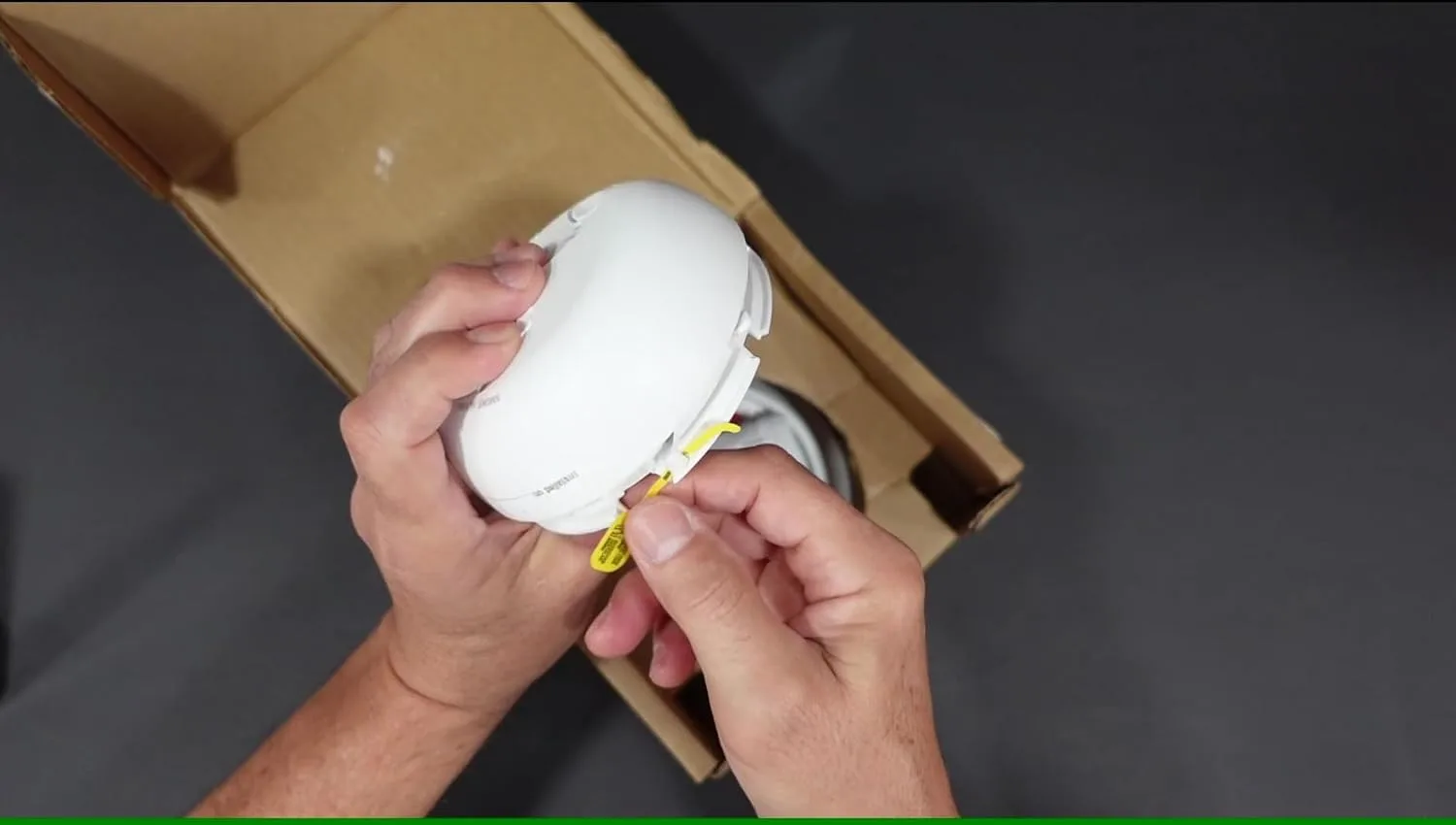
- The 10-year sealed battery means no dead batteries from people forgetting to replace them — or worse, from families removing them out of frustration.
- Photoelectric sensors catch smoldering fires faster than ionization units, which is where real lives hang in the balance in bedrooms and living rooms.
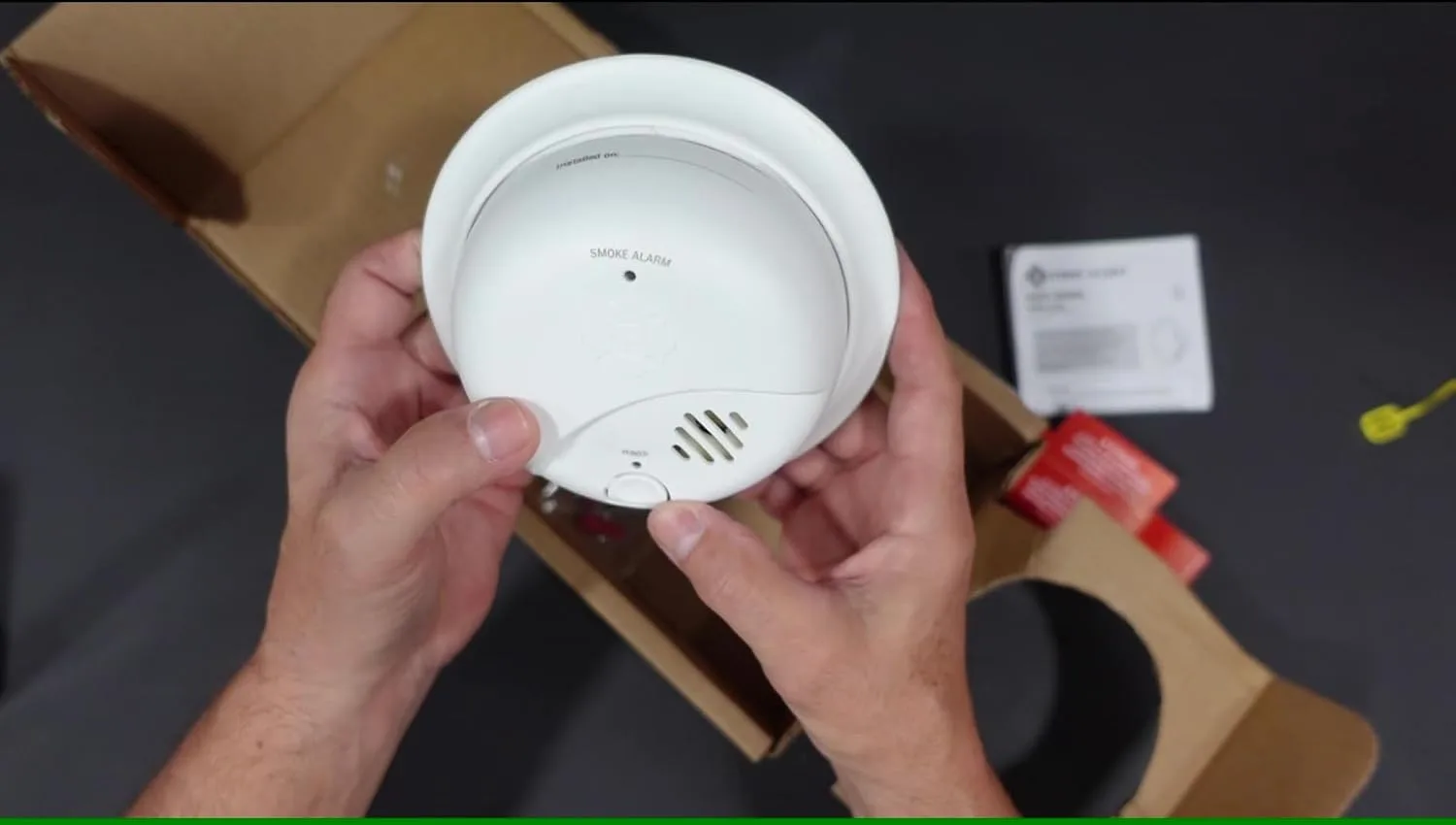
- The Test & Silence button lets you verify it works without triggering a full alarm, so people actually test their detectors instead of avoiding them.
What doesn’t
- The upfront cost is higher than those $8 ionization units, which is why people still grab the cheaper option and end up with a false-alarm problem.
- You can’t replace the battery yourself when it finally dies in 10 years — you replace the whole unit, which feels wasteful until you remember what it actually protects.
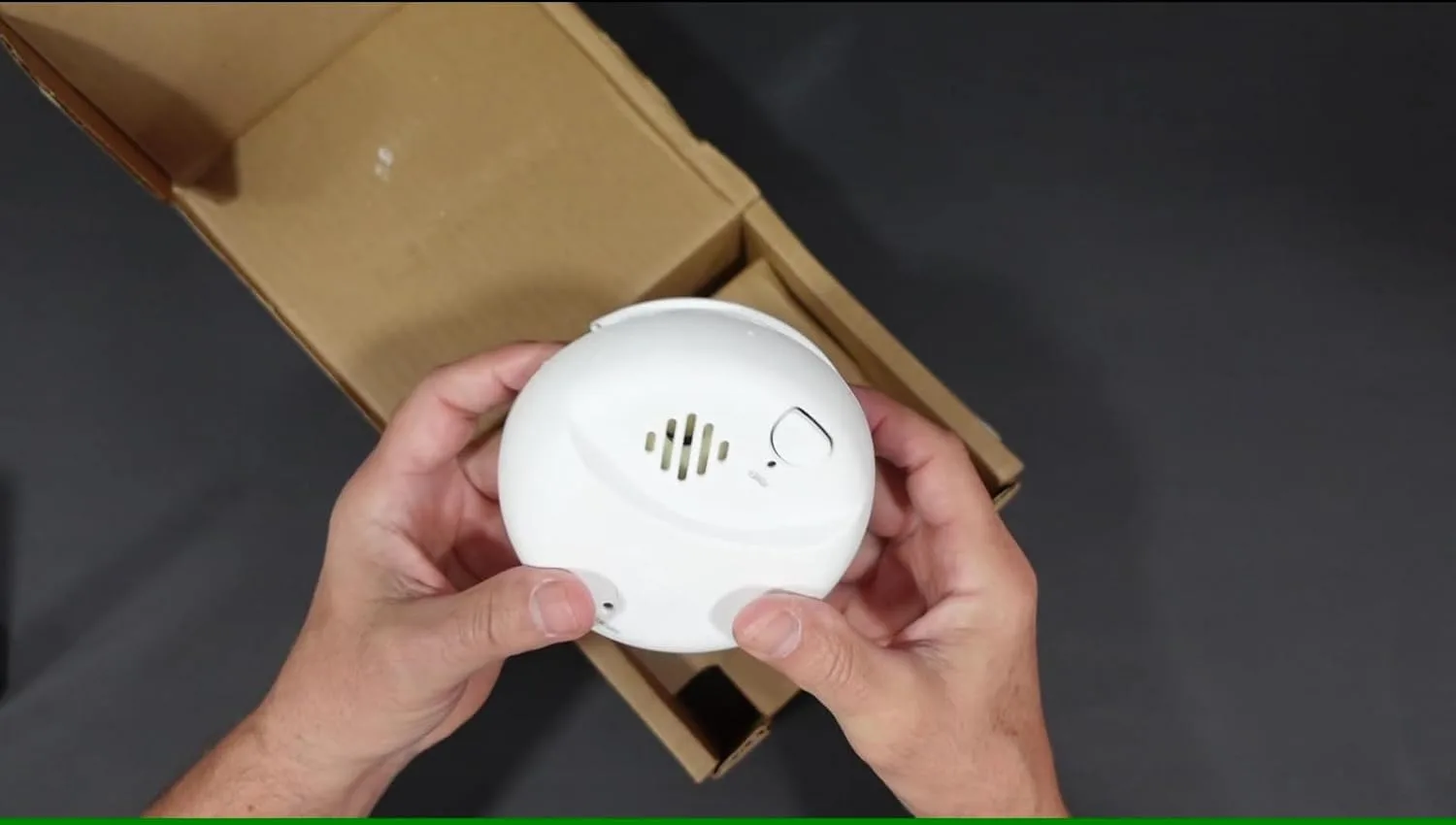
I’ll admit, the first time I recommended this over a cheaper dual-sensor model, I worried the homeowner would balk at the price and just buy another hardware-store special anyway. But when I explained that a working detector in the hallway is only useful if it actually stays plugged in and armed, the choice became obvious. Get the First Alert Smoke Alarm, 10-Year Sealed Battery Detector with Test & Silence Button (SMI110).
This post contains affiliate links. As an Amazon Associate, I earn from qualifying purchases at no extra cost to you.