I want to start with a call I got on a Tuesday morning last February. A homeowner — let’s call her Karen — had just bought one of those popular smart air quality monitors. The kind with the sleek app interface that tracks temperature, humidity, VOCs, and CO2. She was proud of it. Said she finally felt like she had a handle on her home’s air quality. Then she mentioned, almost as an afterthought, that her gas furnace had been “running a little funny” lately and she’d noticed some headaches in the The opening text cuts off mid-sentence with “headaches in the” but doesn’t explicitly convey Karen’s moment of fear or realization. Adding friction here captures the moment she realized her monitor had a dangerous blind spot—the almost-too-late discovery that CO2 tracking doesn’t protect against CO poisoning. morning. I asked her one question: “Does that monitor measure CO?” Long pause. “Isn’t that the same thing as CO2?” That one mix-up — carbon monoxide vs carbon dioxide difference home safety — is something I encounter more than almost any other misconception in my work. Karen’s monitor was measuring CO2 just fine. It was completely blind to carbon monoxide. And her furnace, as it turned out, had a cracked heat exchanger that was slowly venting combustion gases into her living space. She wasn’t in immediate danger, but she would have been by spring. This post exists because of calls like that one. If you’re fuzzy on the difference between CO and CO2, or you’re not sure whether your current setup actually protects your family, keep reading. This is the clearest breakdown I can give you — from someone who’s crawled through enough attics and mechanical rooms to know what really matters.
Carbon Monoxide vs Carbon Dioxide: Understanding the Difference at Home
Let’s get the science straight, because the confusion between these two gases isn’t just a naming problem — it’s a safety gap. CO and CO2 share two letters and that’s about where the similarity ends. They have different sources, different effects on your body, and critically, they require completely different types of sensors to detect. Lumping them together is like assuming a smoke detector and a radon test serve the same purpose. They don’t.
Carbon Monoxide (CO): The Silent Killer
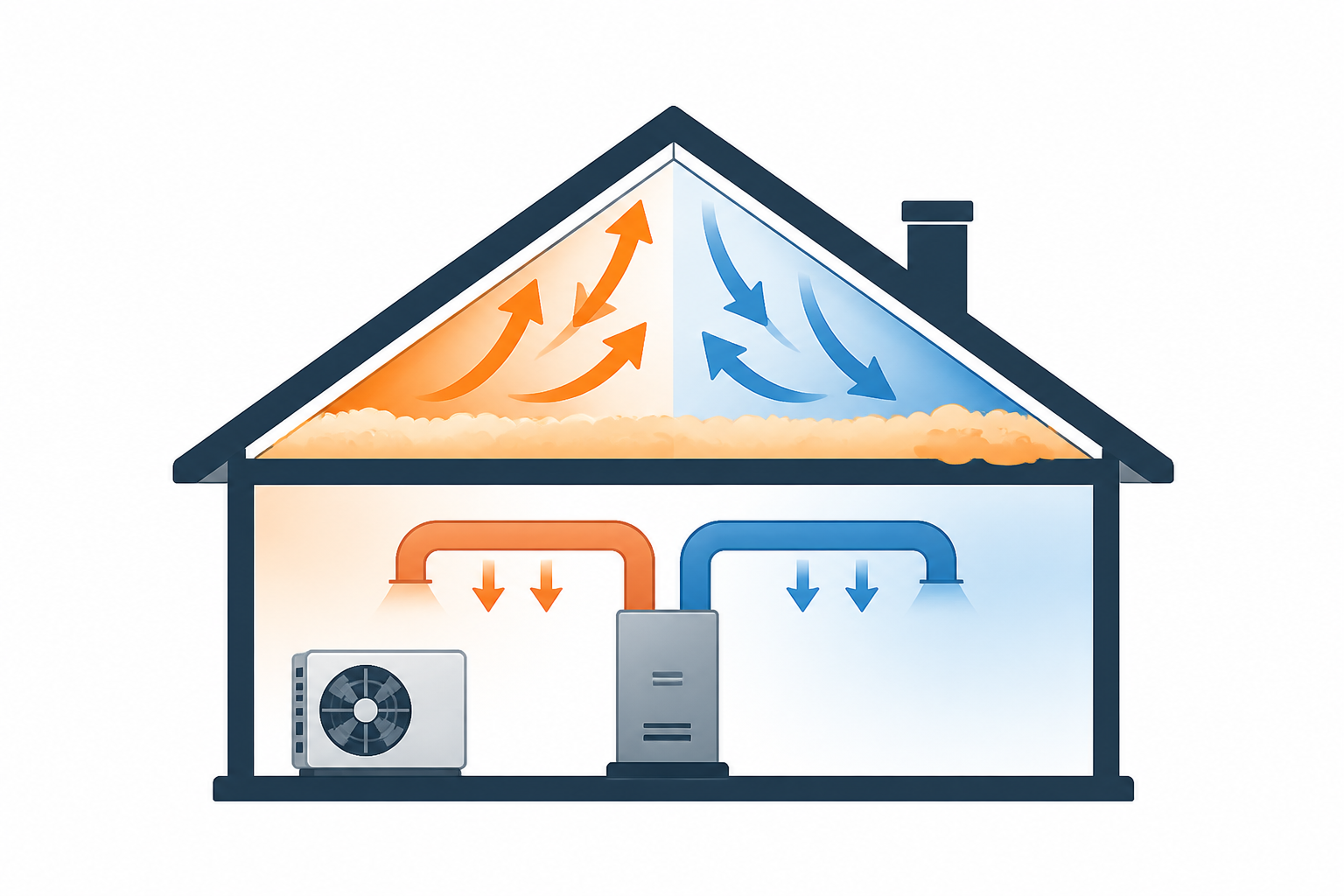
Carbon monoxide is produced by incomplete combustion. Any time a fuel — natural gas, propane, oil, wood, gasoline — burns without enough oxygen, CO is a byproduct. In your home, that means your gas furnace, water heater, boiler, gas range, fireplace, attached garage, and any portable generator. Under normal operating conditions, these appliances vent CO safely outside. The problem is when something goes wrong: a cracked heat exchanger, a blocked flue, backdrafting, or running a generator indoors during a power outage.
CO is colorless and odorless. You will not smell it, see it, or taste it. At 10–35 PPM (parts per million), prolonged exposure causes headaches and fatigue — symptoms most people attribute to a cold or bad sleep. At 70 PPM sustained over one to four hours, standard residential CO alarms are required to trigger under UL 2034, the safety standard most detectors are built to. Here’s what that means in plain English: by the time your alarm sounds, you’ve already been breathing elevated CO for potentially hours. At 150–200 PPM, you’ll have headaches and dizziness within two to three hours. At 400 PPM, it’s life-threatening within three hours. At 800 PPM or above, you can lose consciousness in under an hour. CO works by binding to hemoglobin in your blood — the same molecule that carries oxygen — and it binds far more effectively than oxygen does. Your blood literally stops delivering oxygen to your organs even while your lungs are working normally. That’s why it’s so dangerous and why it’s classified as a life-safety issue, not just a comfort issue.
Carbon Dioxide (CO2): A Ventilation Indicator, Not a Poison
Carbon dioxide is what you exhale. It’s naturally present in outdoor air at around 420 PPM — a level that’s been slowly climbing for decades due to atmospheric changes. Indoors, every person in a room is exhaling CO2 continuously. In a well-ventilated home, it stays manageable. In a tight, energy-efficient home with poor fresh air exchange, it accumulates. ASHRAE guidelines suggest keeping indoor CO2 below 1,100 PPM. Above 1,000 PPM, research shows measurable drops in cognitive function — slower thinking, impaired decision-making, drowsiness. Above 2,000 PPM, expect headaches and significant fatigue. Above 5,000 PPM, it becomes genuinely hazardous, though reaching that level in a residential home without a combustion source is uncommon. CO2 at typical indoor levels is not a poison. It’s a proxy measurement — it tells you that your home isn’t getting enough fresh air exchange, which means you should increase ventilation. CO2 monitors use NDIR (non-dispersive infrared) optical sensors, which are fundamentally different from the electrochemical sensors used in CO detectors. This is why a device marketed as measuring “indoor air quality” might track CO2, temperature, humidity, and VOCs — but not CO. They’re different sensor technologies, and many consumer IAQ devices simply don’t include the electrochemical CO sensor. That omission can be genuinely dangerous if homeowners assume their smart monitor covers all the bases.
Bottom line on CO vs CO2 home safety explained: CO is a combustion poison that requires a dedicated life-safety detector. CO2 is a ventilation quality indicator that tells you to open a window or run your ERV. Both matter. Neither replaces the other.
The Detector That Finally Caught What Her Smart Monitor Missed
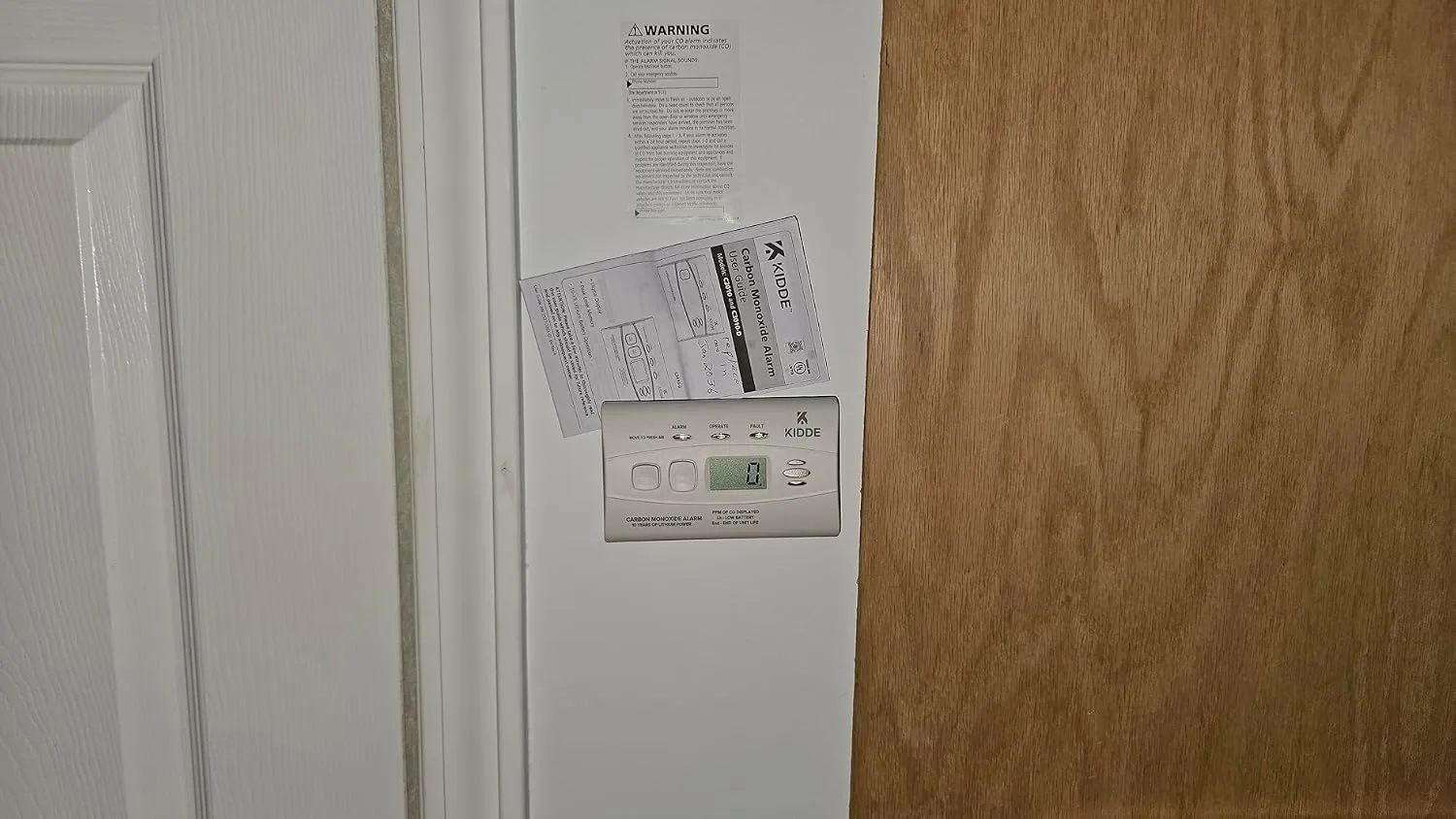
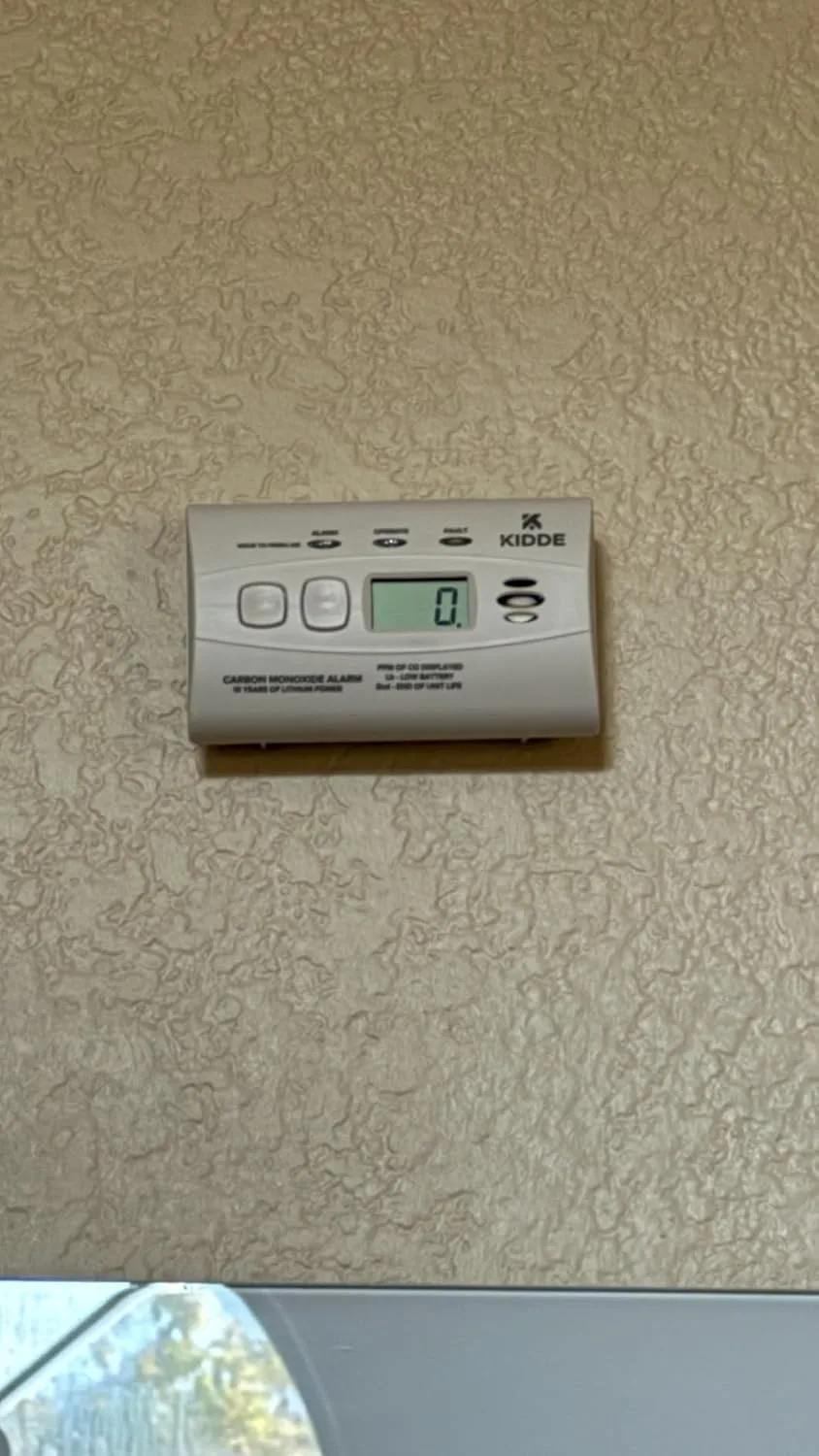
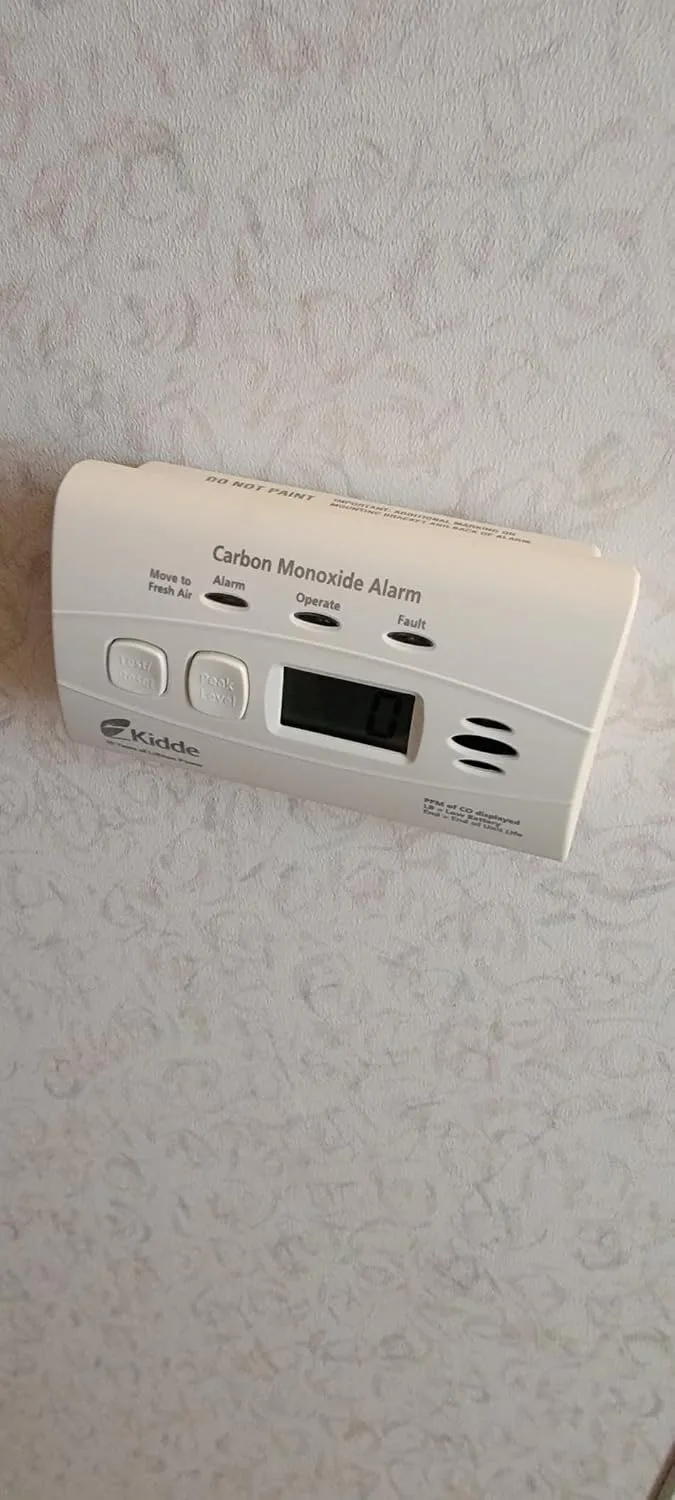
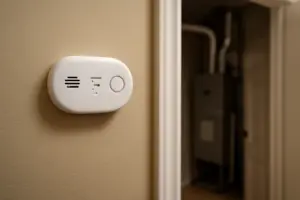
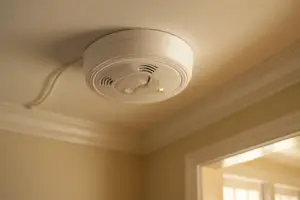
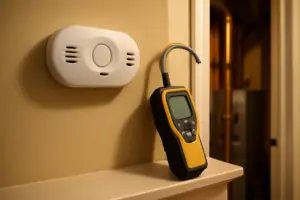
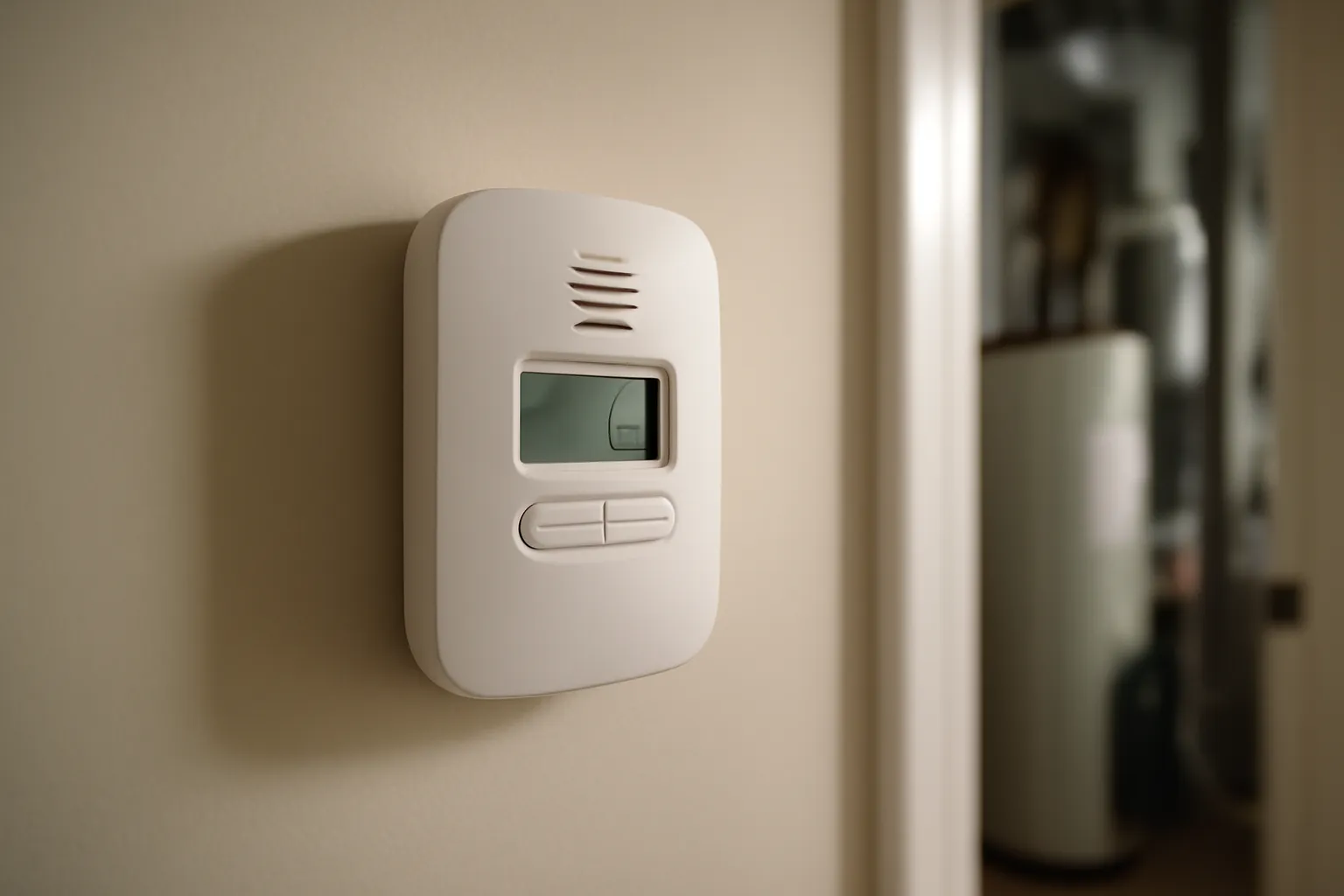
Karen’s air quality app was tracking CO2 just fine—but it was blind to the real threat in her home. Carbon monoxide from that faulty furnace was already in her air, undetected and dangerous. A dedicated CO detector is the one safety device your smart home ecosystem can’t replace.
What works
- The 10-year sealed battery means no dead batteries on a winter night when you need it most—I’ve seen too many homes with detectors that failed silently because the battery died months ago.
- Digital backlit display shows CO levels in real time, so you can actually see if levels are climbing before they hit the alarm threshold—critical information if you’re troubleshooting a furnace issue like Karen was.
- Compact wall-mount design means it doesn’t scream “safety device”—it blends into a bedroom or hallway without the clunky appearance that makes people want to hide it in a closet where it can’t actually protect anyone.
What doesn’t
- The alarm is loud enough to wake you, but the initial chirp-chirp pattern can sound similar to a low-battery warning on other devices, so some homeowners dismiss it before realizing it’s an actual CO event.
- A single detector only monitors the room it’s in—you need one on every level of your home and especially near bedrooms, which means this is a multi-unit investment, not a single-device fix.
I’ll be honest: when Karen first called back after installing one, I held my breath waiting to hear if she’d found dangerous levels—part of me worried the damage was already done. But that detector caught what her app couldn’t, and it gave her the proof she needed to call a technician immediately. Get the Kidde Carbon Monoxide Detector, 10-Year Battery, Digital Backlit Display (COBD10) today.
This post contains affiliate links. As an Amazon Associate, I earn from qualifying purchases at no extra cost to you.