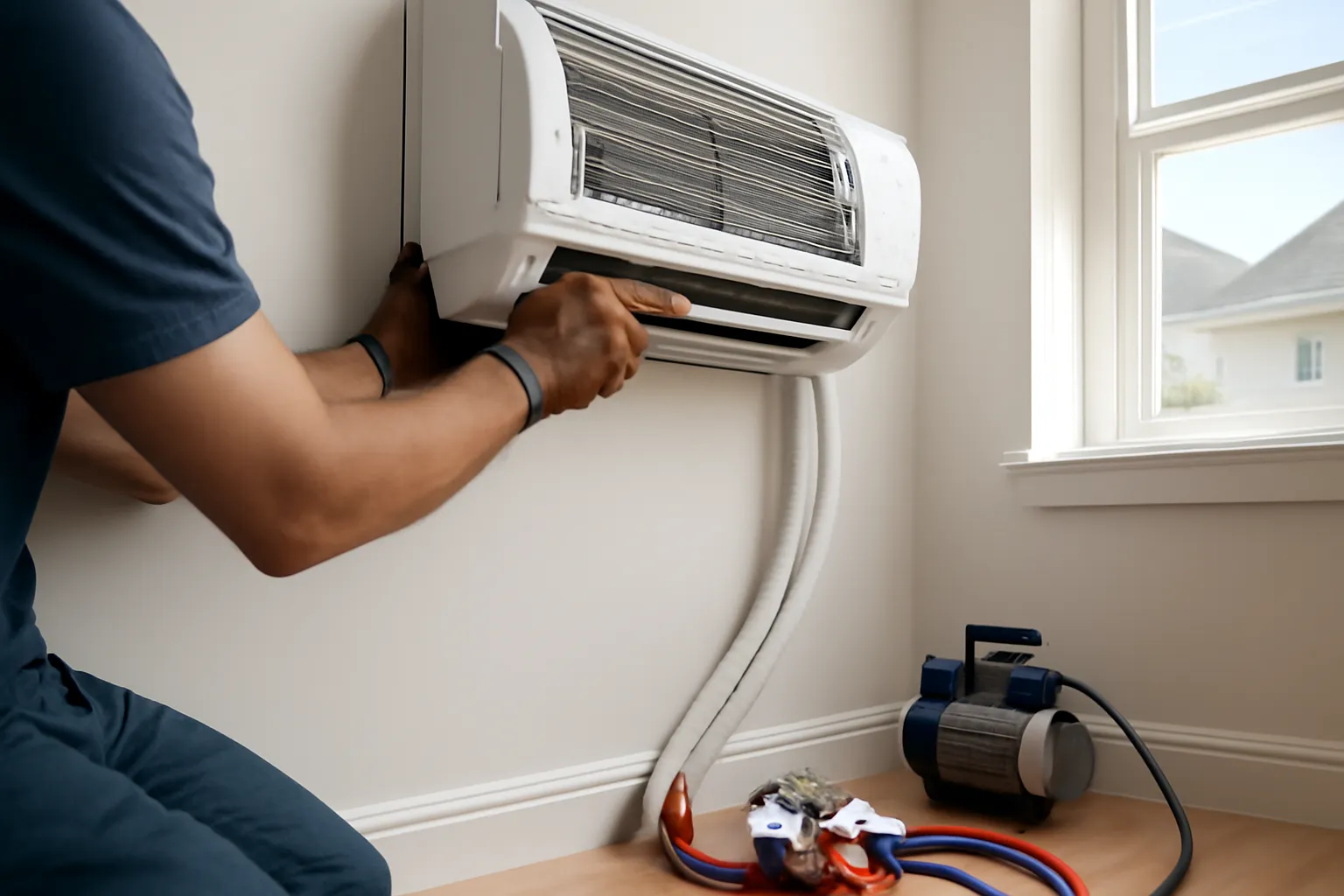
Bare copper — that’s what greeted me on the last four feet of suction line before the wall penetration, on a mini split system that was barely 14 months old. The Draper homeowner who owned it had paid a handyman, not a qualified technician, to hang an 18,000 BTU ductless unit in his master bedroom. It ran nonstop and still couldn’t pull the room below 76°F on a 95-degree afternoon, and by the time the compressor seized up, the damage had long since been done. Pulling the line set apart told the whole story: insulation missing on those last four feet, flare connections tightened by hand with no torque wrench in sight, and a refrigerant charge that went in without anyone ever pulling a proper vacuum first. The oil had already started breaking down from moisture contamination, and the compressor windings showed the early etching of acid damage. A $1,400 system, dead before it ever saw its second summer. These five failure points are the mini split installation mistakes I run into over and over, and almost every one of them is preventable. Whether you’re vetting a someone keeping watch over a DIY project, or trying to figure out why an existing system underperforms, knowing where these installs typically break down is what separates a unit that lasts two decades from one that dies in two years. Here’s exactly how each mistake happens — and what stops it.
Breaking Down the Most Frequent Mini Split Installation Mistakes
Ductless systems are genuinely great equipment — quiet, efficient, flexible — once they’re put in correctly. The trouble is that their simple exterior fools a lot of people into assuming the install itself is just as simple. It isn’t. Five categories of errors show up again and again in my fieldwork, and any single one of them can cut short what should otherwise be a 15-to-20-year lifespan.
1. Getting Head Unit Placement Wrong
Cold air sinks because it’s dense, which is exactly why the indoor air handler belongs high on the wall — typically 6 to 8 inches down from the ceiling. I’ve seen units mounted so tight against the ceiling that the discharge stream slams straight into it and bounces right back to the return sensor. The unit reads that cold air, decides the room is already satisfied, and shuts itself off — meanwhile the space never actually cools. Corner installs cause the identical failure from a different angle: cold air rides down two intersecting walls and gets sensed on the return within seconds. The placement that actually works sits centered on the room’s dominant wall, 6 to 8 inches below the ceiling, with a minimum of 18 inches of clearance on either side.
Mounting the head on an interior wall is another trap I see constantly. The farther that unit sits from the exterior wall, the longer the line set run gets, the harder condensate has to work to drain, and the more refrigerant the system needs. Once you go past the factory charge distance — usually 25 feet on most residential units — every additional 10 feet of line set calls for more refrigerant, and getting that math wrong in either direction, even by a few ounces, wrecks compressor efficiency and shortens its life.
2. Line Set Errors
Line set issues account for more installation failures than any other category I run into. Running a mini split’s line set too long is a real problem: most single-zone residential systems top out at a maximum of 50 to 65 feet. Push past that and oil return suffers — the lubricant traveling with the refrigerant can’t find its way back to the compressor, so it ends up running dry. Add to that a steeper pressure drop, lost capacity, and efficiency that keeps bleeding away as time goes on.
Insulating the suction line — the larger of the two copper tubes — isn’t optional. During cooling mode, that line runs around 40 to 50°F. Leave it bare and you’ll get condensation forming, energy wasted, and in humid regions, water making its way inside your wall cavity. Every inch of that line, right up to both connection points, needs closed-cell foam insulation rated at a minimum 3/8-inch wall thickness.
When a line set sags, refrigerant oil pools in the low spots instead of circulating properly. Lines need support every 4 to 6 feet along with correct pitch. And brazing quality, on any system using brazed joints, is the number-one cause of slow refrigerant leaks — a pinhole you’d never spot with the naked eye can quietly drain a system over 2 to 3 years until it stops cooling altogether.
3. Skipping a Proper Vacuum Procedure
Homeowners almost never catch this one, yet it’s the quiet killer of mini split compressors. Before refrigerant ever leaves the factory-charged outdoor unit and enters the line set and indoor coil, every trace of air and moisture has to be pulled out of the copper lines. Correct procedure means pulling the vacuum down to 500 microns — read with an actual micron gauge, since a manifold gauge isn’t precise enough — and holding it there for at least 15 minutes after the vacuum pump valve closes. If that vacuum creeps back up, meaning pressure is rising instead of holding steady, that tells you there’s a leak or moisture somewhere in the system. No exceptions. This step gets skipped or rushed constantly, whether it’s a rushed DIY mini split project or a someone moving too fast. Any moisture left behind combines with refrigerant to form hydrofluoric acid, which attacks copper and compressor windings alike. Trace back almost any compressor failure inside the first five years and moisture contamination is usually sitting at the root.
4. Condensate Drain Failures
Most mini split systems either run a condensate pump or rely on gravity, but either way, that drain line needs a continuous downward slope — no dips, no kinks, no trapped sections. Let that line clog or come loose and the overflow spills into the pan, then into the wall behind it, and you’re left dealing with mold growth, ruined drywall, and a repair bill that outpaces what the original installation cost.
5. Electrical Errors
Undersized wiring, a missing disconnect box within sight of the outdoor condenser (required by code in most jurisdictions), and improper grounding all show up regularly. An 18,000 BTU mini split typically pulls 15 amps, while a 24,000 BTU unit can draw 20 amps or more. Put that load on an undersized circuit and you’re looking at tripped breakers on a good day, melted insulation on a bad one. Always run a dedicated circuit, match the wire gauge to the nameplate data, and install a disconnect with the proper rating.
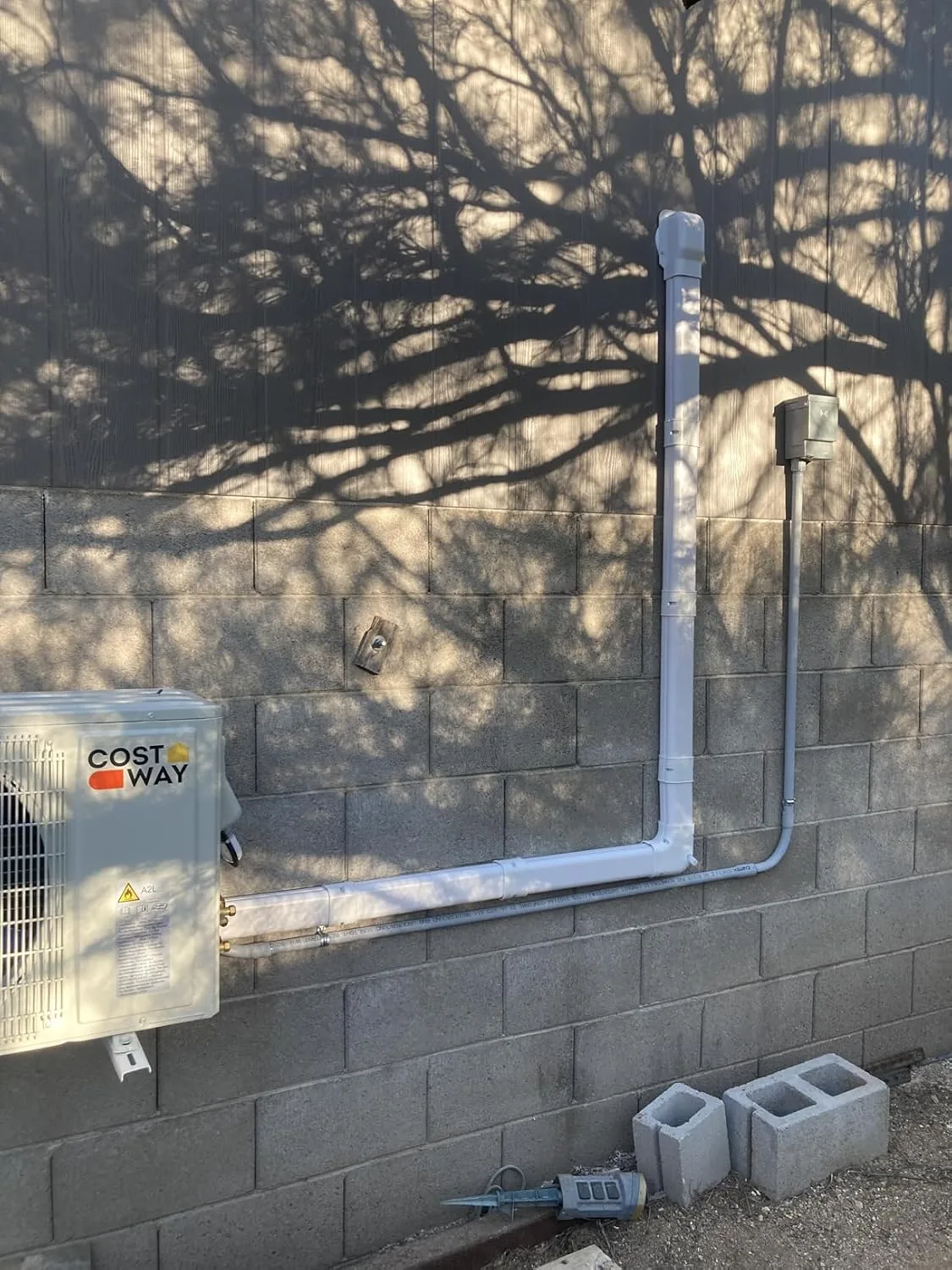
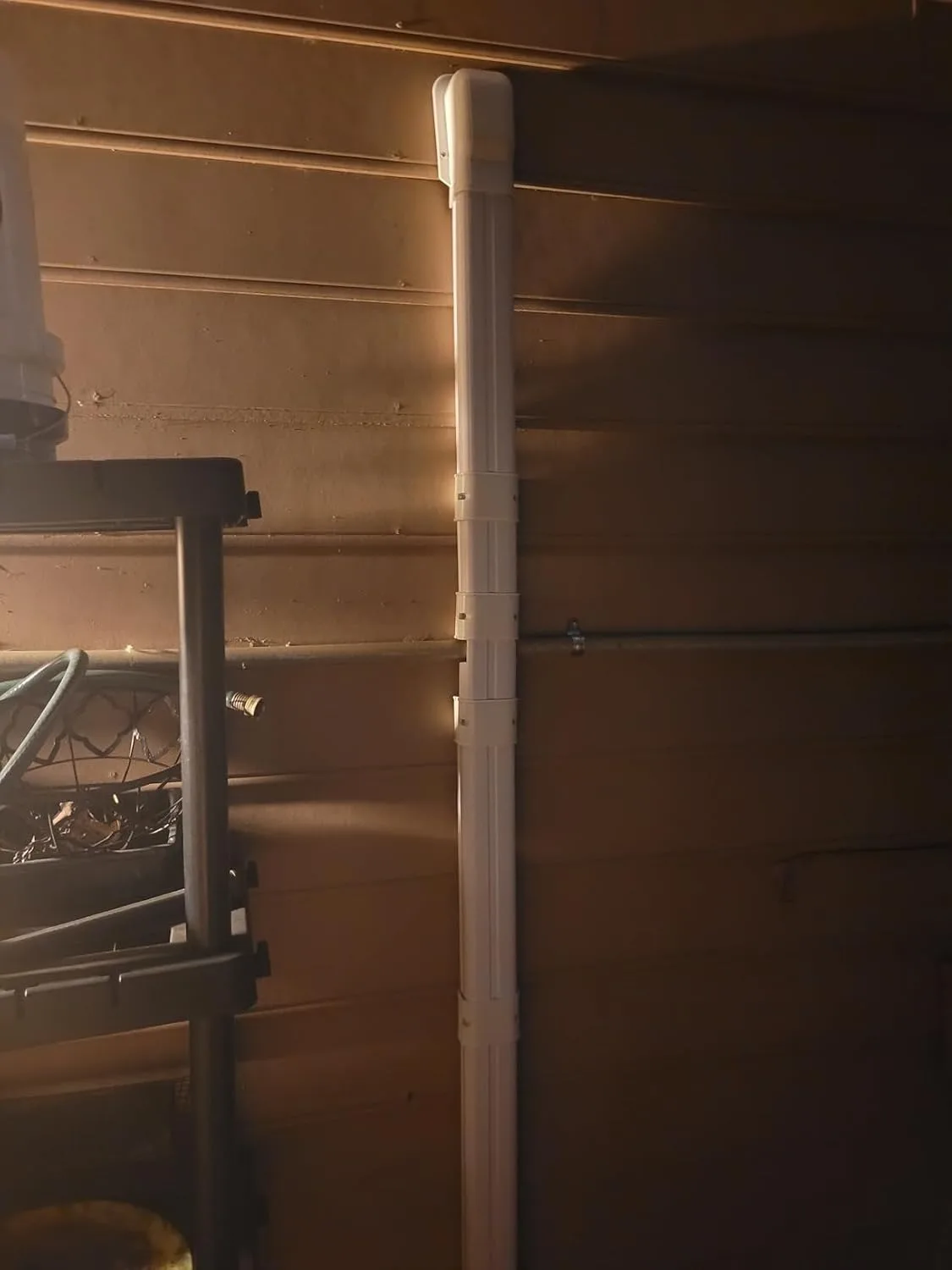
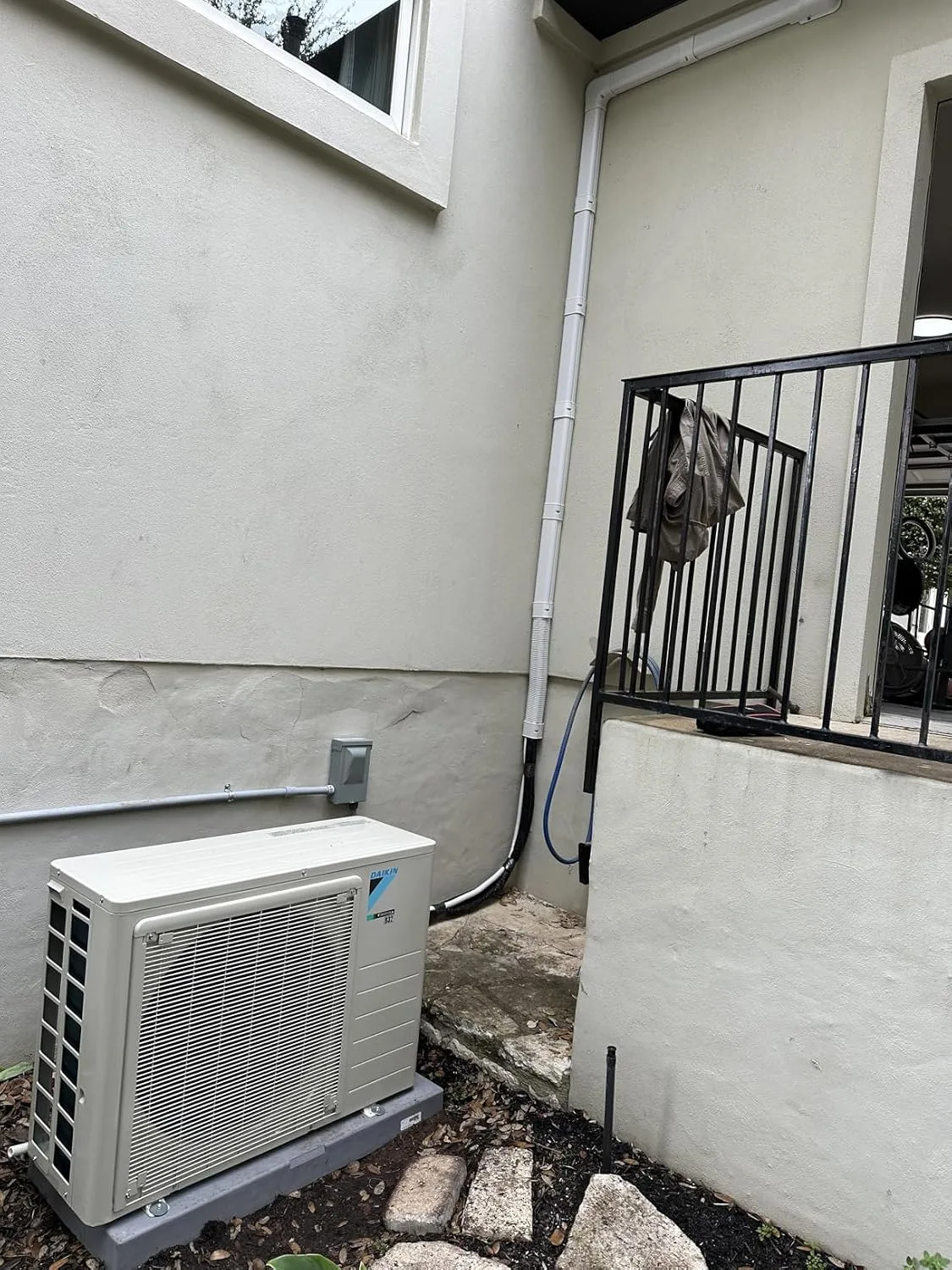
The Line Set Cover That Finally Stopped My Refrigerant Lines From Sweating and Freezing Up
Exposed suction lines quietly kill mini split systems over time — they pull heat from the surrounding air, force the compressor into overdrive, and sweat enough condensation to corrode the copper underneath. I saw exactly how bad that gets when the Draper homeowner’s bare line set ended up costing him a $1,200 compressor replacement in under 15 months.
What Held Up
- The foam wrap runs a full 3/8 inch thick — enough to genuinely block condensation sweat on the suction line even in muggy climates. I’ve stripped these covers off five-year-old installs and found zero moisture damage hiding underneath.
- Because it comes pre-slit, installation takes a fraction of the time — no spiraling tape around the line, no wrestling with adhesive-backed foam that refuses to bond over refrigerant oil residue.
- At 13 feet of coverage, there’s enough length to run from the outdoor unit clear to the wall penetration without splicing pieces together — one less seam that could eventually fail.
Where It Comes Up Short
- Sunlight will break this material down — leave it exposed for more than 2 to 3 years and UV degradation sets in, so a south-facing wall run calls for a conduit sleeve or a coat of paint on top.
- The snug fit is intentional and helps performance, but it also means the cover has to go on before the fittings get connected — skip that order and you’re disassembling a line set you’ve already pressure-tested.
I almost skipped this step on a retrofit job three years ago because I thought I could just tape over the existing exposed lines, but the first summer proved me wrong when the suction line frosted up and the system went into thermal shutdown. Grab the “Nouscan 3” 13Ft Mini Split Line Set Cover Kit and install it right the first time.
About This Article

Written by Dana Sorensen. Homeowner turned building-science obsessive. I help other homeowners understand attic insulation, ventilation, and air quality so they can stay comfortable year-round without overspending on energy bills. More about this site.
Scope and limits. Dana is a homeowner who studies building science, not an HVAC contractor or licensed tradesperson. Anything involving combustion appliances, gas lines, or electrical work belongs with a licensed contractor.
Verify this against a primary source
Specifics change, and your situation may differ from the one described here. These are the authorities worth checking directly:
- ENERGY STAR — recommended insulation R-values by climate zone
- U.S. Department of Energy — air sealing and insulation guidance
- EPA Indoor Air Quality — ventilation and indoor air quality standards