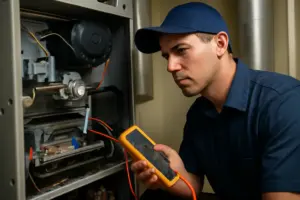
Last February, I got a call from a homeowner in a panic. A contractor had just told her she needed a new $6,800 furnace — same day, emergency replacement — because of a “severely cracked heat exchanger leaking carbon monoxide.” She was scared, her kids were home, and the contractor was pressuring her to sign before he left. She called me for a second opinion. When I arrived, I ran a full combustion analysis, checked CO levels at every supply register, and inspected the heat exchanger with a camera. CO at the registers? Zero ppm. The crack the contractor had photographed? A surface stress mark — completely normal on a 12-year-old exchanger, not a structural failure, not a combustion gas leak. That furnace ran another two heating seasons without incident. I tell this story not to make contractors look bad — most are honest professionals — but because it captures everything complicated about this topic. A cracked heat exchanger is genuinely one of the most dangerous HVAC failures that can happen in your home. It also happens to be the single most common dishonest upsell in the industry. Both things are true at the same time. My job today is to help you understand the carbon monoxide furnace cracked heat exchanger signs that actually matter, what a real failure looks like versus a scare tactic, and what you can do starting today to protect your family.
Understanding the Heat Exchanger — and Why a Crack Is So Dangerous
Before we talk about symptoms and solutions, you need to understand what a heat exchanger actually does — because once you get it, the danger becomes obvious and the diagnostic steps make intuitive sense.
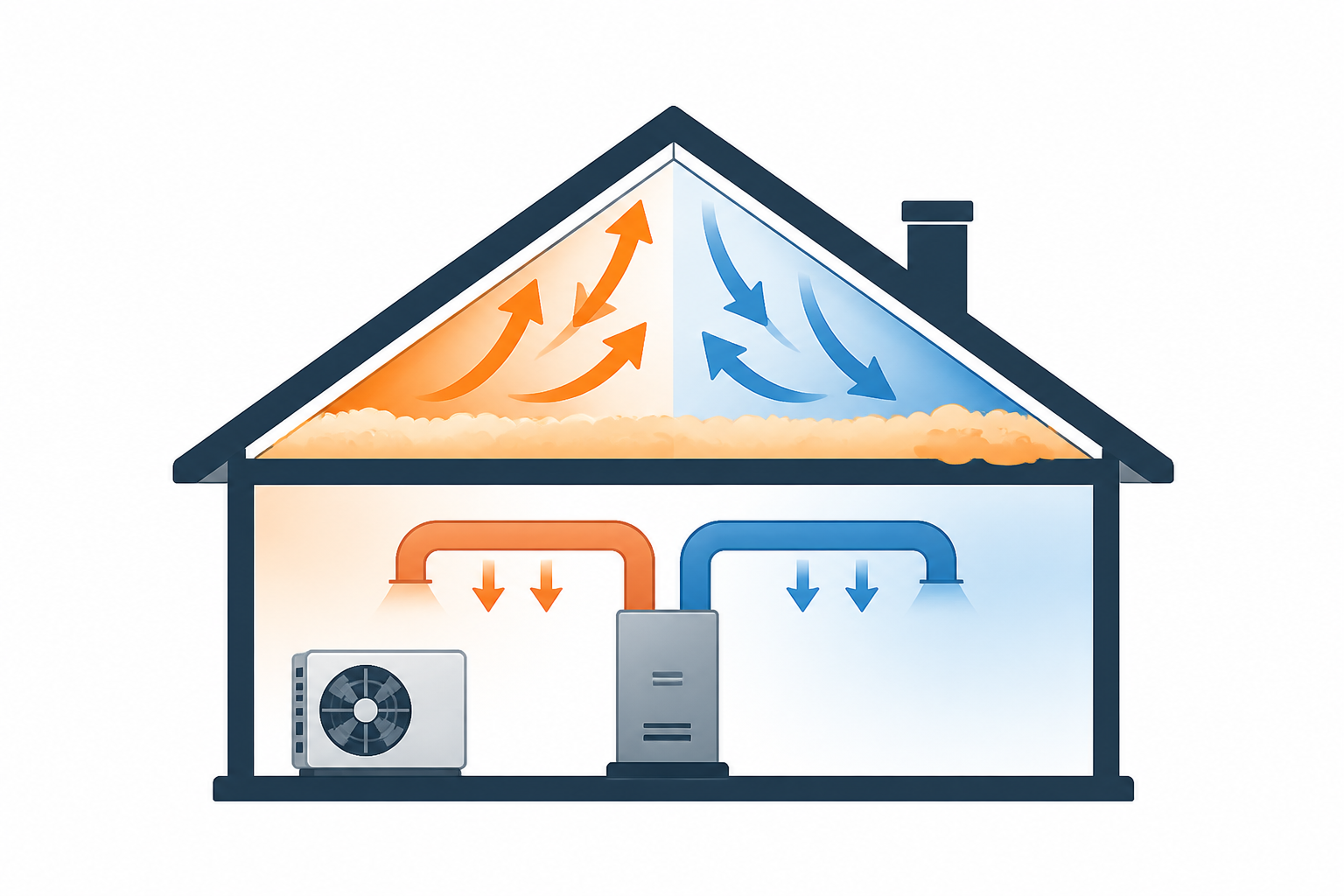
Your furnace runs on two completely separate airstreams that are never supposed to touch each other. The first is the combustion side: gas burns in the burner assembly, and those hot combustion gases — which include carbon monoxide, nitrogen dioxide, and water vapor — travel through a sealed metal chamber called the heat exchanger and then exit your home through the flue pipe. The second is the distribution side: your blower motor pulls return air from your living space, pushes it across the outside surface of that hot metal heat exchanger (picking up heat through conduction), and then sends that warmed air through your ducts and out your supply registers into every room of the house.
The heat exchanger is the wall between those two worlds. When it cracks — and it does crack, especially in systems over 15 years old — combustion gases can migrate through that gap and mix directly into the air your family breathes. The blower motor runs at anywhere from 400 to 1,200 CFM depending on system size, and it creates a pressure differential across the heat exchanger. On a compromised exchanger, that pressure difference is exactly what pulls combustion gases through a crack and into your duct system.
Carbon monoxide is the primary threat. It’s colorless, odorless, and tasteless — you cannot detect it without instrumentation. It binds to hemoglobin in your blood roughly 200 times more effectively than oxygen, which means even low-level exposure degrades your body’s ability to carry oxygen to your organs and brain. The CDC reports that carbon monoxide poisoning kills more than 400 Americans annually in non-fire-related incidents, and the majority of those deaths involve heating equipment. Thousands more are hospitalized with symptoms that are frequently misdiagnosed as flu or migraine.
Here’s the piece that most homeowners don’t know: heat exchangers are under the most thermal stress not when the burners are firing, but during the heat-up and cool-down cycles — the repeated expansion and contraction of metal cycling from room temperature to 900–1,600°F surface temperatures, thousands of times over the life of the unit. That’s what creates fatigue cracks, typically in the clamshell-style primary heat exchanger on older single-stage furnaces, or at weld seams on secondary heat exchangers in high-efficiency condensing units. Systems over 20 years old should be inspected annually without exception. Systems over 25 years old with any carbon monoxide furnace cracked heat exchanger signs should be taken seriously and evaluated carefully — not because a contractor tells you to, but because the math on metal fatigue is working against you.
The Detector That Caught What the Furnace Company Missed
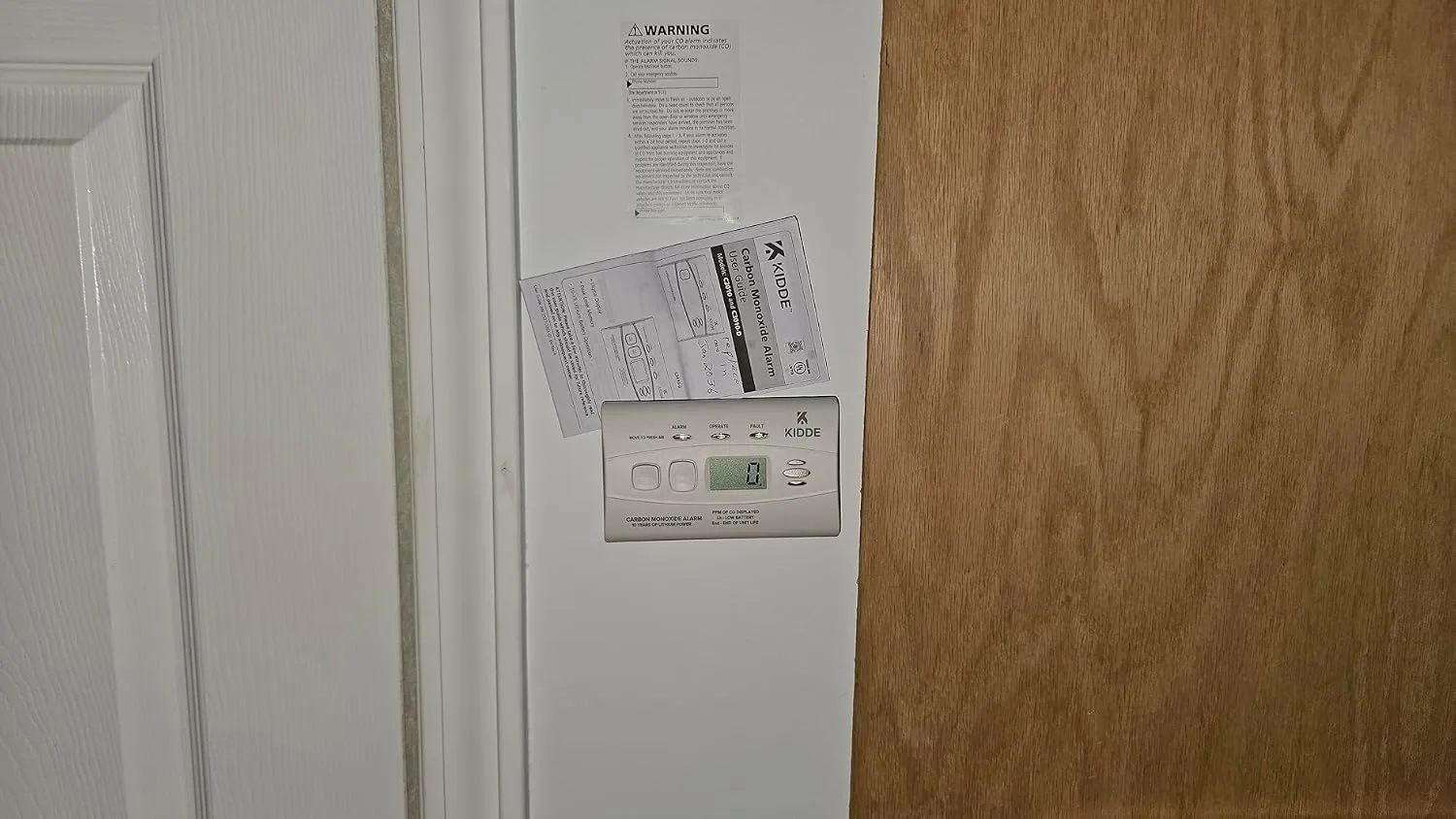
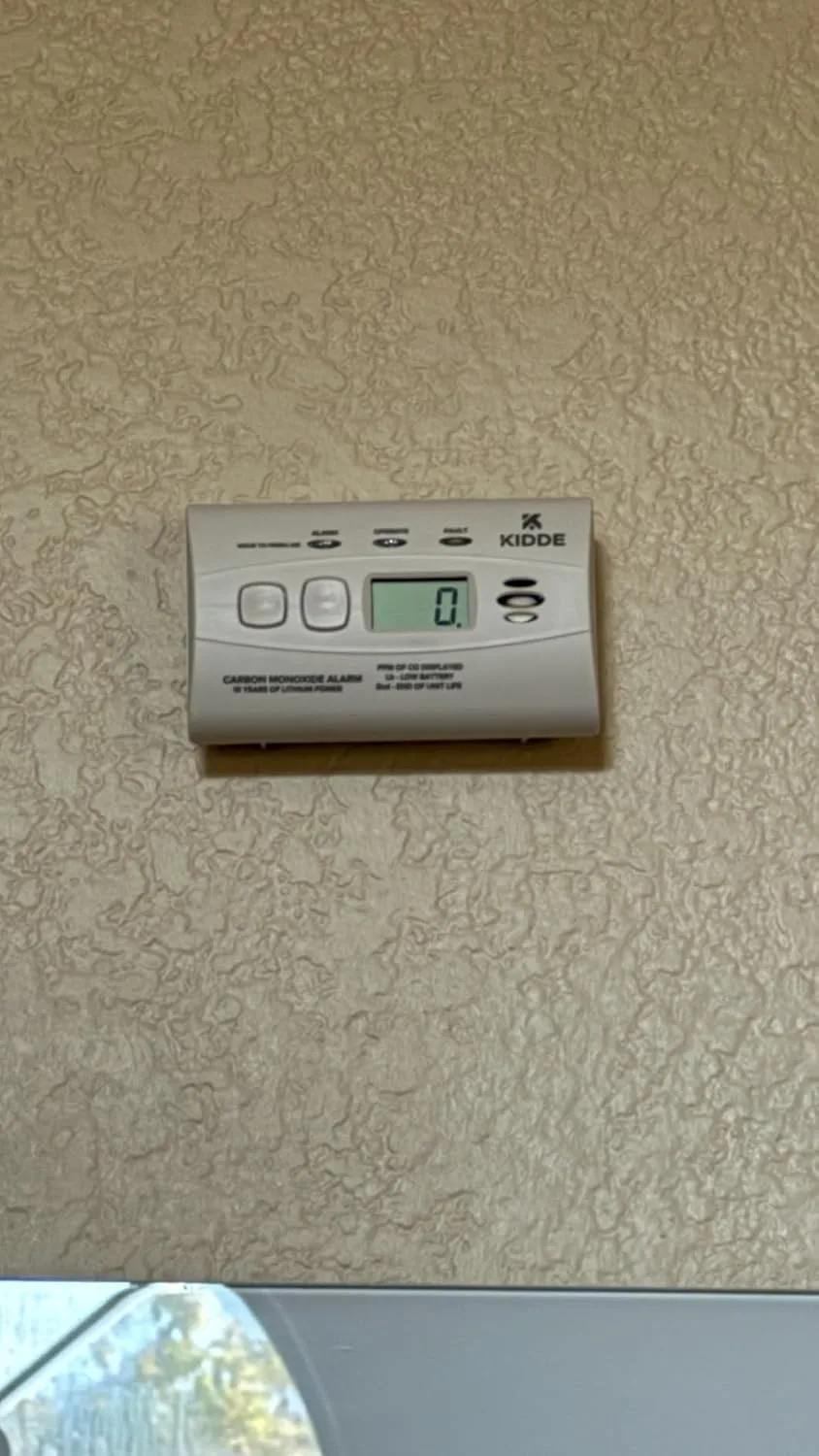
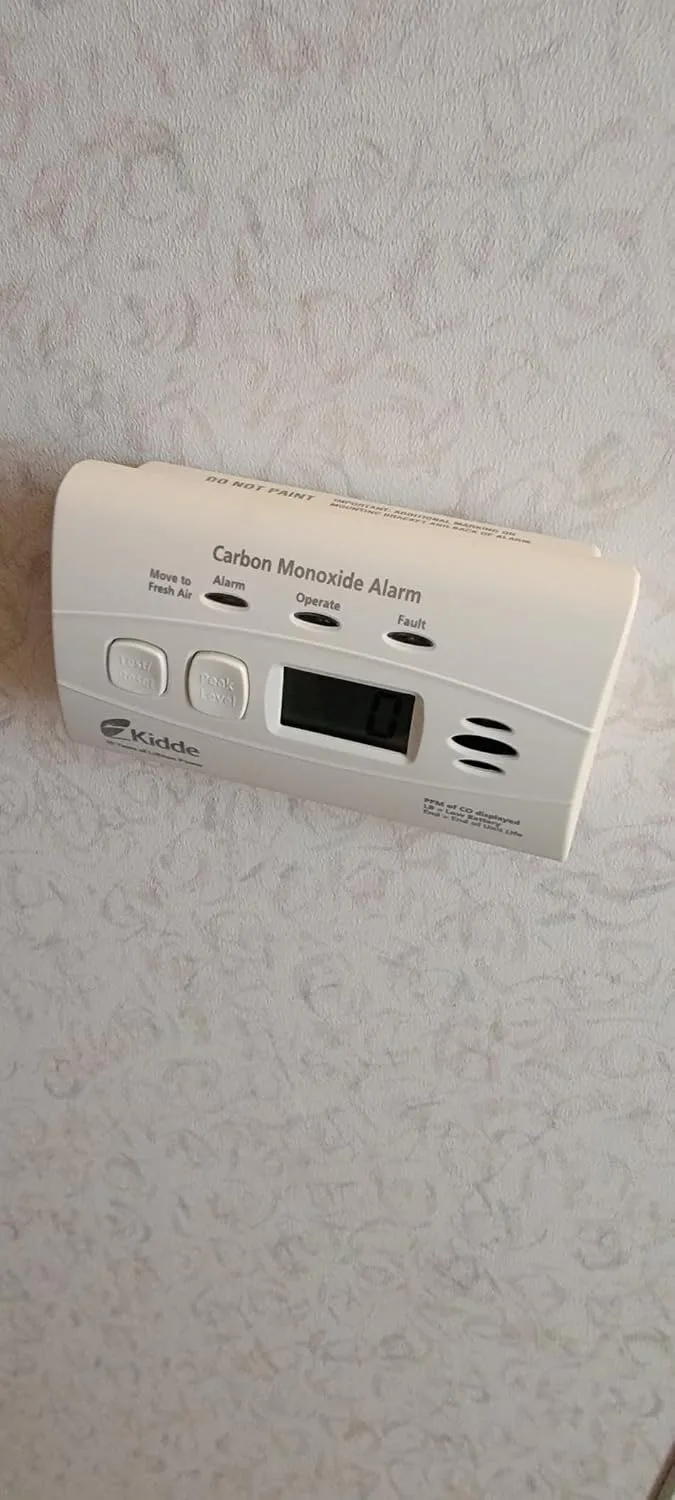
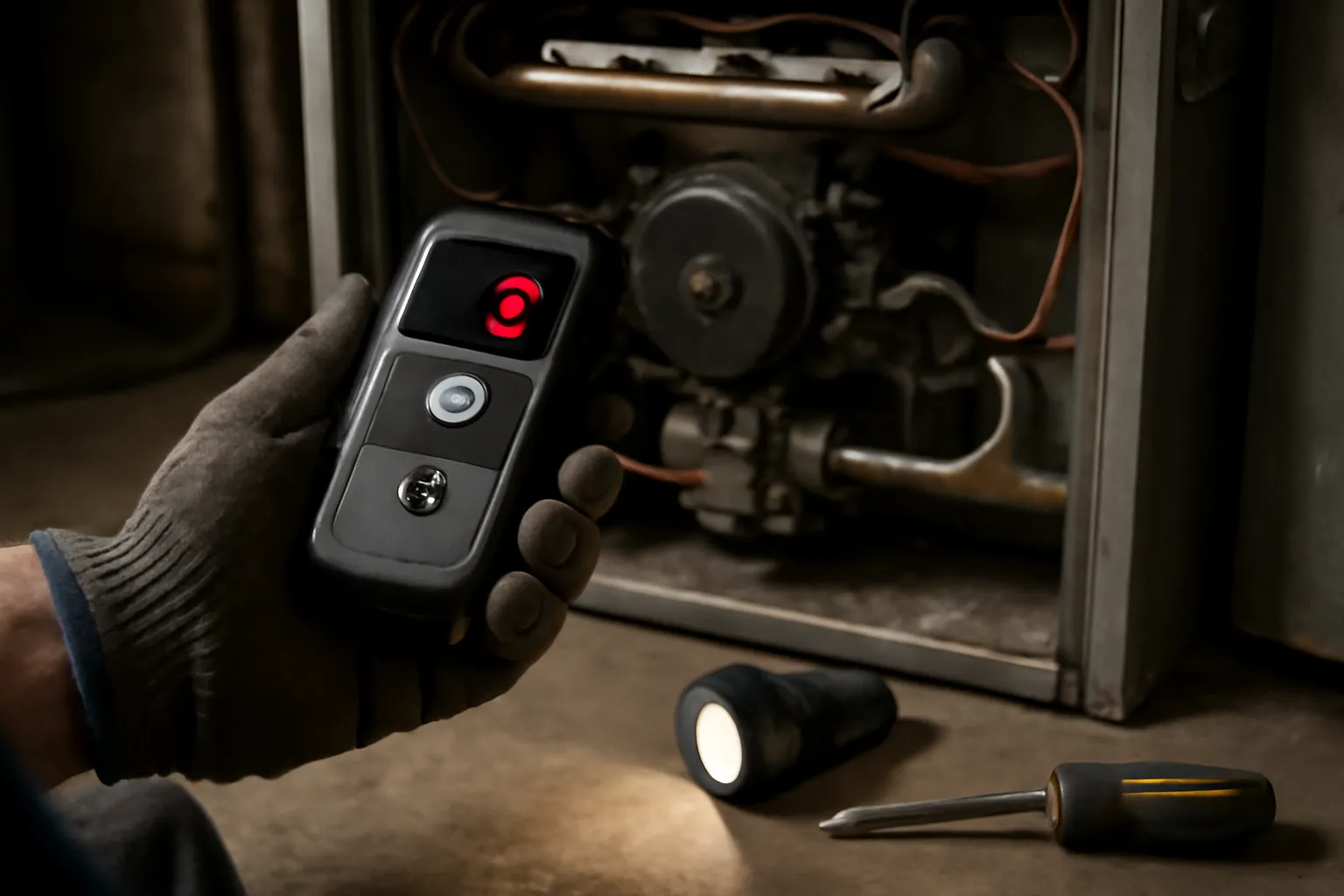
Here’s the hard truth: a single CO detector in your hallway won’t tell you where CO is actually coming from — or whether it’s spilling into your living space. When I’m diagnosing a potential heat exchanger crack, I need multiple detectors at supply registers to map the problem and prove whether a contractor’s claim holds water.
What works
- 10-year battery means it’s monitoring continuously without the “replace batteries” excuses that plague older models — I’ve found dead batteries in detectors that homeowners didn’t even know needed changing.
- Digital display shows actual CO parts per million, not just a red light — this gives you and your HVAC tech concrete data to compare against furnace output readings during combustion analysis.
- Backlit display is readable at night and in dim basements, which matters when you’re checking registers in a furnace room or crawlspace after a contractor’s claim raises red flags.
What doesn’t
- One detector is not enough — you need at least 3-4 units strategically placed to build a real picture, and that adds up fast if you’re doing a thorough investigation like I do.
- A detector will alarm if CO is present, but it won’t tell you whether the source is a cracked heat exchanger, a venting problem, or something else entirely — you still need professional combustion analysis to confirm the real issue.
I’ll admit, the first time I bought multiple detectors to verify a contractor’s claim, I was nervous I’d miss something or misread the data — but the moment those digital displays showed zero CO at every register, I knew exactly what to tell that homeowner. Pick up a Kidde Carbon Monoxide Detector, 10-Year Battery, Digital Backlit Display (COBD10) and trust the numbers, not the sales pitch.
This post contains affiliate links. As an Amazon Associate, I earn from qualifying purchases at no extra cost to you.