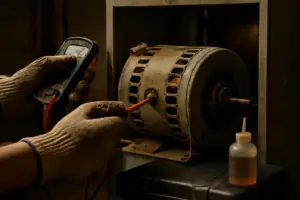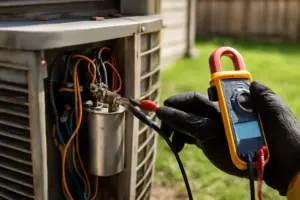
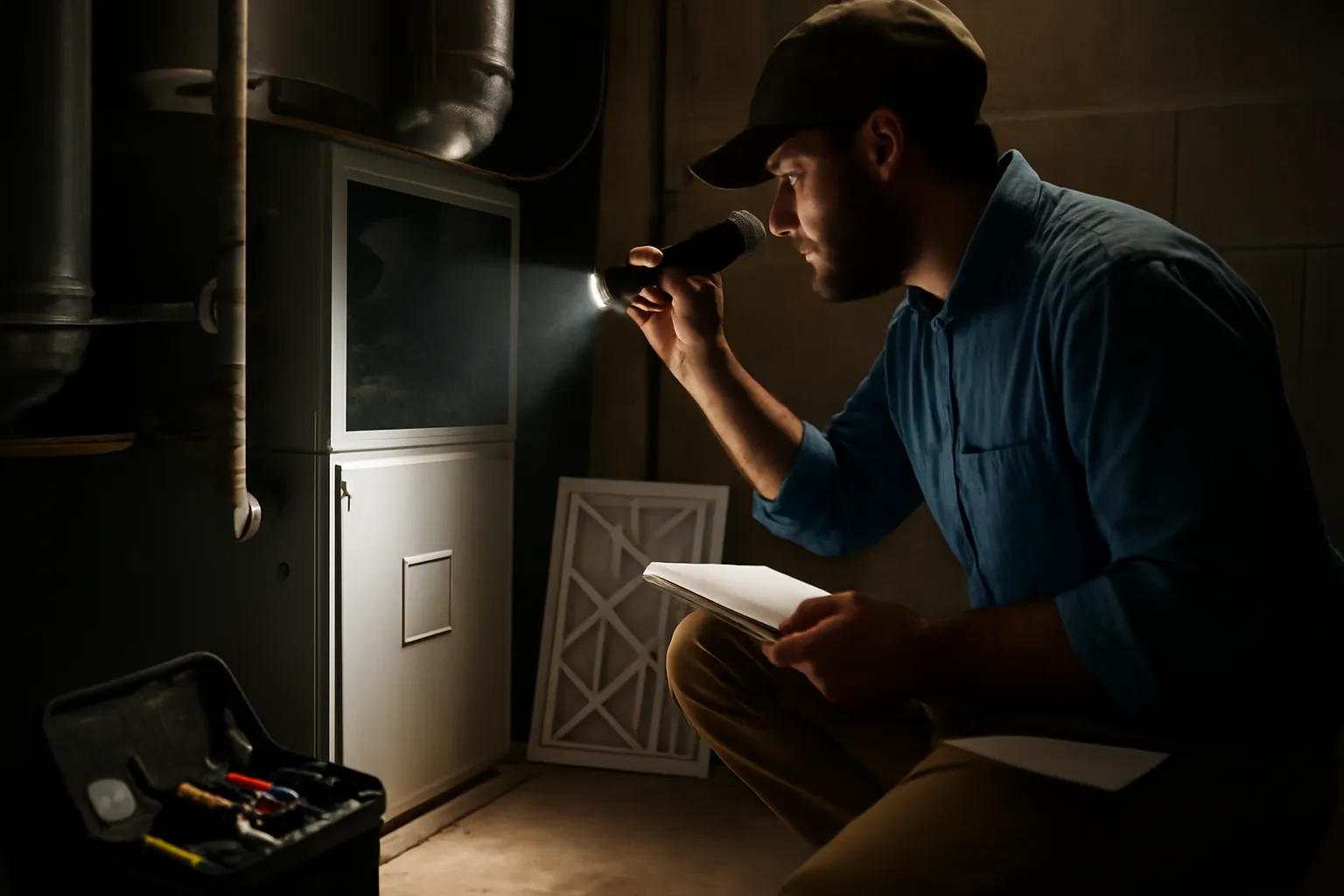
Last October, I got a call from a homeowner in a panic. Her furnace had stopped working the night before, temperatures were dropping into the 30s, and she’d already paid a local HVAC company $189 for a “tune-up” just six weeks earlier. When I got there, I pulled the furnace panel and found a flame sensor so coated with oxidation it looked like it had never been touched. Five minutes with a fine-grit emery cloth and the furnace fired right up. She was furious — and honestly, she had every right to be. That tune-up she’d paid for should have caught it. When I asked her what the technician actually did during that visit, she described him spending most of the time walking through the house pointing out things that “might become problems” — including a $400 UV light package. Sound familiar? Here’s the truth I’ve learned after 20-plus years in this trade: most homeowners are either skipping HVAC maintenance entirely until something breaks, or they’re paying top dollar for a service call that’s really just a sales visit dressed up in a technician’s uniform. Neither option is good for your equipment, your wallet, or your family’s comfort and safety. What you actually need is a clear, honest annual HVAC maintenance checklist homeowners can follow — one that separates what you can do yourself from what genuinely requires a pro.
Understanding the Problem: Why HVAC Maintenance Goes Wrong
Let’s start with some honest building science, because understanding why HVAC systems degrade helps you understand what maintenance actually matters.
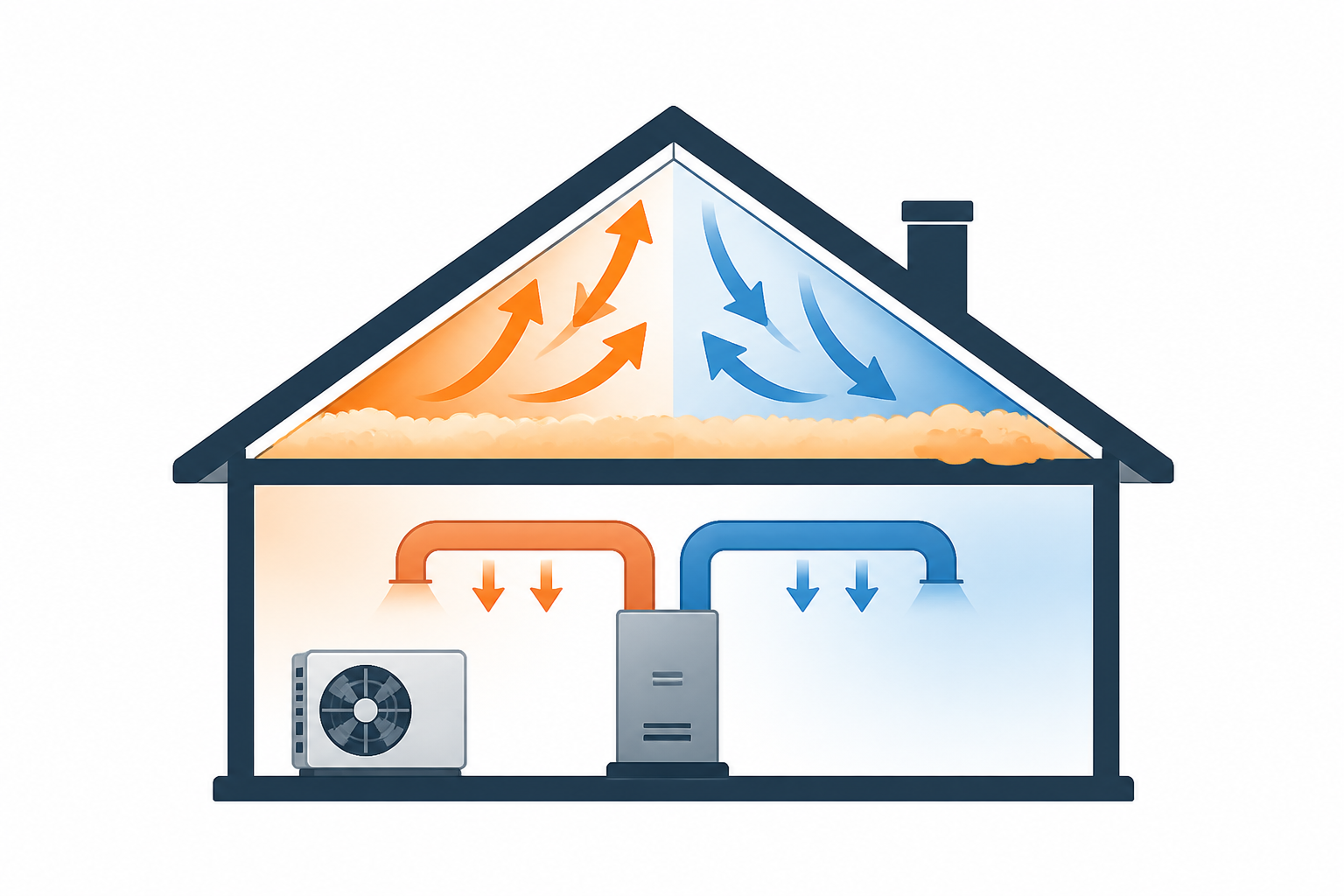
Your HVAC system is essentially a heat-moving machine. In summer, it’s pulling heat out of your house and dumping it outside. In winter, it’s generating heat or extracting it from outside air (if you have a heat pump) and pushing it in. Every component in that system — motors, coils, heat exchangers, refrigerant circuits, burners — degrades incrementally over time. The question is whether that degradation happens slowly and predictably, or fast and catastrophically.
The single most impactful thing that accelerates degradation? Airflow restriction. When a filter loads up with particulate, your blower motor works harder to move the same volume of air. Static pressure across the system rises. On the cooling side, a dirty evaporator coil starved of airflow will start to ice over — refrigerant that should be absorbing heat at around 40°F instead gets colder and colder, eventually freezing the coil solid. On the heating side, restricted airflow causes a gas furnace’s heat exchanger to run hotter than designed, which over time leads to stress cracks. A cracked heat exchanger is how combustion gases — including carbon monoxide — get into your living space. That’s not a hypothetical scare tactic. It’s a documented failure mode that a simple maintenance habit can help prevent.
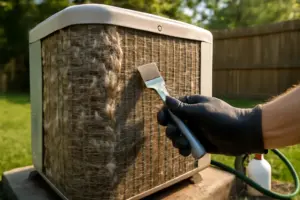
Outside, your condenser coil is doing the critical work of rejecting heat. A coil that’s loaded with cottonwood fluff, grass clippings, or just years of fine dust can lose 15 to 30 percent of its heat rejection capacity. That forces your compressor to run at higher head pressures — the high-side refrigerant pressure that should sit around 200 to 250 psi on a standard R-410A system on a 90°F day can climb to 300 psi or beyond on a filthy coil. Higher head pressure means the compressor runs hotter, draws more amperage, and wears out faster. Compressors are $800 to $2,500 to replace. A garden hose and 20 minutes in the spring costs nothing.
The condensate drain is another one people consistently overlook. Your air handler pulls maybe 2 to 5 gallons of moisture out of your air every day during cooling season. All of that water flows through a drain pan and a PVC condensate line. When that line gets an algae clog — and it will, because dark, wet PVC is a perfect algae habitat — water backs up into the drain pan. Most modern systems have a float switch that shuts the system down before the pan overflows, but not all do. I’ve seen water-damaged air handlers, ruined insulation, and mold-contaminated ductwork all from a clogged condensate line that could have been cleared with a cup of white vinegar twice a year.
This is the foundation of any solid seasonal HVAC maintenance schedule: understand what’s actually degrading, why it matters, and address it before it becomes a repair bill.
The Starter Kit That Finally Let Me Stop Calling the Pros for Basic Maintenance
That flame sensor cleaning? It should never cost $189 as part of a “tune-up.” Most homeowners don’t realize that basic HVAC maintenance tools are affordable and designed for exactly this kind of work—you just need the right kit to start.
What works
- The fine-grit emery cloth and specialized brushes cut through oxidation on flame sensors and burner components without requiring a second trip or extra tool purchases.
- Compact enough to keep in a utility drawer year-round, so you’re actually prepared when your furnace acts up in late fall instead of scrambling on a cold night.
- Covers the actual maintenance tasks that HVAC companies bundle into expensive tune-ups, so you can spot check your own system before calling someone out.
What doesn’t
- These tools won’t replace a full system inspection or refrigerant work—they’re for surface-level maintenance, not diagnostics.
- If you’re not mechanically inclined, you might hesitate to open the furnace panel at all, which means the kit sits unused while you still call the pros.
I almost skipped buying this kit years ago because I figured “real HVAC people” had their own specialized tools—but once I realized how many homeowner-level maintenance calls were actually just dirty sensors and clogged filters, I never looked back. Grab the Malco STKMRBP HVAC Starter Kit, 16-piece and keep it accessible.
This post contains affiliate links. As an Amazon Associate, I earn from qualifying purchases at no extra cost to you.