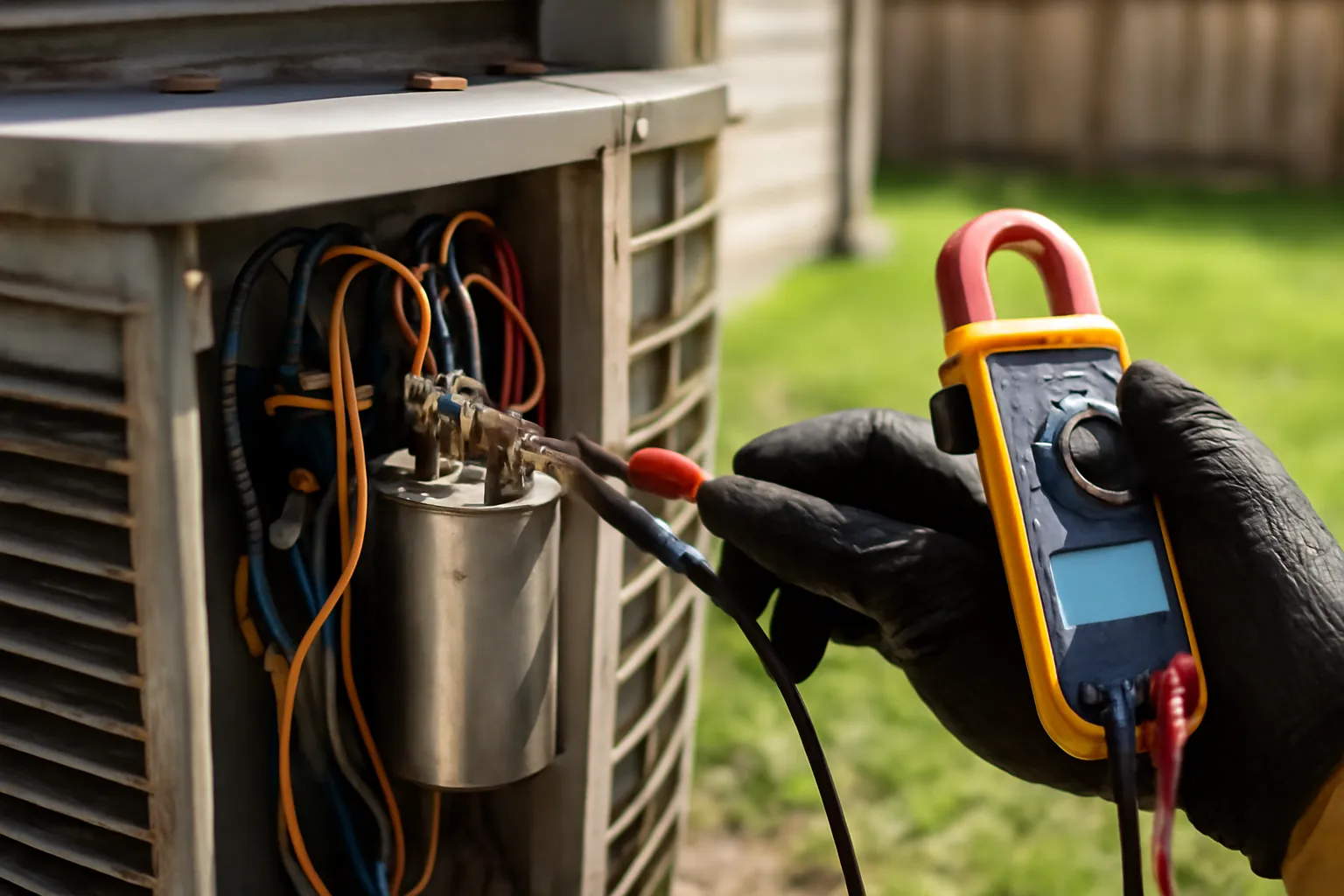
It was a Tuesday afternoon in late July — the kind of day where the asphalt shimmers and your phone starts blowing up with service calls before 9 a.m. I pulled up to a house where the homeowner had been sweating through the night. “It just hums,” she told me, pointing to the condenser unit outside. “It hums and hums but nothing happens.” I already knew what I was going to find before I even opened my tool bag. I’d seen this exact scenario dozens of times every summer. Sure enough, the compressor was trying to start, the contactor was clicking, and the condenser fan blade wasn’t moving at all. I touched the top of the dual run capacitor with the back of my hand — slightly warm, not unusual — but when I pulled it out, the top was visibly domed, bulging upward like a soda can that’s been left in a hot car. Classic capacitor failure. Total repair time: about 20 minutes. Part cost: around $18. If she’d called a different company and waited for a next-day appointment, that bill could have easily run $200–$300 just for labor and a marked-up part. Understanding AC capacitor bad symptoms and when to replace your capacitor is one of the most practical pieces of HVAC knowledge a homeowner can have — and in this post, I’m going to walk you through exactly how to diagnose it, test it safely, and replace it if you’re comfortable with basic electrical work.
Understanding What a Capacitor Does (and Why They Fail)
Here’s the deal with capacitors: your AC motors are not self-starters. The compressor and the condenser fan motor both need a significant jolt of electrical energy to get spinning from a dead stop, and then they need a steady boost to keep running efficiently. That’s where capacitors come in. Think of them like a rechargeable battery that charges and discharges dozens of times a minute — storing electrical energy and releasing it precisely when the motor demands it.
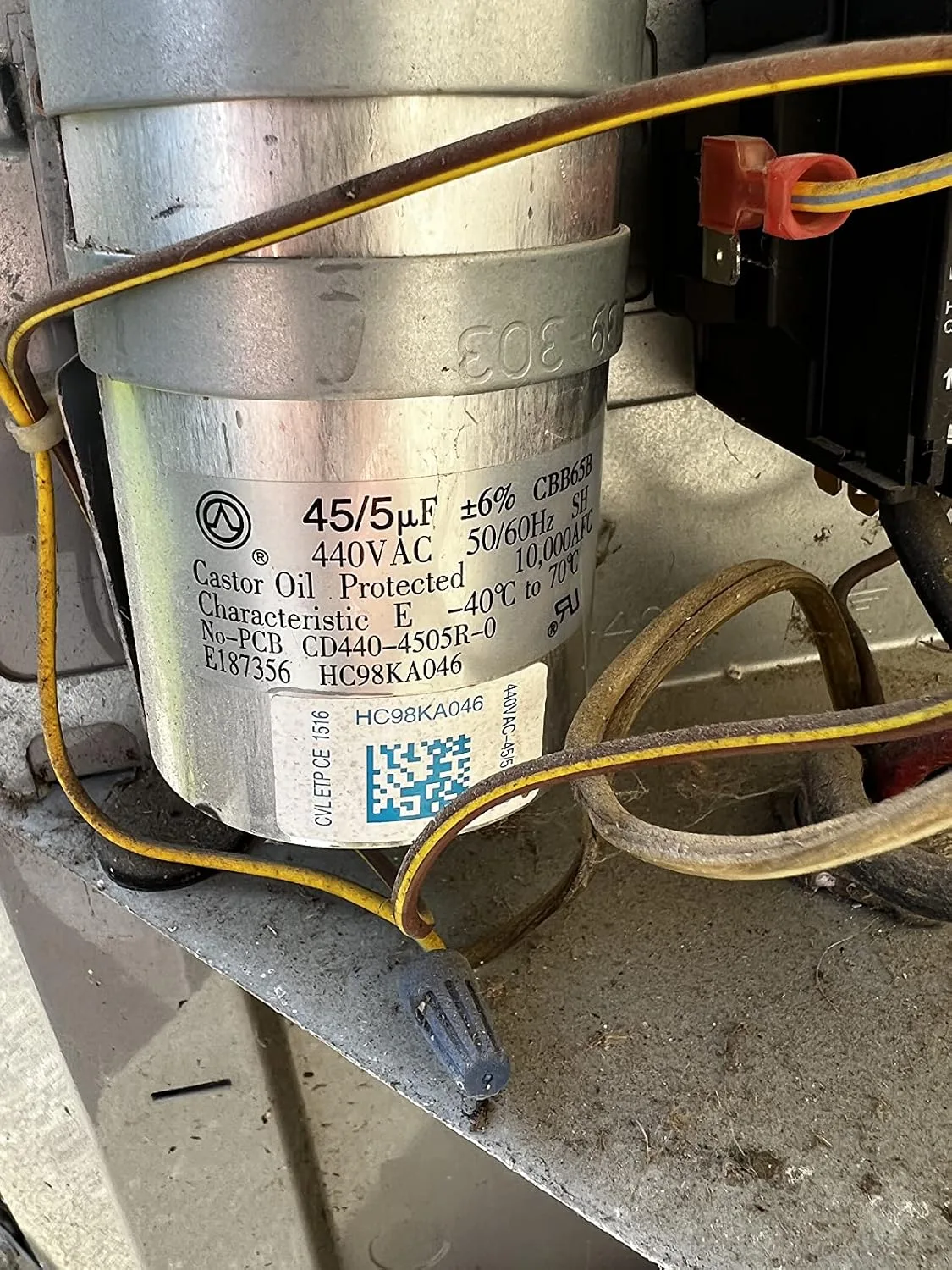
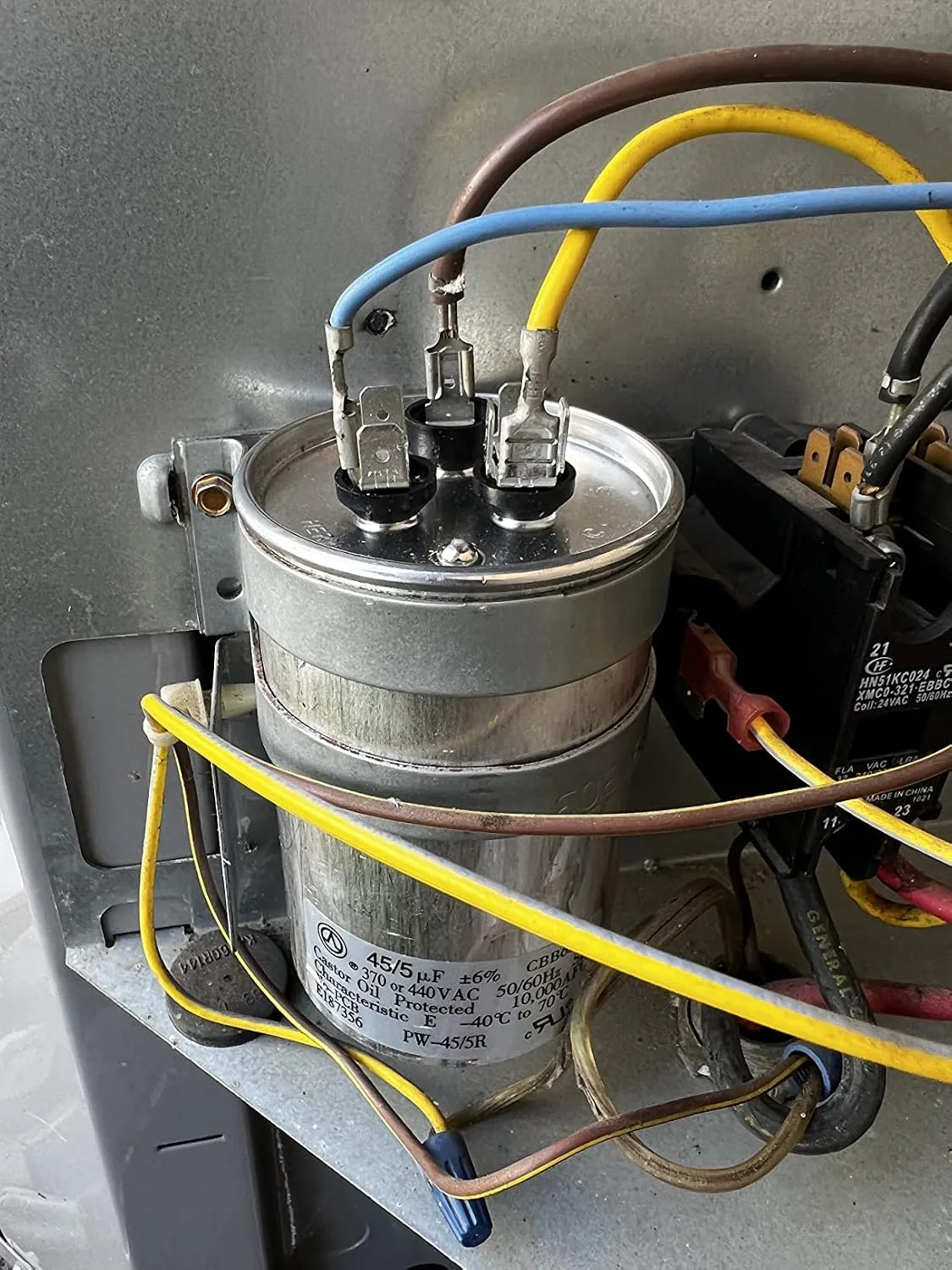
Most residential systems — whether you have a straight cool central AC or a heat pump — use what’s called a dual run capacitor. This is a single cylindrical component that serves two motors simultaneously. You’ll see two ratings printed on the label, something like 45/5 MFD (also written as µF, or microfarads). The larger value (45 MFD) feeds the compressor; the smaller value (5 MFD) feeds the condenser fan motor. Both motors run constantly whenever your system is in cooling mode, so this one part is working hard every single cycle.
Now, about HVAC capacitor failure signs and why summer is the danger zone: capacitors are rated for a maximum voltage and a maximum operating temperature, typically around 150–165°F internal temperature. On a 95°F day, inside a metal electrical compartment on the side of your condenser unit, temperatures can easily hit 130–140°F. Push that hard for weeks during a heat wave, and the dielectric fluid inside the capacitor starts to break down. The internal pressure builds, the case deforms — that’s the bulging you see — and the capacitance value drops. Once it drops more than 10% below its rated MFD value, your motors won’t get what they need.
The Five Classic Failure Symptoms
- AC hums but won’t start — This is the most common one. The contactor closes, power reaches the compressor, but without the capacitor’s starting boost, it just groans and hums. If this goes on for more than a few seconds, the thermal overload trips and shuts it down. This is your AC unit humming not starting capacitor scenario almost every time.
- Condenser fan spins slowly or won’t start — The fan blade moves lazily, or you have to give it a spin by hand to get it going (don’t do this — it’s a diagnostic sign, not a fix).
- AC turns on then immediately shuts off — The system starts, struggles, and the high-pressure or thermal overload trips within 30–60 seconds.
- Clicking sounds from the contactor — Repeated clicking as the contactor tries to engage but the compressor won’t catch.
- Visibly swollen or bulging capacitor top — The flat or slightly concave top of the capacitor is now domed outward. This is a definitive visual confirmation. Replace it immediately.
One thing worth clarifying: there’s often confusion about run capacitor vs start capacitor differences. A start capacitor is only in the circuit momentarily during startup — it provides a massive boost and then drops out. A run capacitor stays in the circuit the entire time the motor runs, improving efficiency and maintaining torque. Most modern residential systems use run capacitors (often in a dual configuration). Some older or higher-efficiency systems also have separate start capacitors. If your system has both, a failed start capacitor will typically prevent the motor from starting at all, while a failed run capacitor causes sluggish, inefficient operation that can eventually burn out the motor.
The Capacitor That Finally Stopped Me from Misdiagnosing a Dead Compressor
When a compressor hums but won’t turn over, most homeowners assume the worst — and cost themselves thousands on an unnecessary replacement. A failed capacitor is the culprit in about 80% of these calls, and swapping it out takes 15 minutes instead of a $3,000 compressor job.
What works
- The 45+5 dual rating handles both the compressor and fan motor on most standard AC systems without needing two separate parts
- 370/440V range covers the voltage variance you actually see in residential equipment — no guessing or callbacks
- Round metal casing sits flat against the condenser frame, so you’re not fighting awkward shapes in tight spaces during installation
What doesn’t
- You’ll need a capacitor discharge tool or a careful hand — these things hold a charge even when the system is off, and I’ve seen more than one technician take an accidental shock
- If your system uses a non-standard MFD rating, this won’t work; always verify your old capacitor’s specs before ordering
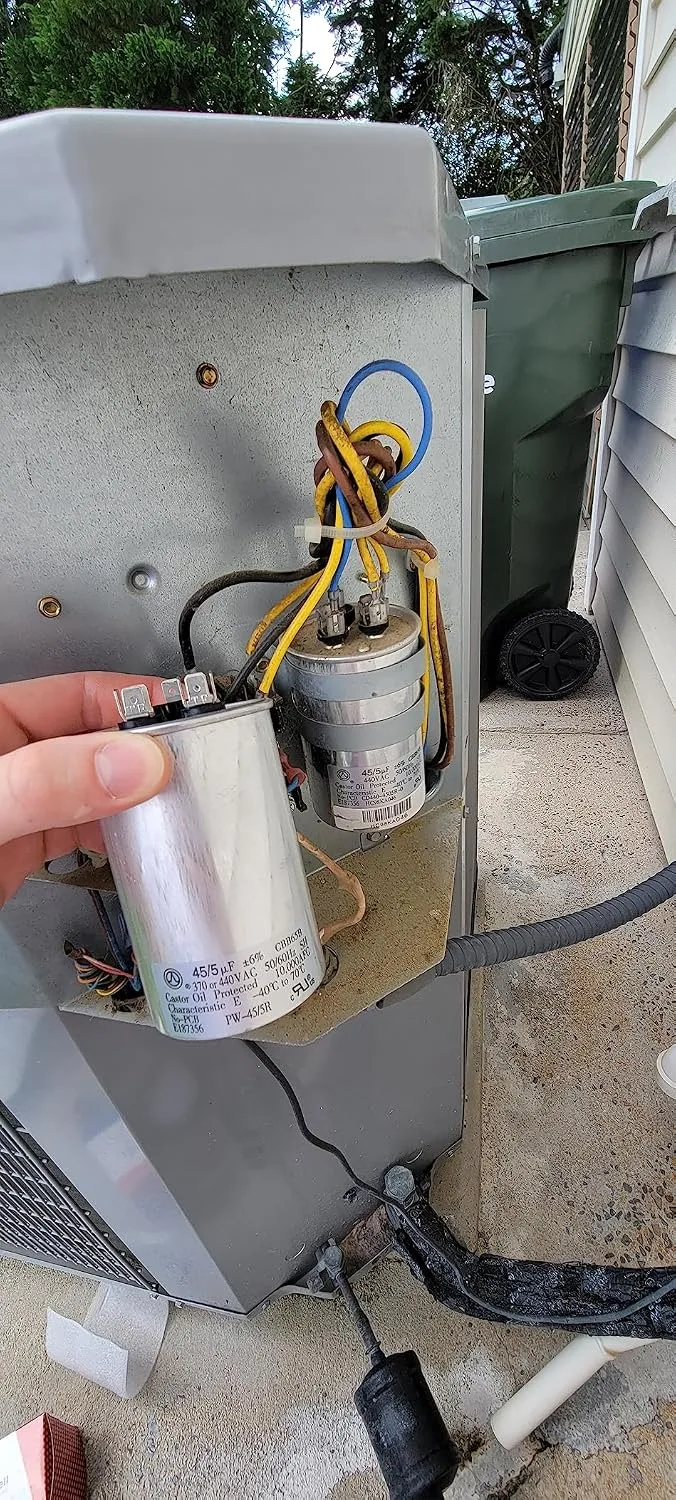
I once second-guessed myself on a humid August morning — the compressor was humming, the cap looked dark and bloated, but part of me worried I was missing something bigger in the electrical line. The moment I swapped in the PowerWell 45+5 MFD 370/440V Dual Run Round Capacitor and heard that compressor kick to life, I knew I’d made the right call.
This post contains affiliate links. As an Amazon Associate, I earn from qualifying purchases at no extra cost to you.