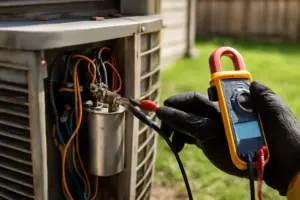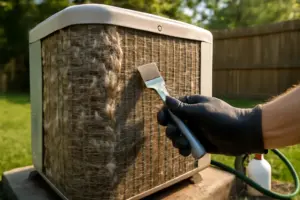
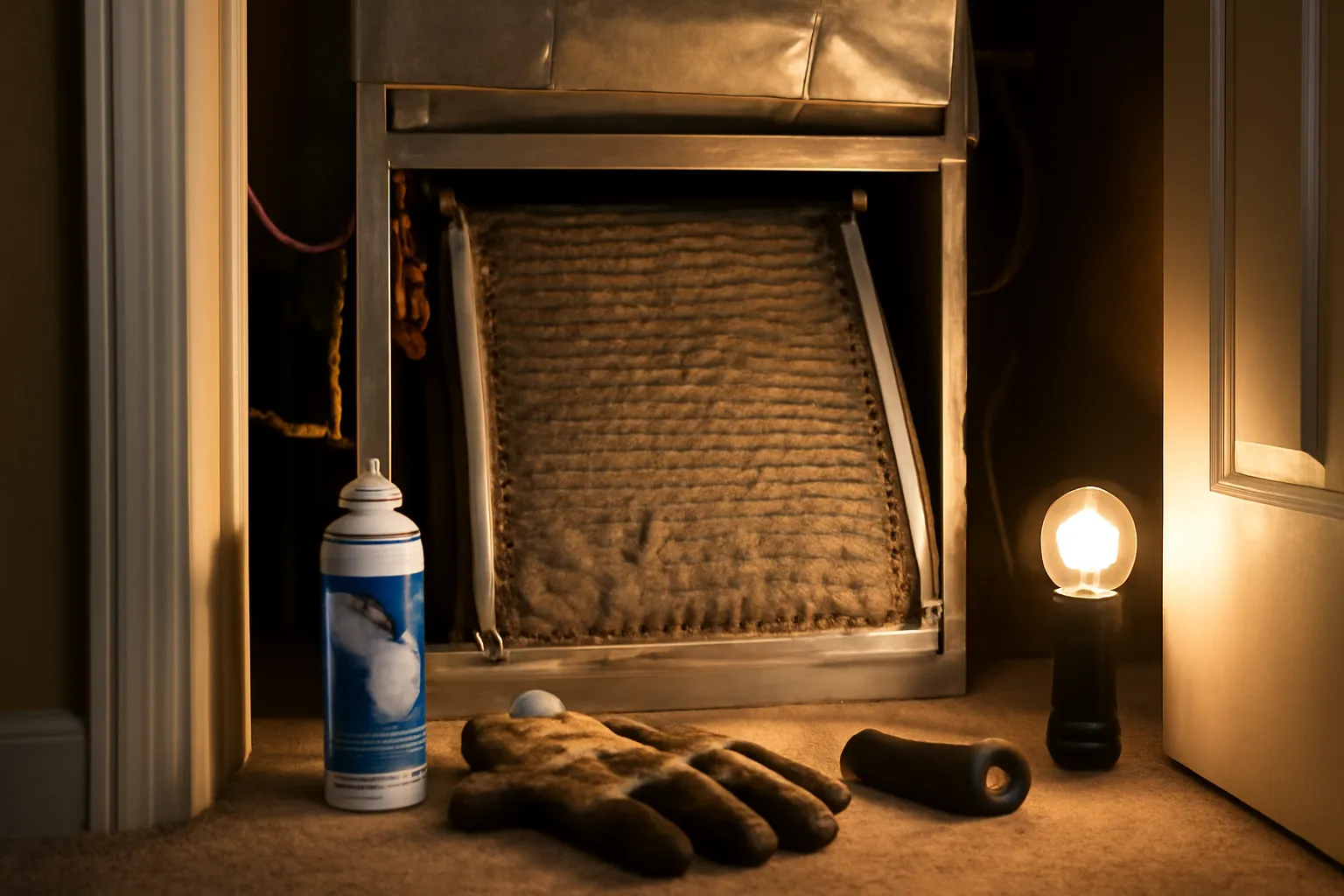
Last August, I got a call from a homeowner in the middle of a heat wave. She’d already had two other companies out that summer. The first told her she needed a new refrigerant charge. The second said her system was just “getting old” and quoted her $7,800 for a replacement unit. She was frustrated, sweating, and about to sign the contract. When I pulled the access panel off her air handler, I found an evaporator coil so caked with dust, pet hair, and biological growth that I could barely see the fins. The coil looked like a dirty furnace filter someone had forgotten about for five years. I cleaned it that afternoon. Her system dropped to the target supply air temperature of 55°F within 45 minutes — exactly where a properly functioning system should land. Her “dying” AC had another decade of life in it. I’ve been doing this long enough to know that dirty evaporator coils are one of the most misdiagnosed problems in residential HVAC. Homeowners blame the age of the equipment. Contractors blame low refrigerant. Meanwhile, the actual culprit — a coil that hasn’t been touched in years — keeps silently strangling the system’s ability to do its job. If your AC is running longer than it used to, your energy bills are creeping up, or you’re just not getting the cooling you expect, keep reading. This is the guide I wish every homeowner had before calling a technician.
Understanding the Problem: What a Dirty Evaporator Coil Actually Does to Your System
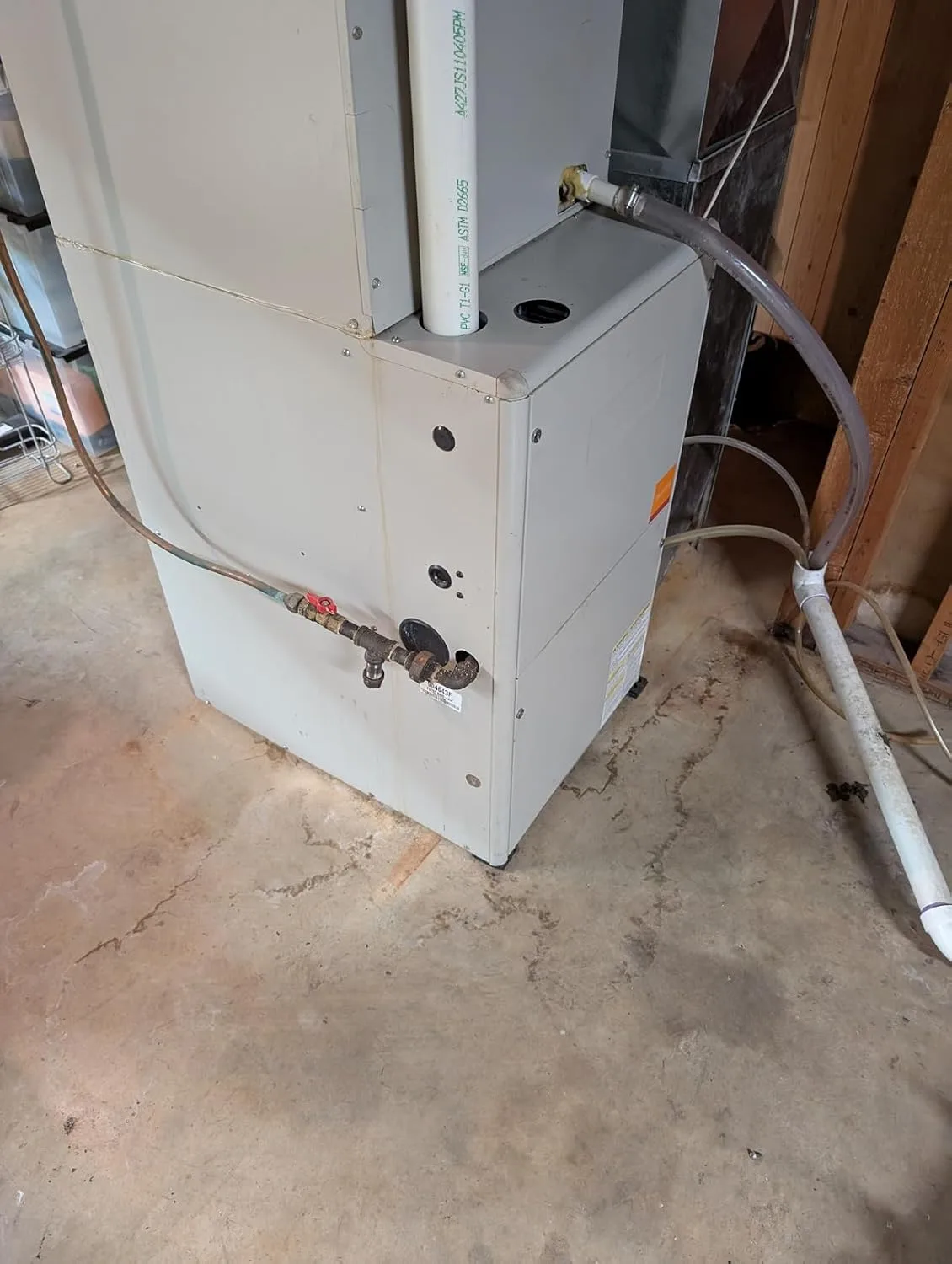
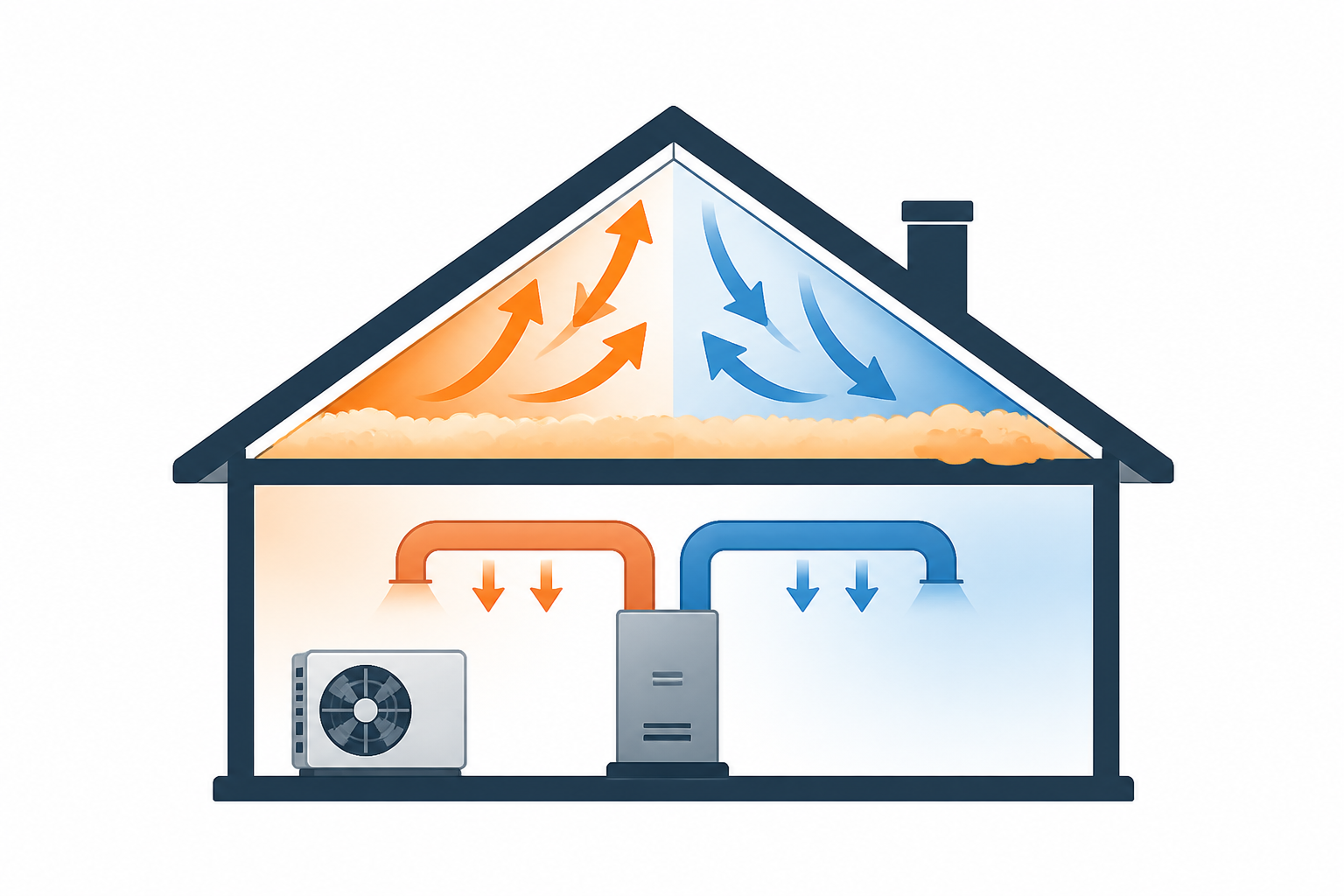
Your evaporator coil is the heart of your air conditioning system’s cooling process. It sits inside your air handler or furnace cabinet — usually in the attic, basement, or a mechanical closet — and it’s where the refrigerant absorbs heat from your home’s air. Warm air from your living space gets pulled across the coil by the blower, the refrigerant inside the coil evaporates and soaks up that heat, and cooled air gets pushed back into your ductwork. Simple in principle. Brutally sensitive to interference in practice.
Here’s the physics that matters: heat transfer efficiency depends entirely on surface contact between the air and the coil fins. A residential evaporator coil might have anywhere from 100 to 300 square feet of total fin surface area packed into a cabinet that’s only about 18 inches wide. That surface area is the whole ballgame. When you start layering dust, pollen, pet dander, mold spores, and skin cells across those fins — and it doesn’t take much, just a thin biofilm — you’re essentially wrapping your coil in insulation. The refrigerant can no longer absorb heat efficiently. The system has to work harder and longer to move the same amount of BTUs out of your house.
The numbers are sobering. Studies from ASHRAE and the EPA’s ENERGY STAR program have found that a dirty evaporator coil can reduce system cooling capacity by 20 to 40 percent. That means a 3-ton system (36,000 BTUs) might be delivering the performance of a 2-ton system (24,000 BTUs) or less — while still drawing full electrical current. Your electric meter doesn’t know your coil is dirty. It just keeps running.
The dirty evaporator coil symptoms I see most often in the field are consistent and recognizable once you know what to look for:
- The AC runs constantly but the house never quite reaches setpoint. The system is working, it’s just not moving enough heat.
- Energy bills creeping up year over year with no obvious explanation — same house, same thermostat settings, higher bills.
- Ice forming on the refrigerant lines or on the coil itself. This one scares homeowners, but it’s a direct consequence of restricted airflow causing the refrigerant to get too cold and freeze condensation on the coil surface. A frosted coil moves zero air. Zero.
- A musty or mildew smell from your vents, especially when the system first kicks on. That’s biological growth on the coil surface doing what biological growth does.
- Water overflowing from the drain pan beneath the coil. A dirty coil changes how condensate drains off the fins, and combined with a partially blocked drain line, you can end up with water damage fast.
There’s also a longer-term consequence that most homeowners don’t think about: compressor damage. When your coil can’t absorb heat properly, the refrigerant returning to the compressor doesn’t get fully vaporized. Liquid refrigerant slugging into a compressor is one of the leading causes of compressor failure — and compressors cost $1,200 to $2,500 to replace. A $15 can of coil cleaner looks a lot smarter in that context.
The Coil Cleaner That Saved Me From Selling a Homeowner a $7,800 Unit She Didn’t Need
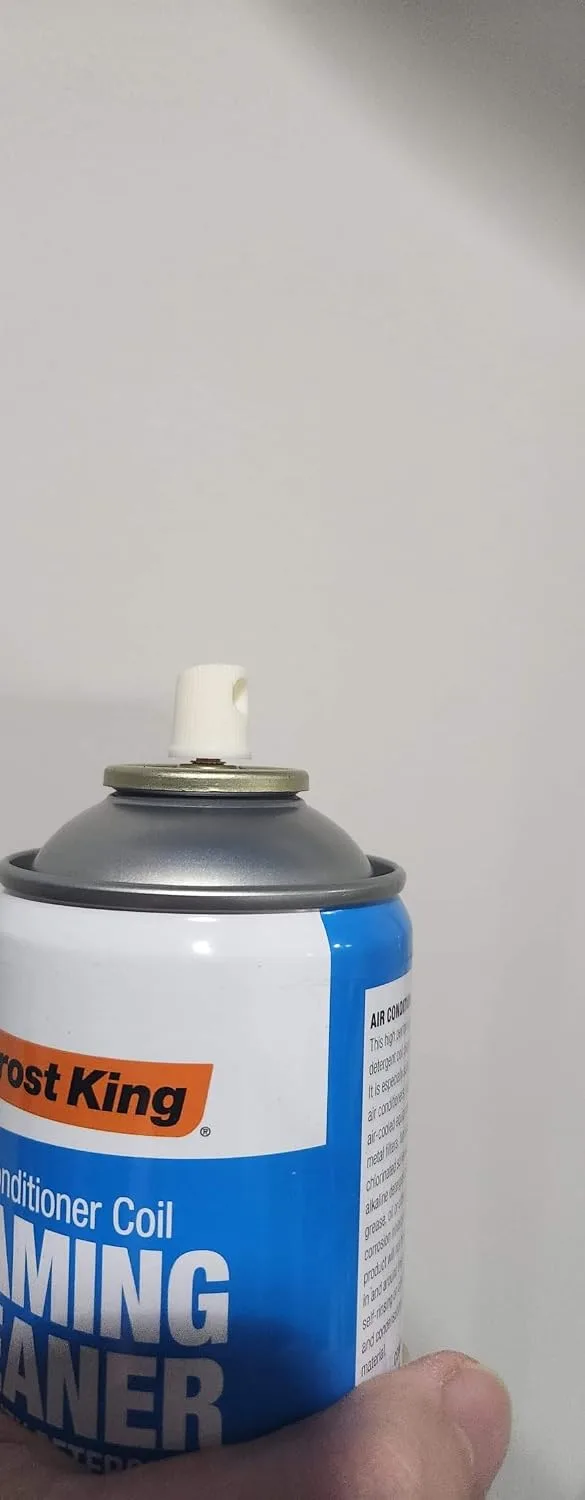
Once you’ve identified a clogged evaporator coil as the real problem, you need a cleaner that actually works without requiring you to disassemble half your air handler. A good foam coil cleaner cuts through years of dust, pet hair, and biological buildup in minutes—and it’s the difference between a $30 fix and a panic-driven equipment replacement.
What works
- Foam expands into tight fin spacing where compressed air and brushes can’t reach, dissolving stubborn pet hair and mold without damaging delicate aluminum fins
- Fast application in tight quarters—spray it on, let it sit 10–15 minutes, rinse with a pump sprayer, and you’re done without pulling the entire coil assembly
- Visible results that prove to the homeowner (or yourself) that the coil was actually the problem, not a failing compressor or low refrigerant charge
What doesn’t
- Won’t fix deeply corroded or damaged fins—if the coil is already leaking refrigerant, cleaner is a band-aid, not a solution
- Requires you to have water access and a pump sprayer nearby, so it’s not a solution for field calls where drainage is awkward or impossible
I’ll admit the first time I used this, I was skeptical that foam alone could clear what looked like three seasons of compacted debris—I almost defaulted to recommending coil replacement out of habit. But after 15 minutes of dwell time and a thorough rinse, that coil came back to life, and the homeowner’s system ran 8 degrees cooler. Pick up a Frost King ACF19 Foam Coil Cleaner before your next service call.
This post contains affiliate links. As an Amazon Associate, I earn from qualifying purchases at no extra cost to you.