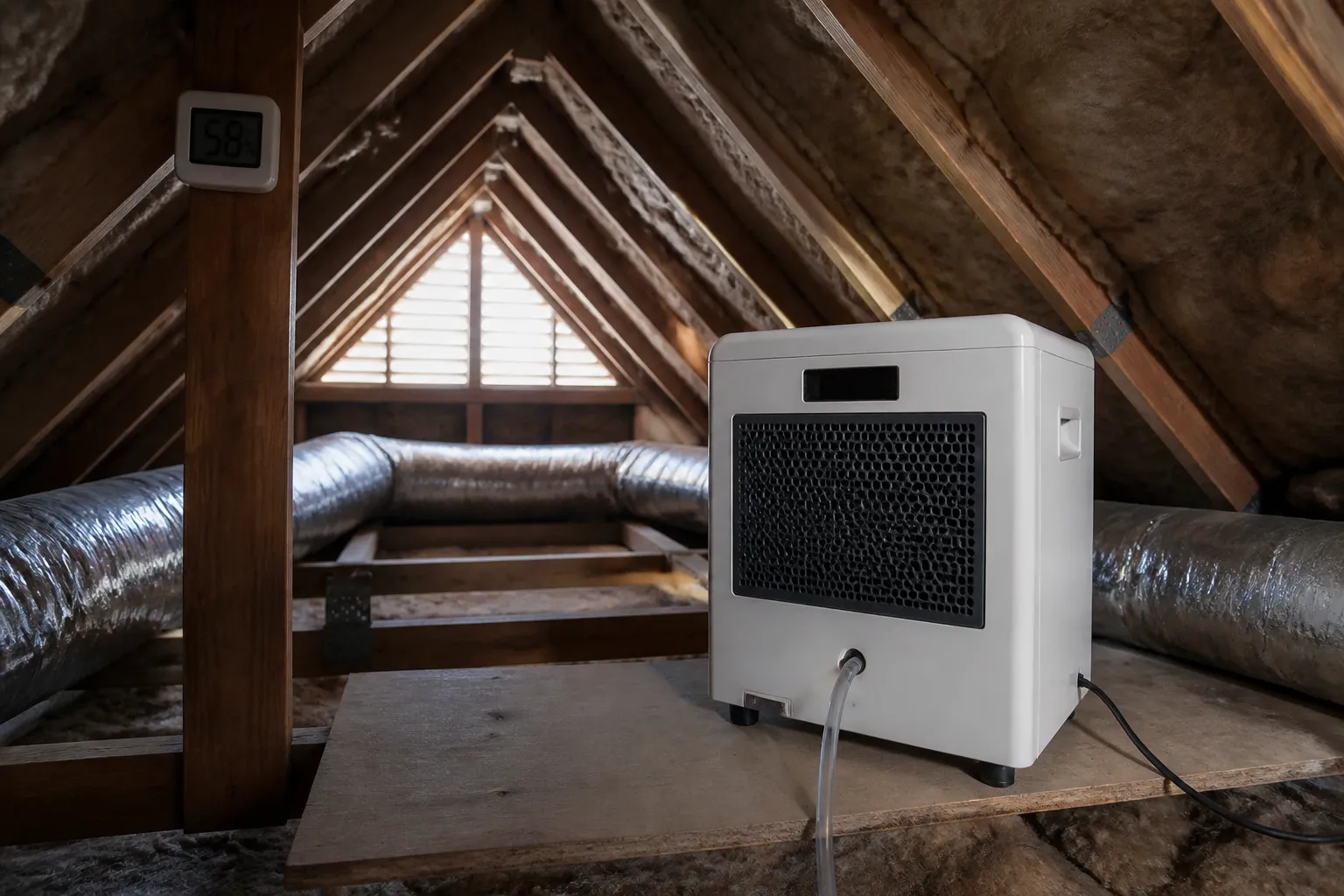
I got a call last Tuesday from a homeowner in the suburbs who’d discovered condensation on his attic sheathing during a winter inspection. His first instinct? Buy an attic dehumidifier. He’d already ordered one online when he called me.
“Dana, it’s got great reviews,” he said. “Should arrive tomorrow.”
I asked him to hold off. When I climbed into that attic the next morning, I found exactly what I expected: frost concentrated around the top plate where the kitchen and bathroom were directly below. That’s not a humidity problem that a dehumidifier will solve. That’s warm, moist air leaking from his living space into the attic — an air sealing problem.
We sealed those bypasses, balanced his soffit and ridge vents, and the condensation was gone within two weeks. No dehumidifier needed. No electricity bill spike. No band-aid solution.
This scenario plays out constantly in my business. Homeowners find moisture in their attic and immediately reach for a plug-in dehumidifier — which is almost always the wrong tool for the job. In this post, I’m going to show you exactly when an attic dehumidifier actually makes sense, what you should do instead in most cases, and how to know the difference.
Understanding the Problem: Where Attic Moisture Actually Comes From
Before you buy anything, you need to understand what’s actually happening in your attic. Attic moisture problems come from two distinct sources, and the fix for each one is completely different.
Source 1: Air Bypasses (The Most Common Culprit)
Warm, humid air from your living space leaks directly into the attic through unsealed penetrations. I’m talking about recessed can lights, gaps around the top plate, plumbing vents, electrical boxes, and HVAC ducts. In winter, that warm moist air hits cold attic sheathing and condenses — sometimes forming frost. In summer, it just adds to humidity load.
The fix: Air sealing. Not a dehumidifier. When you seal those leaks with caulk, foam, or gaskets, you stop the moisture source entirely. I’ve sealed hundreds of attics this way, and it’s the most cost-effective solution by far.
Source 2: Inadequate Ventilation
Your attic needs balanced soffit intake and ridge exhaust ventilation — roughly a 1:150 ratio of vent area to attic square footage. If you’re short on soffit vents or your ridge vent is blocked by insulation or ice dams, humidity builds up because there’s no exhaust path for moisture vapor coming from the conditioned space below and from outdoor air.
The fix: Install or unblock ventilation. Add soffit vents if you’re short. Ensure your ridge vent isn’t covered by insulation (I see this constantly). Again — not a dehumidifier.
How to Diagnose Which You Have
- Frost or condensation concentrated near the top plate or around specific penetrations? That’s an air bypass problem. The moisture is coming from your living space.
- Widespread condensation or high humidity readings across the entire attic deck? That’s typically a ventilation problem. Moisture isn’t being exhausted.
- Wet spots, staining, or mold in one localized area? That’s usually a roof leak, not humidity. Different diagnosis, different fix.
The reason this matters: A portable dehumidifier running in your attic will never fix air bypasses or ventilation shortfalls. It just wastes electricity while the root cause keeps pumping moisture into the space.
The Dehumidifier That Finally Stopped Me from Chasing Symptoms Instead of Causes
If you’ve already got ventilation problems or air leaks in your attic, a dehumidifier becomes a band-aid that runs 24/7 without fixing the real issue. But when moisture sources are truly isolated and structural conditions are sound, a capable unit can buy you time while you plan a larger strategy.
What works
- The 70-pint capacity handles localized moisture spikes without constant emptying—the built-in pump actually drains condensate to a window or foundation drain, so you’re not hauling buckets in January.
- Runs quietly enough that it won’t become an annoying hum every time you’re in the attic, and the energy draw is reasonable for short-term moisture control during seasonal transitions.
- Sized appropriately for basements and crawl spaces, which means it won’t be undersized in an attic—a mistake I’ve seen cost homeowners hundreds in wasted runtime.
What doesn’t
- If your attic has uncontrolled air leaks or inadequate ventilation, this unit becomes a permanent tenant—you’re treating the symptom, not the source, and utility bills will reflect the constant runtime.
- Requires an outlet in the attic and periodic filter checks; if you’re installing one because you can’t access your attic easily, maintenance will become a hassle you’ll likely skip.
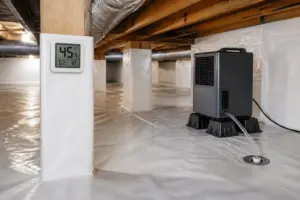
I almost recommended one to a client before realizing their entire soffit line was blocked with insulation—the dehumidifier would’ve masked a $400 ventilation fix with a $50-per-month electricity bill. Check out the ALORAIR Crawl Space/Basement Dehumidifier 70 Pint with Pump if you’ve already ruled out ventilation and air sealing as your solution.
This post contains affiliate links. As an Amazon Associate, I earn from qualifying purchases at no extra cost to you.